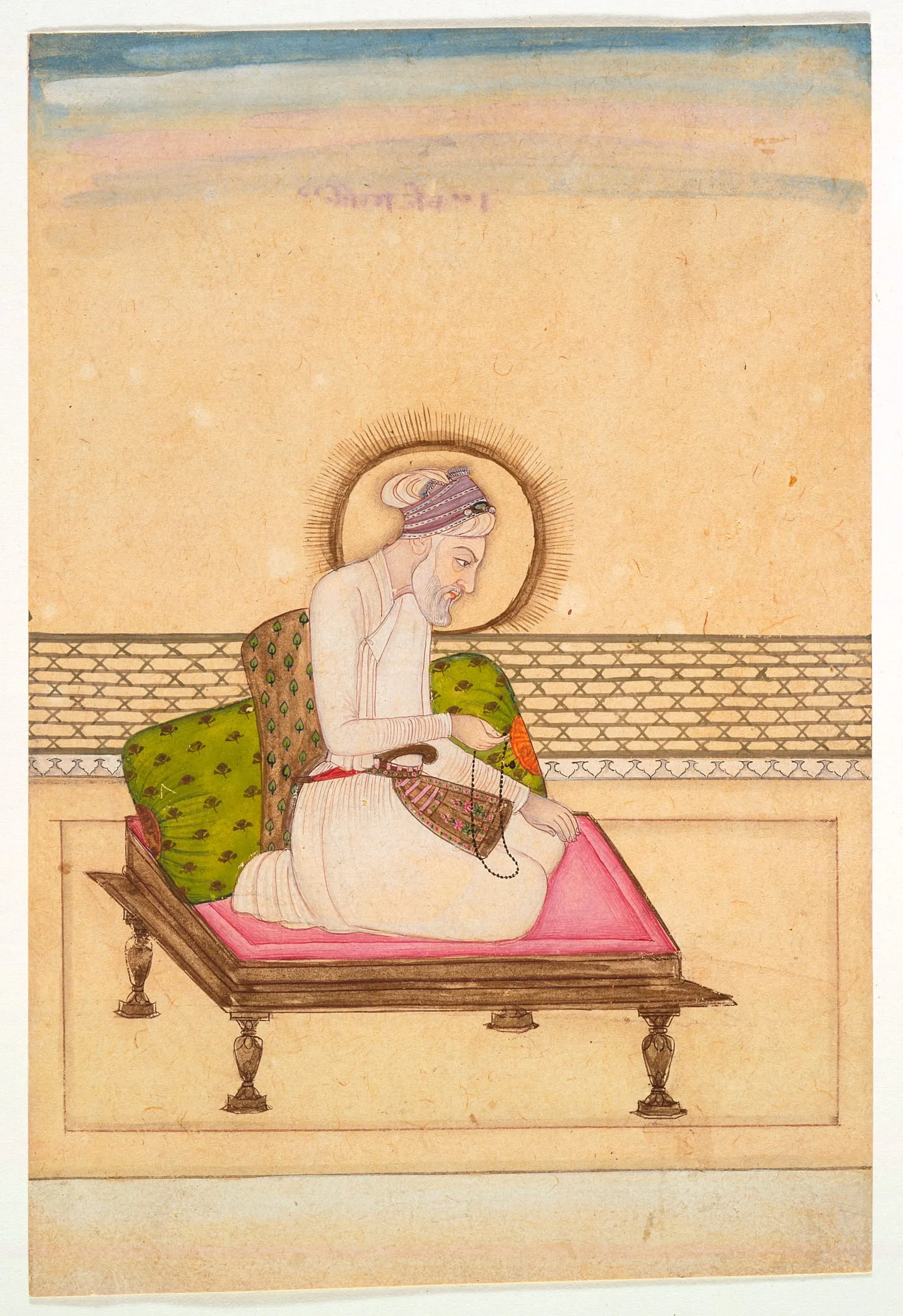
Emperor Aurangzeb (or Alamgir, r. 1658-1707) was born in 1618. His birth name was Muhi al-Din Muhammad. His regnal title was Alamgir (Conqueror of the World), but he is more commonly known as Aurangzeb (Ornament of the Throne). Prince Aurangzeb served in the military, as the viceroy of the Deccan, and as the governor of several provinces. After a bloody war of succession against his brothers, he deposed his father, Emperor Shah Jahan (r. 1628-1658) and proclaimed himself emperor in 1658. During the first decade of his long reign, the royal ateliers continued producing paintings of superb quality. Gradually, however, the emperor’s increasing religious orthodoxy and preoccupation with the conquest of the Deccan resulted in a decreased patronage of the painting. In the last two years of life, he became severely ill and spent much of his time praying. He died in his military encampment near Ahmednagar, Maharashtra in 1707 and was buried in a modest open-air grave in Aurangabad, Maharashtra in the courtyard of the shrine of the Sufi saint Shaikh Burhanuddin Gharib.
Images of the emperor from his final years and posthumous portraits typically portray him in what came to be trope as a pious Muslim counting his prayer beads, such as in this posthumous portrait, or reading the Qur’an (such as in a similar portrait attributed to circa 1700 in the British Library, London [Johnson Album 2, 2]).
Above the emperor is a probably later Devanagari inscription that reads, Aurangzeb.