- Title
- Lotus
- Date Made
- Qing dynasty (1644-1911), dated 1889
- Medium
- Hanging scroll, ink and color on paper
- Dimensions
- Image: 36 5/8 x 17 1/8 in. (93.03 x 43.5 cm); Mount: 64 x 22 1/8 in. (162.56 x 56.2 cm); Roller: 25 5/8 in. (65.09 cm)
- Accession Number
- M.72.100.2
- Curatorial Notes
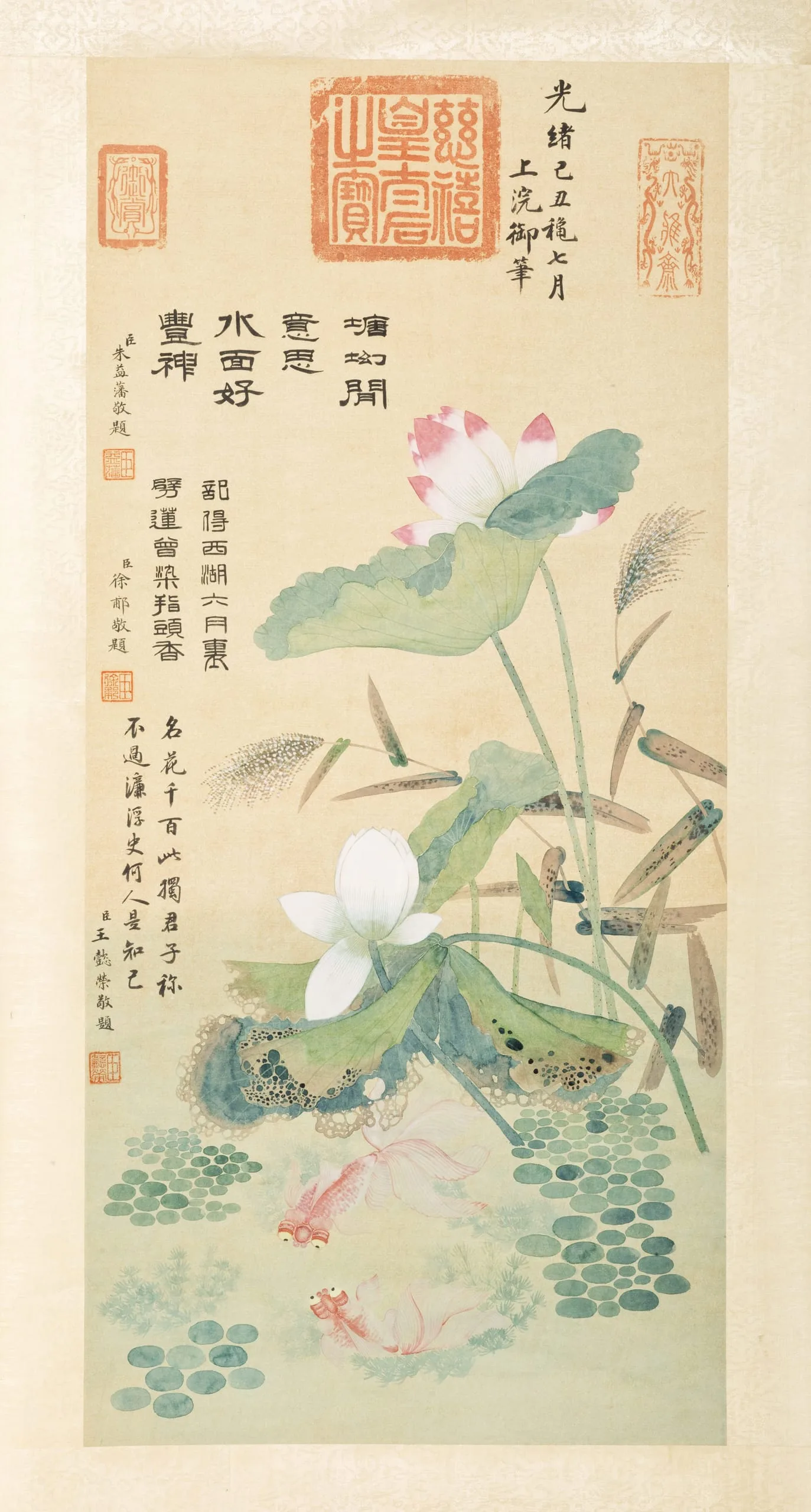
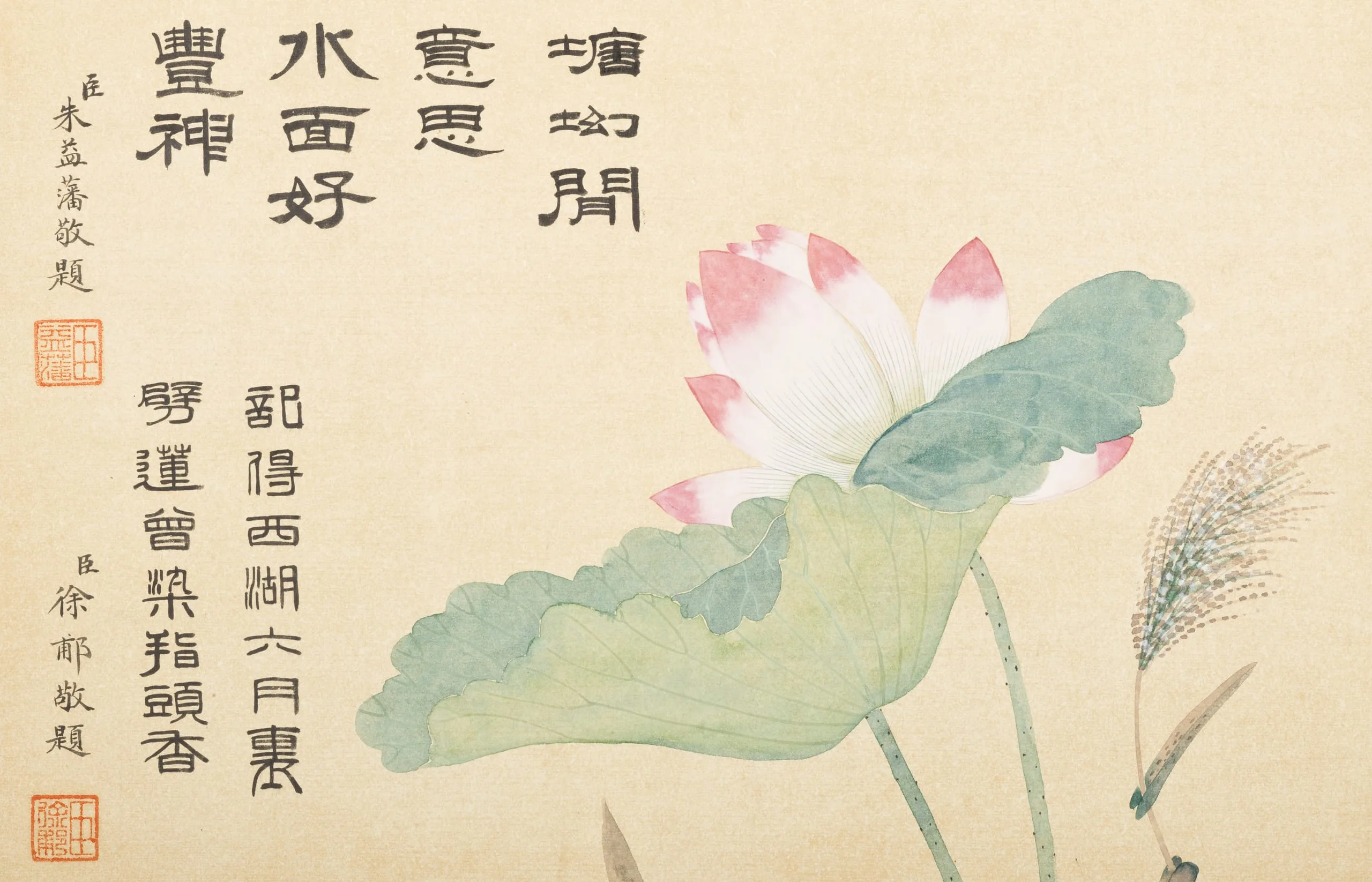
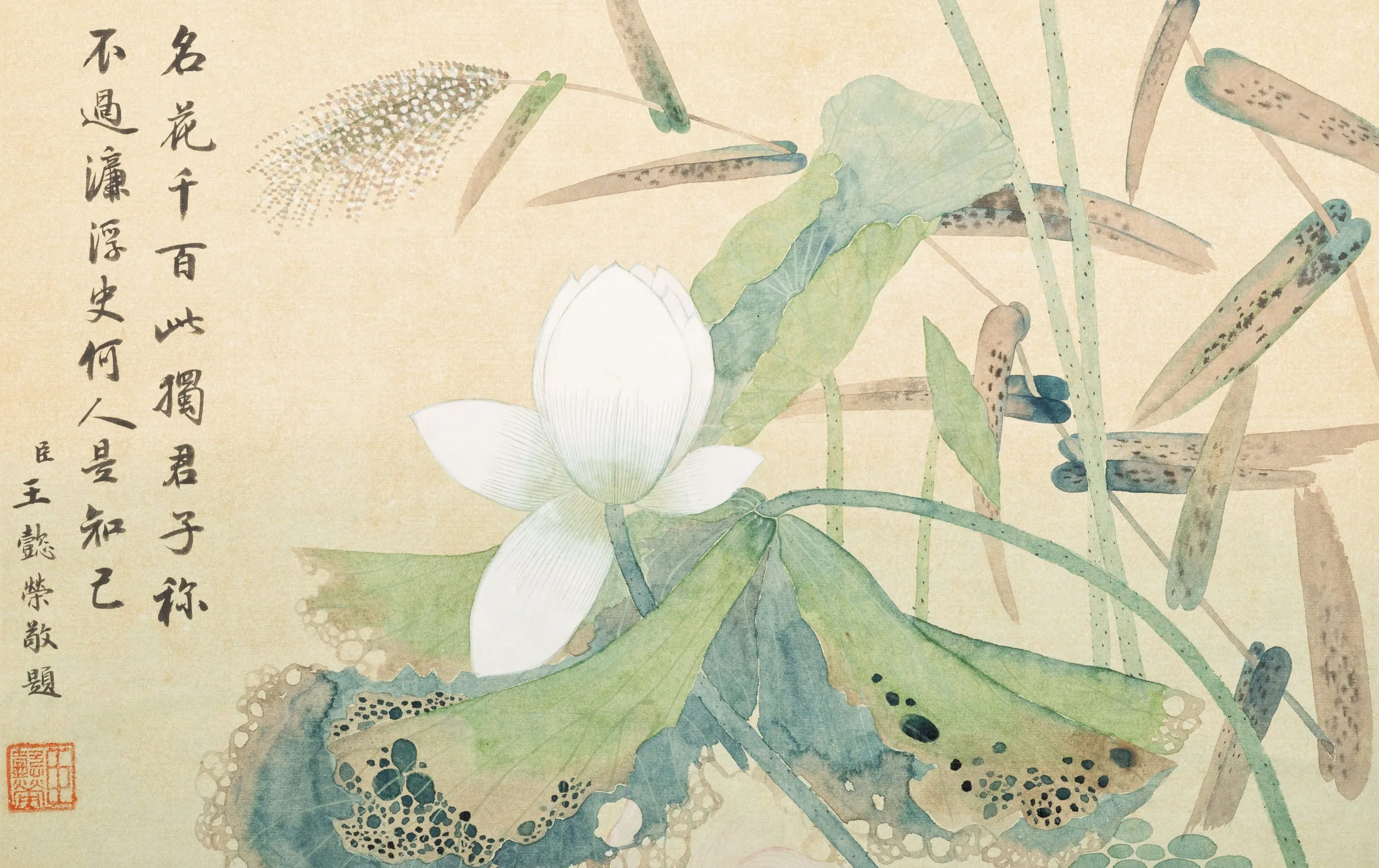
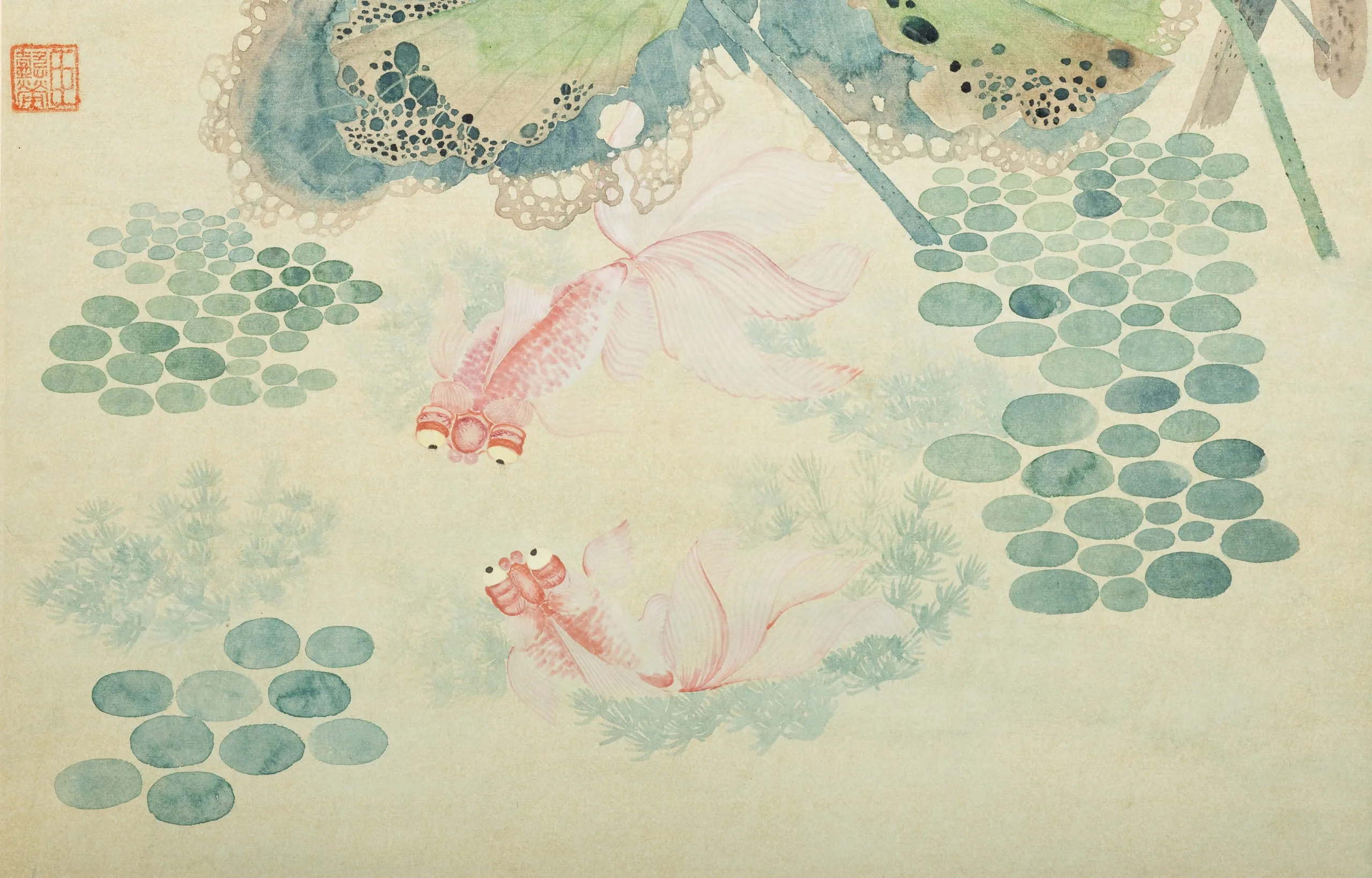
One of the most powerful female rulers in Chinese history, Empress Dowager Cixi was an accomplished painter and calligrapher. She is also known to have hired ghost painters (daibi). This beautifully rendered scroll painting suggests that the artist was well trained in the flower-and-bird genre. The upper lotus flower is in bloom; the top and bottom of its leaves are distinguished by different shades of green. The lower lotus flower has not yet bloomed, and its leaves are slightly withered, indicated by soft brownish washes. The artist’s masterful command of the mogu (“boneless”) technique is apparent in the delicately depicted leaf perforations, of various size and color, as well as the green circles (more lotus leaves) floating on the water’s surface. The water is a lightly tinted green. The gracefully curving shapes of two goldfish mimic the swirl of faintly sketched water plants. Many of Cixi’s flower-and-bird paintings are said to have been made by a female artist from Yunnan named Miao Jiahui, and this is likely one of them. Another of Cixi’s ghost painters, Qu Zhaolin, specialized in pines, cranes, and mushrooms.
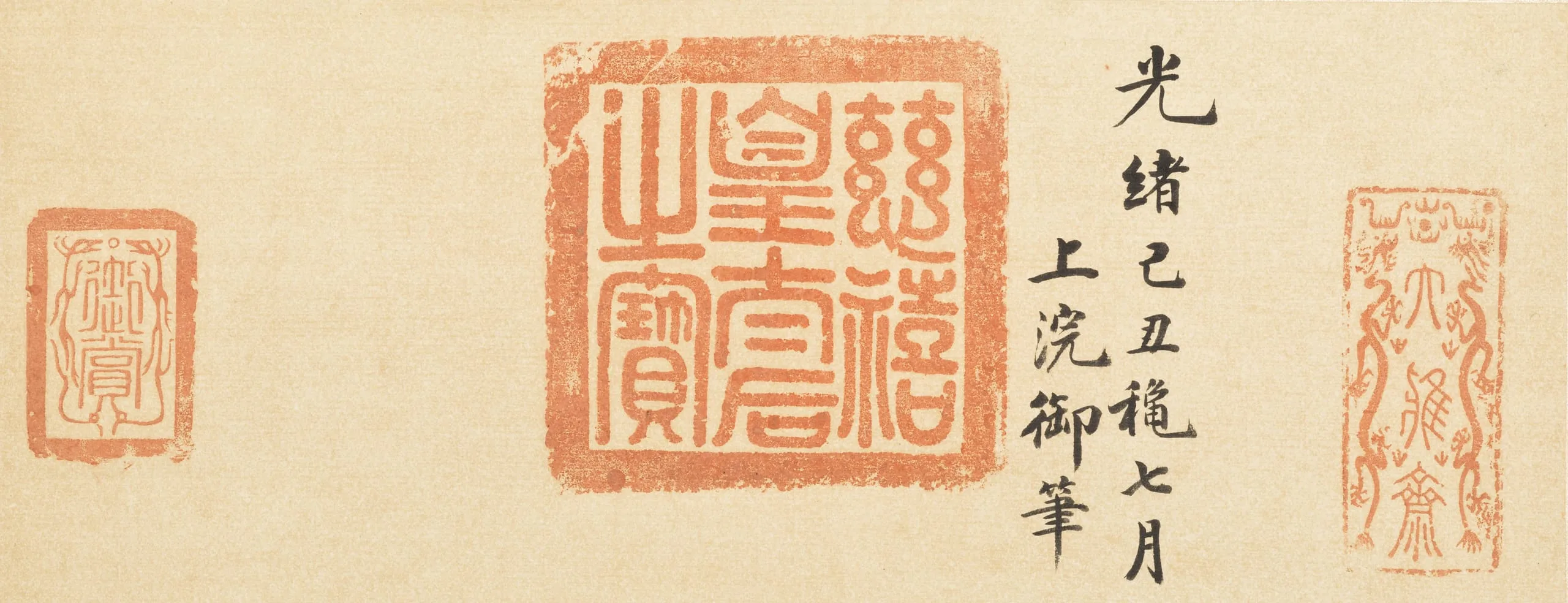
The inscription on the top middle right reads: “In the upper huan [the first third] of the seventh month, in the autumn of the year jichou of the Guangxu reign [1889], by imperial brush [shanghuan yubi, Empress Cixi’s usual signature].” The large square seal reads: “Cixi huangtaihou zhibao [Treasure of the Empress Dowager Cixi].” The inscriptions on the left side were written by three ministers––Zhu Yifan, Xu Fu, and Wang Yirong.
Wan Kong
2024