LACMA

ShopMembershipMyLACMATickets
LACMA
Los Angeles County Museum of Art
5905 Wilshire Blvd.
Los Angeles, CA 90036
info@lacma.org
(323) 857-6000
Sign up to receive emails
Subscribe
© Museum Associates 2025

Museum Hours

Monday

11 am–6 pm

Tuesday

11 am–6 pm

Wednesday

Closed

Thursday

11 am–6 pm

Friday

11 am–8 pm

Saturday

10 am–7 pm

Sunday

10 am–7 pm


  • About LACMA
  • Jobs
  • Building LACMA
  • Host An Event
  • Unframed
  • Press
  • FAQs
  • Log in to MyLACMA
  • Privacy Policy
© Museum Associates 2025
Collections

Rembrandt Harmensz. van Rijn
The Raising of Lazaruscirca 1630-1632

Not on view
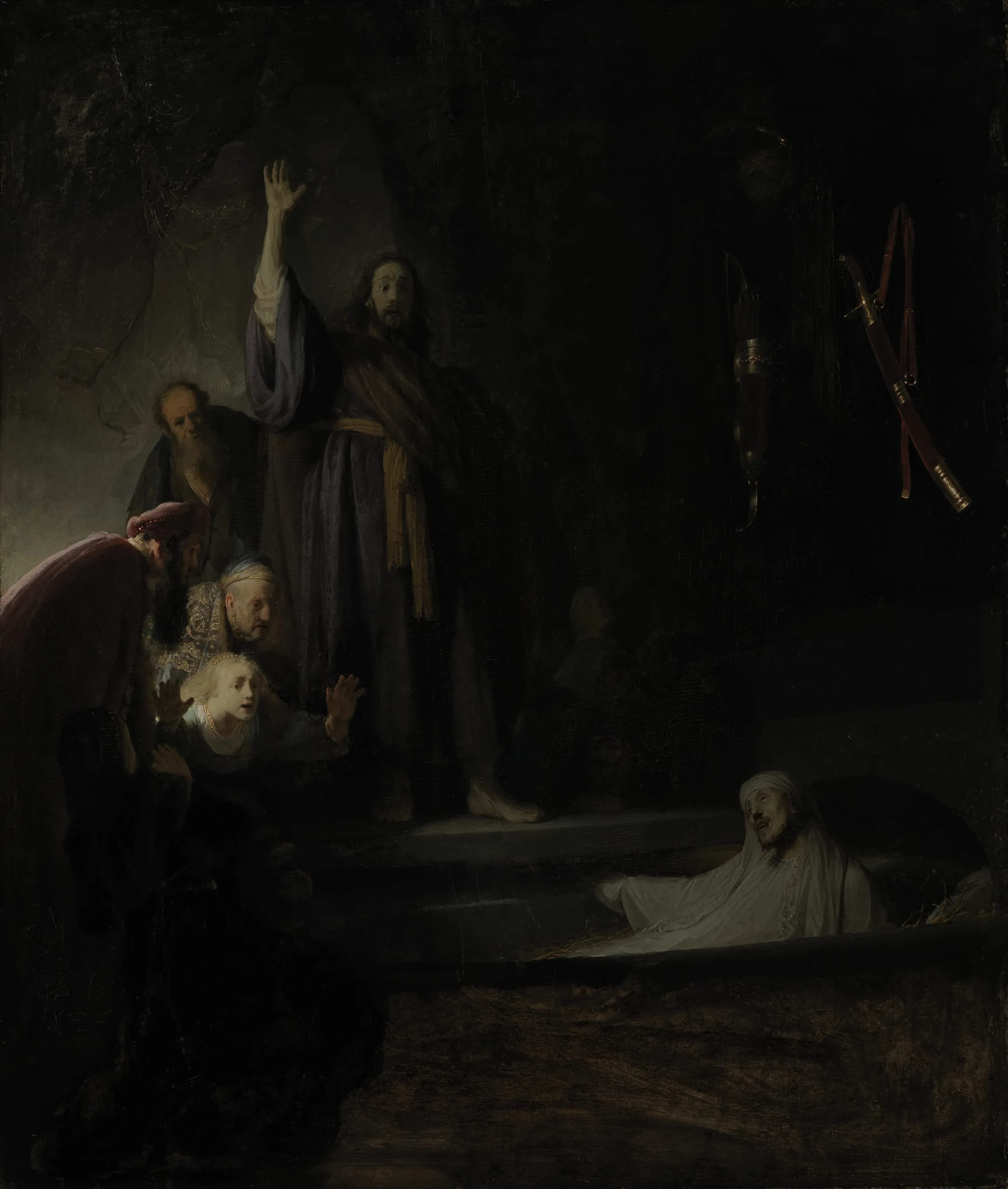
Oil painting of a multi-figure scene in near-total darkness, with a robed man raising one arm above a group of figures surrounding a shrouded figure emerging from a stone tomb
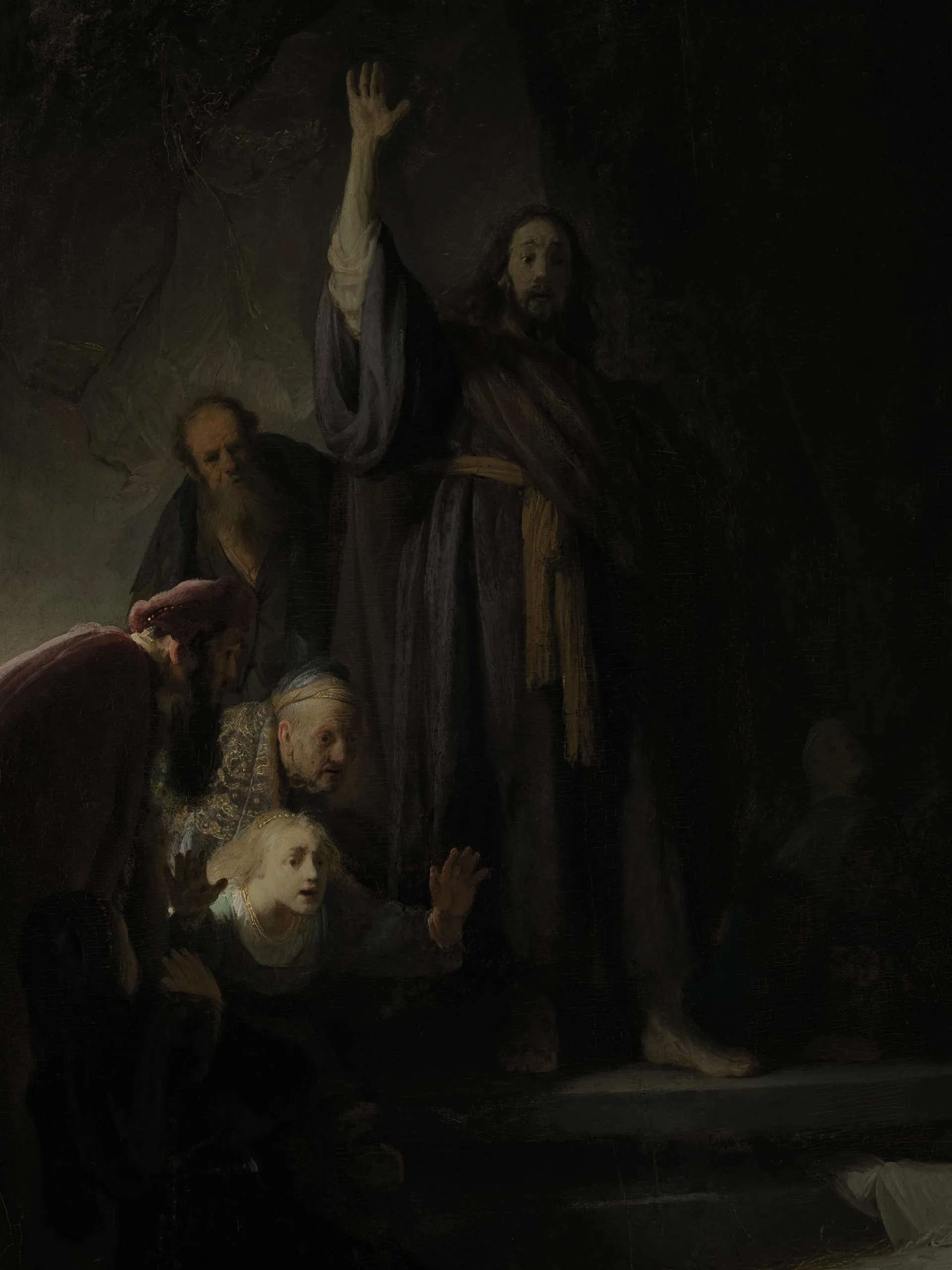
Oil painting with dramatic chiaroscuro; a robed standing figure raises one arm upward against a dark background while three figures cluster at lower left around a kneeling woman illuminated by a concentrated light source, rendered with loose brushwork.
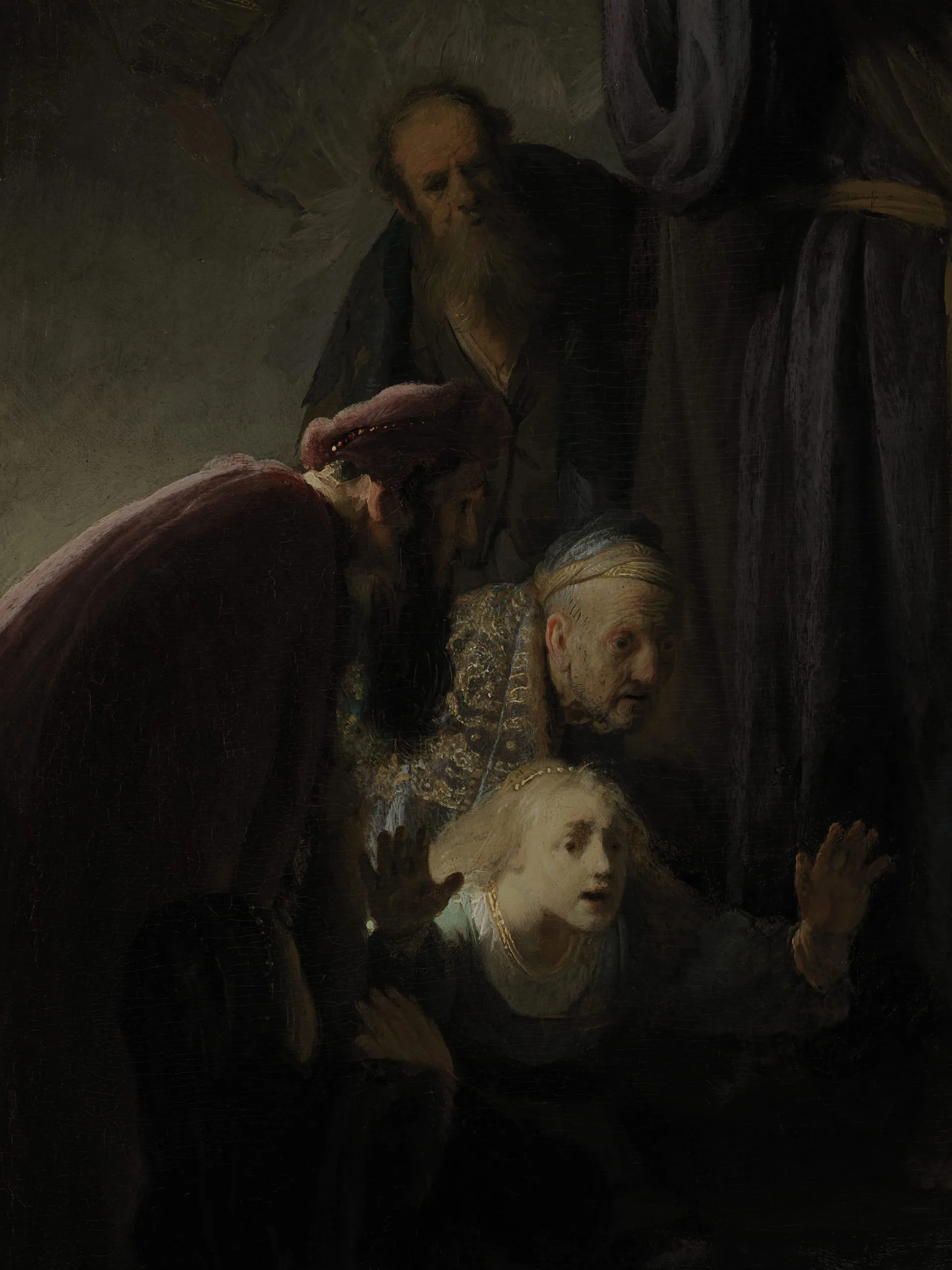
Oil painting with chiaroscuro technique; four figures in a dark interior, an illuminated young woman with upturned face kneeling at center, surrounded by three older bearded men in robes and turbans leaning over her, rendered in deep browns and earth tones with loose brushwork.
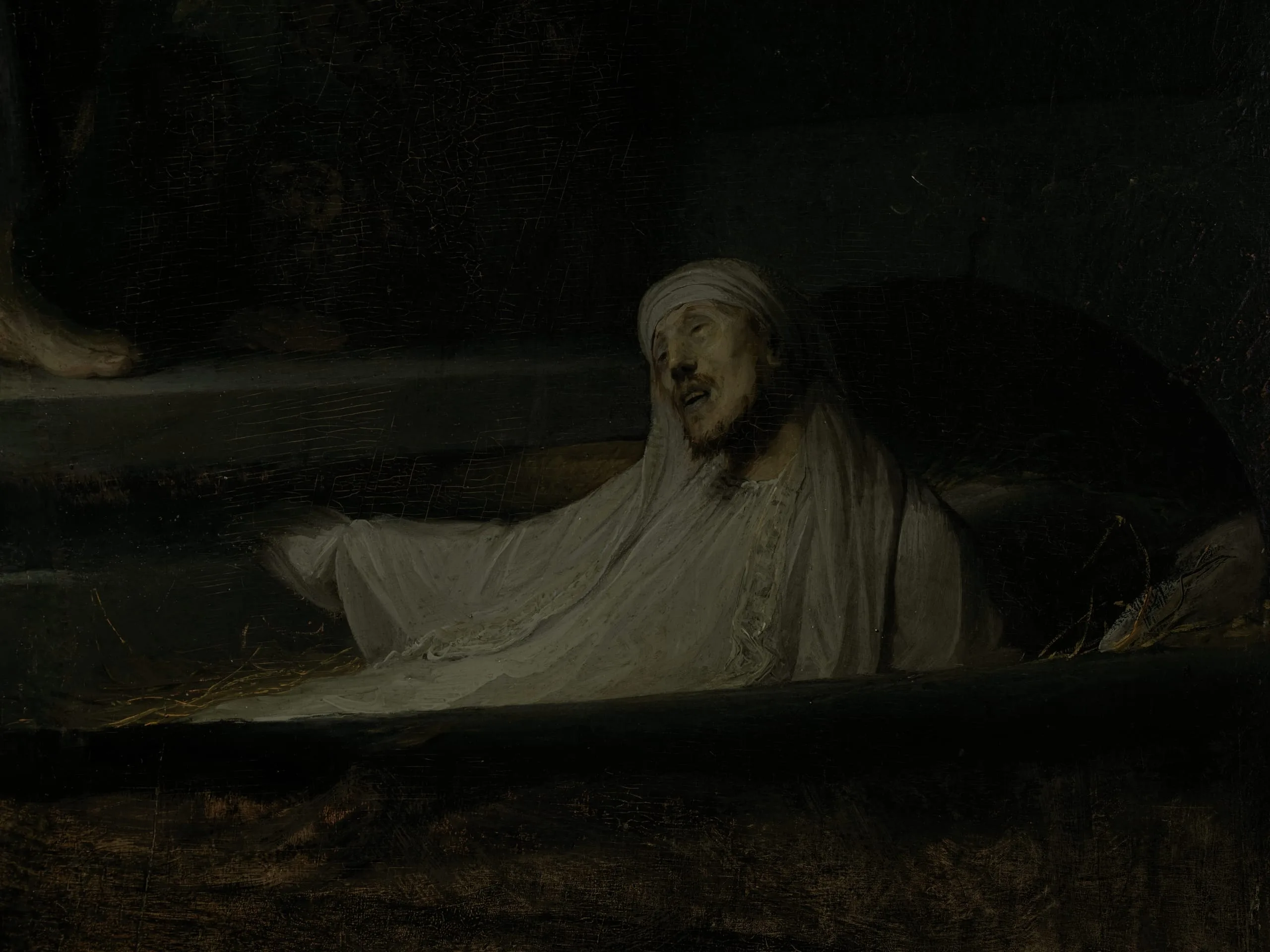
Oil painting, dimly lit scene of a bearded man in white robes and head covering, reclined with head tilted back and mouth open, against a near-black background, with loose painterly brushwork.
Artist or Maker
Rembrandt Harmensz. van Rijn
Northern Netherlands, 1606-1669
Title
The Raising of Lazarus
Date Made
circa 1630-1632
Medium
Oil on wood panel
Dimensions
Panel: 37 5/16 × 32 in. (94.77 × 81.28 cm) Framed: 47 1/2 × 41 3/4 × 2 in. (120.65 × 106.05 × 5.08 cm)
Credit Line
Gift of H. F. Ahmanson and Company, in memory of Howard F. Ahmanson
Accession Number
M.72.67.2
Classification
Paintings
Collecting Area
European Painting and Sculpture
Curatorial Notes
Throughout his life Rembrandt treated the stories and parables of the Old and New Testaments in accessible, familiar images. Because the Dutch Reformed Calvinism of his time forbade religious art in churches, public commissions for paintings of biblical subjects were virtually nonexistent, but an enthusiastic private patronage for them thrived, which helps account for the preponderance of religious subjects in Rembrandt's work.
The Raising of Lazarus is Rembrandt's only painting of this miracle marking the culmination of Christ's ministry, but he also made drawings and etchings of the same subject. Christ's divine and human nature is revealed as he stands in the cave where Lazarus was buried, his hand raised to perform the miracle, his face filled with apprehension and triumph. Rembrandt interprets Lazarus's rising not only in direct correspondence with Christ's forceful gesture but also in response to the divine power it has unleashed by evoking faith.
Around Christ and the tomb huddle the astounded witnesses—among them Mary and Martha, Lazarus's sisters—whose gestures and expressions record successive states of awareness and awe before what is unfolding. The dramatic darkness of the cave does not obscure the subtle colors--mauve, rose, and aqua--of the costumes or the glinting highlights of the quiver and scabbard hanging at the right.
Selected Bibliography
  • Lehmbeck, Leah, editor. Gifts of European Art from The Ahmanson Foundation. Vol. 3, Dutch Painting, Flemish Painting, Spanish Painting and Sculpture. Los Angeles: Los Angeles County Museum of Art, 2019.
  • Manuth, Volker, Marieke de Winkel, and Rudie van Leeuwen. Rembrandt: the Complete Paintings. Cologne: Taschen GmbH, 2019.
  • Chapman, H. Perry. "Rembrandt, Lievens, Dou. Imagining artistic friendship." Netherlands Yearbook for History of Art 70 (2020): 240-257.