LACMA

ShopMembershipMyLACMATickets
LACMA
Los Angeles County Museum of Art
5905 Wilshire Blvd.
Los Angeles, CA 90036
info@lacma.org
(323) 857-6000
Sign up to receive emails
Subscribe
© Museum Associates 2026
  • About LACMA
  • Jobs
  • Building LACMA
  • Host An Event
  • Unframed
  • Press
  • FAQs
  • Log in to MyLACMA
  • Privacy Policy
© Museum Associates 2026
Collections

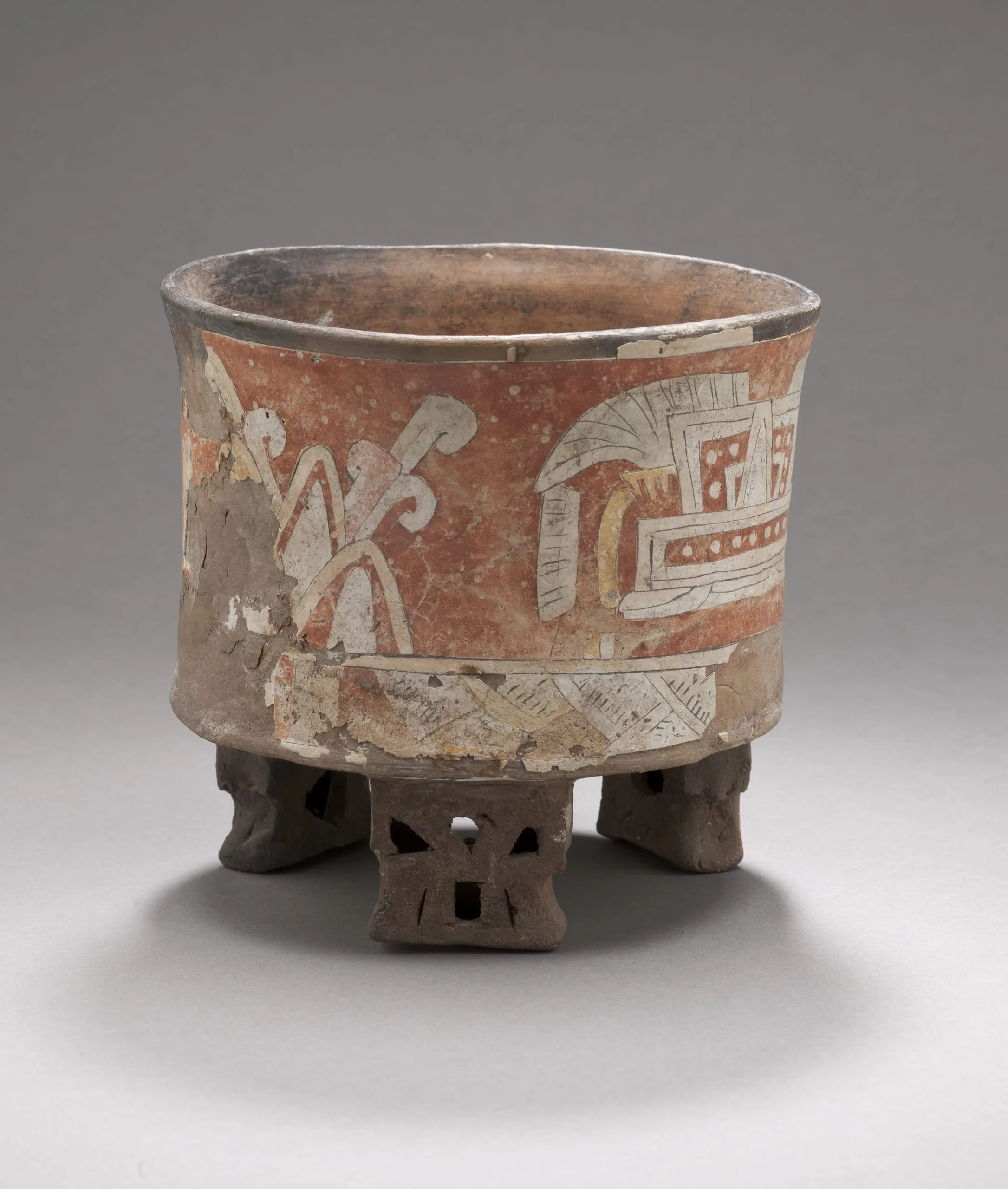
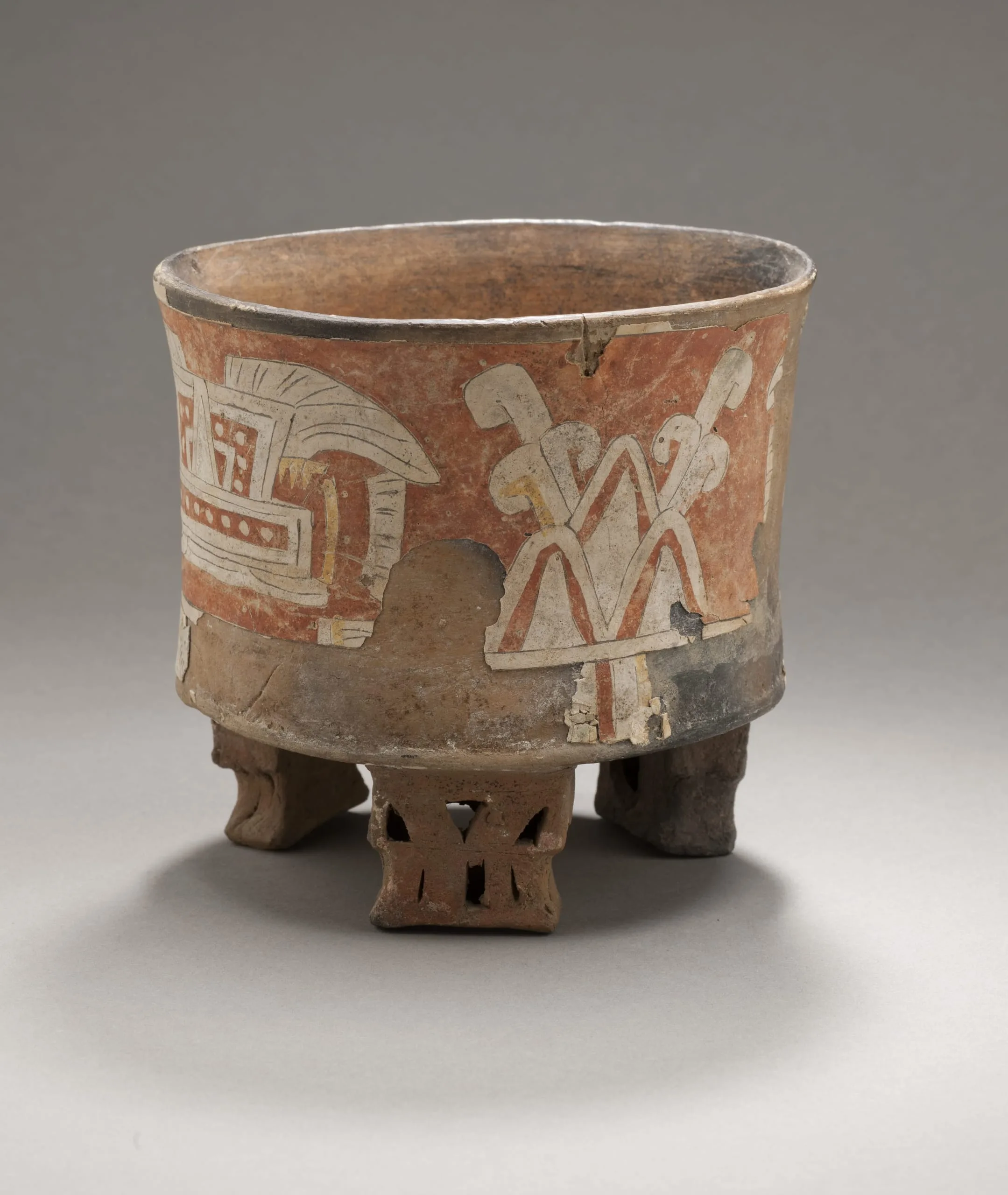
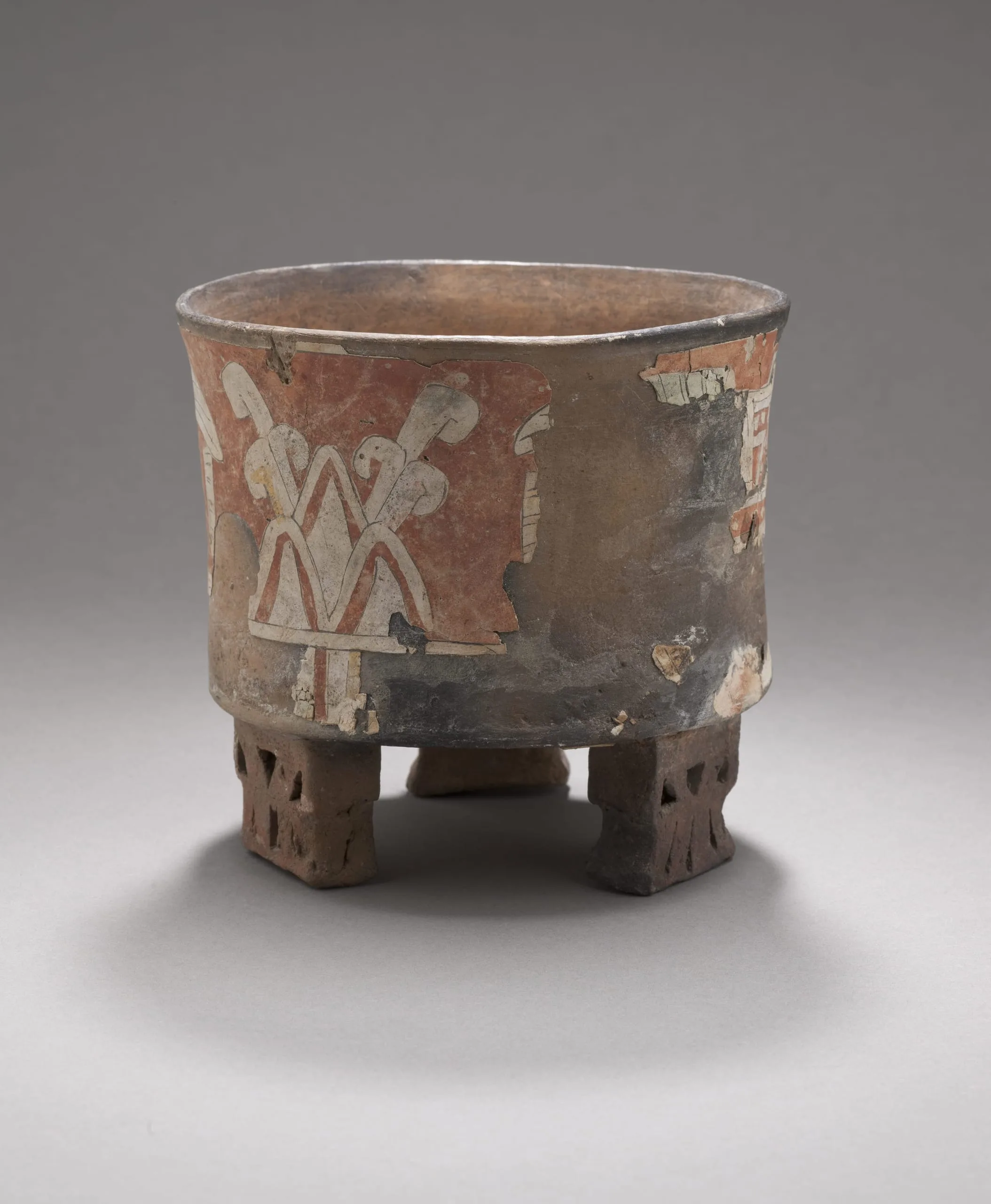
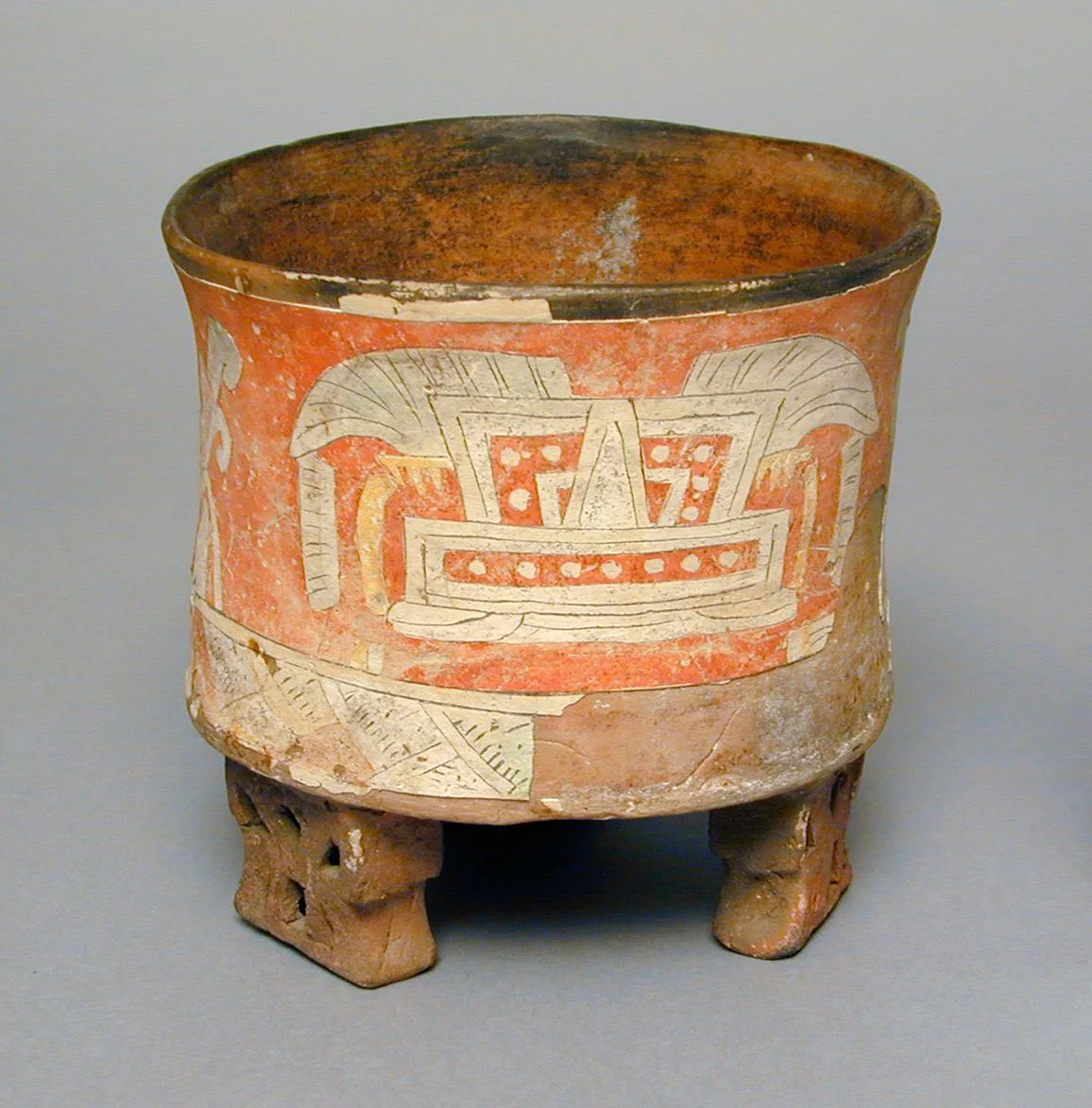
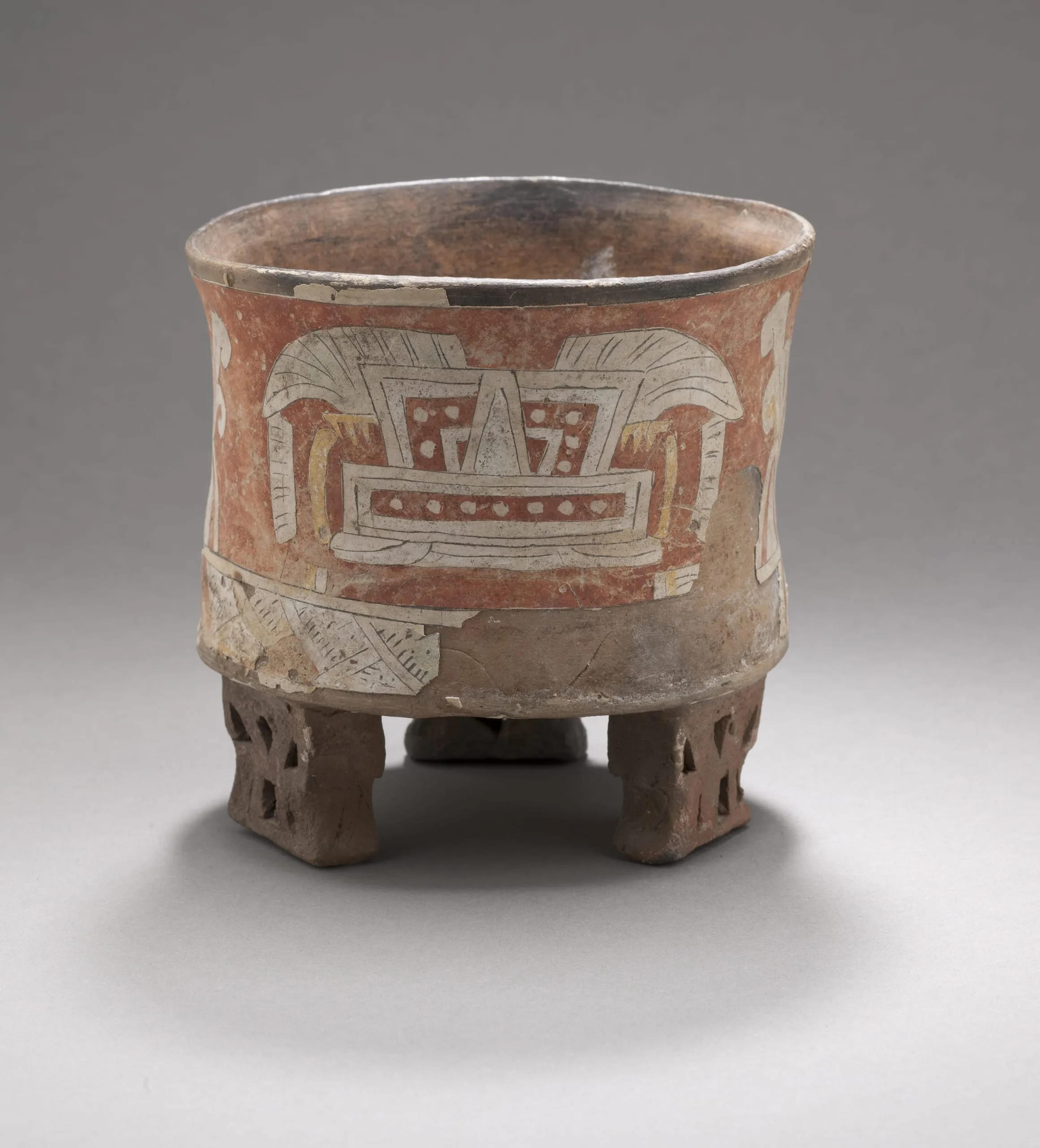
Tripod Vessel with Year-Sign Headdress and Mountain Motif200–450 CE

Not on view
Ceramic tripod vessel with cylindrical body, brick-red slip, and painted white geometric and zoomorphic motifs; standing on three pierced rectangular legs
Cylindrical ceramic vessel on three hollow slab feet with openwork cutouts, painted with polychrome slip decoration in red, white, and ochre depicting figural and geometric motifs on the exterior band; visible paint loss and surface wear throughout.
Ceramic tripod vessel with cylindrical form, supported on three hollow slab feet with cutout openings. Exterior painted in red, white, and tan with stylized figural and geometric motifs against a reddish-orange ground; paint worn in areas revealing the clay beneath.
Ceramic tripod vessel with cylindrical form, raised on three openwork slab feet. Exterior painted in red, cream, and dark gray with partially preserved figural and geometric motifs, including a prominent white and red interlaced design against a terracotta ground.
Ceramic tripod vessel with cylindrical body supported by three hollow slab feet. Red-orange slip decorated with incised and painted white geometric and figural motifs, including a central framed panel with dotted patterns and flanking wing-like forms. Interior darkened; surface shows wear and restoration.

Unknown, Tripod Vessel with Year-Sign Headdress and Mountain Motif, 200–450 CE, Los Angeles County Museum of Art, The Phil Berg Collection, photo © Museum Associates/LACMA

Title
Tripod Vessel with Year-Sign Headdress and Mountain Motif
Culture
Teotihuacan
Place Made
Mexico, Basin of Mexico, Teotihuacan
Date Made
200–450 CE
Medium
Stuccoed ceramic with postfire applied pigment
Dimensions
Height: 5 3/8 in. (13.66 cm)
Credit Line
The Phil Berg Collection
Accession Number
M.71.73.179
Classification
Ceramics
Collecting Area
Art of the Ancient Americas
Curatorial Notes

Though the city of Teotihuacan was among the largest in the world by the fifth century CE, little in the way of a writing system can be recognized there. Emblematic signs, such as the one seen here, may refer to specific places or record an individual’s name, but lengthy texts are not known.

2008

Selected Bibliography
  • Berg, Phil. Man Came This Way: Objects from the Phil Berg Collection. Los Angeles: Los Angeles County Museum of Art, 1971.
  • Conides, Cynthia. Made to Order: Painted Ceramics of Ancient Teotihuacan. Norman, OK: University of Oklahoma Press, 2018.
Selected Exhibition History
  • The Painted City: Art from Teotihuacan. Saturday, March 29 - Sunday, December 7, 2014
Related Exhibitions