LACMA

ShopMembershipMyLACMATickets
LACMA
Los Angeles County Museum of Art
5905 Wilshire Blvd.
Los Angeles, CA 90036
info@lacma.org
(323) 857-6000
Sign up to receive emails
Subscribe
© Museum Associates 2025

Museum Hours

Monday

11 am–6 pm

Tuesday

11 am–6 pm

Wednesday

Closed

Thursday

11 am–6 pm

Friday

11 am–8 pm

Saturday

10 am–7 pm

Sunday

10 am–7 pm


  • About LACMA
  • Jobs
  • Building LACMA
  • Host An Event
  • Unframed
  • Press
  • FAQs
  • Log in to MyLACMA
  • Privacy Policy
© Museum Associates 2025
Collections

Unknown
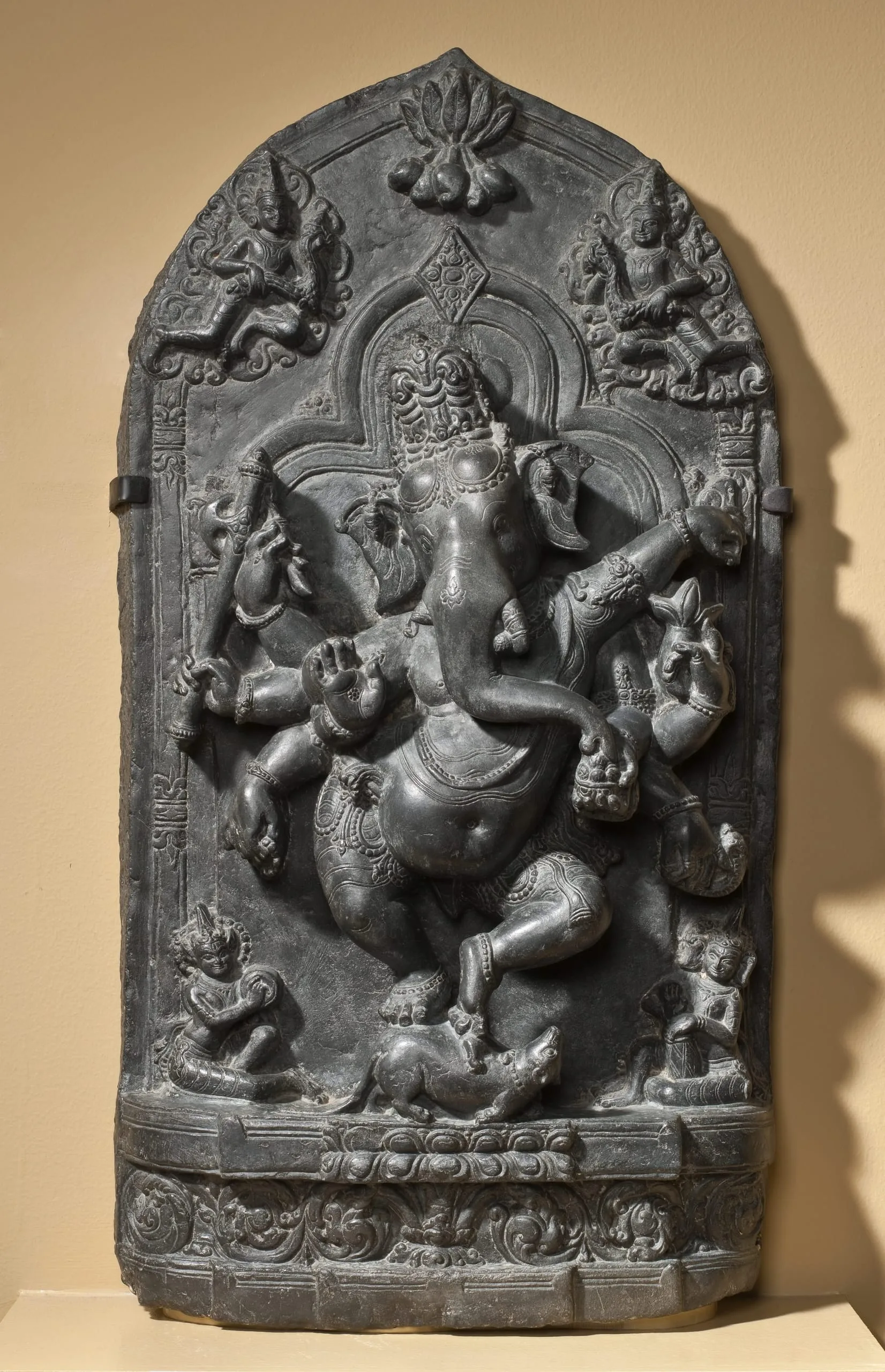
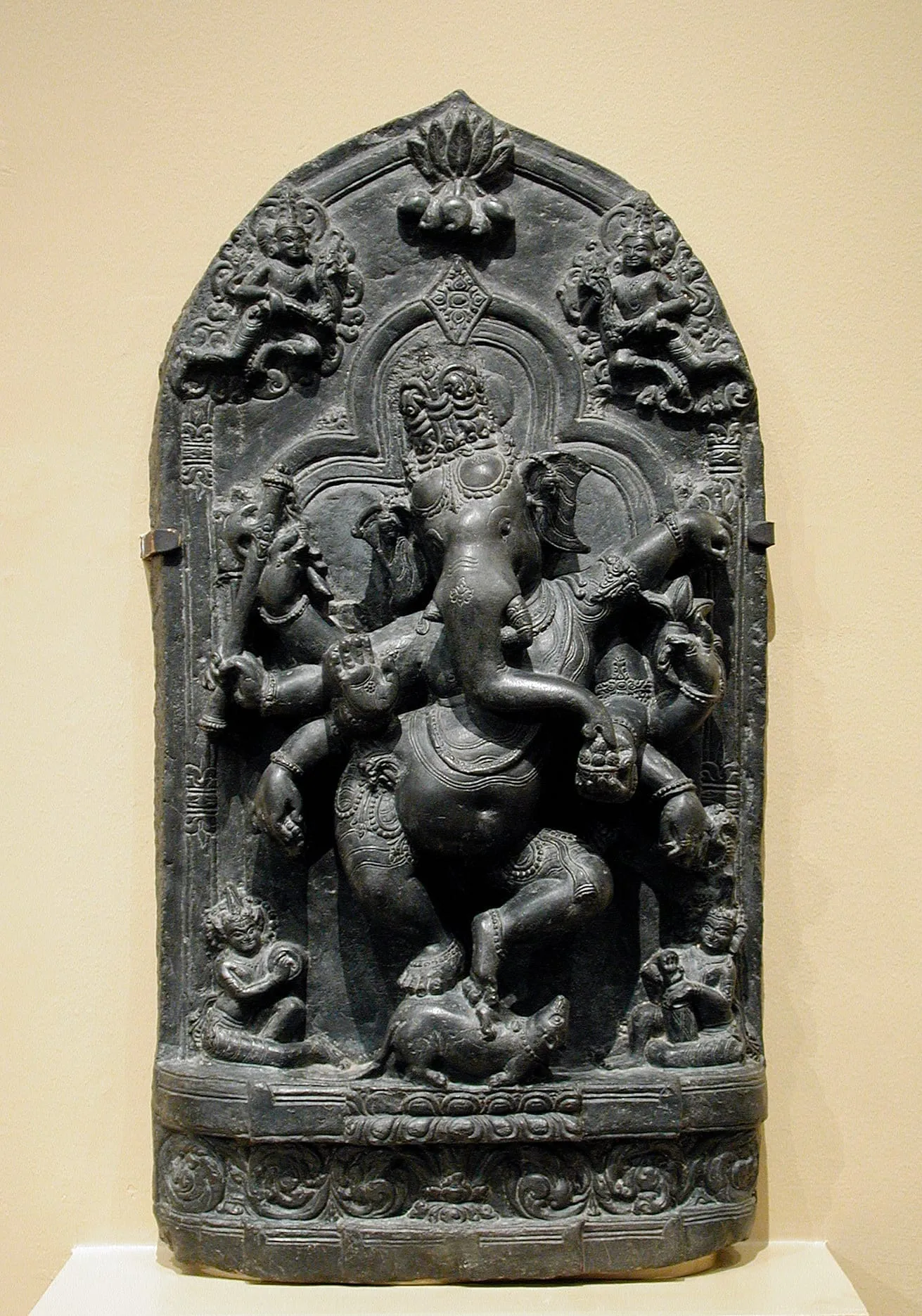
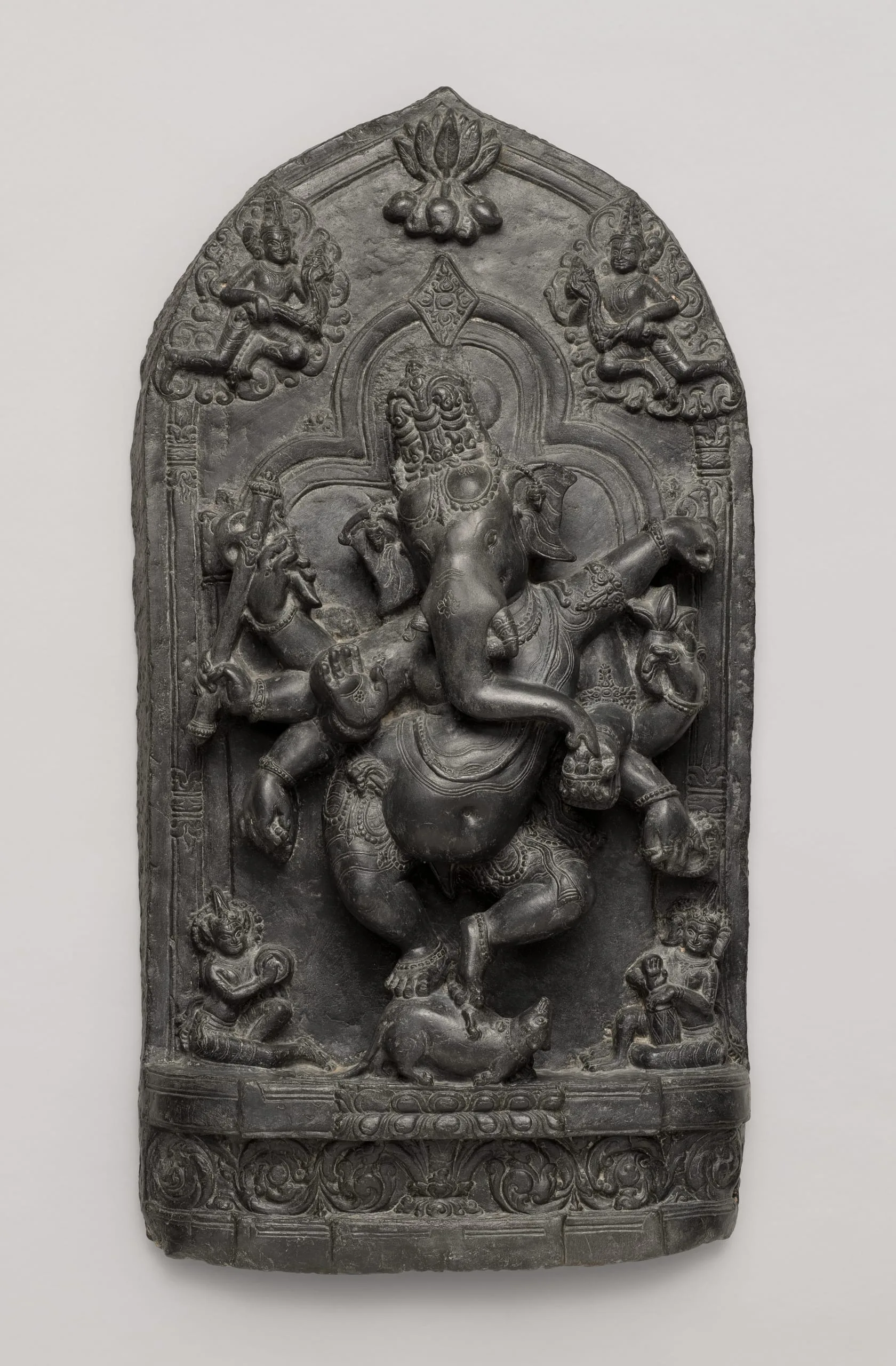
Dancing Ganesha, Lord of Obstaclescirca 1150-1200

Not on view
Dark gray stone relief sculpture of a multi-armed, elephant-headed dancing figure within a pointed arch, with smaller figures at the corners and a carved foliate border at the base
Dark stone relief stele depicting a multi-armed, elephant-headed deity in a dynamic dancing posture, with multiple attendant figures and small animals at the base, framed by an arched border with lotus finial and scrolling foliate carvings along the bottom register.
Dark stone stele with high-relief carving of a four-armed, elephant-headed deity in a dynamic dancing pose, adorned with jewelry and draped garments, set within an arched frame with smaller attendant figures at the corners and a lotus finial at the top.
Artist or Maker
Unknown
Title
Dancing Ganesha, Lord of Obstacles
Place Made
Bangladesh, Dinajpur District
Date Made
circa 1150-1200
Medium
Phyllite
Dimensions
25 3/4 x 13 1/4 x 5 in. (65.41 x 33.66 x 12.7 cm)
Credit Line
The Phil Berg Collection
Accession Number
M.71.73.143
Classification
Sculpture
Collecting Area
South and Southeast Asian Art
Curatorial Notes
In this eight-armed representation of Ganesha, the Lord of Obstacles, he dances exuberantly on the back of his mount, identified as either a rat (akhu) or mouse (musaka), which are both renowned for their ability to break through obstacles. Ganesha’s principal right hand is held in the ‘fear-not’ gesture (abhaya mudra). In his remaining right hands (top to bottom), he holds his broken tusk, battle axe, and rosary. His principal left hand and arm are raised in the ‘elephant hand pose’ (gaja hasta). In his remaining left hands (top to bottom), he holds a radish, bowl of sweetmeats from which he is eating with his trunk, and a serpent. A double trefoil areola emanates around Ganesha’s head. At the apex of the relief is a pendant bunch of mangoes, symbolic of fertility and auspiciousness. Two celestial garland bearers (maladharas) fly above Ganesha in his honor. Seated on the base are two celestial musicians (gandharvas): on his left, a drummer with elephant ears emblematic of his association with Ganesha; and on his right, a cymbalist with rodent ears evocative of his rat mount.
Selected Bibliography
  • Pal, Pratapaditya. Indian Sculpture, vol.2. Los Angeles: Los Angeles County Museum of Art; University of California Press, 1988.
  • Berg, Phil. Man Came This Way: Objects from the Phil Berg Collection. Los Angeles: Los Angeles County Museum of Art, 1971.
  • Huntington, John C. and Dina Bangdel. The Circle of Bliss: Buddhist Meditational Art. Columbus: The Columbus Museum of Art; Chicago: Serindia Publications, 2003.