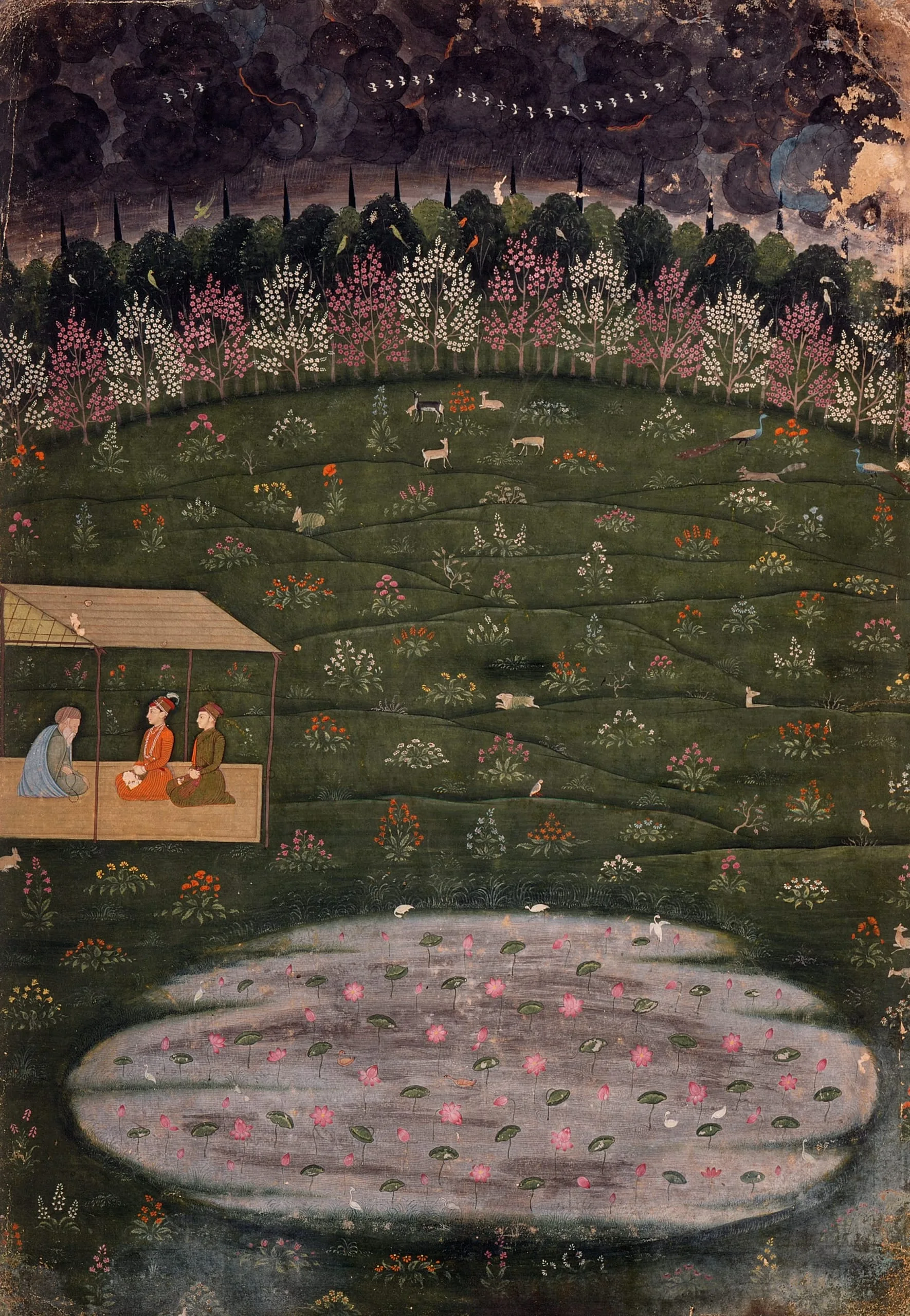
Prince Dara Shikoh (1615-1659) is renowned for his deep spiritual interest in Sufi mysticism and Hindu asceticism. He studied with Sufi masters, such as Mian Mir (d. 1635) and Mullah Shah (d. 1661), and also conversed with Hindu ascetics and pandits. In doing so, Dara Shikoh was following the tradition of his grandfather, Emperor Jahangir (r. 1605-1627), who also consulted ascetics for spiritual guidance and dynastic legitimacy (see M.87.20.2).
According to a Persian inscription on the reverse, this painting is by Hunhar II (birthname: Puran Nath, active 1740-1780). It portrays Dara Shikoh (wearing a feather plume) and a companion meeting with an aged sage in a scene akin to Dara Shikoh’s imaginary visit with the ascetic Kamal, the son of the mystic poet Kabir (1398-1518). Slightly earlier depictions of Dara Shikoh meeting Kamal are in the British Library, London (J.19, 1) and the Freer Gallery of Art, Washington (F1936.14). This painting differs in its emphasis on the lush landscape rather than the principal figures. The setting is a bird’s eye view of a meadow with brilliant flowers and wildlife that texture the ground like a carpet. A pool of pink lotuses fills the foreground. Rows of blossoming trees along the ridge line are under a dark sky filled with ominous clouds and migrating birds.
The figures are incorrectly identified in Persian and Marathi inscriptions on the reverse as the Biblical characters Jacob, Joseph, and John. (Translations by Z. A. Desai.)