Maria Kipp was born in Weissenbrunn, Germany, to an affluent and well-educated family with generational ties to German royalty whom they served in both educational and medical capacities. By the age of seventeen, Kipp’s entire family—father, mother, and brother—had died of various illnesses. While these losses imprinted an enduring sadness, they also made possible Kipp’s decision to pursue art as a profession—a choice then highly controversial for any woman, but particularly one of her class. Trained as a weaver at the Kunstgewerbeschule in Munich and the Staatliche höhere Fachschule für Textilindustrie in Münchberg, Kipp established a short-lived business making handwoven fashion fabrics in Germany in 1923, then emigrated to Los Angeles the following year. She would go on to have a long career producing furnishing textiles for architecturally significant modern interiors throughout the world, winning distinction as the first woman to lead a commercially successful handweaving business in the United States.
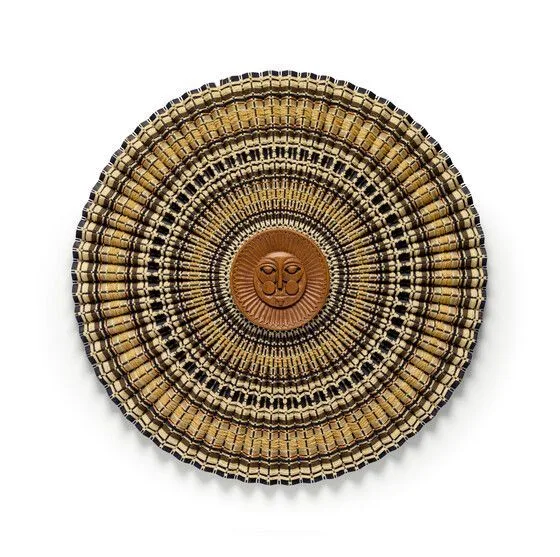
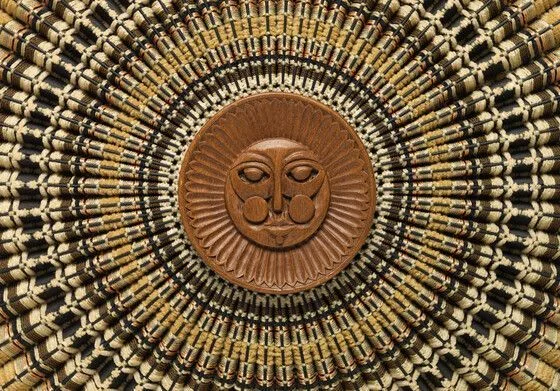
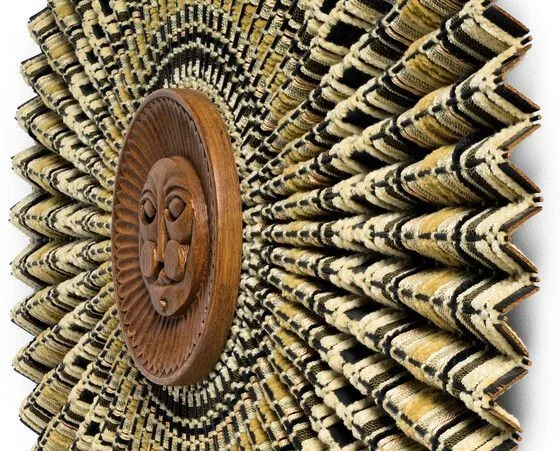
This sunburst mural sculpture was first produced in a range of colorways during the 1960s. Kipp’s good friend, Los Angelesbased WPA artist Pasquale Giovanni Napolitano, was involved in its design and probably also its manufacture. While Napolitano worked in a variety of media, he was primarily a sculptor who favored mural stucco sgraffito and wood. Napolitano’s wife, German-born Emmeline Goetz, was Kipp’s close confidante and served as her assistant designer-weaver.
Nicole LaBouff
2024