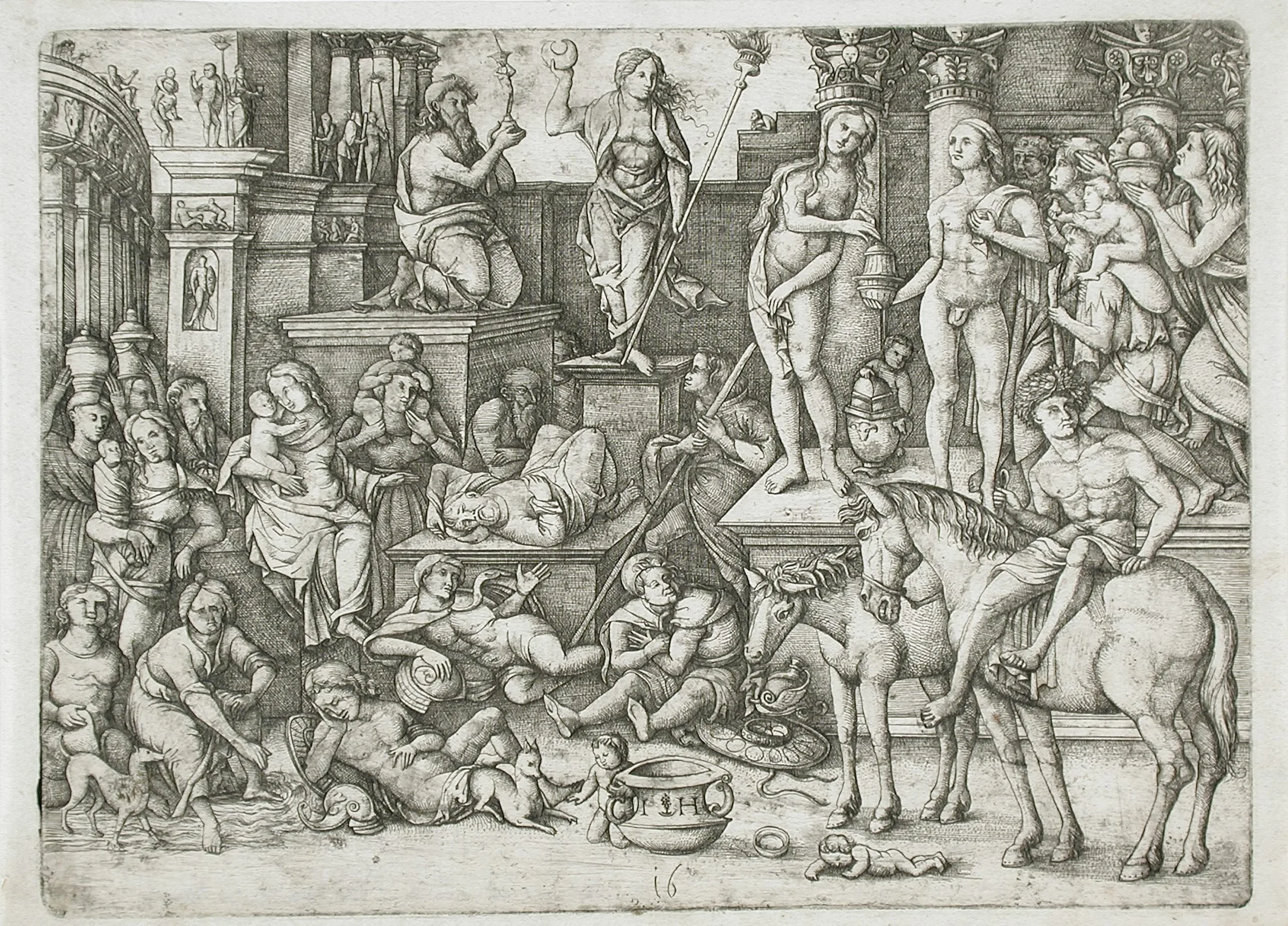
A noble figure holding a torch and a crescent moon stands atop a pillar at the center of this busy etching, surrounded by a diverse crowd of gatherers presenting offerings, some kneeling or standing on tombs, others carrying jugs on their heads. The likely subject of this print is an ancient Roman day of rest for slaves and women that occurred each year on the Ides of August at the Temple of Diana on the Aventine Hill. Called Nemoralia, this holy day involved tributes to the moon god, here presented in an unusual masculine form. From ancient Rome to sixteenth-century Nuremberg, where this print was made, the moon was understood as closely connected to the basic rhythms of daily life, its movements affecting human behavior and even specific events, like the outcomes of military battles.
The son of printmaker Daniel Hopfer (ca. 1470−1536), Hieronymus Hopfer made copies after Italian prints for a Northern market during the 1520s and 1530s. This etching is a copy in reverse after an engraving by an Italian artist known only by his monogram as Master PP. The younger Hopfer’s etched copies were carefully done, but probably relatively inexpensive, making prints of significance available to an audience beyond the Italian peninsula. Hopfer included his initials “I.H.” on the urn at bottom center, along with a hop plant—a pun on the family surname.
Claire Spadafora Baes
2024