LACMA

ShopMembershipMyLACMATickets
LACMA
Los Angeles County Museum of Art
5905 Wilshire Blvd.
Los Angeles, CA 90036
info@lacma.org
(323) 857-6000
Sign up to receive emails
Subscribe
© Museum Associates 2026
  • About LACMA
  • Jobs
  • Building LACMA
  • Host An Event
  • Unframed
  • Press
  • FAQs
  • Log in to MyLACMA
  • Privacy Policy
© Museum Associates 2026
Collections

Ladi Kwali
Water jarcirca 1962

Not on view
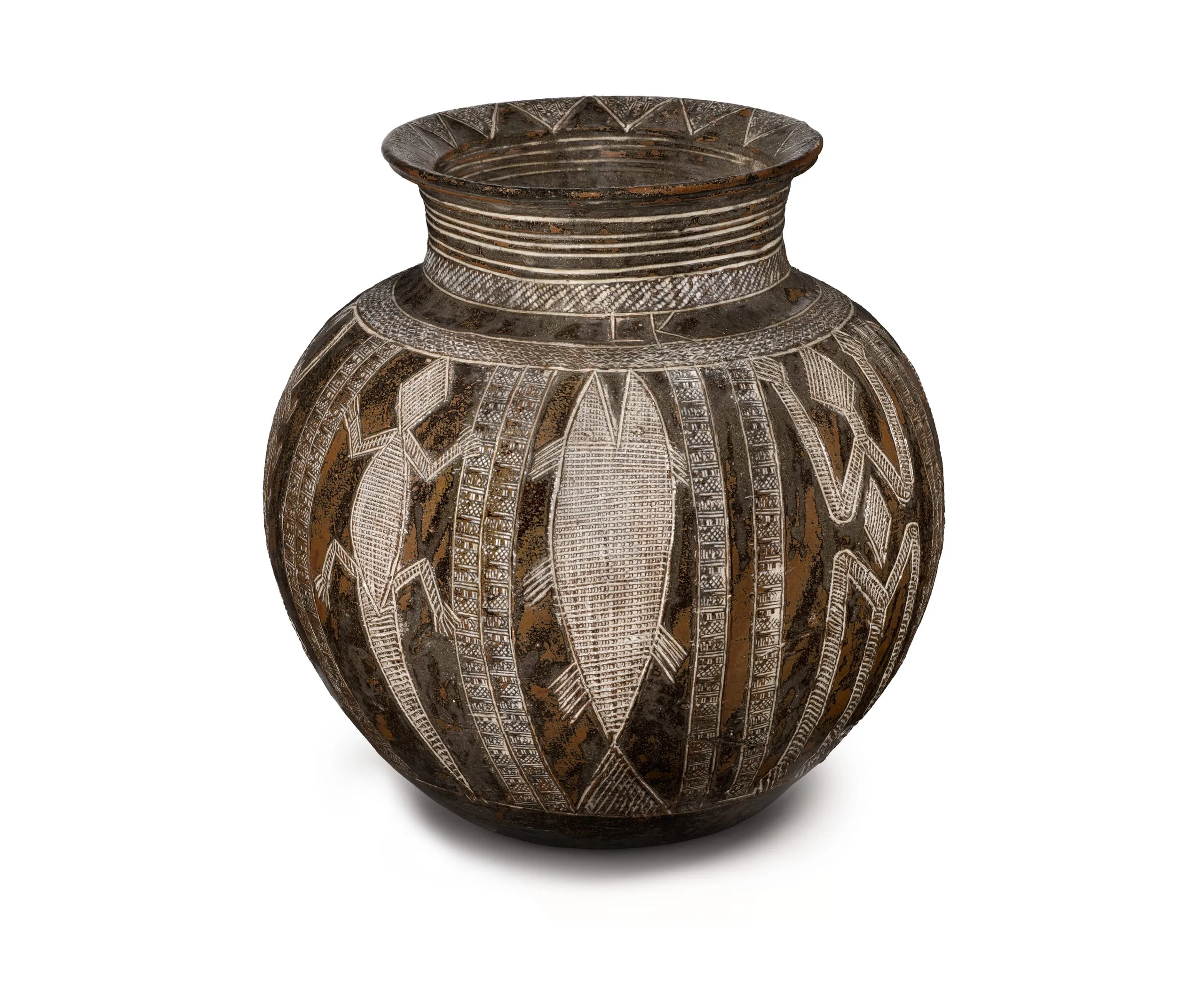
Ceramic vessel with globular body and flared mouth, dark brown surface decorated with white-filled incised patterns of cross-hatching, vertical columns, and a large central lizard figure
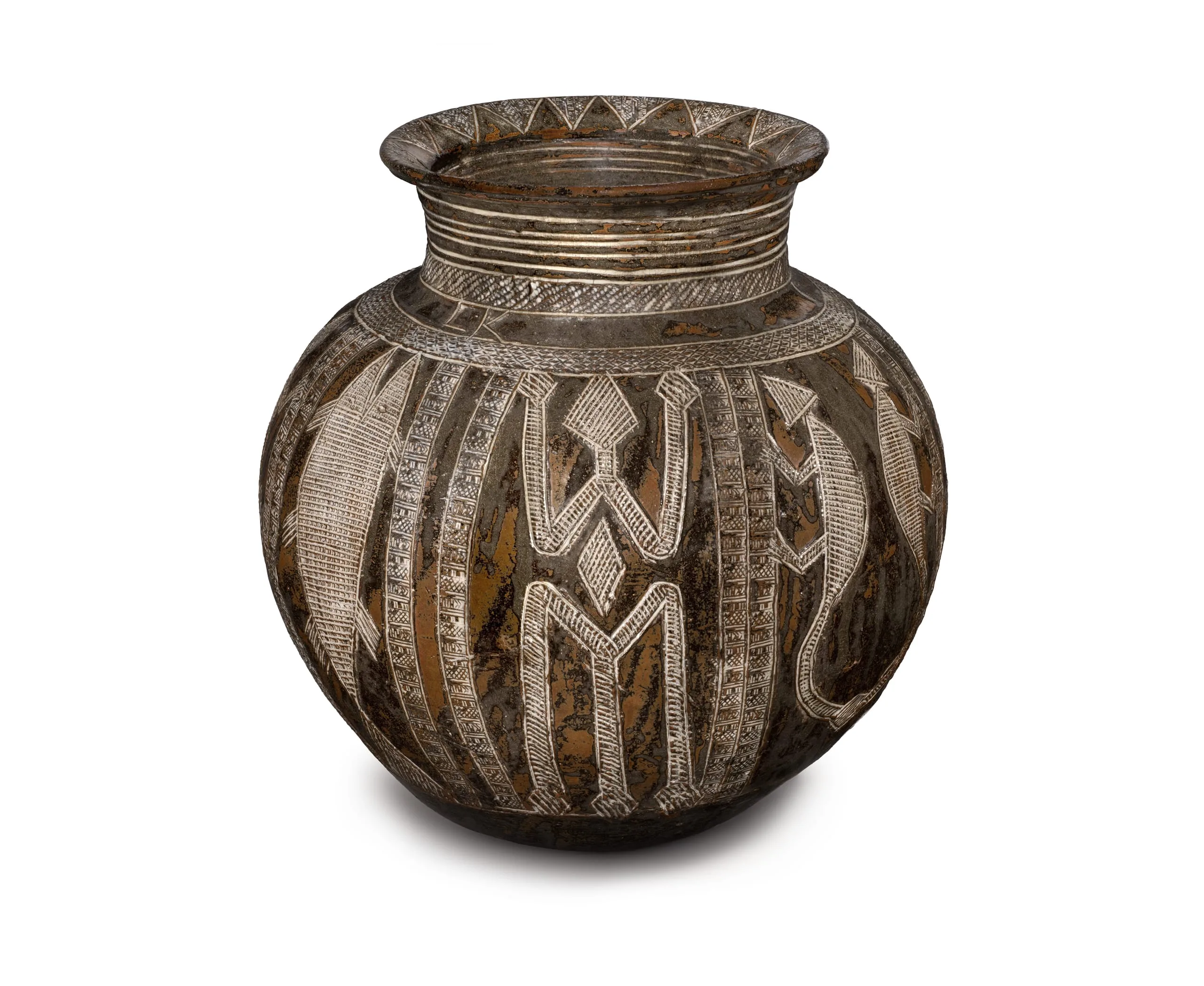
Ceramic vessel with globular body and flared rim, dark brown clay with densely incised geometric patterns including vertical bands, diamond shapes with crosshatched fill, zigzag lines, and triangular motifs at the neck.
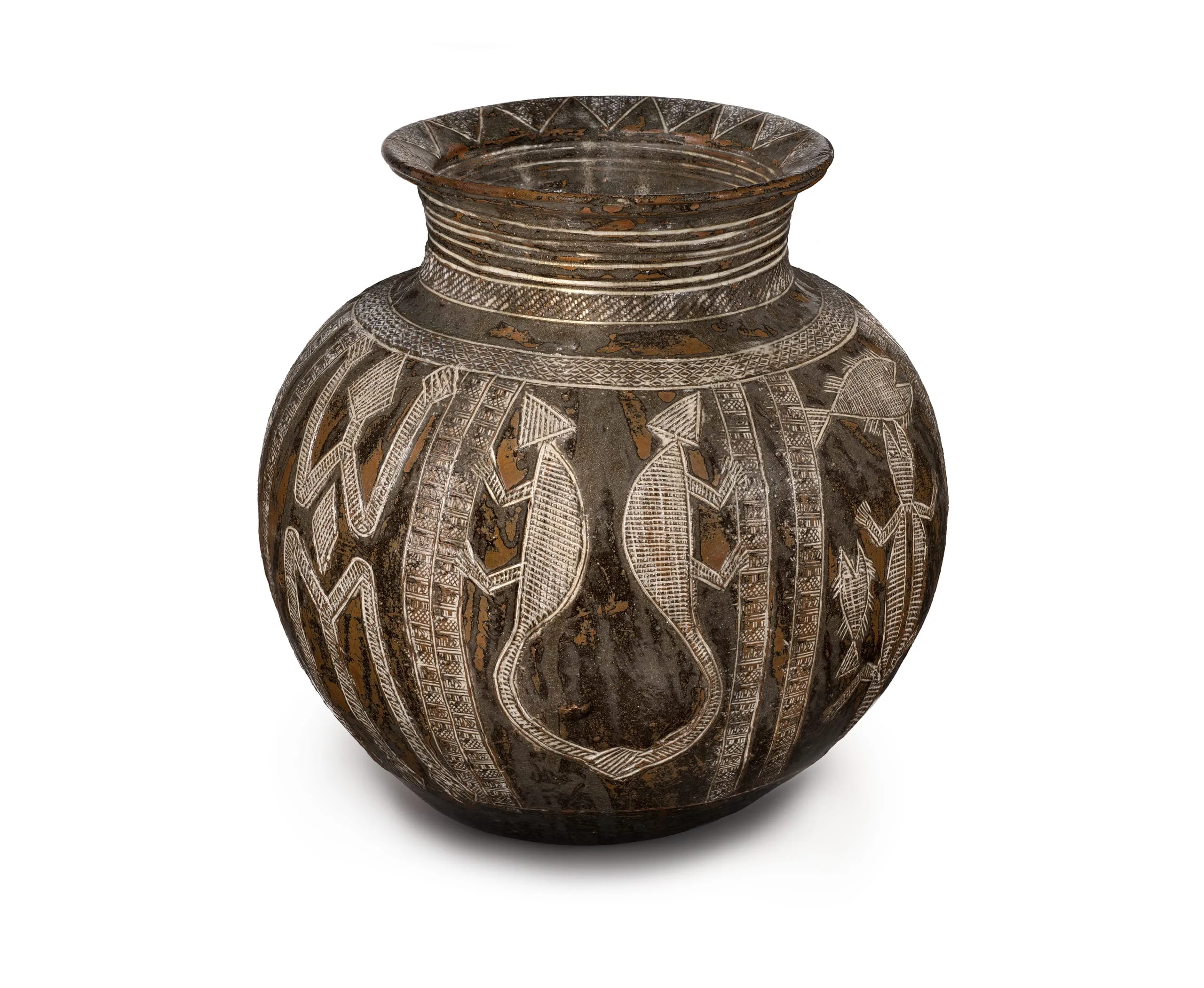
Ceramic vessel with globular body and flared neck, dark brown with ochre tones, densely covered in incised geometric patterns including vertical bands, diamond shapes, zigzag borders, and crosshatching highlighted in white pigment.
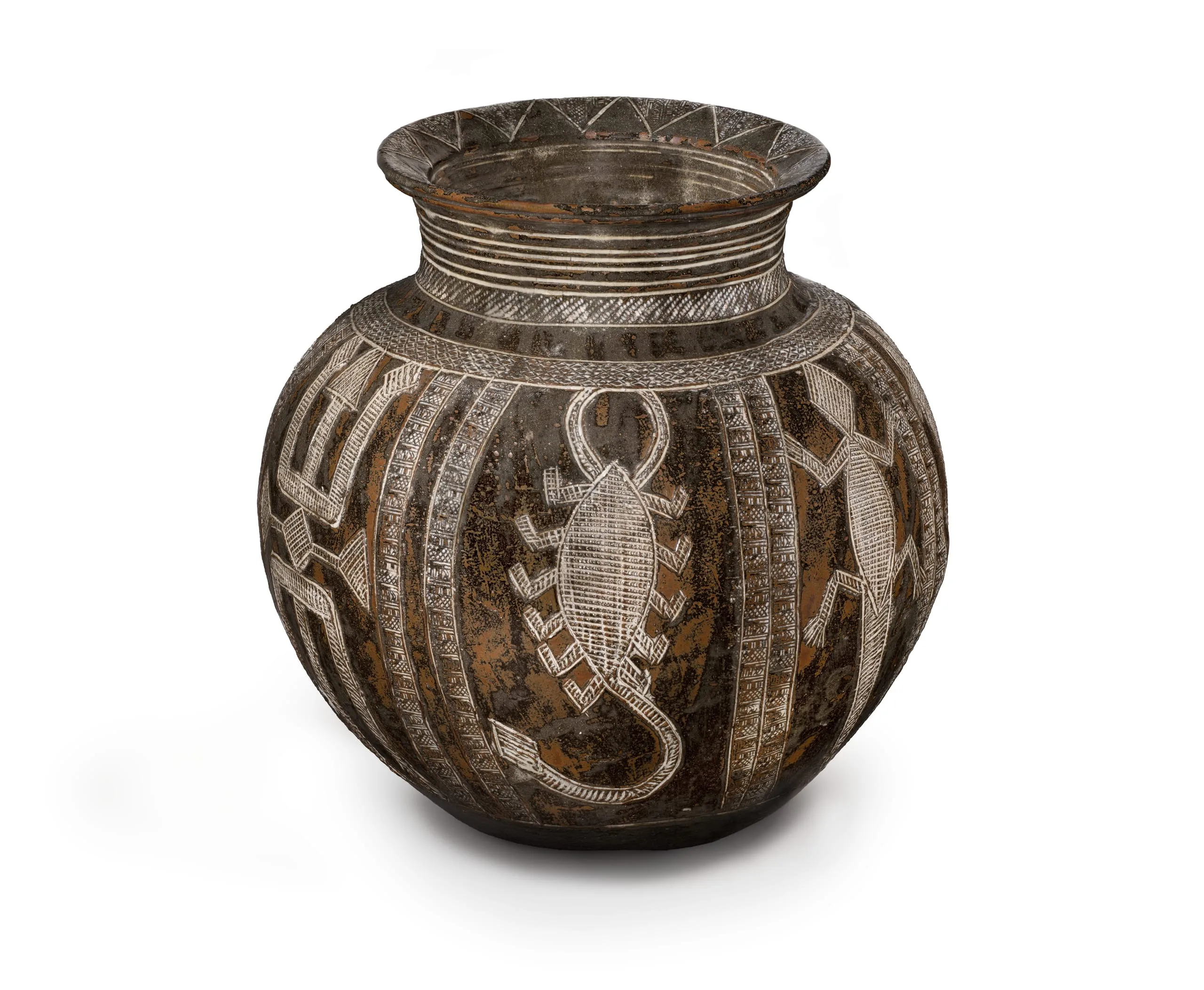
Ceramic vessel with globular body and flared rim, dark brown surface with incised white-filled decoration; repeating lizard figures and hatched vertical bands encircle the body, geometric zigzag pattern at the rim.
Artist or Maker
Ladi Kwali
Nigeria, 1925 - 1984
Title
Water jar
Date Made
circa 1962
Medium
Stoneware
Dimensions
14 3/4 × 15 1/4 × 15 1/4 in. (37.47 × 38.74 × 38.74 cm)
Credit Line
Gift of the 2024 Collectors Committee
Accession Number
M.2024.82.1
Classification
Ceramics
Collecting Area
Decorative Arts and Design
Curatorial Notes

Nigerian artist Ladi Kwali produced exquisitely incised ceramic vessels with the forms and motifs of her native Gwari region. Her cooking pots, tureens, bowls, and water jars like this one—the most desirable form because of its broad surface—blend Indigenous and European techniques and visual traditions. Raised in a rural area near present-day Abuja, Kwali learned the traditional coiling method from her aunt, using local clays and cassava starch in the incised decorations. Her work became well known locally, and when revered British potter Michael Cardew (M.2024.82.3) saw her pots in 1950, he invited her to work at the newly built Abuja Pottery Training Centre (since renamed in Kwali’s honor). There, he introduced her to the potter’s wheel and high-firing clays, glazes, and porcelain slips that gave her pieces durability and a shimmery, almost iridescent luster. While typical Nigerian pottery features simple geometric designs and crosshatching, the incised motifs on Kwali’s pieces record the natural world of northern Nigeria, including vegetation, fish, birds, scorpions, and lizards.

Through her work and teaching, Kwali became a national hero—for the past fifty years, her image has graced the 20-naira banknote—and her pots became the quintessential diplomatic gift. Her influence in Africa and abroad is incalculable, a rich legacy that has influenced generations of artists, including the celebrated Kenyan-British potter Magdalene Odundo.

Bobbye Tigerman

2024
Related Unframed

Related Unframed

New Acquisition: Ladi Kwali’s Water Jar
  • May 3, 2024
  • Bobbye Tigerman
LACMA Announces 10 New Acquisitions During the 38th Collectors Committee Weekend
  • April 29, 2024
  • Editors
Two Art Histories, One America
  • January 21, 2010