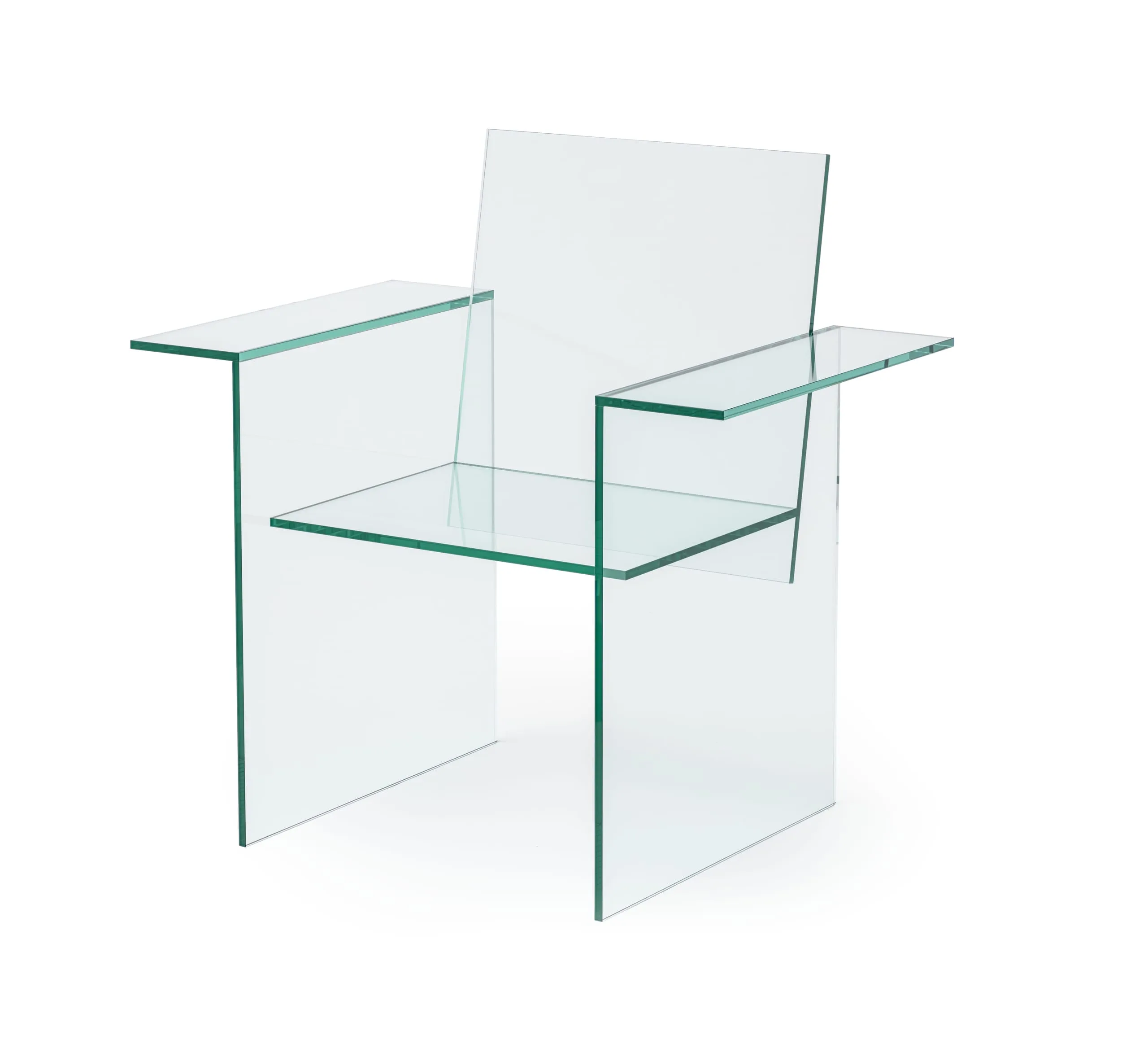
Shiro Kuramata’s Glass Chair is an early example of the designer’s lifelong efforts to explore transparency and to dematerialize the object. “The main problem is gravity,” he explained. “We must try and think of a way to remove gravity.” Here, the construction of six sheets of 12mm pane glass secured with a newly available invisible adhesive gave the appearance of a sitter defying gravity and floating on air. Born in Tokyo in 1934, Kuramata was the foremost Japanese furniture designer of his generation and was part of an avant-garde circle of artists, designers, and architects in postwar Japan. The Glass Chair was the first of several of his designs that explore illusion, space, light, and emptiness. He later said that he made the chair in response to Stanley Kubrick’s film 2001: A Space Odyssey: he thought a movie that so vividly imagined the future should also have envisioned new furniture and was disappointed that the filmmaker resorted to using existing chairs.
Despite Kuramata’s prolific production over an abbreviated career (he died suddenly at the age of fifty-six), the Glass Chair became an icon of his oeuvre and has appeared on the cover of several books about him.
Bobbye Tigerman
2024