LACMA

ShopMembershipMyLACMATickets
LACMA
Los Angeles County Museum of Art
5905 Wilshire Blvd.
Los Angeles, CA 90036
info@lacma.org
(323) 857-6000
Sign up to receive emails
Subscribe
© Museum Associates 2025

Museum Hours

Monday

11 am–6 pm

Tuesday

11 am–6 pm

Wednesday

Closed

Thursday

11 am–6 pm

Friday

11 am–8 pm

Saturday

10 am–7 pm

Sunday

10 am–7 pm


  • About LACMA
  • Jobs
  • Building LACMA
  • Host An Event
  • Unframed
  • Press
  • FAQs
  • Log in to MyLACMA
  • Privacy Policy
© Museum Associates 2025
Collections

Unknown
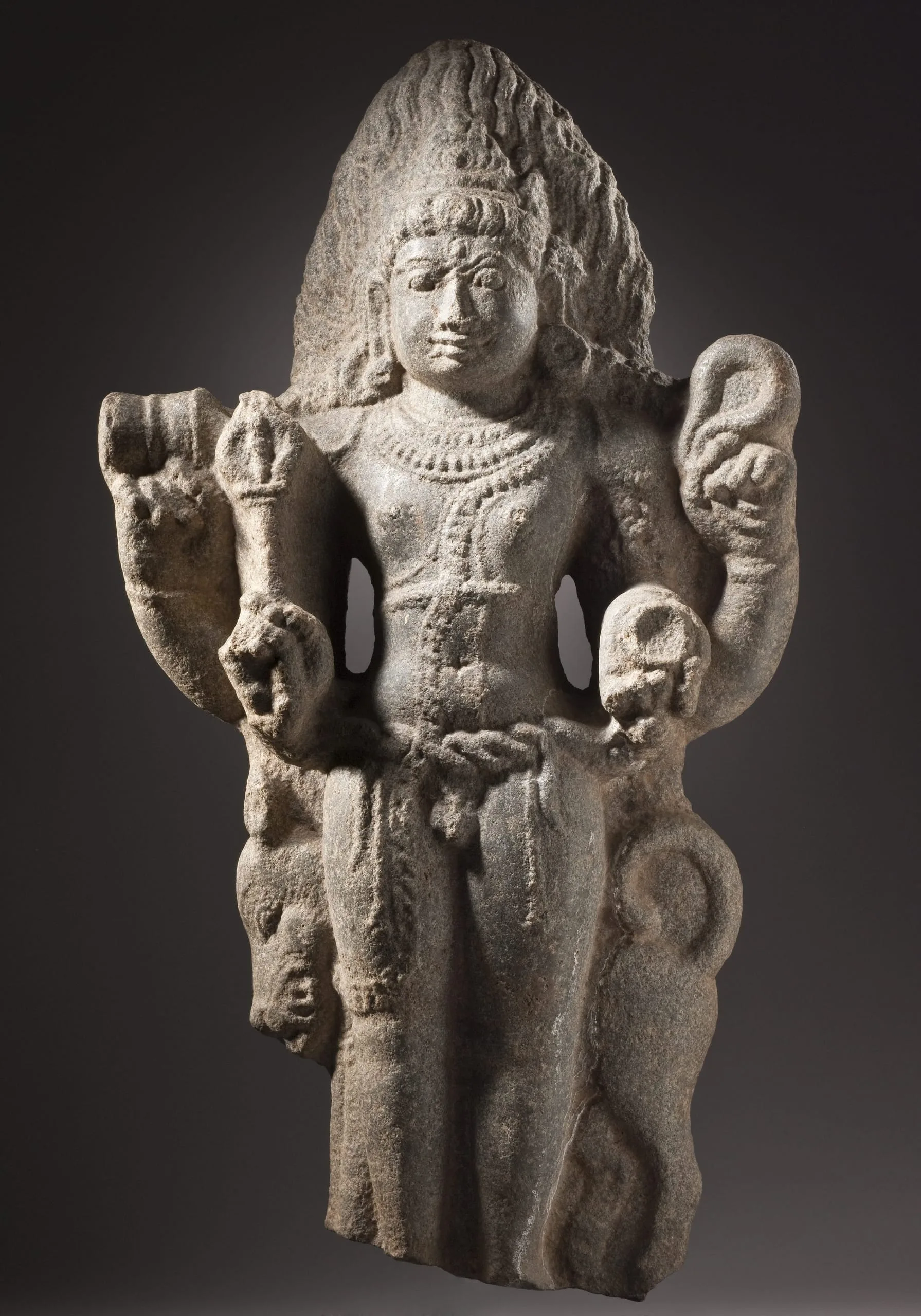
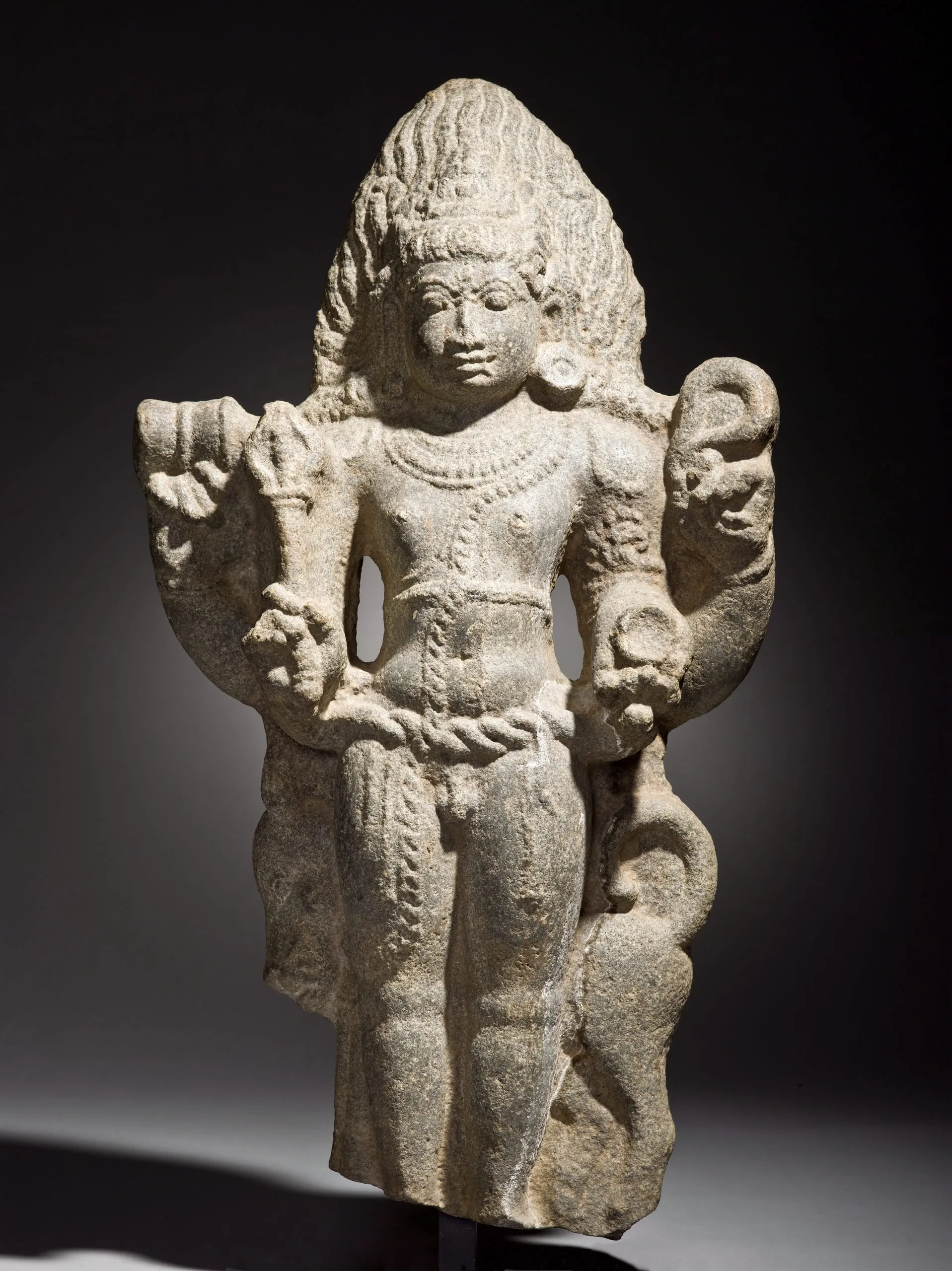
Shiva as Bhairavaearly 13th century

Not on view
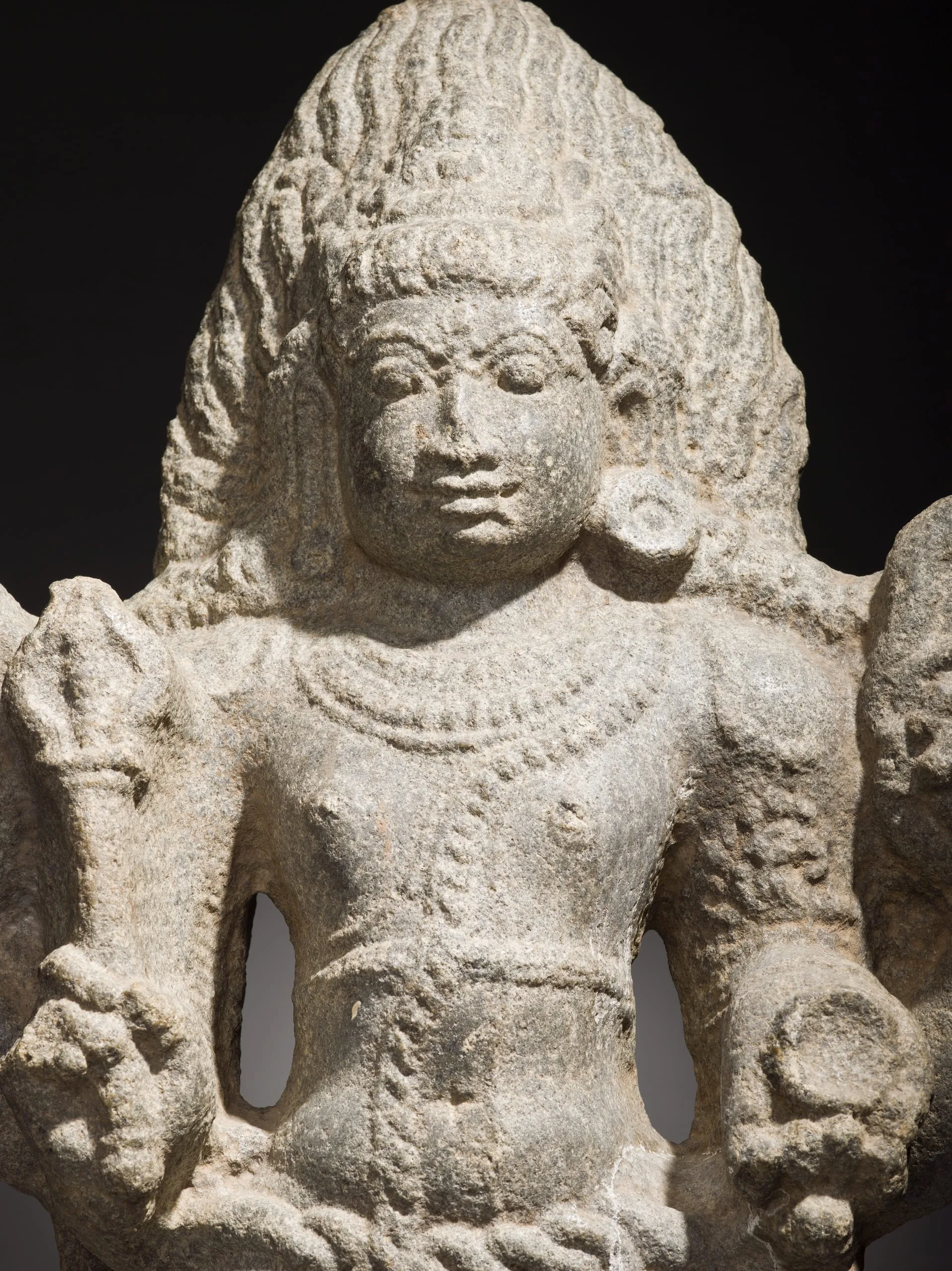
Gray granite sculpture of a four-armed standing figure with a tall flame-like crown, beaded necklaces, and flanking smaller figures, worn surface with coarse texture
Granite sculpture of a standing four-armed deity with tall matted hair, adorned with carved beaded jewelry and a waist cord, holding serpents in the raised outer hands, with detailed surface carving throughout.
Granite sculpture, upper torso of a four-armed deity with tall, flame-like jata crown, large circular earrings, and layered necklaces; carved attributes visible in two of the hands; weathered surface with fine decorative detail at the waist.
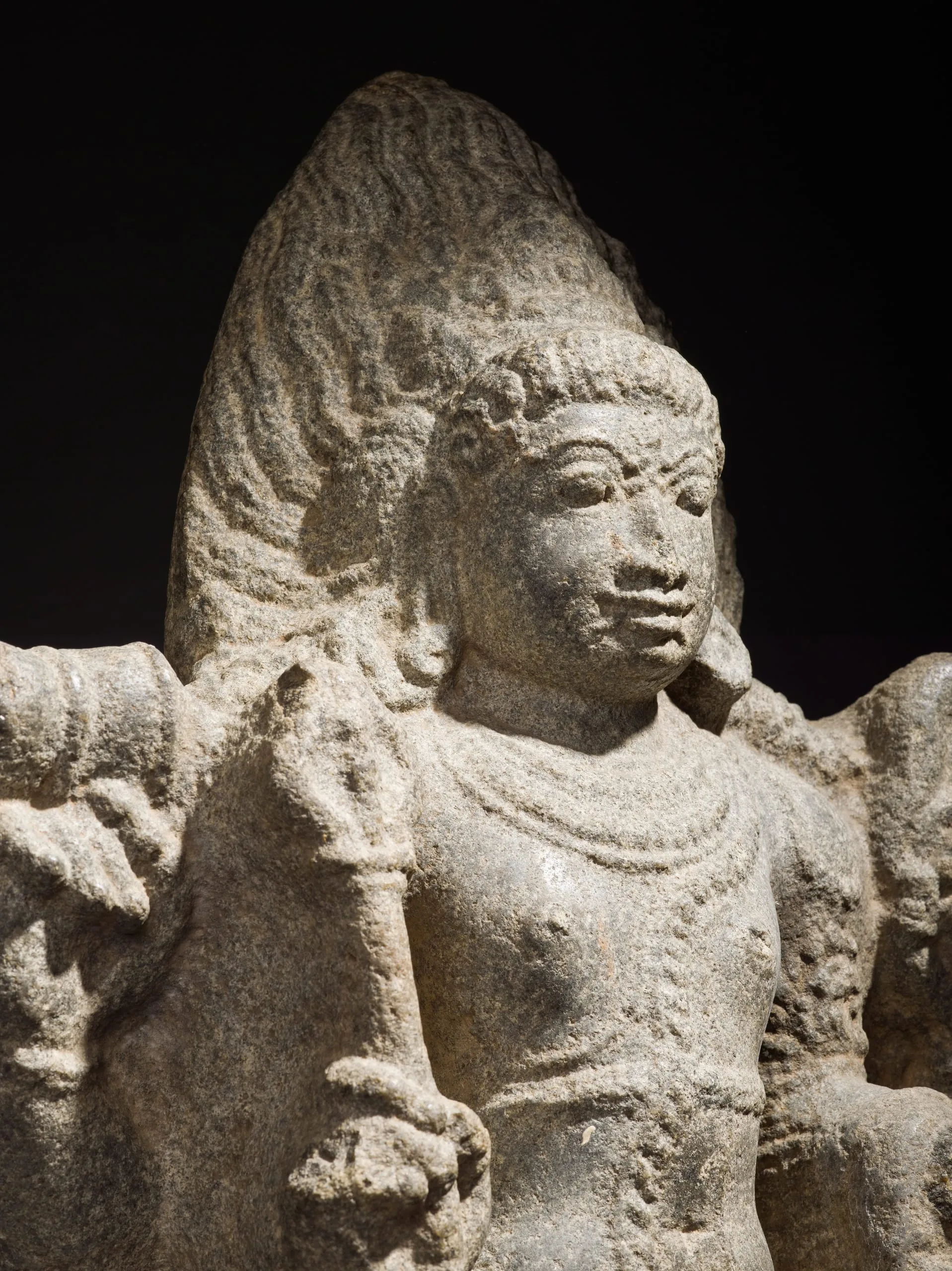
Granite sculpture, upper torso and face of a multi-armed deity with tall jata mukuta headdress and beaded necklace, fine carved detail on weathered gray stone against black background.
Artist or Maker
Unknown
Title
Shiva as Bhairava
Place Made
India, Tamil Nadu
Date Made
early 13th century
Medium
Granulite
Dimensions
31 x 17 1/4 x 7 in. (78.74 x 43.82 x 17.78 cm)
Credit Line
Gift of Mr. and Mrs. Paul E. Manheim
Accession Number
M.70.42.4
Classification
Sculpture
Collecting Area
South and Southeast Asian Art
Curatorial Notes

Bhairava (frightful) is a violent or powerful (ugra) form of the Hindu god Shiva. The deity’s creation is told in the lingodbhava myth about the origin of a colossal column of flame arising from the cosmic ocean (see M.74.138.4). According to the myth, Brahma and Vishnu were arguing boastfully over who was the more powerful, when suddenly they came upon the column of flame. Brahma took the form of his mount, a white gander, and flew upward to find the flame's summit. Vishnu sought the fire's origin by diving into the ocean in his boar incarnation (see also M.72.53.8 and M.87.160.2). When neither god could find an end to the column, which was actually a linga (Shiva’s aniconic symbol), Shiva triumphantly emerged from its side and proclaimed his supremacy. Because Brahma had falsely proclaimed to have found the upper origin of the column (which was cosmologically the axis mundi connecting heaven and earth), the enraged Shiva cut off Brahma’s fifth head for lying and was condemned to wander the earth as a naked beggar.

Bhairava is accordingly represented as naked except for his jeweled ornaments, including an ascetic’s sash (yoga patta) worn across his left shoulder and a belt made of entwined serpents. He has Shiva’s third eye of wisdom (jñana netra), and the fierce attributes of bulging eyes, furrowed brows, fangs, and flaming hair that forms a nimbus (see also M.83.48). He has four arms. In his upper right hand, he holds a drum. In his lower right hand, he carries a trident. In his upper left hand, he holds a noose. In his lower left hand, he carries a skull cup as a begging bowl, which is said to represent Brahma’s decapitated head. Bhairava’s mount, a snarling dog (shvan), stands aggressively behind him. See also M.86.338.3.
Selected Bibliography
  • El Universo de la India: Obras Maestras del Museo de Arte del Condado de Los Angeles. Santiago: Centro Cultural Palacio La Moneda, 2012.