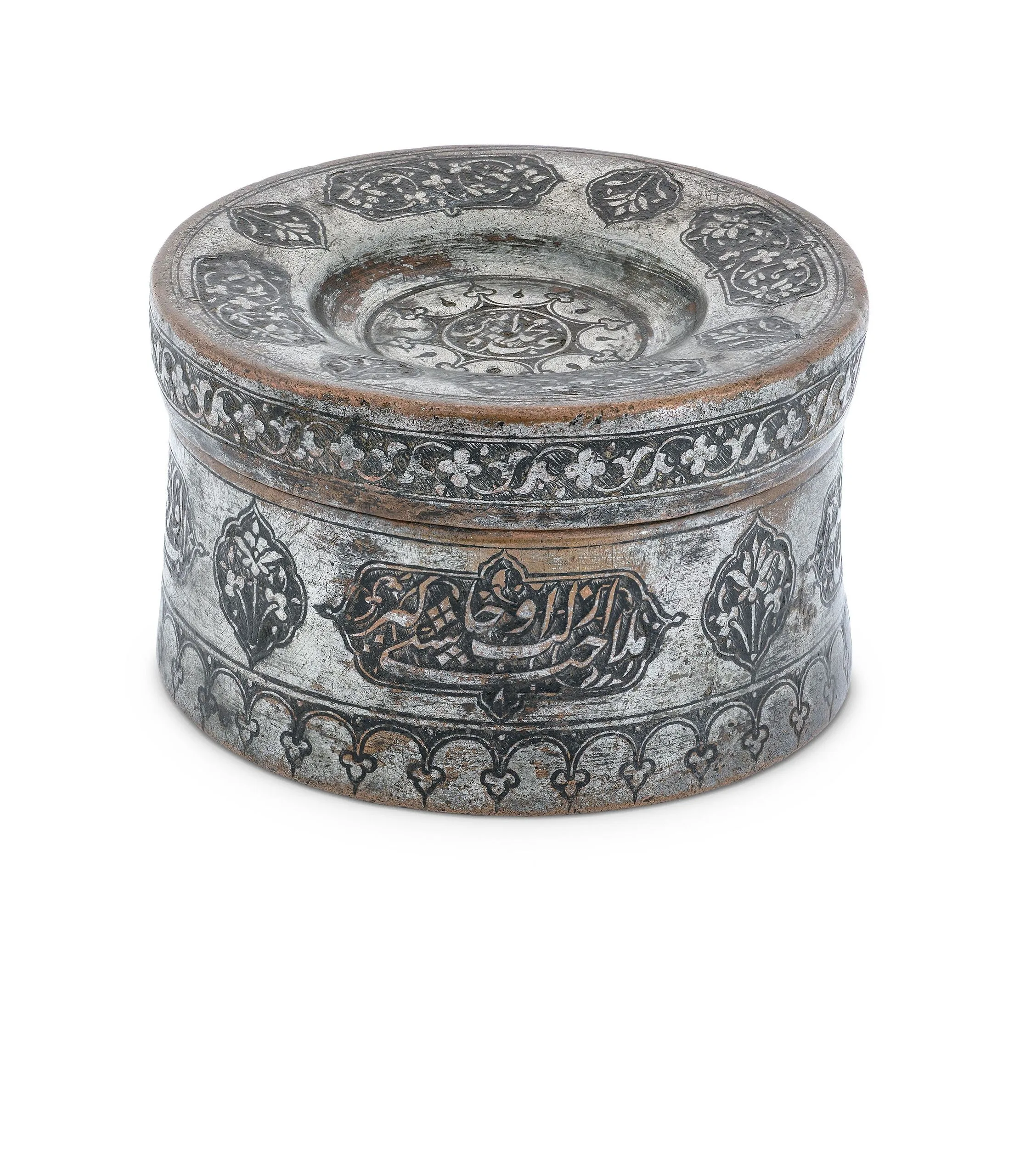
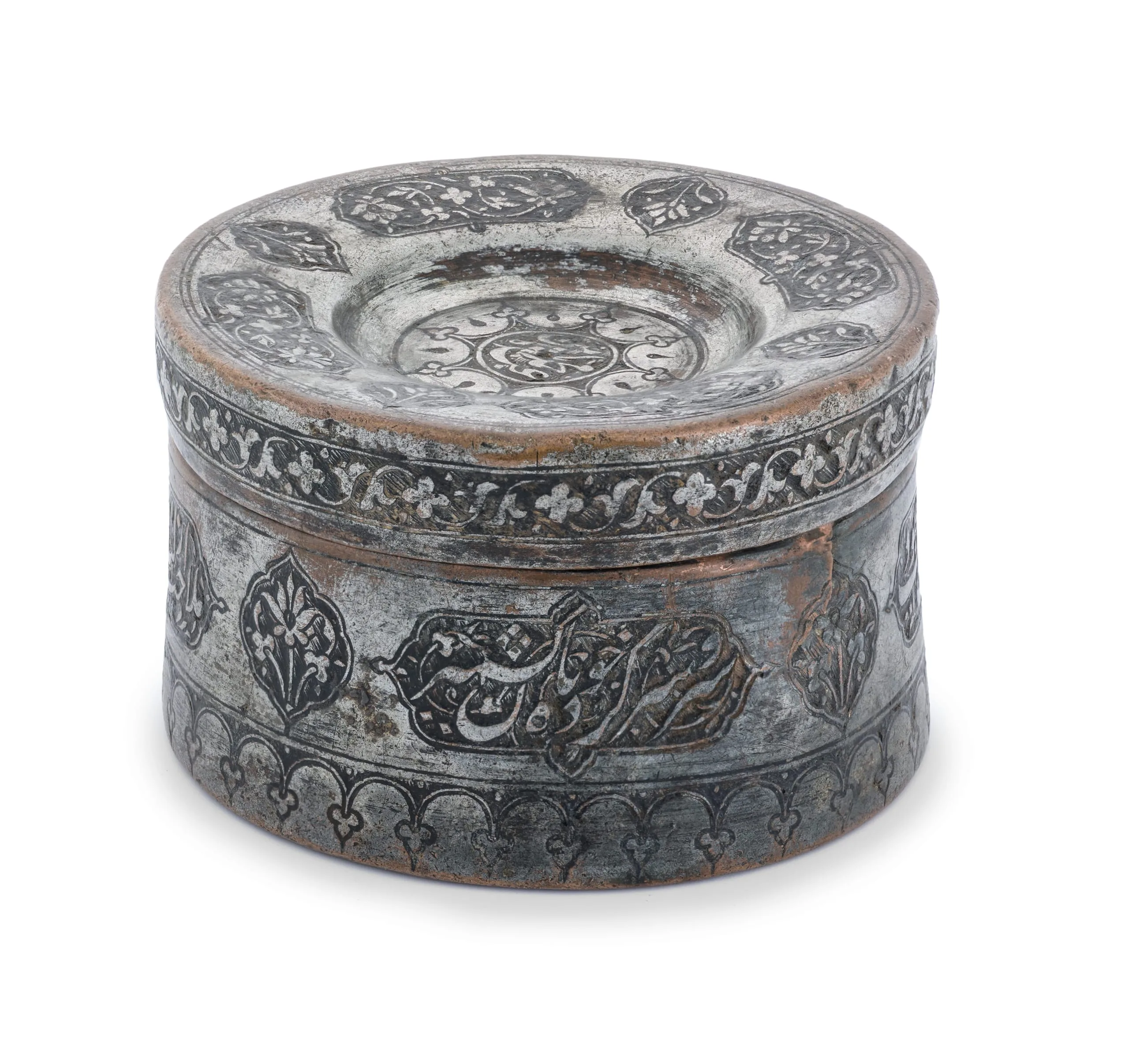
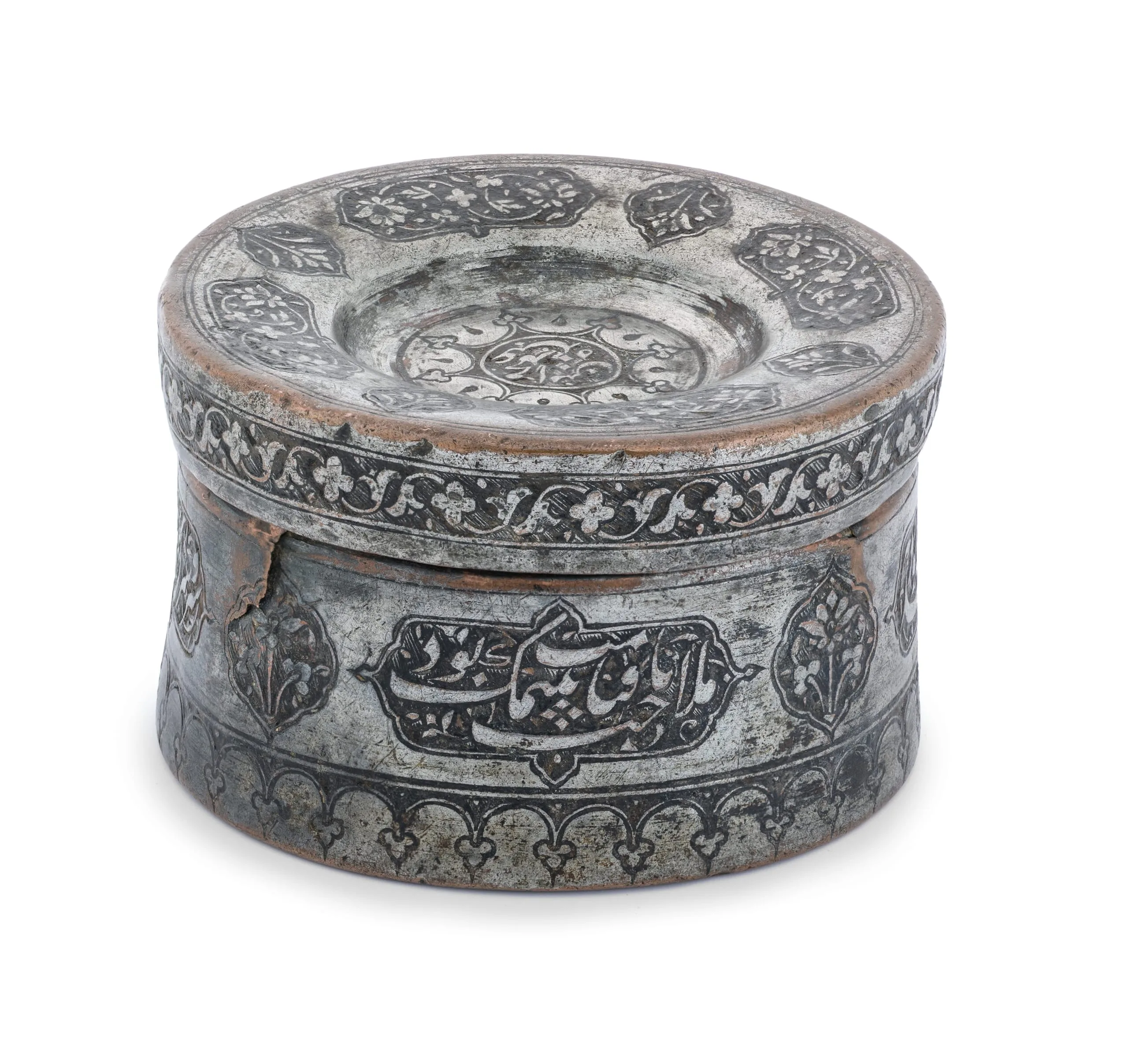
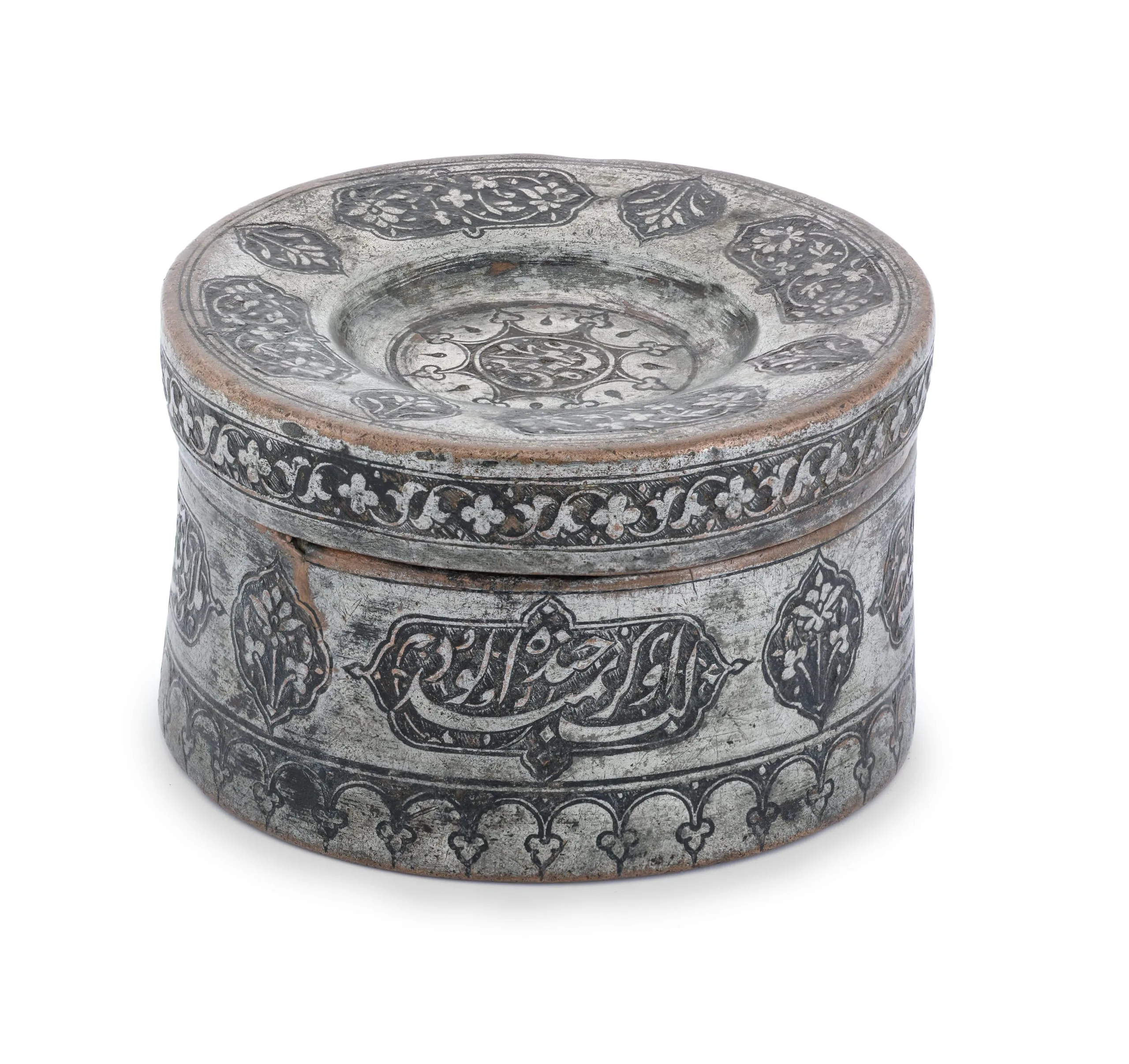
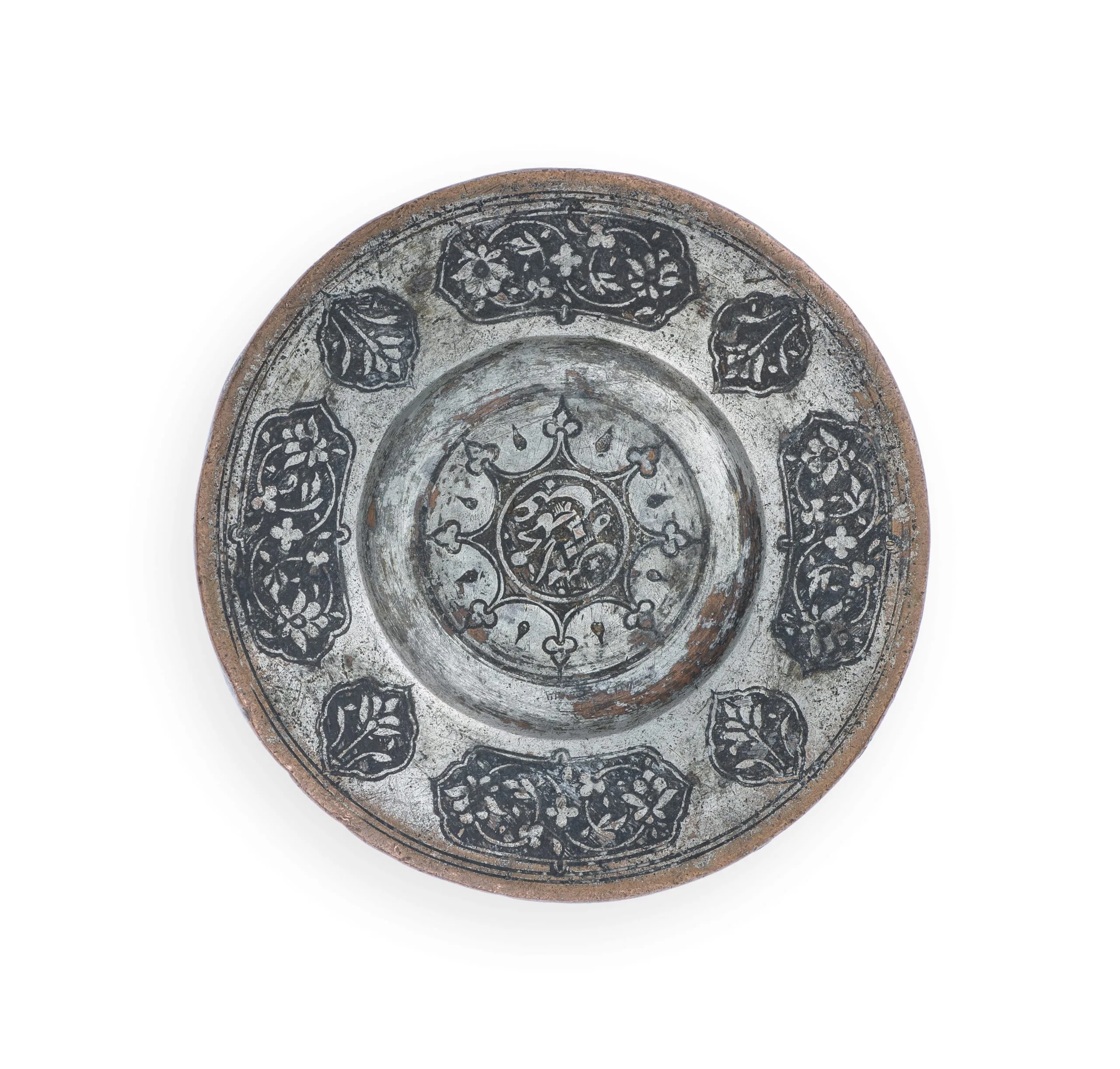
The decoration and technique of this small covered box tie it to seventeenth-century Iran, while the pair of charming Persian couplets inscribed in four cartouches around the middle section suggest it was used as a container for salt (namakdan):
The chief and leader of the beauties
of Kashmir—tastiness itself snacks on his lips.
If there were no smile on his lips, the tastiness would be insipid until
doomsday.
As is typical of the inscriptions on Iranian metalwork from the fifteenth century onward, their poetic texts often supply the name of the object or, as here, allude to its function, creating a kind of literary pun that would be appreciated by erudite users, many of whom would have recognized the work of Zulali Khansari, a poet at the court of Shah ‘Abbas (r. 1588–1629). The verses on the container reference the tastiness of the lips of the poet’s beloved.