LACMA

ShopMembershipMyLACMATickets
LACMA
Los Angeles County Museum of Art
5905 Wilshire Blvd.
Los Angeles, CA 90036
info@lacma.org
(323) 857-6000
Sign up to receive emails
Subscribe
© Museum Associates 2025

Museum Hours

Monday

11 am–6 pm

Tuesday

11 am–6 pm

Wednesday

Closed

Thursday

11 am–6 pm

Friday

11 am–8 pm

Saturday

10 am–7 pm

Sunday

10 am–7 pm


  • About LACMA
  • Jobs
  • Building LACMA
  • Host An Event
  • Unframed
  • Press
  • FAQs
  • Log in to MyLACMA
  • Privacy Policy
© Museum Associates 2025
Collections

Unknown
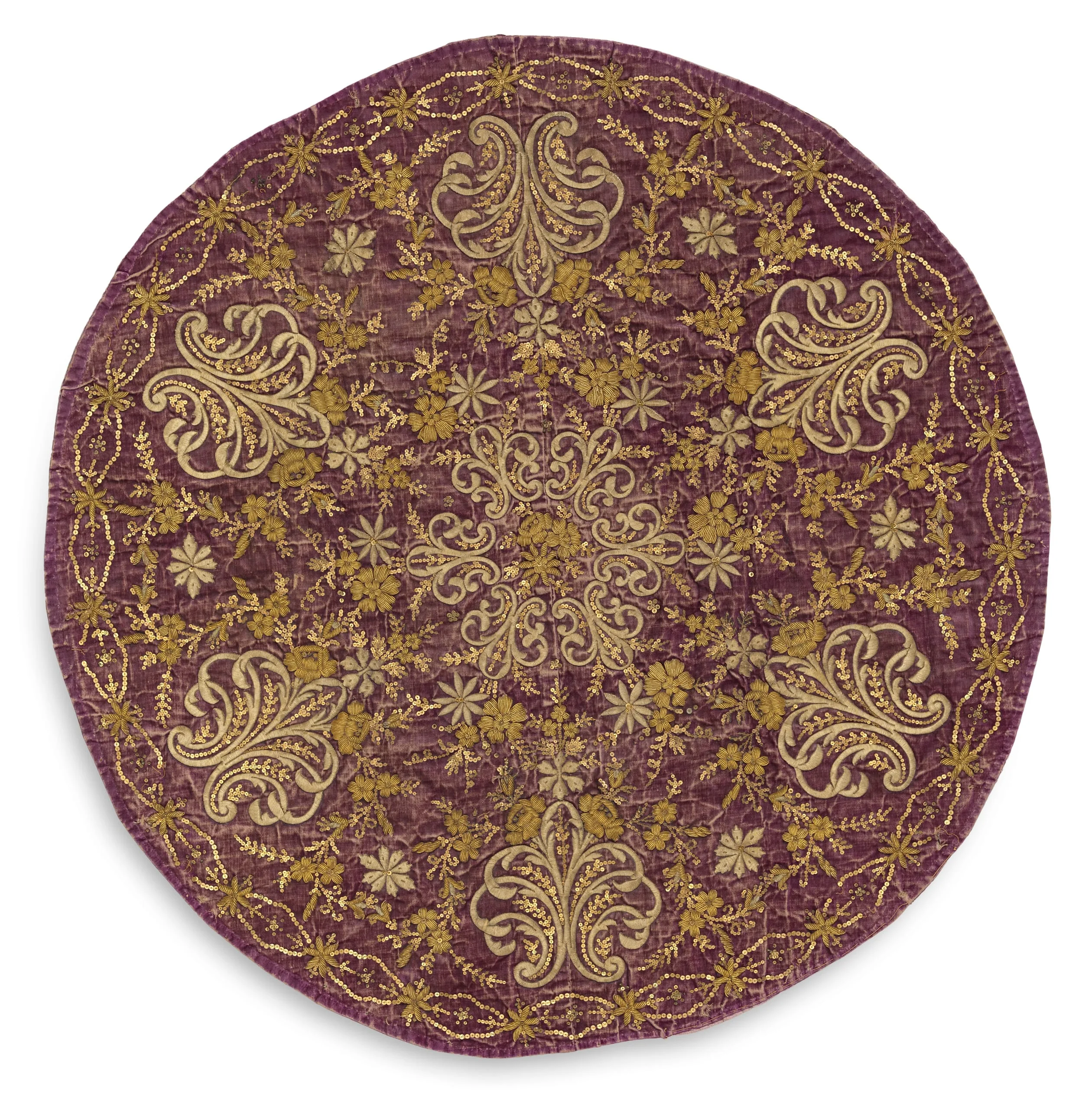
Tray Cover18th-19th century

Not on view
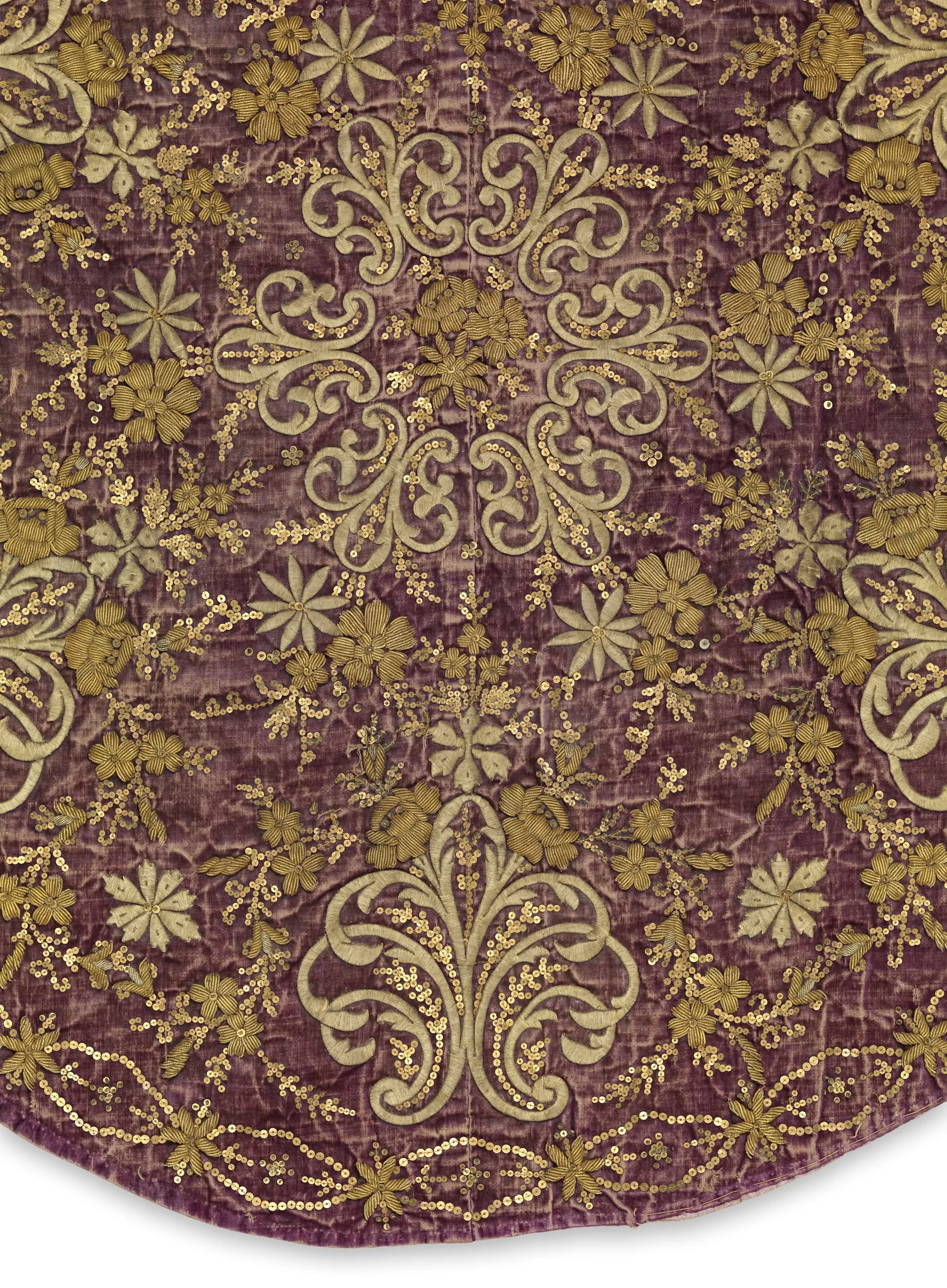
Circular embroidered textile with plum-purple ground, covered in symmetrical pattern of cream acanthus scrolls, gold floral clusters, and vine lattice
Ecclesiastical vestment, likely a chasuble, in aged purple velvet densely embroidered with gold and olive-green threadwork in a symmetrical pattern of scrolling acanthus leaves, stylized flowers, and trailing vine sprays, with small gold sequins scattered throughout.
Artist or Maker
Unknown
Title
Tray Cover
Date Made
18th-19th century
Period
Ottoman
Medium
Velvet textile with metal threads
Dimensions
Overall (Diameter): 34 in. (86.36 cm)
Credit Line
Purchased with funds provided by Songul Afacan Yaprak and Tolga Yaprak in Loving Memory of Mazhar Afacan
Accession Number
M.2022.221
Classification
Textiles
Collecting Area
Art of the Middle East: Contemporary
Curatorial Notes

In large parts of the Islamic world, including the Ottoman empire, sufra, the Persian word for the fabric covering the dining surface, came to signify any place from which food was served—not unlike a dining table. In urban Ottoman households, the sufra was traditionally rectangular in shape and used as a dining space on the floor. Trays on stands could then be set on top to provide an elevated position, making them more accessible to those seated nearby. Known in Ottoman usage as a sufra bezi, tray covers not only protected the surface beneath but provided a beautiful mise en placefor a coffee service (cat. 129b) or a small meal as might have been served in Ottoman era palaces and elite households. The sufra bezi, also known as nihali, as here, made of velvet, satin, or leather, and laid inside round trays, became common by the mid- to late eighteenth century. Offering coffee to guests was a particularly important practice among the affluent citizens of Ottoman lands, and the wealth and success of the household were reflected not only in the opulence of the serving pieces but in the tray cover. These two brilliantly colored and elaborately decorated examples would have added to the delectation of the guests.
Selected Bibliography
  • Komaroff, Linda, editor. Dining with the Sultan: The Fine Art of Feasting. Los Angeles: Los Angeles County Museum of Art; New York: DelMonico Books, 2023.