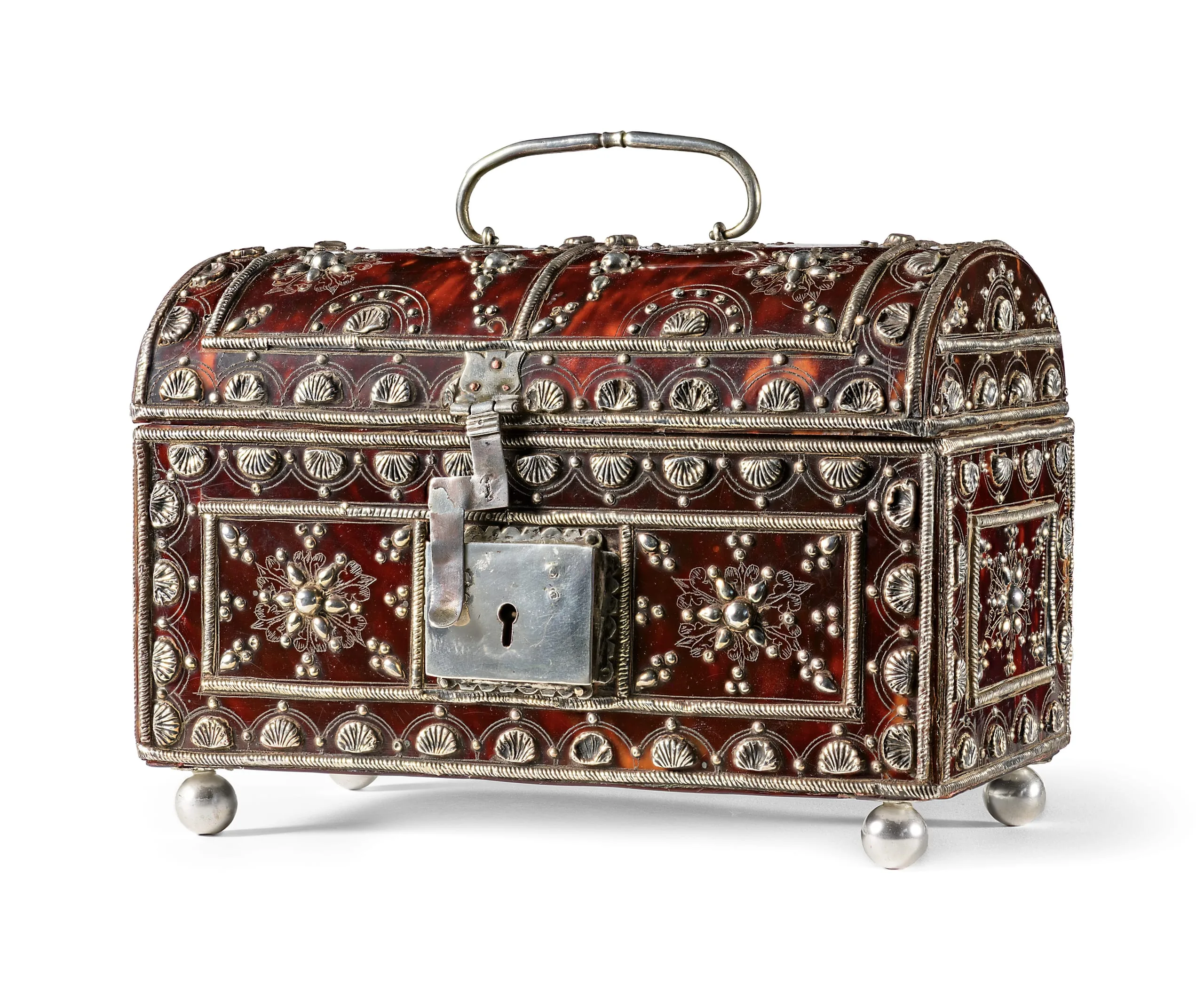
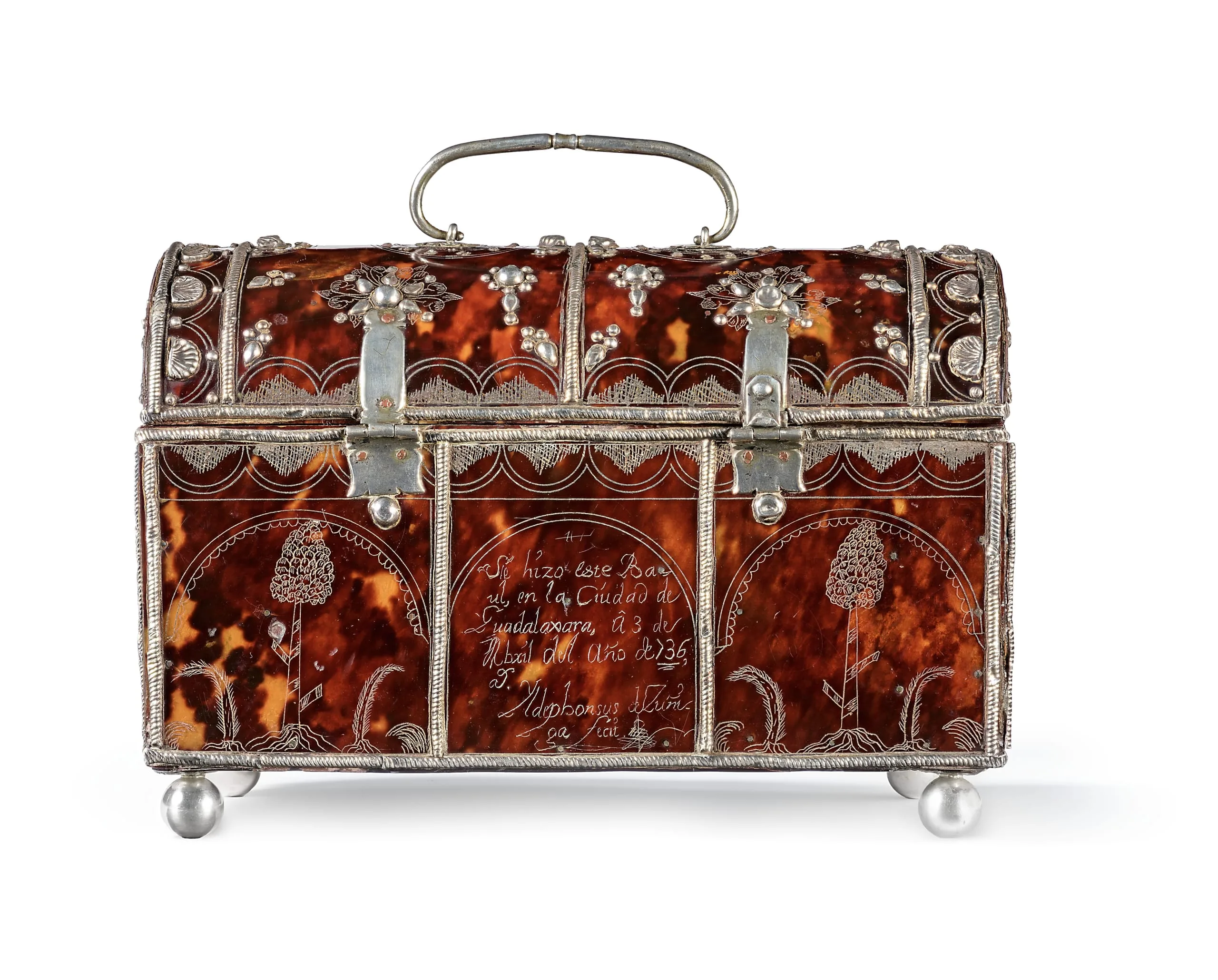
This intricate box that combines silver and tortoiseshell—two precious materials that abounded in the viceroyalty of New Spain—conjured the legendary wealth of the region. The silver shell motifs further hinted at mythical profusion of New World pearls. Used to store valuable items such as jewelry, its portability would have made it especially prized as a gift. (Several comparable caskets circulated across Spanish America and were shipped to Europe.) An unusual detail is the engraved inscription on the back indicating its origin, maker, and date of manufacture: “This chest was made in the city of Guadalajara on April 3, 1736, by Don Ildefonso de Zúñiga” (Se hizo este Ba / ul, en la Ciudad de / Guadalaxara, â 3 de Abril del año de 736, / D. Ildephononsus de Zuñi / ga fecit). This notable detail points to a pride in craft, and helps correlate this kind of box with a family of artists that appears to have been active in multiple centers across the viceroyalty. For example, two comparable boxes in private collections in Spain are signed and dated in Guatemala by other makers with the same surname—Blas Antonio Pérez de Zúñiga, 1730, and Clemente Pérez de Zúñiga, 1736. (See María Jesús Sanz Serrano, ed., La orfebrería hispanoamericana en Andalucía occidental, exh. cat., Seville: Fundación El Monte, 1995, pp. 152–53; El país del quetzal: Guatemala maya e hispana, exh. cat, Madrid: Centro Cultural de la Villa, Sociedad Estatal para la Acción Cultural Exterior, 2002, cat. no. 315.)
Ilona Katzew, 2022