LACMA

ShopMembershipMyLACMATickets
LACMA
Los Angeles County Museum of Art
5905 Wilshire Blvd.
Los Angeles, CA 90036
info@lacma.org
(323) 857-6000
Sign up to receive emails
Subscribe
© Museum Associates 2025

Museum Hours

Monday

11 am–6 pm

Tuesday

11 am–6 pm

Wednesday

Closed

Thursday

11 am–6 pm

Friday

11 am–8 pm

Saturday

10 am–7 pm

Sunday

10 am–7 pm


  • About LACMA
  • Jobs
  • Building LACMA
  • Host An Event
  • Unframed
  • Press
  • FAQs
  • Log in to MyLACMA
  • Privacy Policy
© Museum Associates 2025
Collections

Unknown
Buddha Shakyamunilate 6th century

On view:
Resnick Pavilion, floor 1
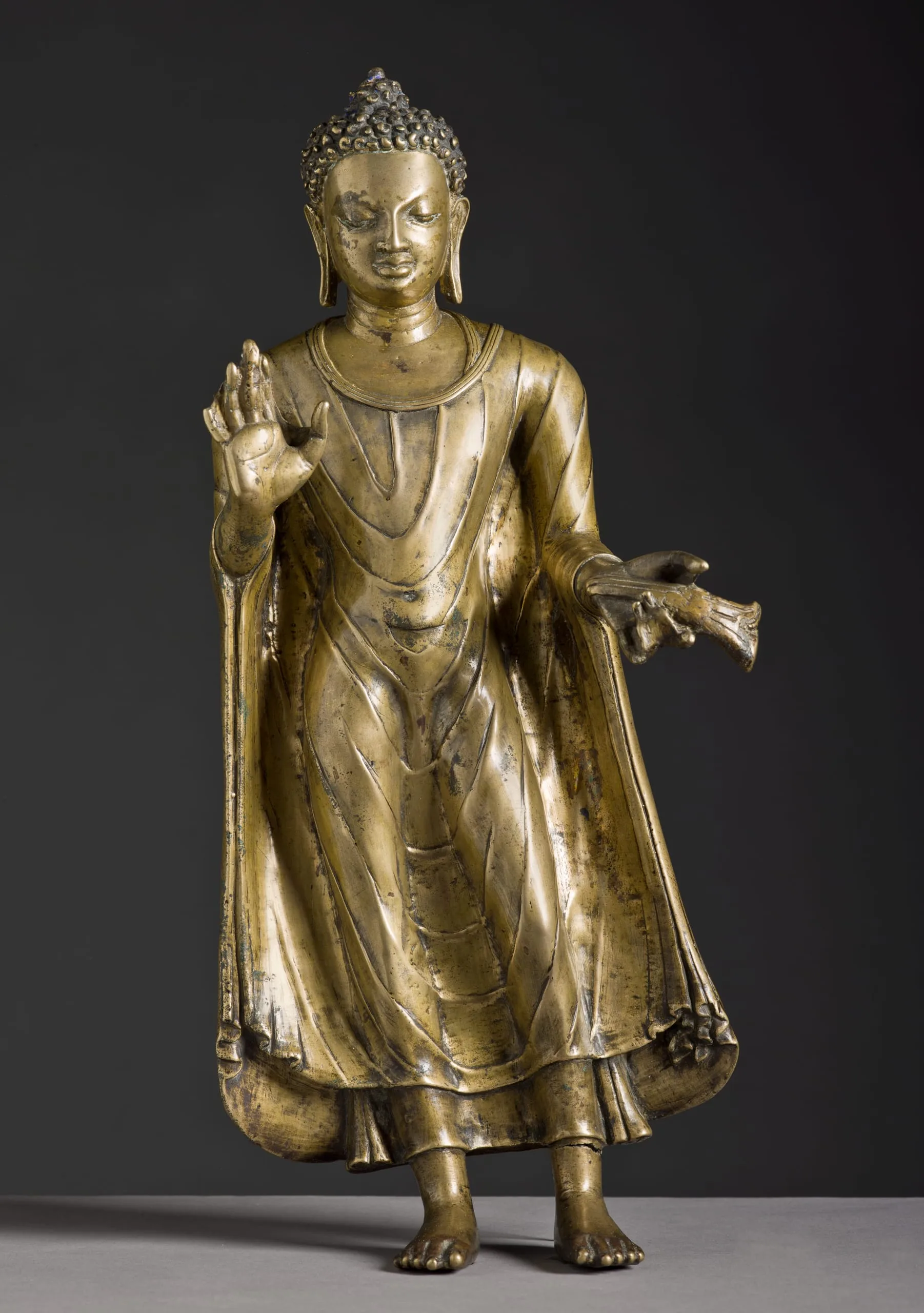
Gilt bronze standing figure in a flowing monastic robe with one hand raised and one extended, holding a lotus bud, with downcast eyes and tightly curled hair
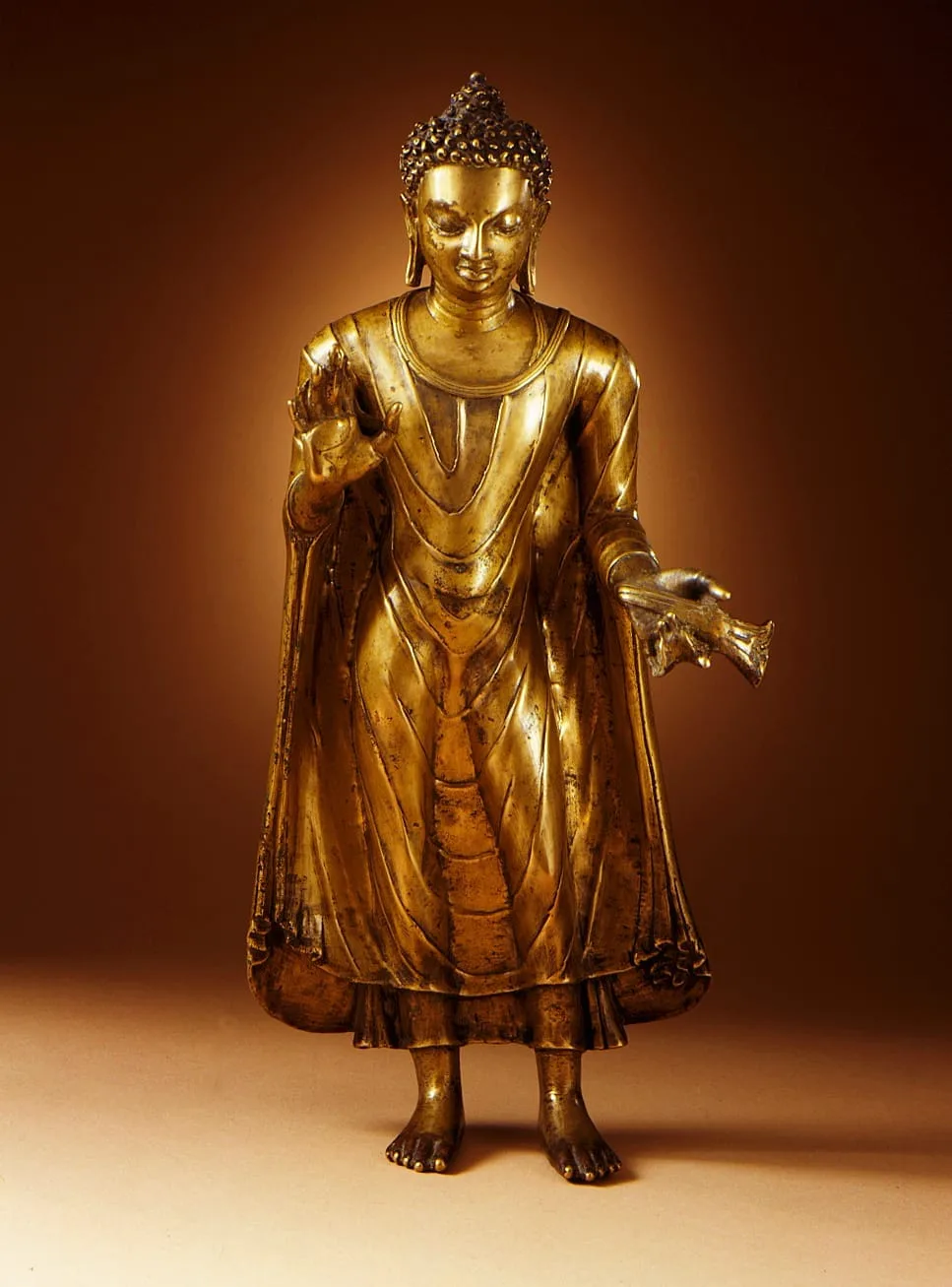
Gilt bronze standing Buddha figure with ushnisha and curled hair, robes with incised flowing drapery, right hand raised in abhaya mudra, left hand extended holding an object, warm golden patina with areas of wear.
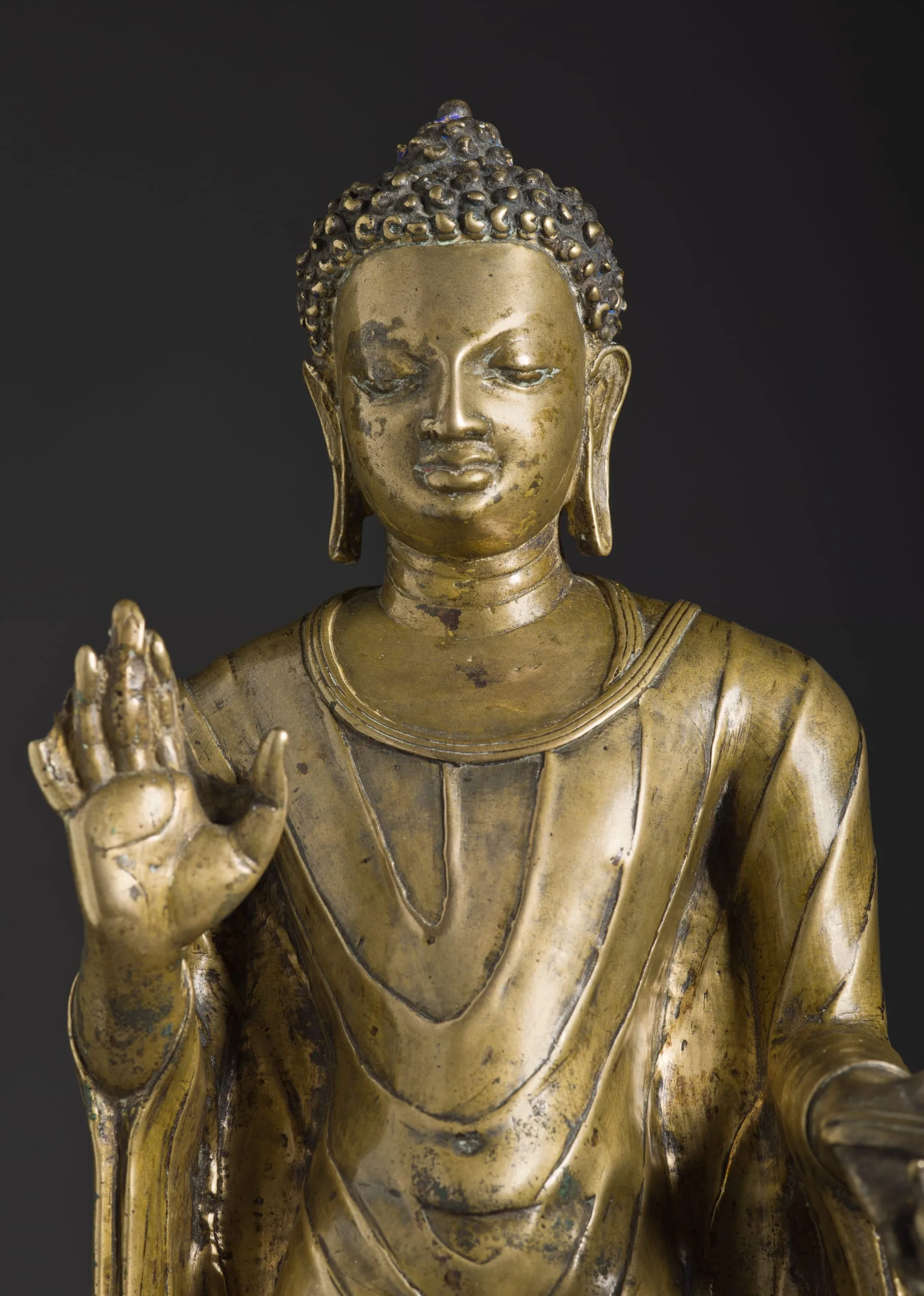
Gilt bronze figure of a Buddha, upper body shown, with ushnisha and curled hair, wearing draped monastic robes with ridged folds, right hand raised in abhaya mudra, against a dark gray background.
Artist or Maker
Unknown
Title
Buddha Shakyamuni
Place Made
India, Uttar Pradesh
Date Made
late 6th century
Medium
Copper alloy with traces of paint
Dimensions
15 1/2 x 6 3/4 x 4 in. (39.37 x 17.15 x 10.16 cm)
Credit Line
Gift of the Michael J. Connell Foundation
Accession Number
M.70.17
Classification
Sculpture
Collecting Area
South and Southeast Asian Art
Curatorial Notes
Gupta rule in northern India initiated a long era (320-600) of peace, prosperity, and artistic accomplishment. From the two main artistic centers of the period, Mathura and Sarnath, issued the sculpture now regarded as forming the classical Indian style. This image of the historical Buddha Sakyamuni, with its serene countenance, embodies the Gupta balance of elegant form and inner spirituality.
Although the Gupta rulers were Hindu, they actively patronized Buddhism. Kings and devotees gained spiritual merit by pious acts: building temples, commissioning or making images of Buddha, such as this one, or worshiping them. This Buddha embodies two ideals basic to Buddhism, the perfect yogi and the universal ruler. He possesses the yogi's supple, almost buoyant body and contemplative gaze and facial expression, and the ruler's youth, strong shoulders, firm body, and webbed hands and feet. Time-honored traditions of portrayal connect the Buddha's human form with nature; his long eyes are shaped like fish, his curls like snail shells, and the profile of his left shoulder and arm is like the trunk of an elephant.
This sculpture was probably made in northern India and was influenced by Mathura and Sarnath styles. The image, long preserved in a Tibetan monastery, received there the dark indigo paint on its locks. The striated, schematic folds of the robe were common to Mathura figures, while its transparency as well as the delicate proportions of face and body and the slight weight shift to the right leg are reminiscent of Sarnath sculpture.
Selected Bibliography
  • Ray, Nihar Ranjan, Karl Khandalavala, and Sadashiv Gorakshkar. Eastern Indian Bronzes. New Delhi: Lalit Kalā Akademi, 1986.
  • Alsop, Ian. "The Bronze Standing Buddha in Gupta India and Licchavi Nepal." Arts of Asia 50, no.6 (2020): 62-75.
  • Little, Stephen, Tushara Bindu Gude, Karina Romero Blanco, Silvia Seligson, Marco Antonio Karam. Las Huellas de Buda. Ciudad de México : Instituto Nacional de Antropología e Historia, 2018.
  • Little, Stephen, and Tushara Bindu Gude. Realms of the Dharma: Buddhist Art across Asia. Los Angeles: Los Angeles County Museum of Art, 2025.