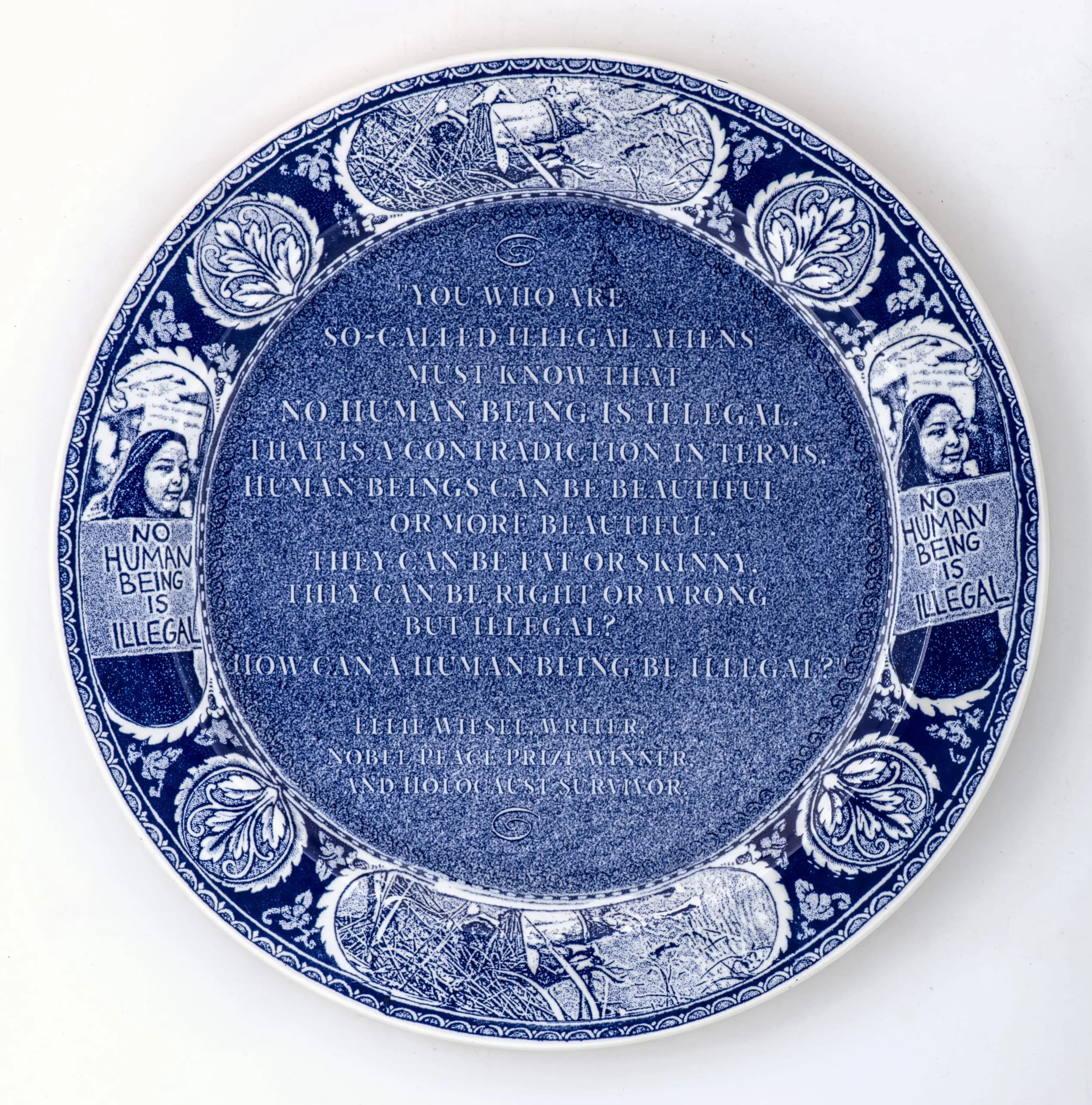
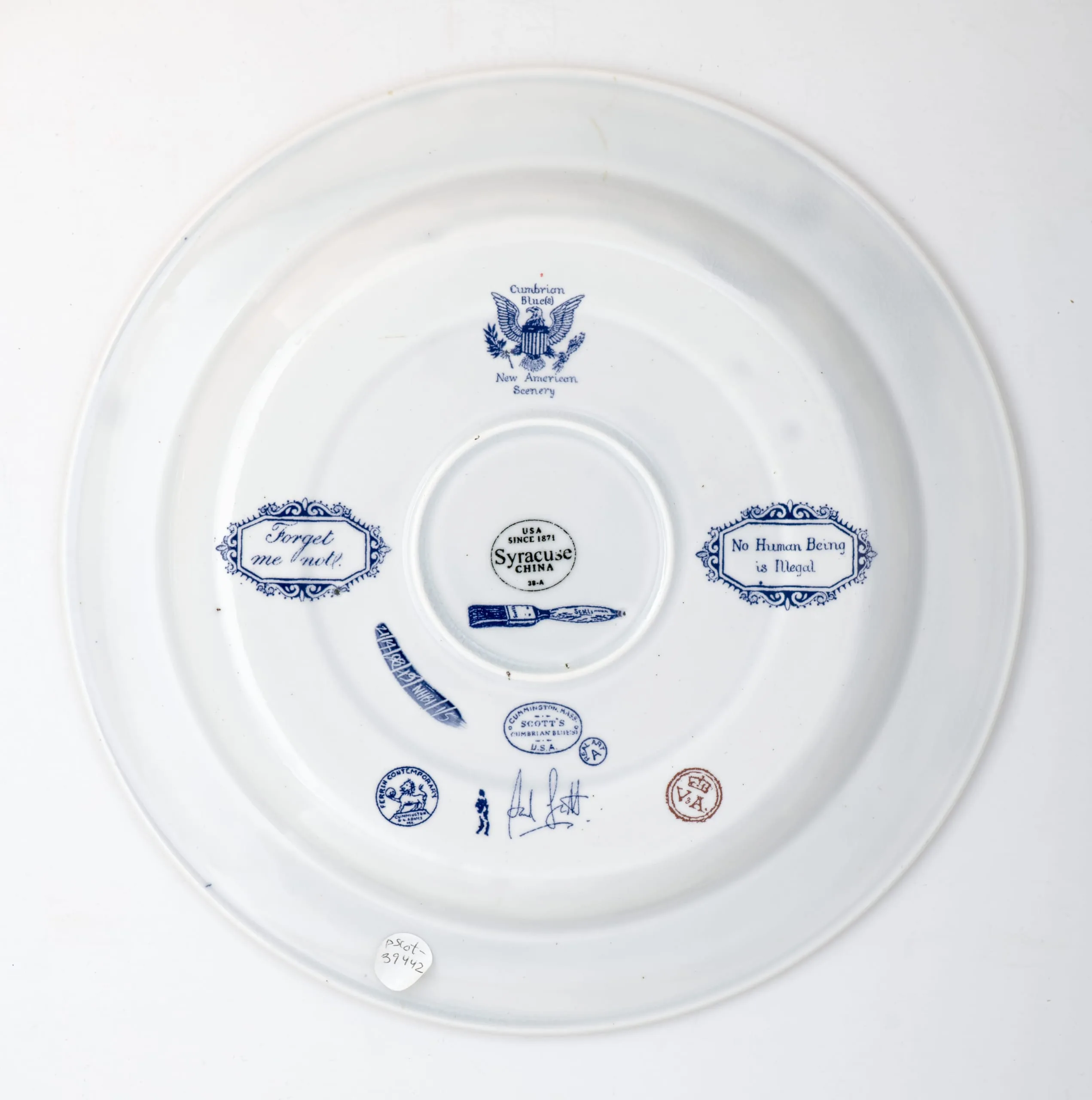
British artist Paul Scott’s ongoing project “New American Scenery” subverts idealized depictions of the United States on nineteenth- and early twentieth-century blue-and-white transfer-printed plates made in England for the American market. His sophisticated alterations to historical plates and their designs comment on contemporary justice issues such as climate change, immigration, and the impact of natural resource extraction on Indigenous communities. On Forget Me Not, No Human Being Is Illegal, Scott incorporated a horrific media image of Óscar Alberto Martínez Ramírez and his daughter Valeria, who drowned while attempting to cross the U.S.-Mexico border, as well as a social media image of an immigrant rights protester, into the border of an archival transferware design. At the center of the plate is a quote from Nobel Peace Prize winner and Holocaust survivor Elie Wiesel, calling out dehumanizing rhetoric about undocumented immigrants.
Although most historical transferware was intended to inspire patriotic pride, there is historical precedent for Scott’s political commentary. The layout of Forget Me Not echoes that of an earlier example in LACMA’s collection. The Tyrant’s Foe, The People’s Friend (c. 1840; 50.28.23) memorialized the fatal exercise of freedom of the press by abolitionist Elijah Parish Lovejoy (1802–1837) with a quote from the First Amendment to the U.S. Constitution. Like this unusual historical work, Paul Scott’s plates address a sympathetic audience for the purpose of fostering resilience and recognition of humanity’s self-inflicted wounds.
With his groundbreaking handbook Ceramics and Print now in its third edition, Scott is a leading proponent of printed ceramics in contemporary art. Not only does his archival research and engagement with former employees of ceramic factories inform his creative investigations, they also have revived wider intellectual and aesthetic interests in the history of industrial ceramic decoration.
Rosie-Mills Helterbran
2022, revised by Staci Steinberger 2025