LACMA

ShopMembershipMyLACMATickets
LACMA
Los Angeles County Museum of Art
5905 Wilshire Blvd.
Los Angeles, CA 90036
info@lacma.org
(323) 857-6000
Sign up to receive emails
Subscribe
© Museum Associates 2025

Museum Hours

Monday

11 am–6 pm

Tuesday

11 am–6 pm

Wednesday

Closed

Thursday

11 am–6 pm

Friday

11 am–8 pm

Saturday

10 am–7 pm

Sunday

10 am–7 pm


  • About LACMA
  • Jobs
  • Building LACMA
  • Host An Event
  • Unframed
  • Press
  • FAQs
  • Log in to MyLACMA
  • Privacy Policy
© Museum Associates 2025
Collections

Unknown
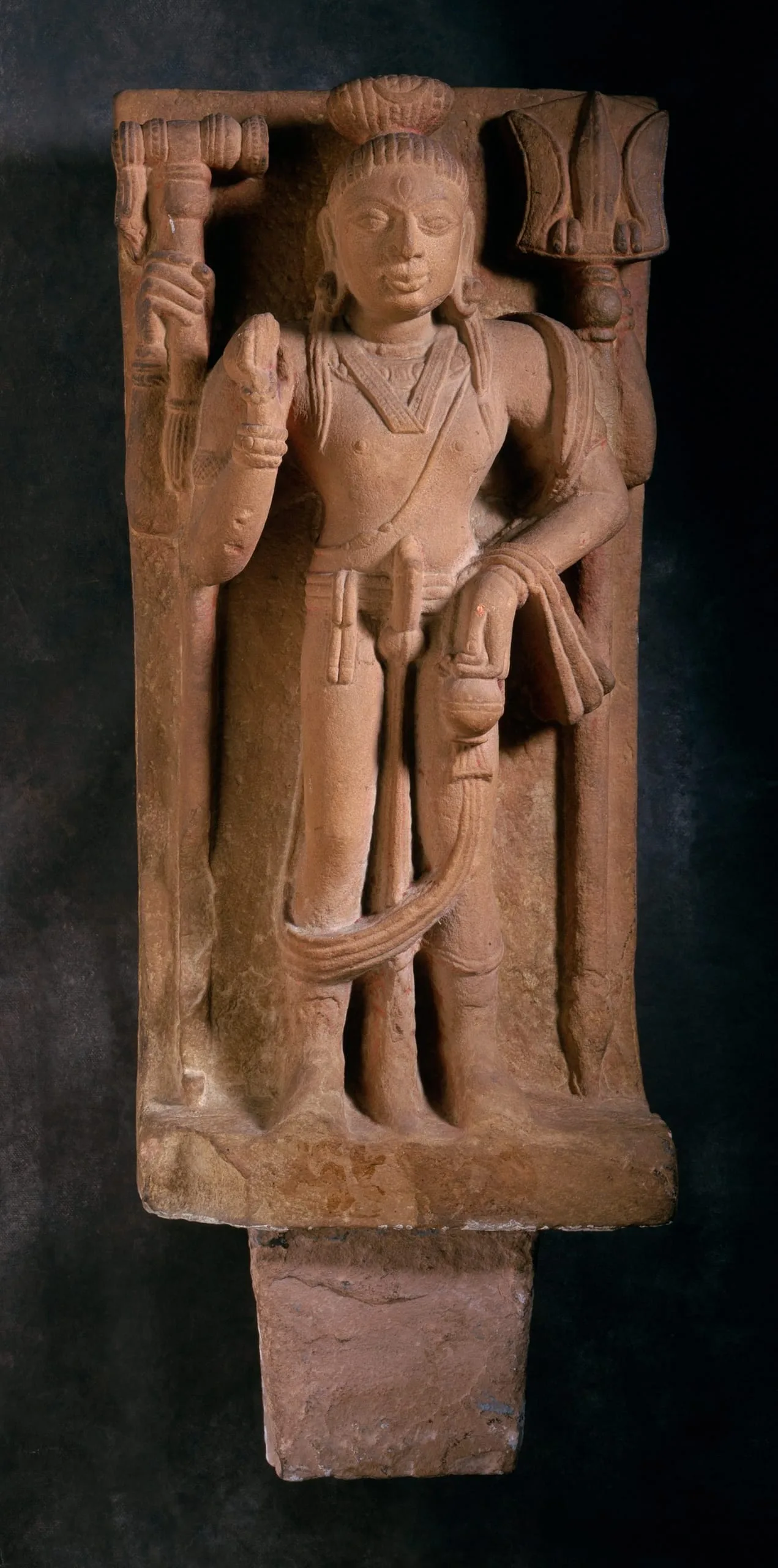
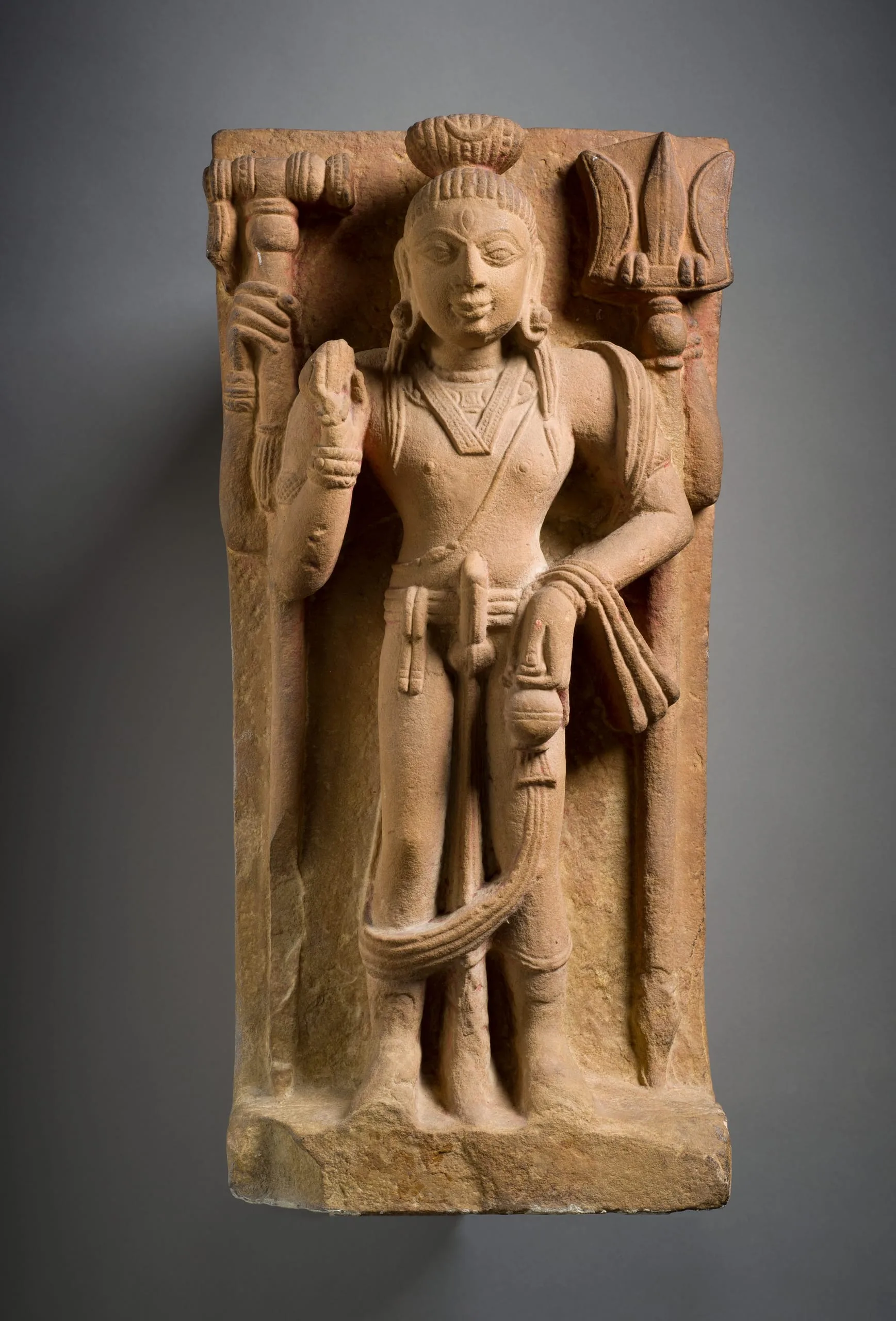
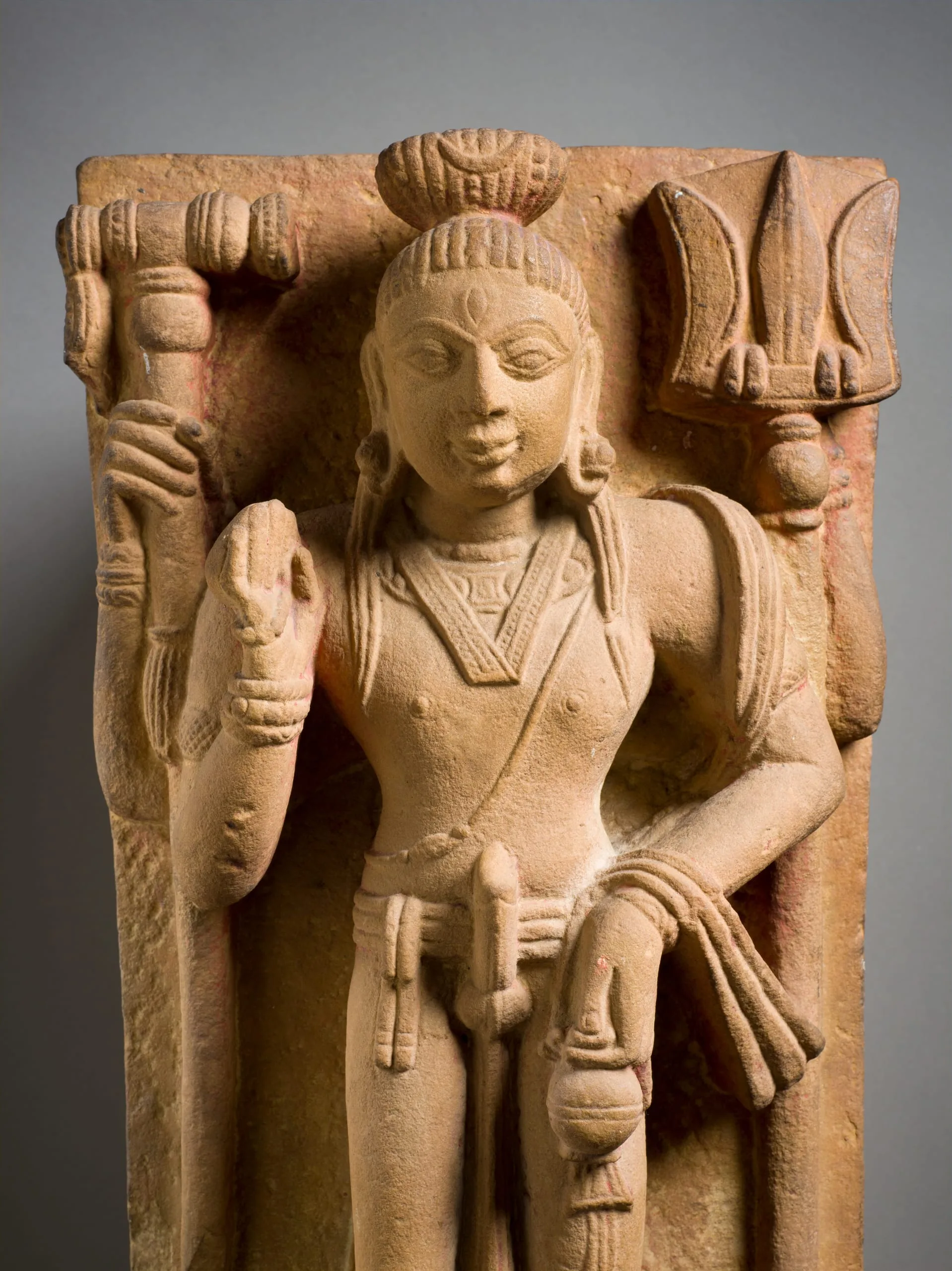
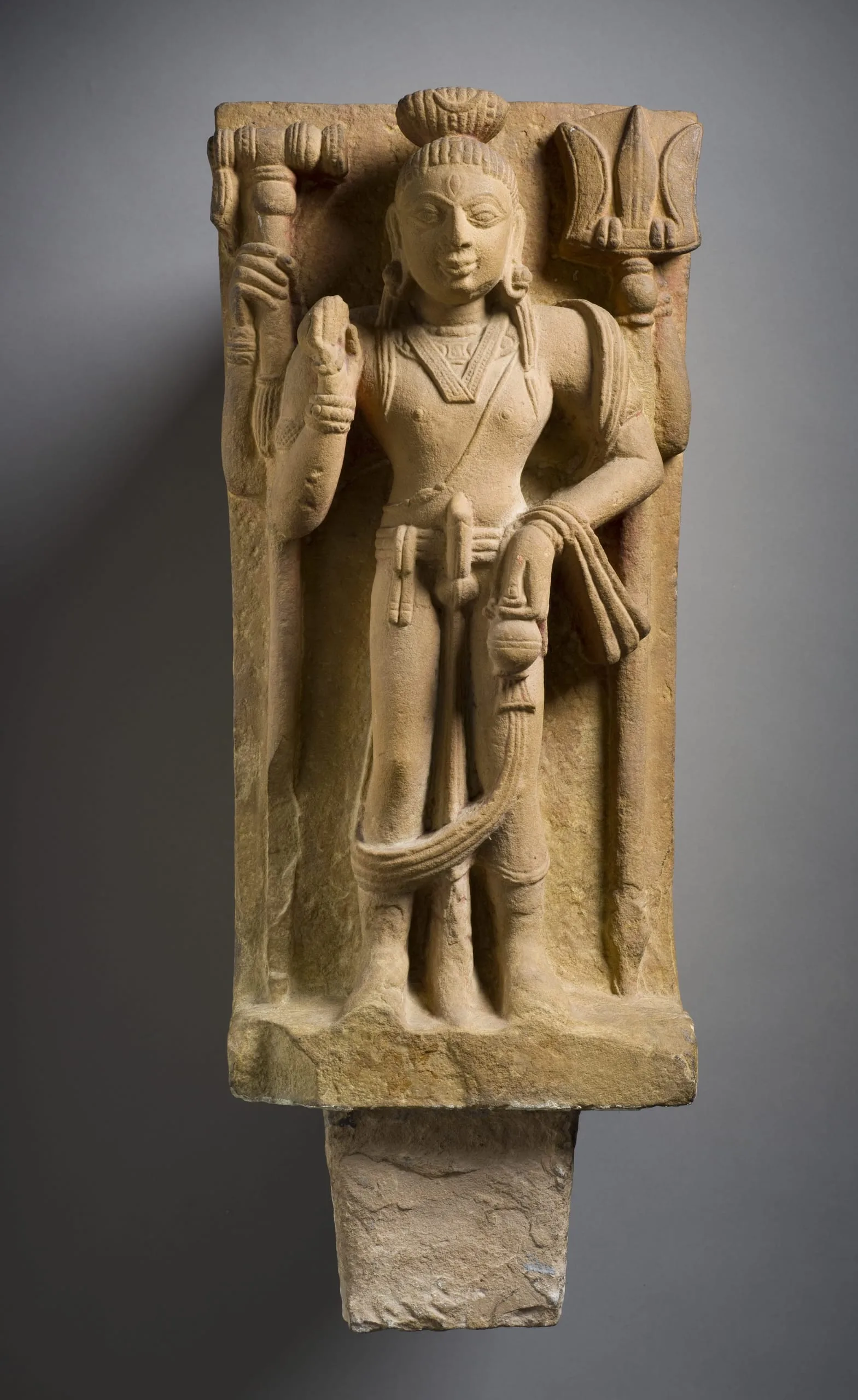
The Hindu God Shiva3rd century

Not on view
Tan sandstone relief sculpture of a four-armed standing male figure with topknot hair, holding attributes including what appears to be a conch and curved bow, carved on a rectangular slab
Sandstone relief sculpture of a standing male deity in contrapposto stance, wearing ornamental jewelry and a dhoti, holding a staff in one raised hand with a bow at the side, carved in high relief against a flat backing slab with attendant figures partially visible at upper corners.
Sandstone relief sculpture of a standing male deity with a tall jatamukuta hairstyle, four arms holding attributes, adorned with jewelry and a dhoti, carved in high relief against a flat slab with worn surface.
Sandstone relief sculpture of a four-armed deity in frontal stance, wearing jewelry and a decorated necklace, with an elaborate topknot; attributes held in upper hands, set against a carved architectural backing.
Artist or Maker
Unknown
Title
The Hindu God Shiva
Place Made
India, Uttar Pradesh, Mathura or Ahichchhatra (?)
Date Made
3rd century
Medium
Buff sandstone
Dimensions
27 x 11 1/8 x 5 1/2 in. (68.58 x 28.25 x 13.97 cm)
Credit Line
From the Nasli and Alice Heeramaneck Collection, Museum Associates Purchase
Accession Number
M.69.15.1
Classification
Sculpture
Collecting Area
South and Southeast Asian Art
Curatorial Notes
Shiva, the Hindu god of Destruction, stands in a stiff, frontal pose (samapada sthanaka) on a plain base with a large insertion tang extending beneath it. He has an ascetic’s piled hair (jata mukuta), which is tied in a bun and adorned with his attribute of the crescent moon. He has a third eye of wisdom (jñana netra), and is ithyphallic (urdhva linga) symbolizing the generative energy of the universe. He wears the Brahmanical sacred thread (yajñopavita) over his left shoulder, a dhoti, and a long sash draped over his left shoulder and forearm. He has four arms. In his upper right hand, he holds a mallet (mudgara) or an unusual staff. In his upper left hand, he holds a trident (trishula). His lower right hand is held in the gesture of reassurance (abhaya mudra) and holds a rosary (akshamala). He carries an ascetic’s waterpot (kamandalu) in his lower left hand.
Selected Bibliography
  • Khandalavala, Karl J., ed. The Golden age: Gupta art: empire, province, and influence. Bombay: Marg Publications, 1991.
  • El Universo de la India: Obras Maestras del Museo de Arte del Condado de Los Angeles. Santiago: Centro Cultural Palacio La Moneda, 2012.