- Title
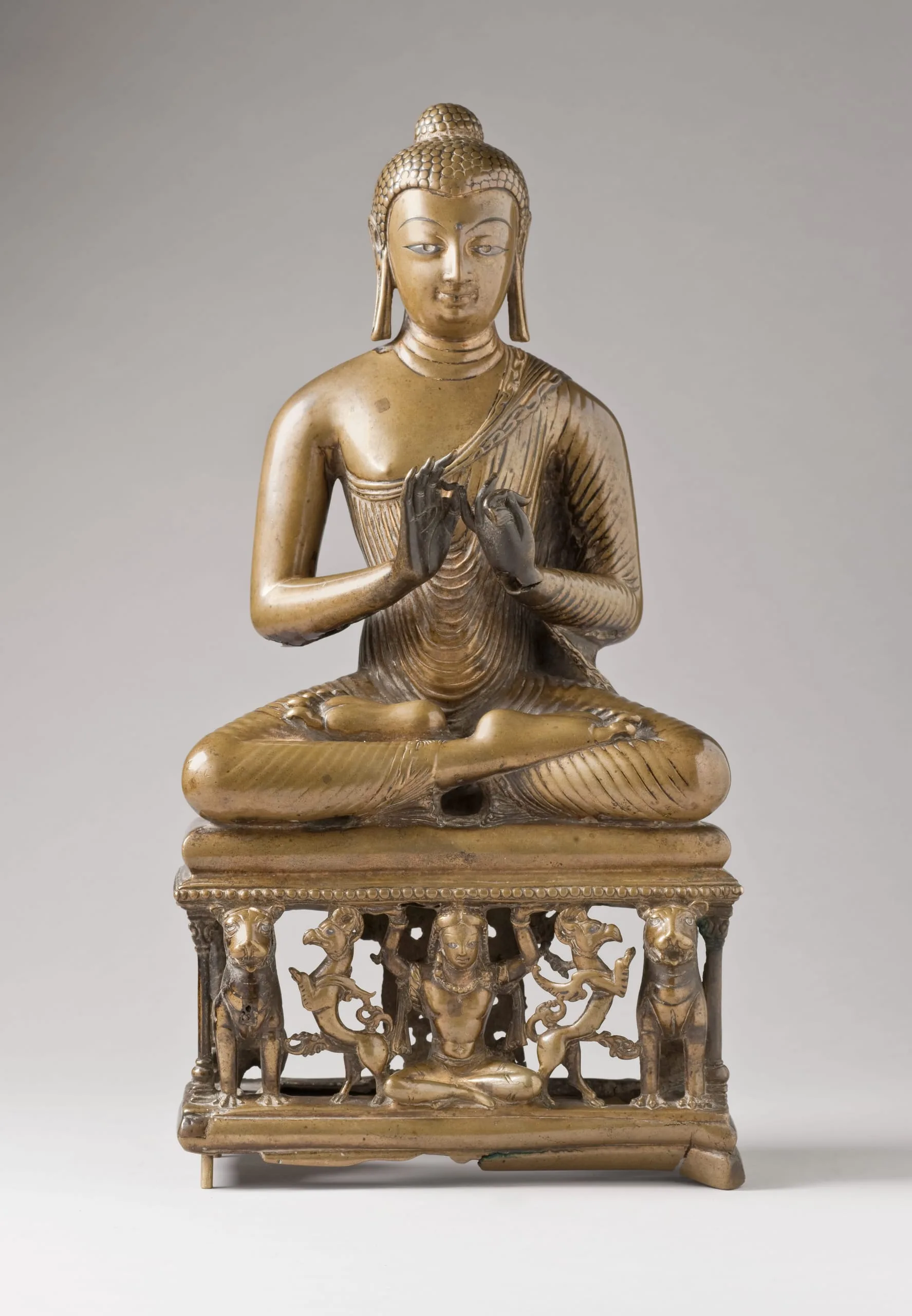
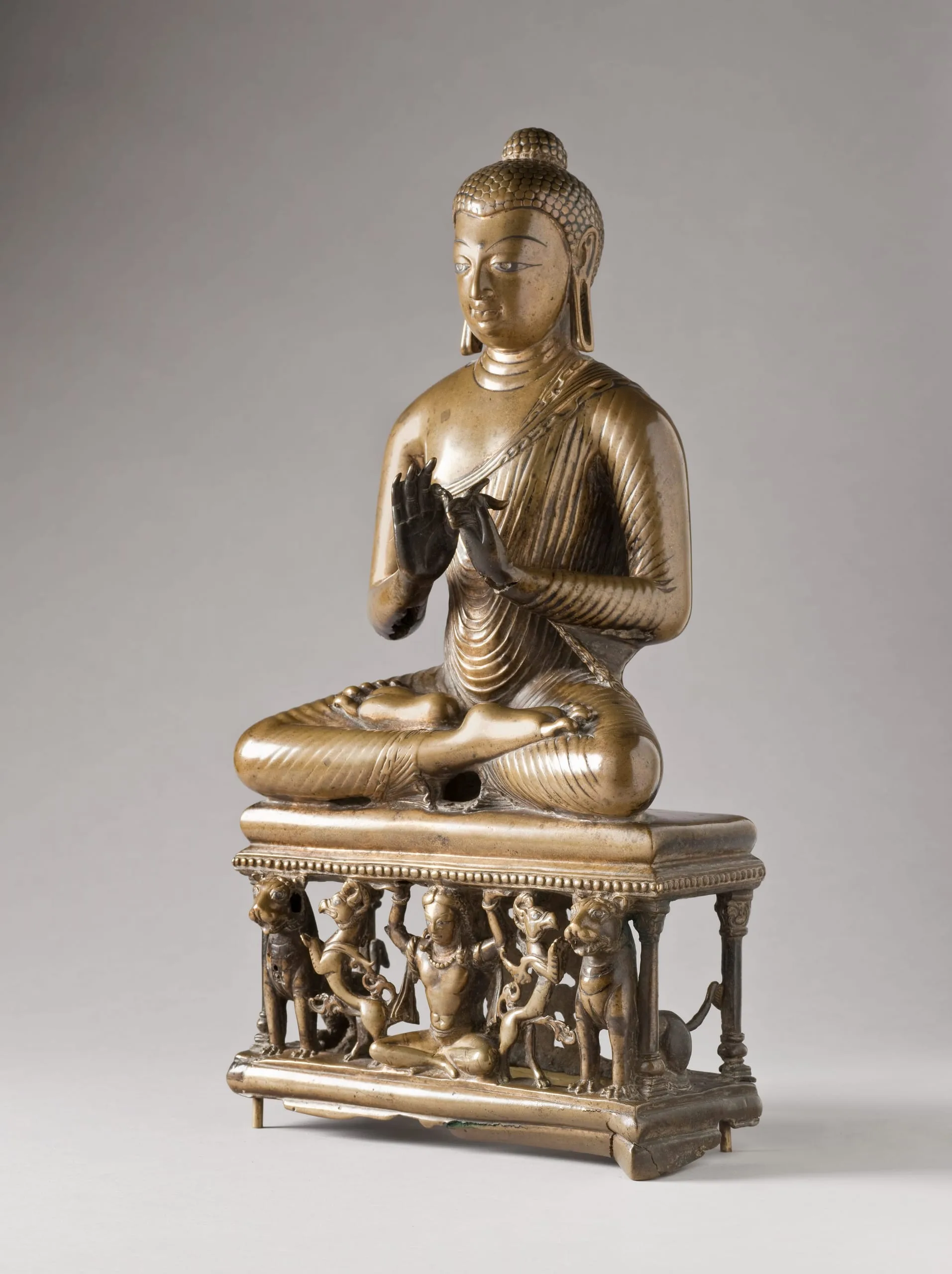
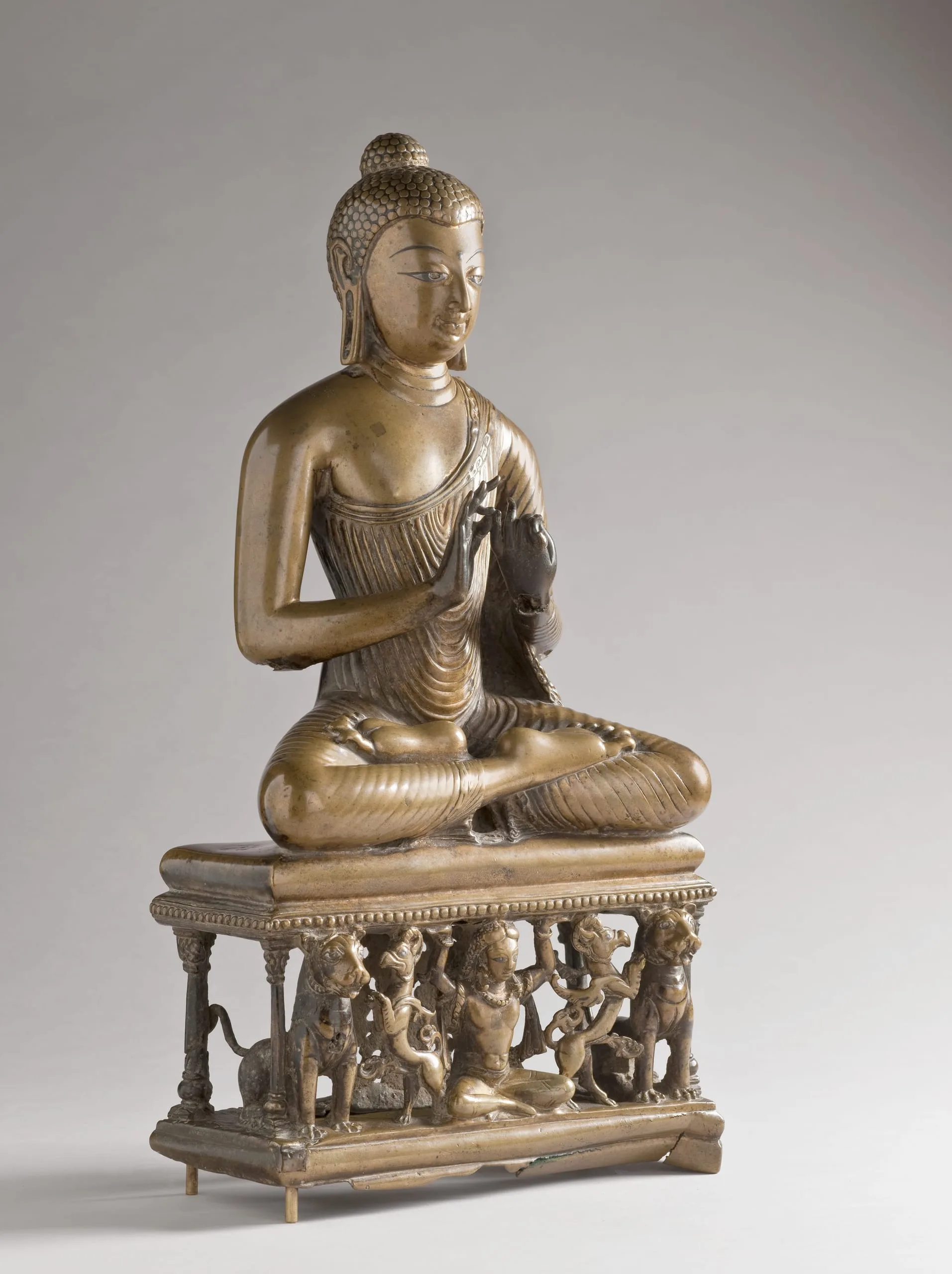
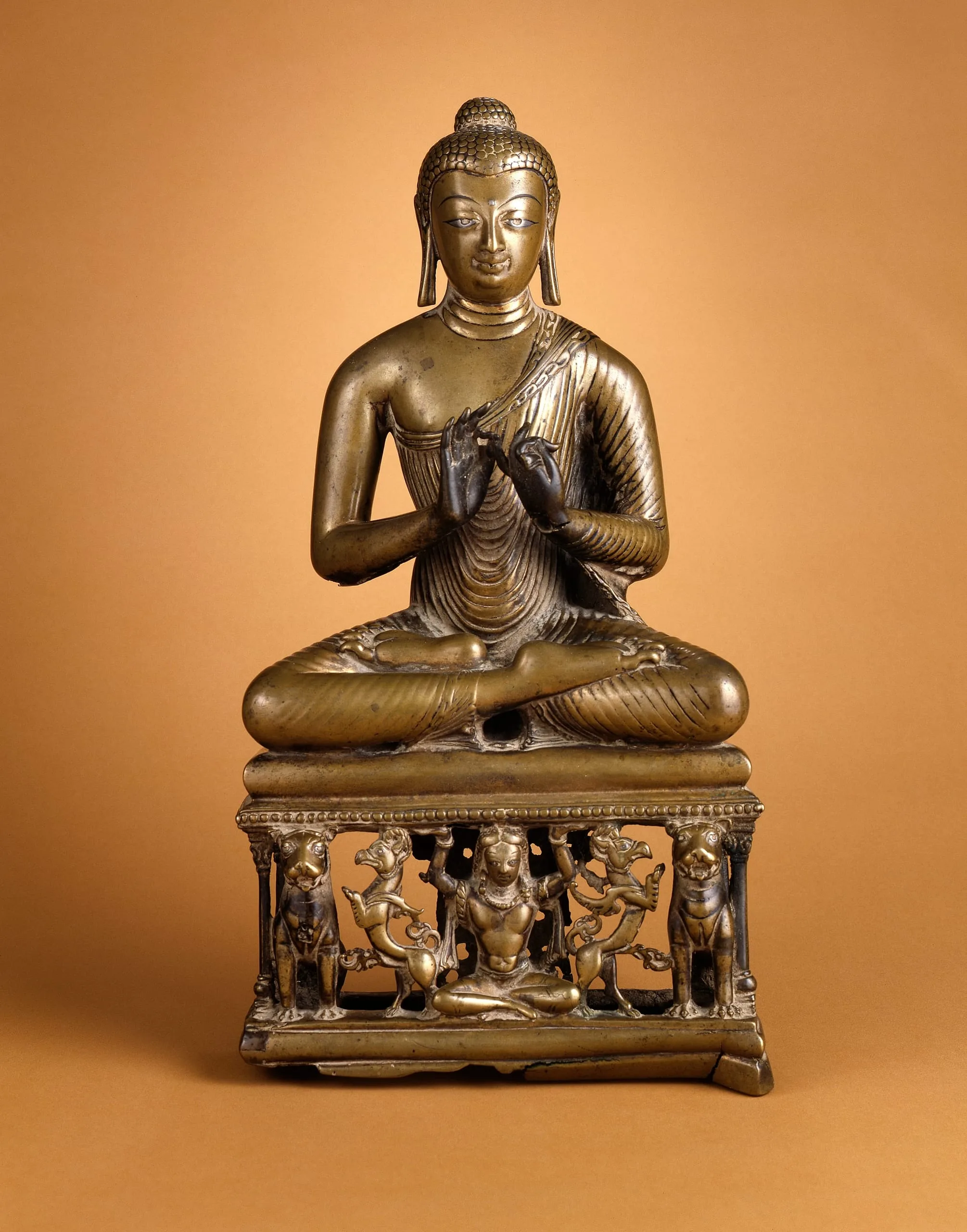
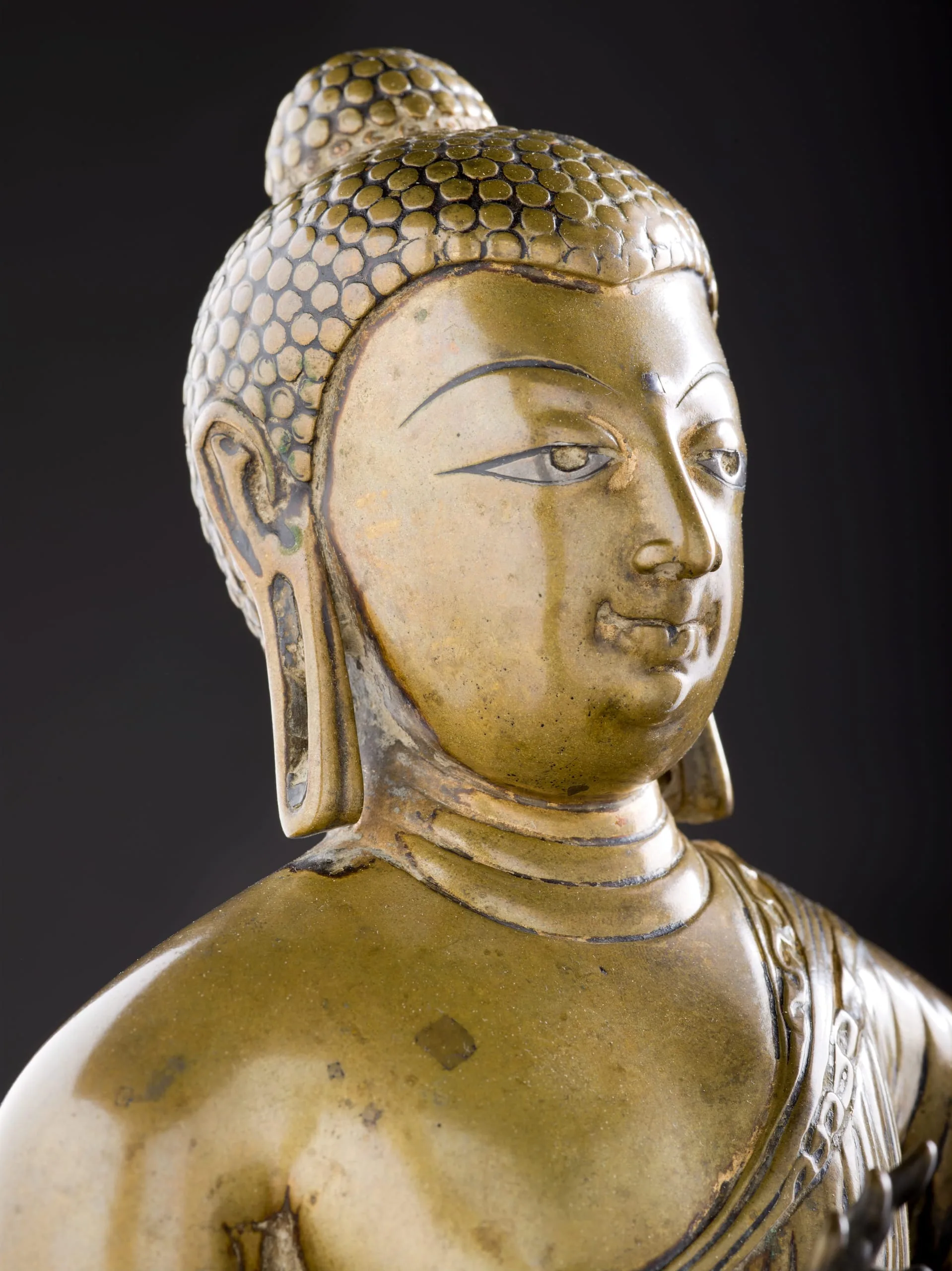
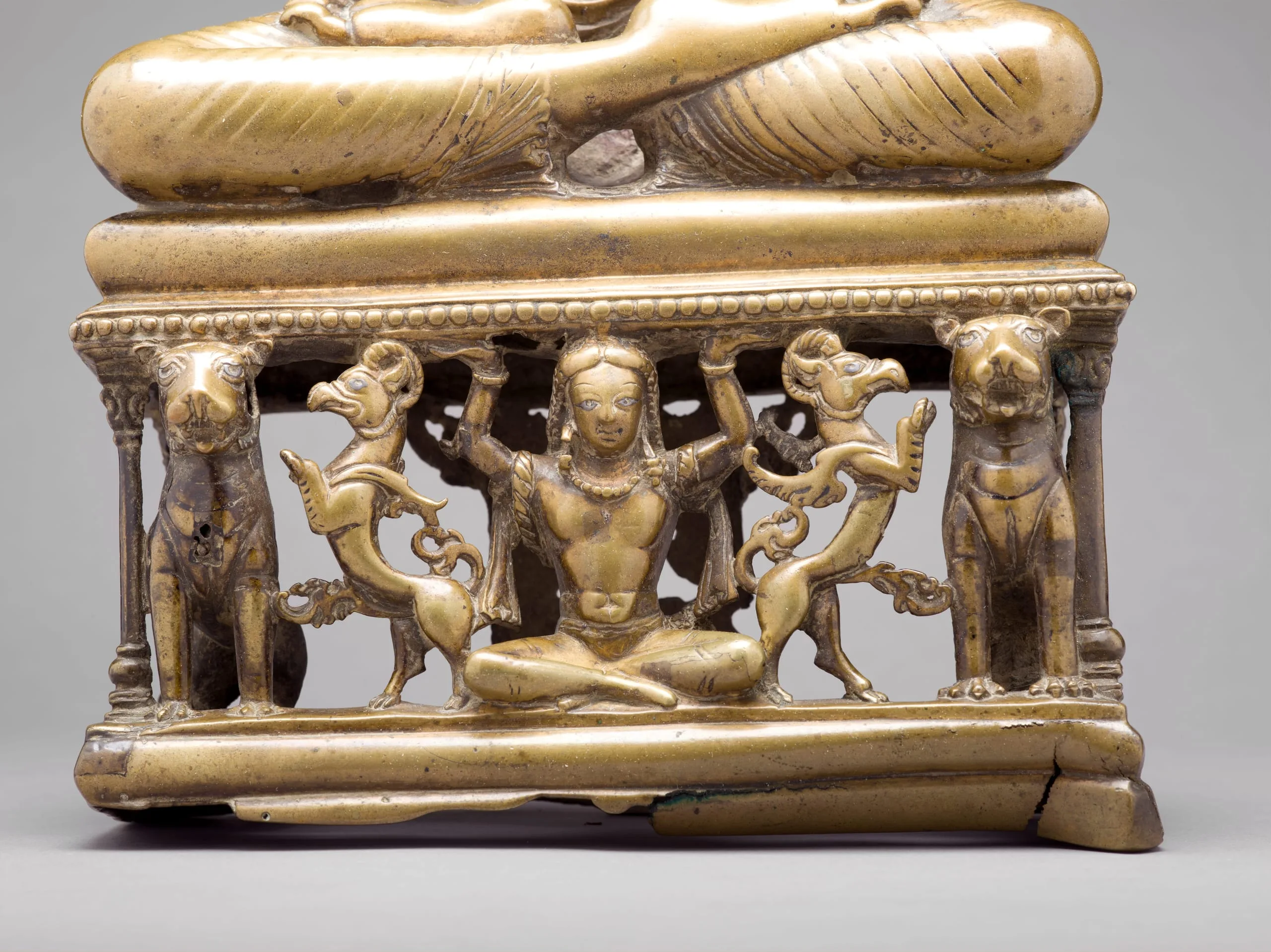
- Buddha Shakyamuni or the Jina Buddha Vairochana
- Date Made
- circa 725-750
- Medium
- Copper-zinc-tin alloy inlaid with silver
- Dimensions
- 16 x 8 1/2 x 3 5/8 in. (40.64 x 21.59 x 9.2 cm)
- Accession Number
- M.69.13.5
- Curatorial Notes
The historical Buddha Shakyamuni, traditionally dated to 563–483 BCE, or the transcendent Jina Buddha Vairochana in Akanishta Heaven, is represented in this elegant Kashmiri image. Both Buddhas hold their hands in the gesture of Turning the Wheel of the Law (dharmachakra mudra) and both sit with their feet being crossed in meditation (dhyana asana). The Buddha has the cranial protuberance (ushnisha) emblematic of his omniscience, the circular forehead marking (urna) indicating his enlightenment, and elongated earlobes symbolizing his renunciation of the material world. He wears a pleated robe over one shoulder. A small lug at the base of his neck indicates that he once had a separately cast nimbus. He sits on a lion throne associated with royal imagery that emphasizes his spiritual sovereignty. A demigod (yaksha) supports the throne in the front. He is flanked by two rearing griffins. The back corners of the throne each have a column rising out of a pot with a flaring capital. A pierced foliate panel supports the middle of the throne in the rear.