LACMA

ShopMembershipMyLACMATickets
LACMA
Los Angeles County Museum of Art
5905 Wilshire Blvd.
Los Angeles, CA 90036
info@lacma.org
(323) 857-6000
Sign up to receive emails
Subscribe
© Museum Associates 2025

Museum Hours

Monday

11 am–6 pm

Tuesday

11 am–6 pm

Wednesday

Closed

Thursday

11 am–6 pm

Friday

11 am–8 pm

Saturday

10 am–7 pm

Sunday

10 am–7 pm


  • About LACMA
  • Jobs
  • Building LACMA
  • Host An Event
  • Unframed
  • Press
  • FAQs
  • Log in to MyLACMA
  • Privacy Policy
© Museum Associates 2025
Collections

Unknown
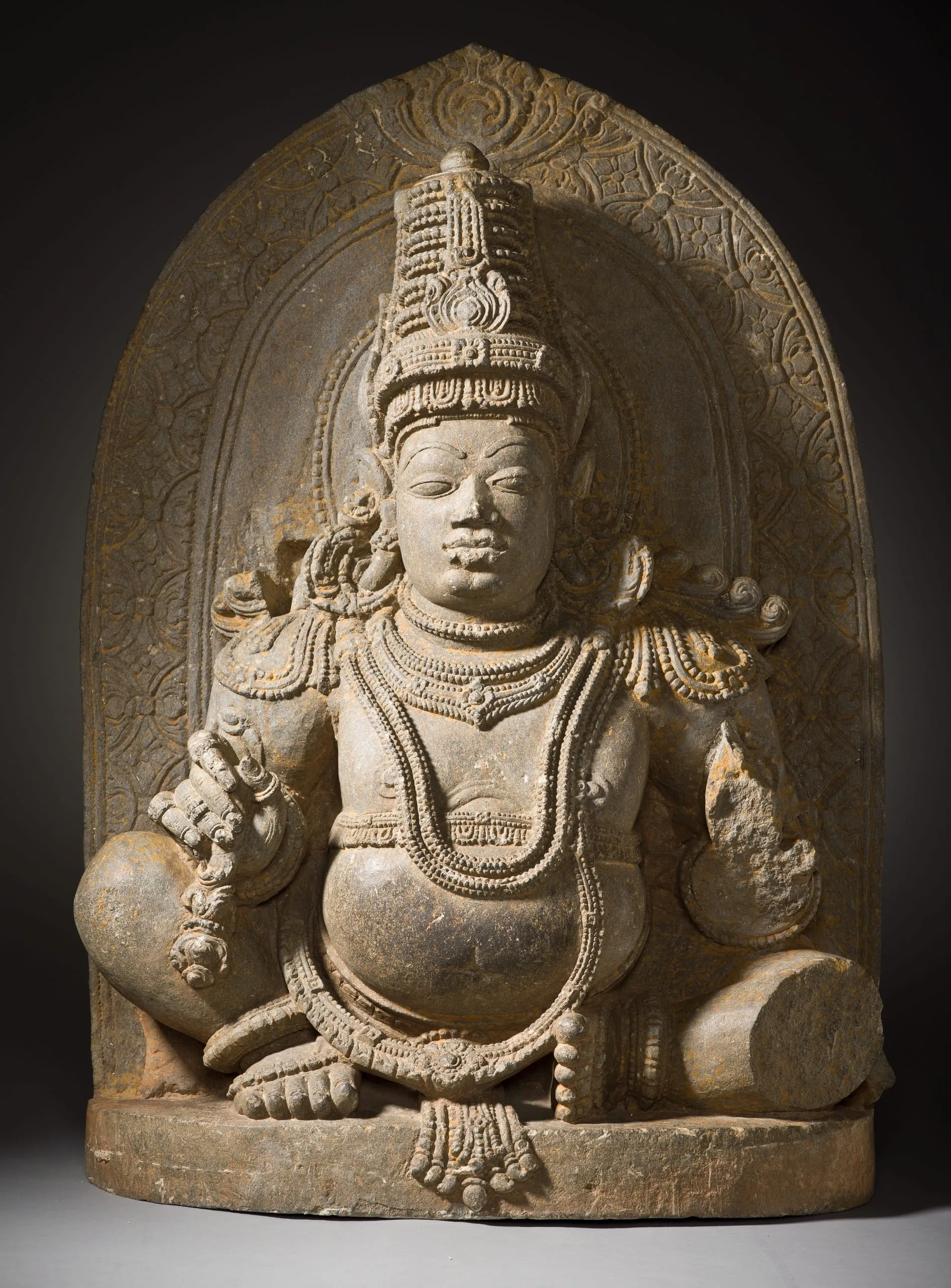
Kubera, the God of Richescirca 1050

Not on view
Stone sculpture of a four-armed seated deity with a tall tiered crown, multiple beaded necklaces, and cross-legged pose, set against an arched slab carved with scrolling floral patterns
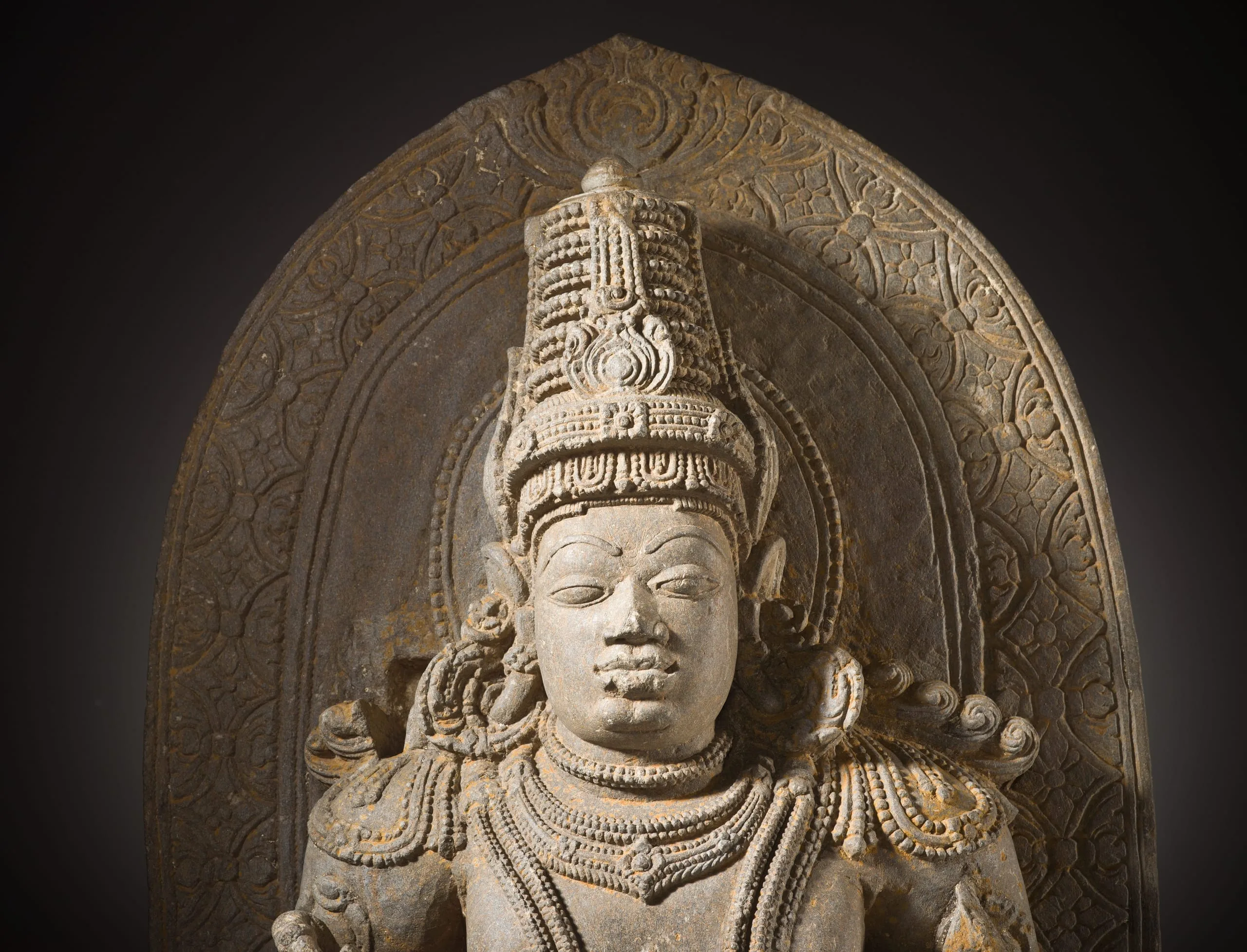
Stone sculpture, upper body of a deity figure wearing a tall cylindrical crown with intricate carved bands, multiple beaded necklaces, and ornate shoulder decorations, set against an arched prabhamandala with scrolling floral relief carving.
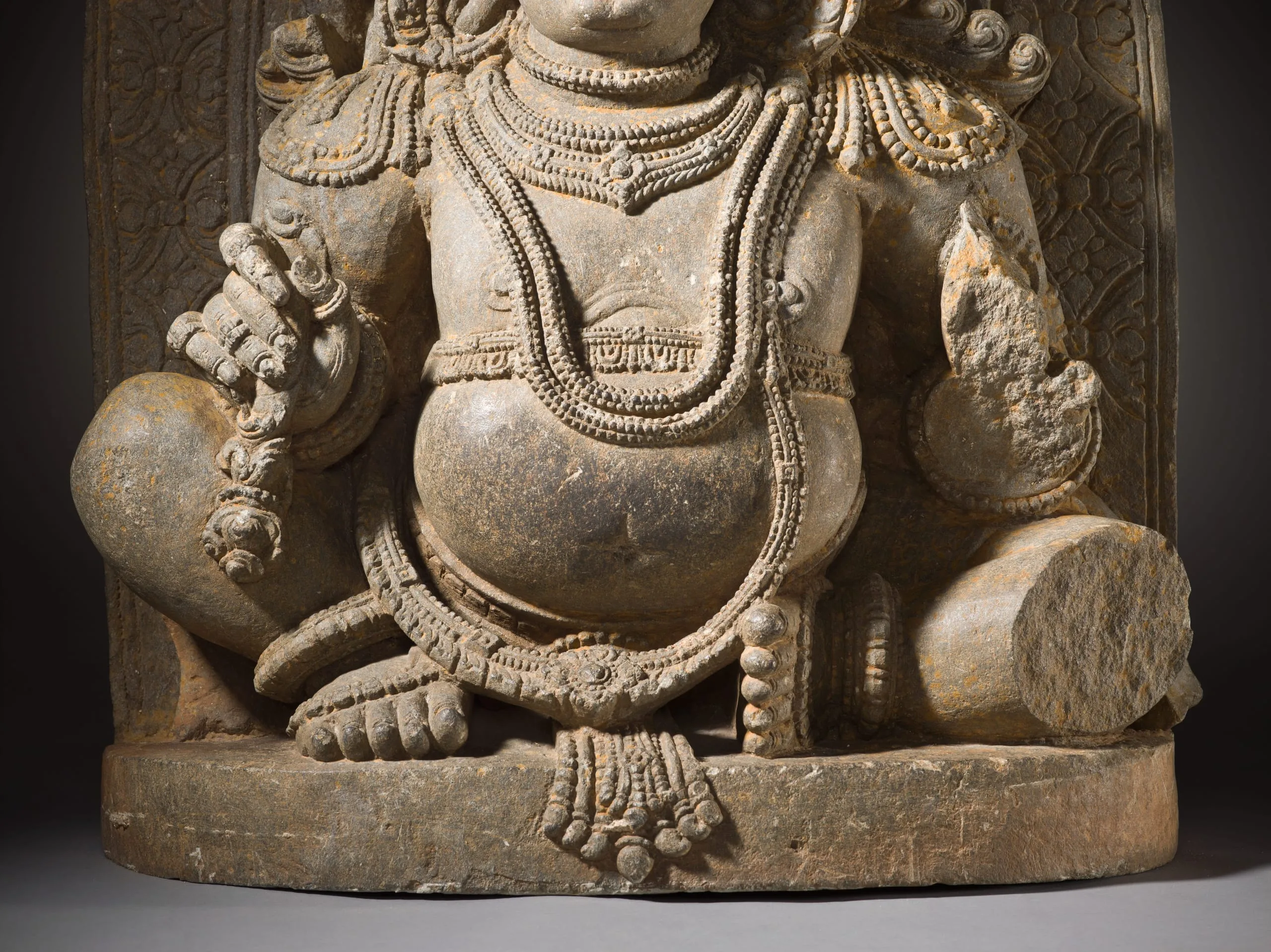
Stone sculpture of a seated deity with a rotund belly, four arms, and an elephant head partially visible above; adorned with intricately carved multilayered bead necklaces, waistband, and ornaments, set against a relief-carved backplate.
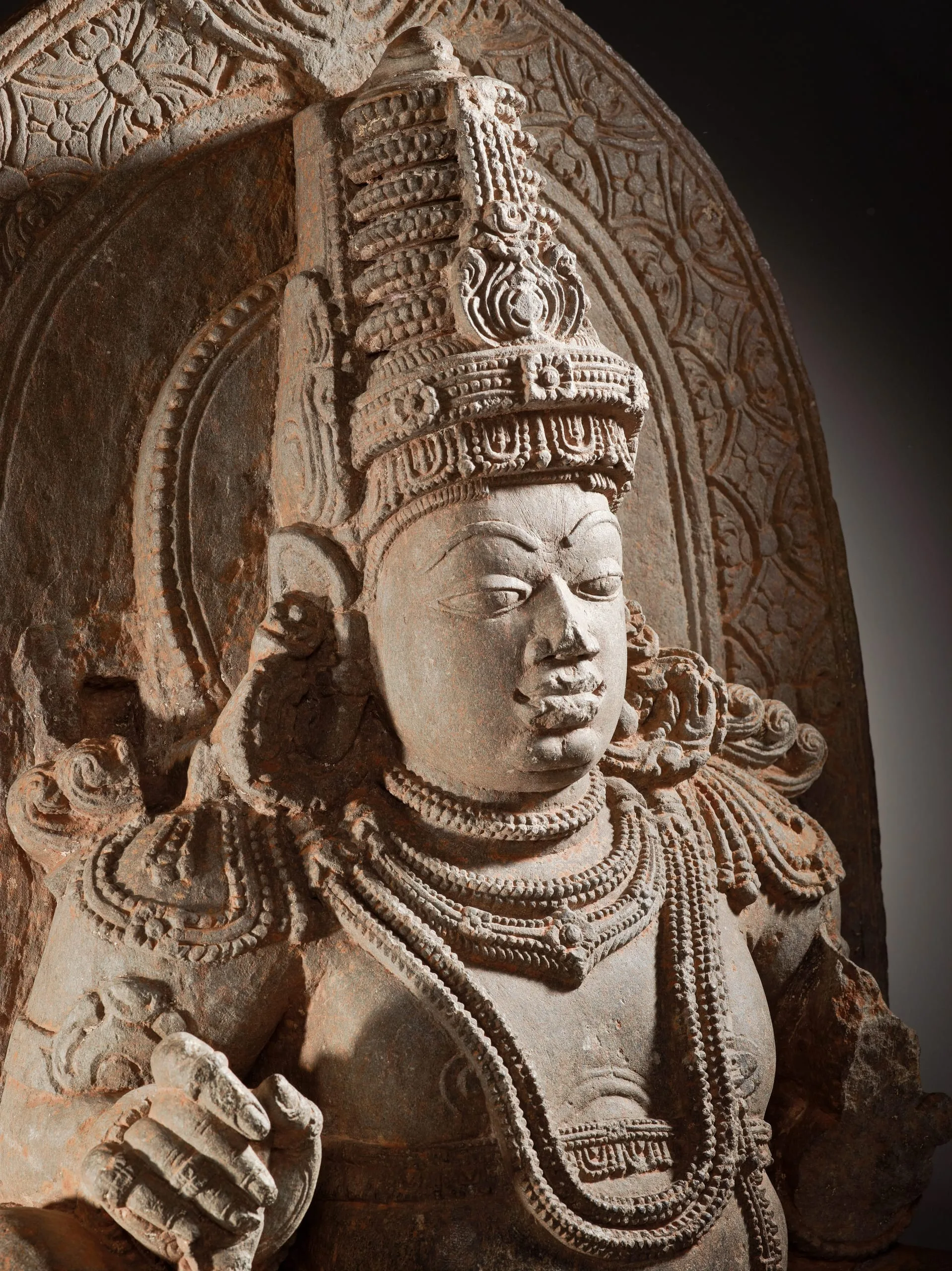
Stone sculpture, close-up of a deity figure wearing an elaborately carved tall crown and multiple layered necklaces, set against a circular prabhavali with floral relief carving, detailed surface texture throughout.
Artist or Maker
Unknown
Title
Kubera, the God of Riches
Place Made
India, Karnataka, Varuna
Date Made
circa 1050
Medium
Magnesian schist
Dimensions
36 x 24 1/4 x 12 in. (91.44 x 61.59 x 30.48 cm)
Credit Line
From the Nasli and Alice Heeramaneck Collection, Museum Associates Purchase
Accession Number
M.69.13.8
Classification
Sculpture
Collecting Area
South and Southeast Asian Art
Curatorial Notes
Kubera, The God of Riches, is also known as Vaishravana or Jambhala. He is venerated by Hindus, Buddhists, and Jains. Kubera was originally the chief of the demigods and guardians of treasures (yakshas). He is also the Regent of the Northern Direction (dikpala). This Jain representation from Varuna, Karnataka, exhibits his characteristic iconography of being potbellied (tundila). He wears copious princely ornaments (bodhisattva abharana) and has long wavy locks of hair on his shoulders. He is seated on a lotus base in the kingly posture of royal ease (maharajalila asana) with his left leg lying flat and his right knee raised. His now-missing left hand likely once held a pomegranate (dadima) or citron (jambhira). His right hand holds the stalk of a now-broken lotus (padma). His aureole has a plain inner band and an outer band decorated with diamond-shaped floral motifs with bead junctures.
Selected Bibliography
  • Newman, Richard. The Stone Sculpture of India: a Study of the Materials Used by Indian Sculptors from ca. 2nd Century B.C. to the 16th Century. Cambridge, MA: Center for Conservation and Technical Studies, Harvard University Art Museums, 1984.
  • El Universo de la India: Obras Maestras del Museo de Arte del Condado de Los Angeles. Santiago: Centro Cultural Palacio La Moneda, 2012.