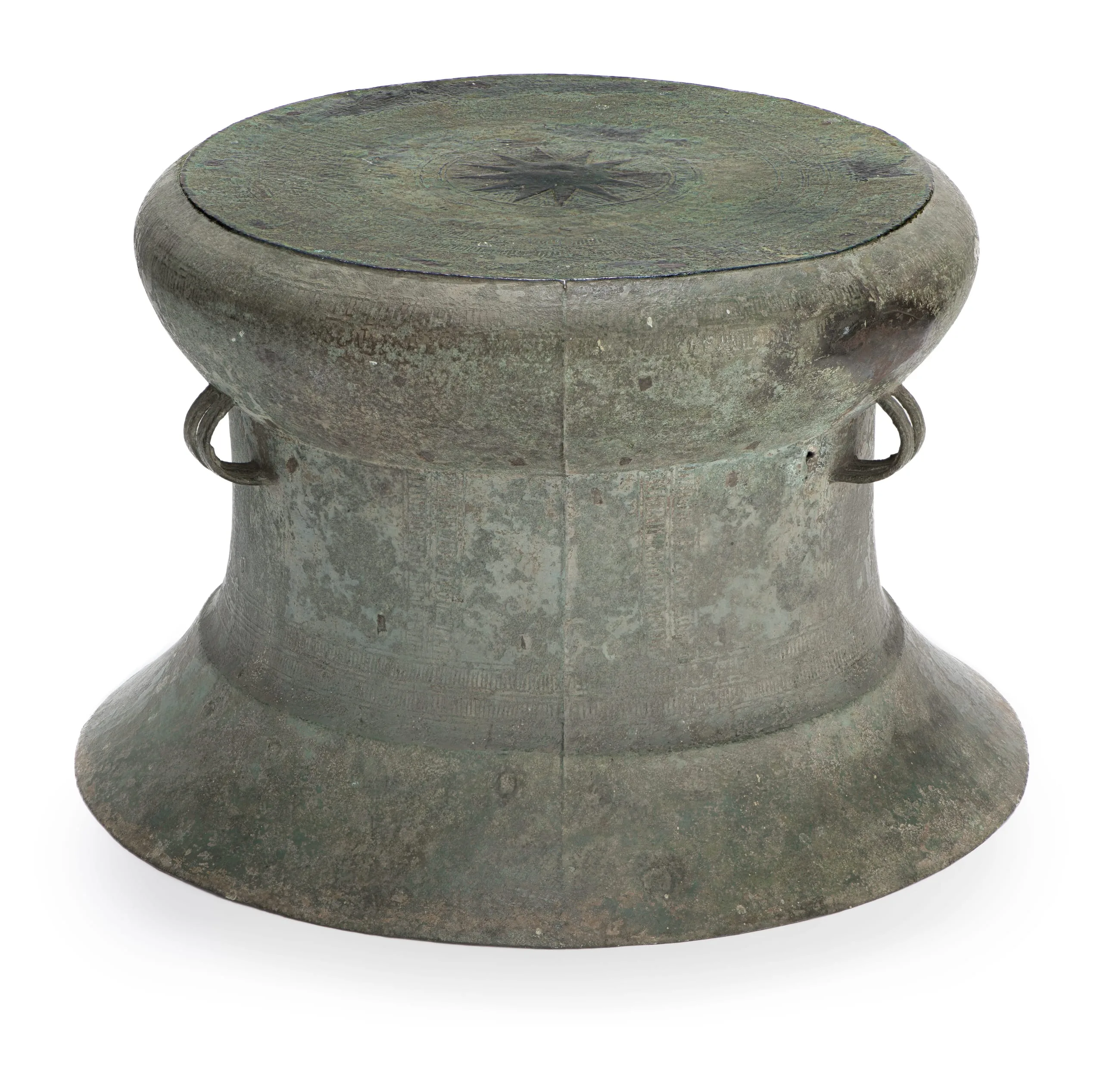
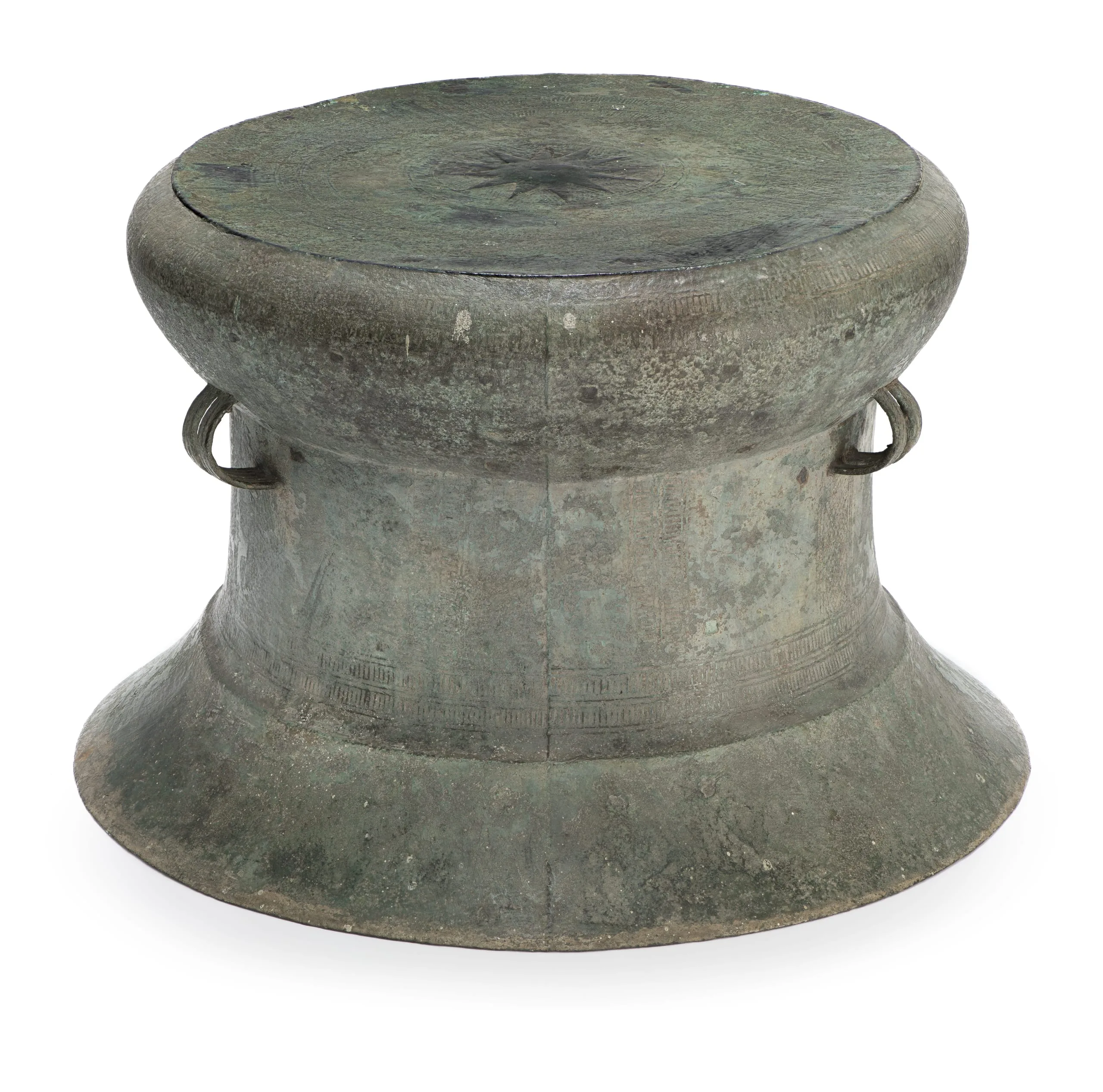
The Dongson culture derives its name from the modern village of Dongson in northern Vietnam, which is near the extensive necropolis of tumuli in which numerous types of objects were interned with the dead, likely in conjunction with funerary or ceremonial rituals. From the 7th century BCE to the Chinese conquest of the area by the Han Dynasty in the 2nd century CE, the Dongson people were one of the dominant Bronze Age cultures in Southeast Asia. As they were wide-ranging traders and travelers, the copper alloy (bronze) kettledrums that are the hallmark of their civilization have been found in Malaysia, Borneo, and throughout the islands of the Indonesian archipelago. Excavations by Vietnamese archaeologists have demonstrated that the Dongson drums originated in Vietnam and were later produced in distant localities where the Dongson people had trading settlements. Dongson drums can vary in size from miniature examples to over six feet in height and up to four feet in diameter.
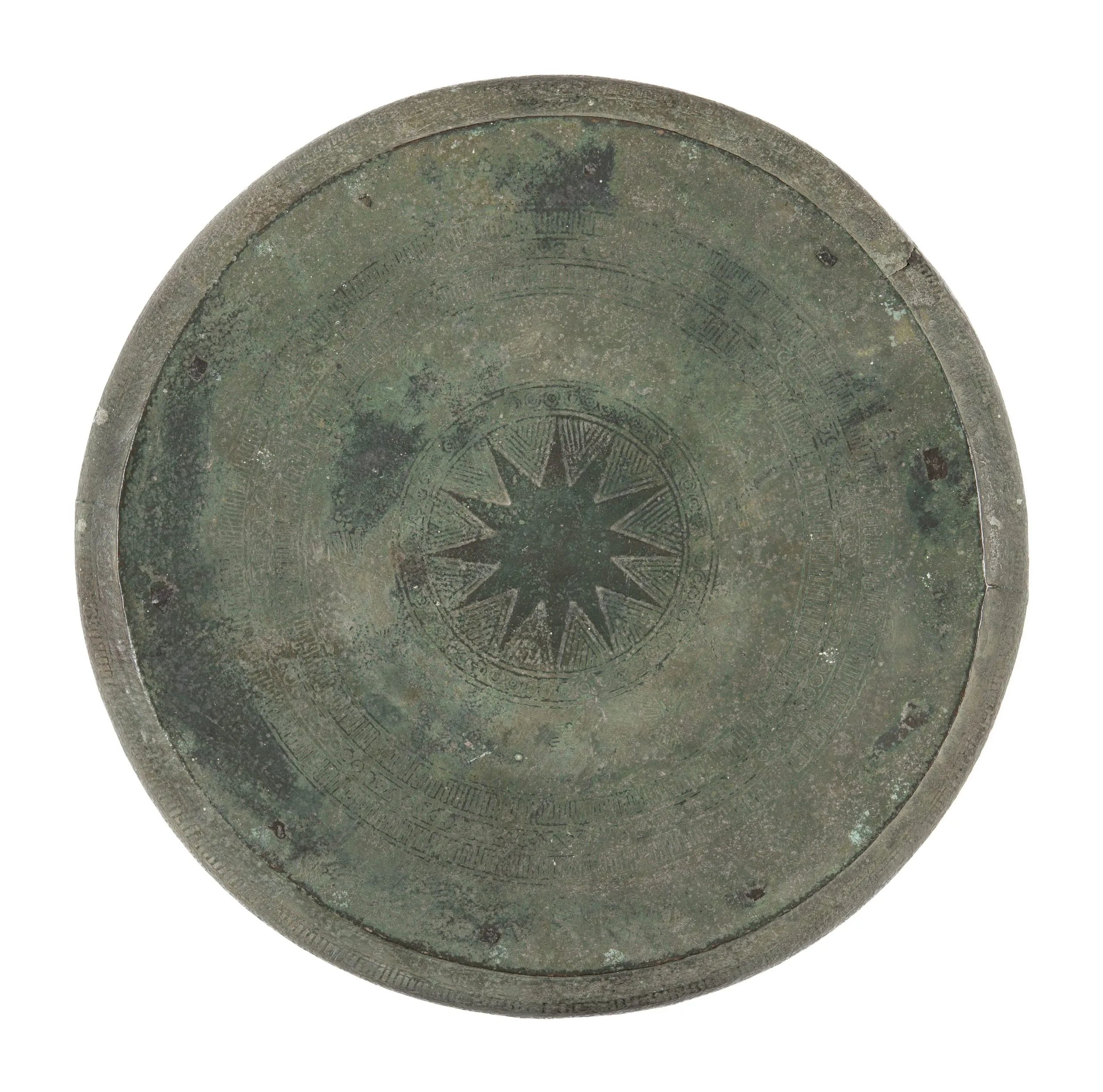
Dongson drums generally have a many-rayed star at the center of the drumhead, surrounded by concentric rings of "comb-tooth lines," center-dotted circles, and four long-beaked, long-tailed birds flying in a counterclockwise direction. Earlier drums often have figures portrayed, while later drums became more stylized and typically have frogs around the rims of the drumhead. Various interpretations of the central star and the bird imagery have been postulated by scholars, including astral symbolism, allegorical motifs, community affiliation markers, and decorative designs. Although somewhat difficult to discern because of its timeworn surface condition, this drumhead has a twelve-pointed star, concentric bands of "comb-tooth lines," and long-tailed birds. The side of the drum has long-tailed birds in compartments demarcated by "comb-tooth lines."
A miniature and possibly later Dongson drum is in the Metropolitan Museum of Art, New York (2000.284.57). See also M.91.350.1 and M.2003.226.4.