LACMA

ShopMembershipMyLACMATickets
LACMA
Los Angeles County Museum of Art
5905 Wilshire Blvd.
Los Angeles, CA 90036
info@lacma.org
(323) 857-6000
Sign up to receive emails
Subscribe
© Museum Associates 2026
  • About LACMA
  • Jobs
  • Building LACMA
  • Host An Event
  • Unframed
  • Press
  • FAQs
  • Log in to MyLACMA
  • Privacy Policy
© Museum Associates 2026
Collections

Unidentified artist
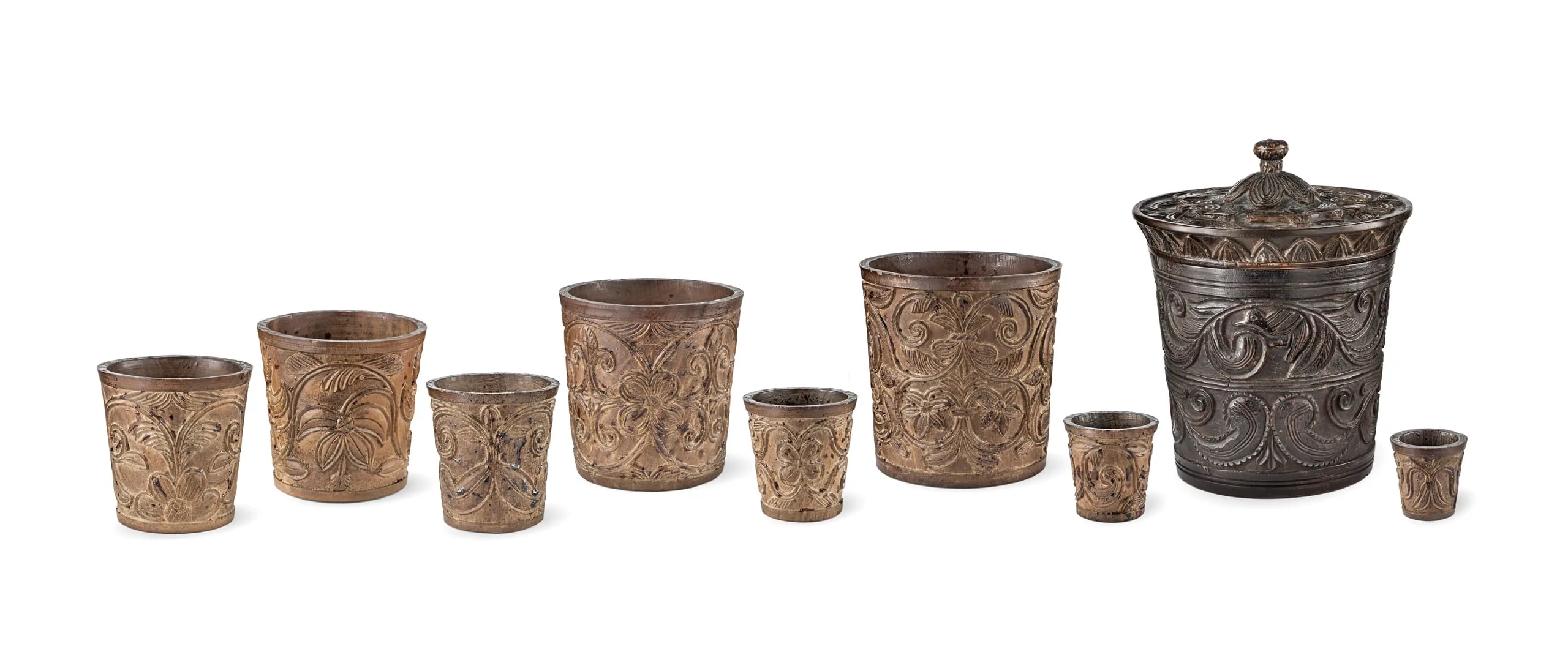
Measuring Cups (Vasos para medir)circa 1750-1800

On view:
Geffen Galleries, South American Symbolic Universes
Set of eight graduated gilt-metal cups with repoussé foliate decoration, arranged in a row, with one large lidded silver vessel at right
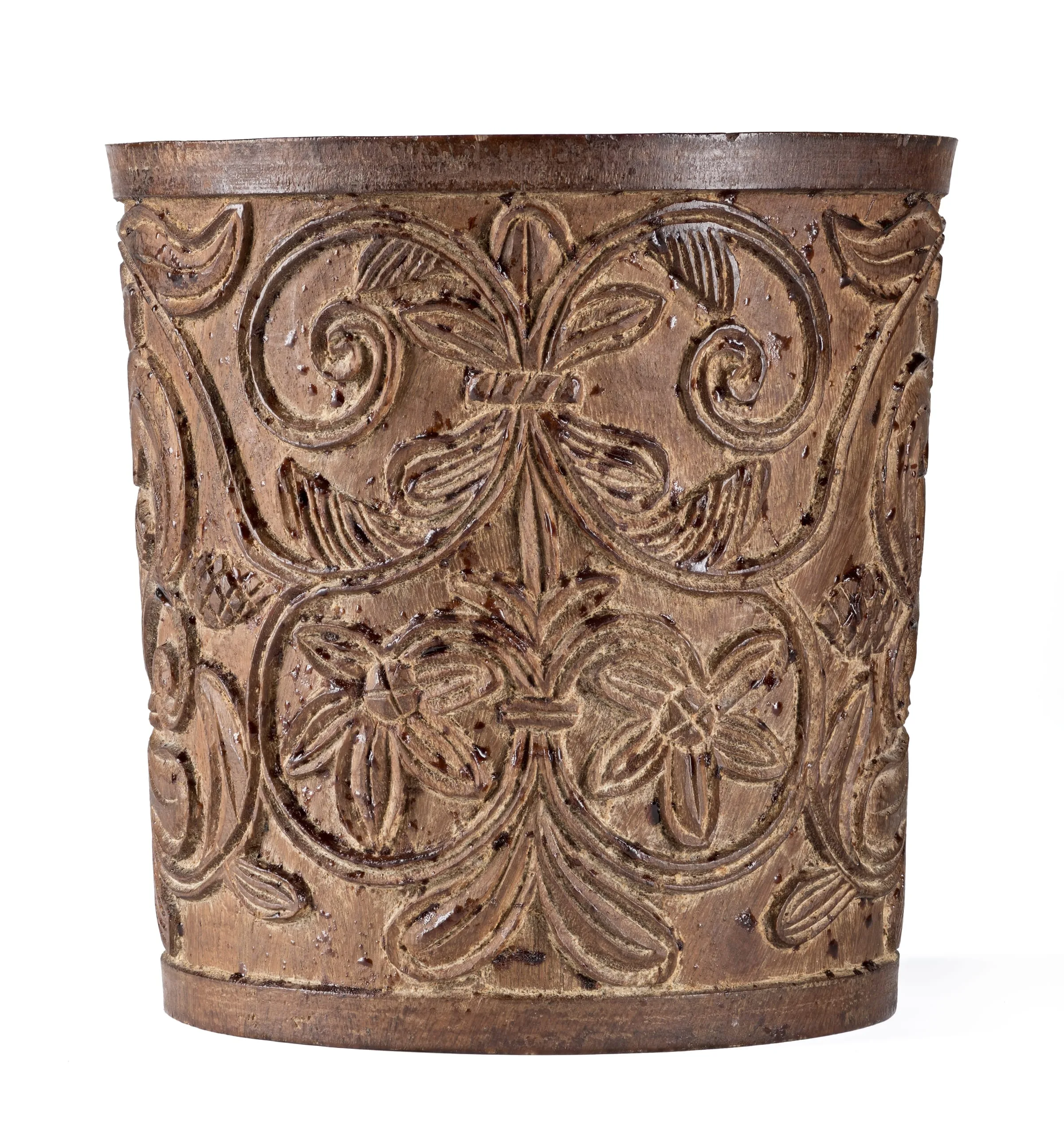
Cylindrical wooden vessel with deeply carved scrolling foliage, floral rosettes, and interlacing vine motifs covering the entire exterior surface, with plain banded rim and base.
Artist or Maker
Unidentified artist
Title
Measuring Cups (Vasos para medir)
Place Made
Bolivia, possibly Moxos or Chiquitos
Date Made
circa 1750-1800
Medium
Carved tropical wood
Dimensions
Large to small (height × diameter): (1) 7 1/2 × 5 1/2 in. (19.1 × 14 cm); (2) 4 1/4 × 4 1/8 in. (10.8 × 10.5 cm); (3) 4 × 3 11/16 in. (10.2 × 9.4 cm); (4) 3 5/16 × 3 1/4 in. (8.4 × 8.3 cm); (5) 3 1/4 × 3 in. (8.3 × 7.6 cm); (6) 2 7/8 × 2 1/2 in. (7.3 × 6.4 cm); (7) 2 3/8 × 2 1/4 in. (6 × 5.7 cm); (8) 1 7/8 × 1 7/8 in. (4.8 × 4.8 cm); (9) 1 1/2 × 1 1/2 in. (3.8 × 3.8 cm)
Credit Line
Purchased with funds provided by the Bernard and Edith Lewin Collection of Mexican Art Deaccession Fund
Accession Number
M.2020.84.1-.9
Classification
Furnishings
Collecting Area
Latin American Art
Curatorial Notes

Nested within a larger lidded container, this set of nine cups—likely employed for measuring various substances—is profusely embellished with carved floral and bird motifs. Their format recalls the Andean metal cups known as aquillas and those made of wood known as keros, which were important ceremonial vessels for drinking chicha (corn beer) in ancient and colonial times.

Indigenous artists carved exquisite wood objects that drew simultaneously on local and foreign decorative motifs and employed a variety of tropical woods. They labored in missions (reducciones) established by Jesuit priests, who first arrived in Moxos and Chiquitos (in present-day Bolivia) in the late 1600s. By the 1700s, the Jesuits had established a chain of largely self-sustaining missions, where different Indigenous groups were relocated for the purpose of evangelization and work in different types of trades.

Ilona Katzew

2024

Provenance
Susana Montiel de Colmenares, London, c. 1980s; Pedro Aguiar-Branco, Portugal and France, 2001; AR-PAB gallery (Álvaro Roquette and Pedro AguiarBranco), Paris; Eguiguren Arte de Hispanoamérica (Javier Eguiguren), 2019; LACMA, 2019.
Selected Bibliography
  • Katzew, Ilona, ed. Archive of the World: Art and Imagination in Spanish America, 1500–1800: Highlights from LACMA’s Collection. Exh. Cat. Los Angeles: Los Angeles County Museum of Art; New York: DelMonico Books/D.A.P., 2022.
Selected Exhibition History
  • Archive of the World: Art and Imagination in Spanish America, 1500–1800. June 12, 2022 - October 30, 2022
  • Archive of the World: Art and Imagination in Spanish America, 1500–1800. October 20, 2023 - January 28, 2024
  • Archive of the World: Art and Imagination in Spanish America, 1500–1800. June 22, 2024 - September 08, 2024

Related Exhibitions