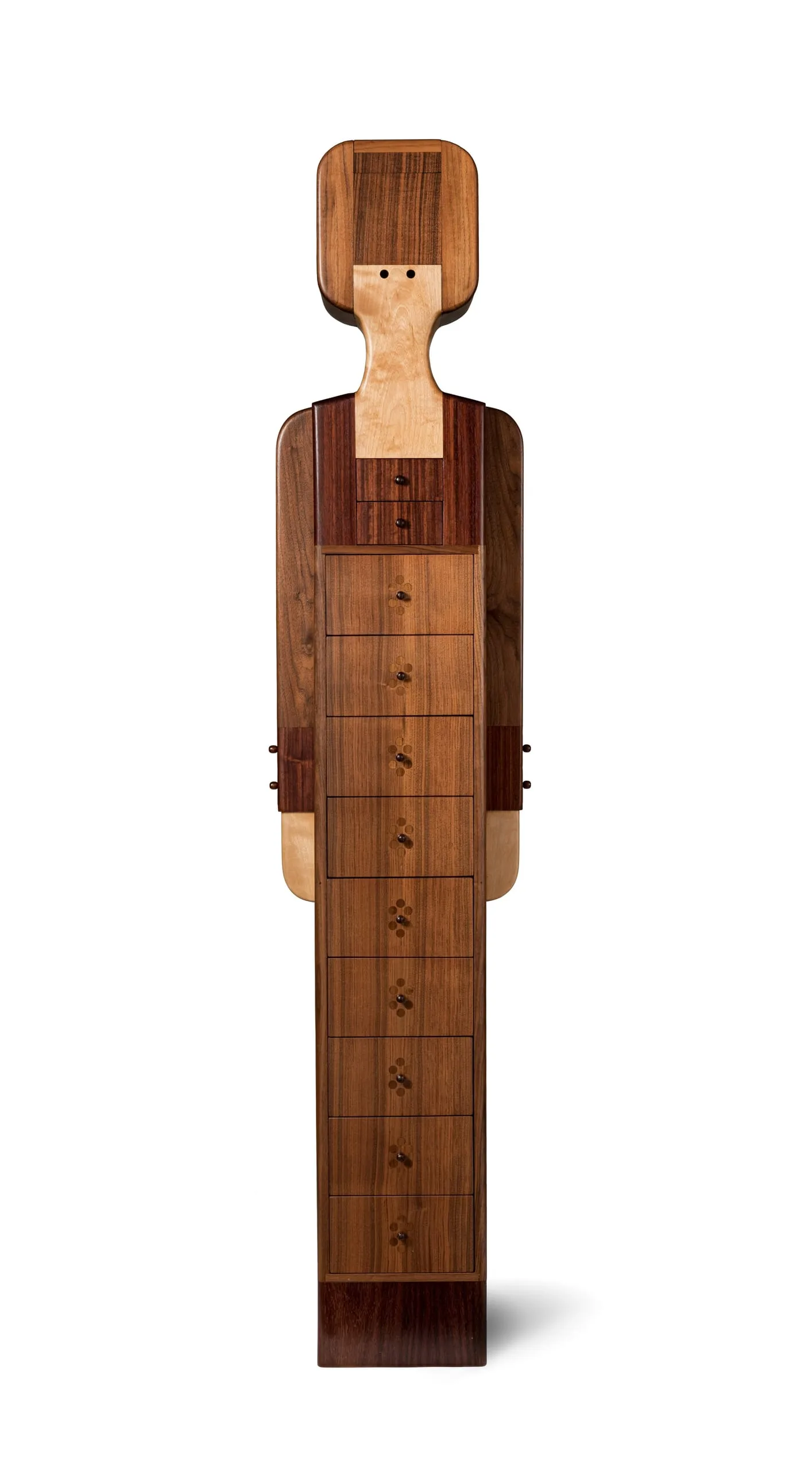
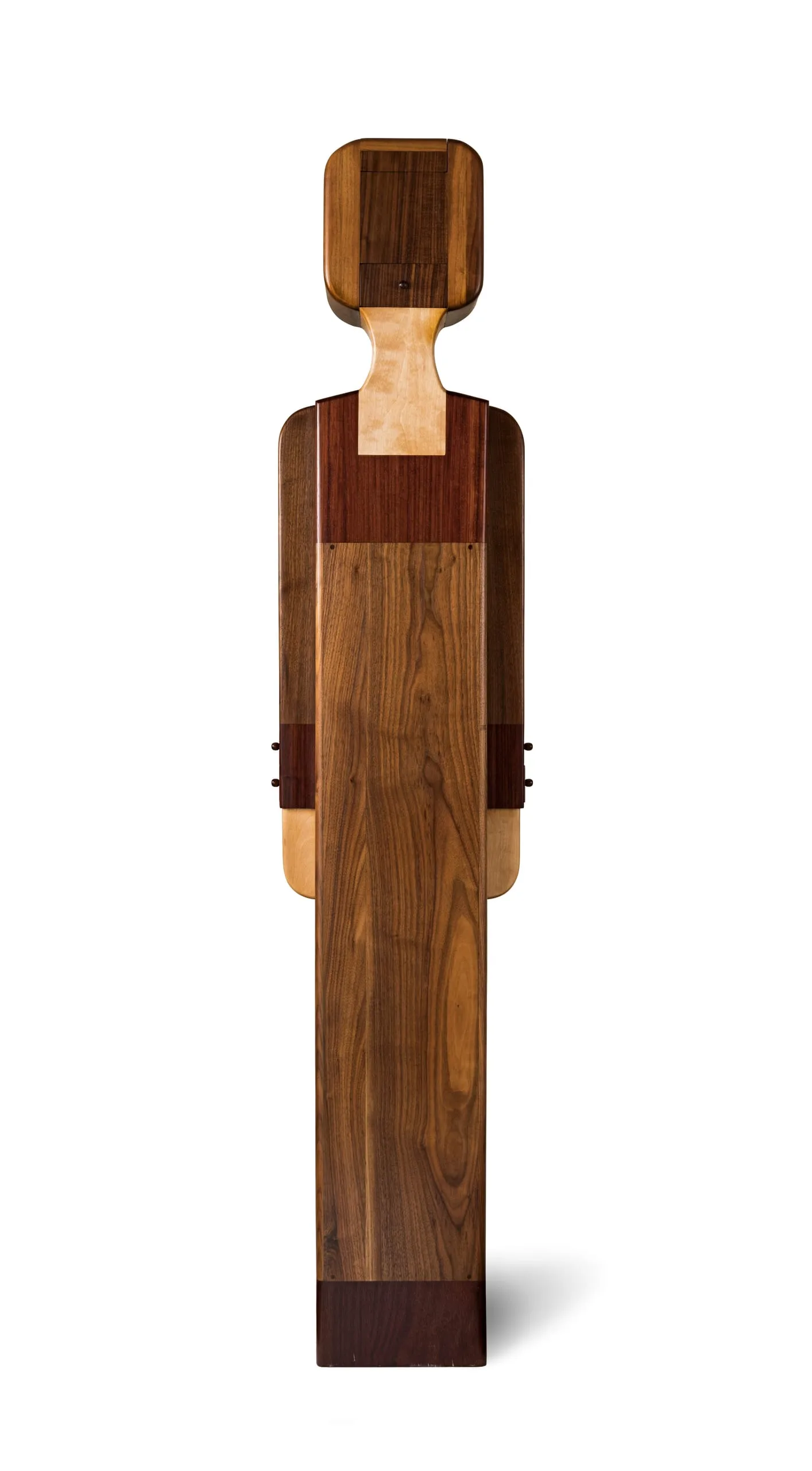
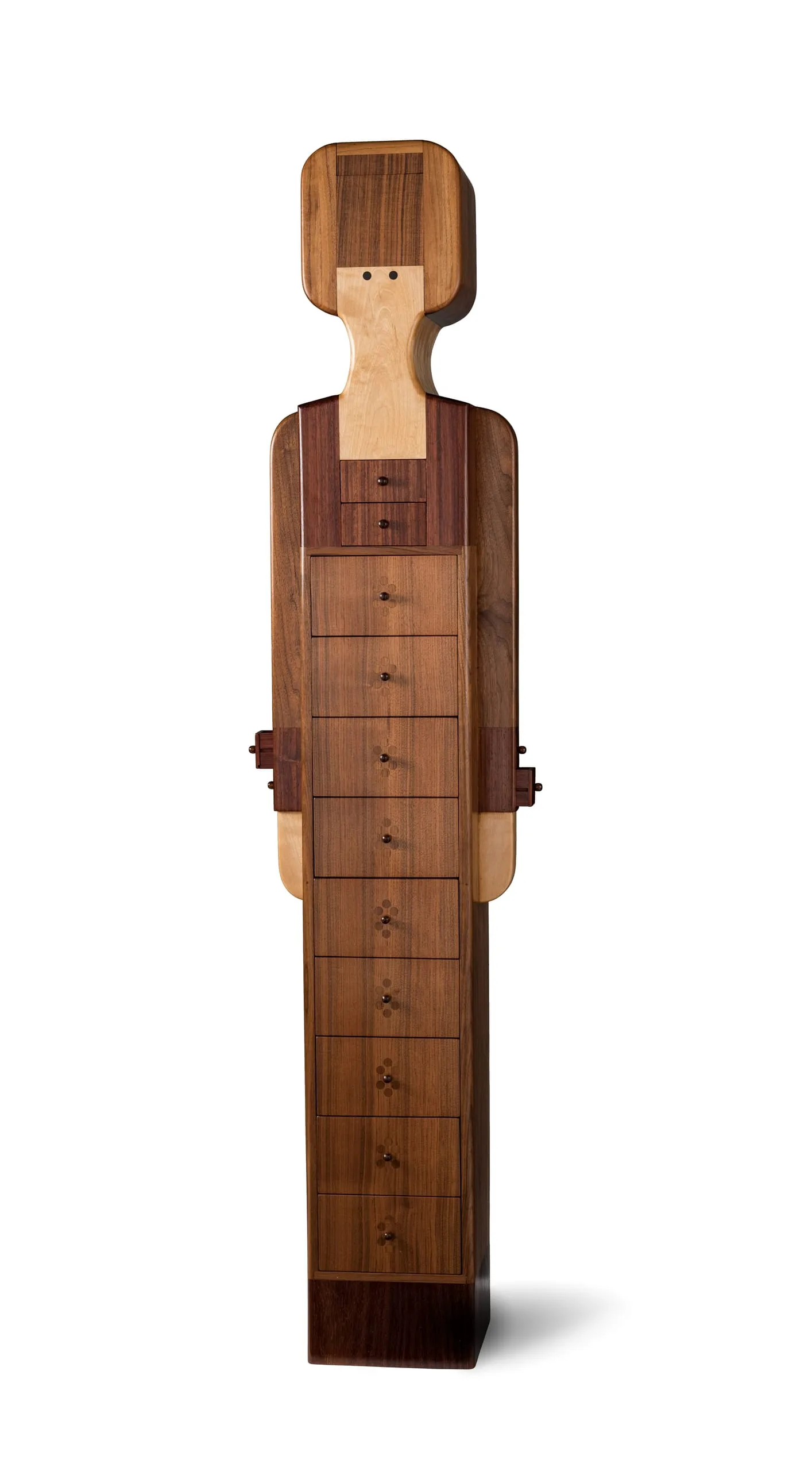
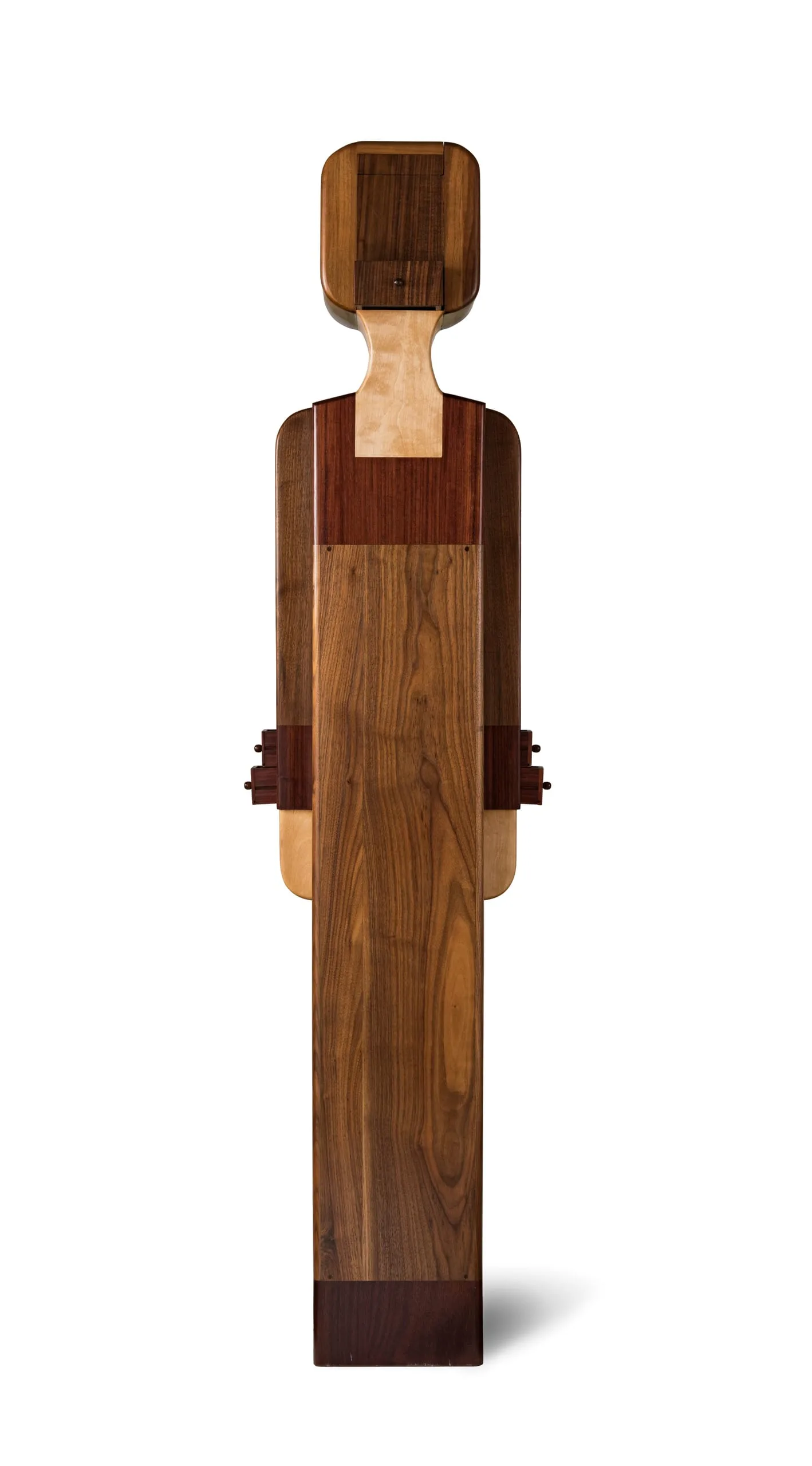
A sculptor in wood among other media, Pamela Weir-Quiton was introduced to woodworking in a class at California State University, Northridge. For the final assignment to make a piece of furniture, Weir-Quiton crafted a chest of drawers in the shape of an over-lifesize doll. The result was Sloopy, named after the hit McCoys song of 1965 "Hang on Sloopy." In the song, Sloopy "lives in a very bad part of town, and everybody (yeah) tries to put my Sloopy down." As a rare woman in a field dominated by men, Weir-Quiton closely identified with Sloopy’s marginalized status and the towering female doll allowed her to assert her rightful place in the field.
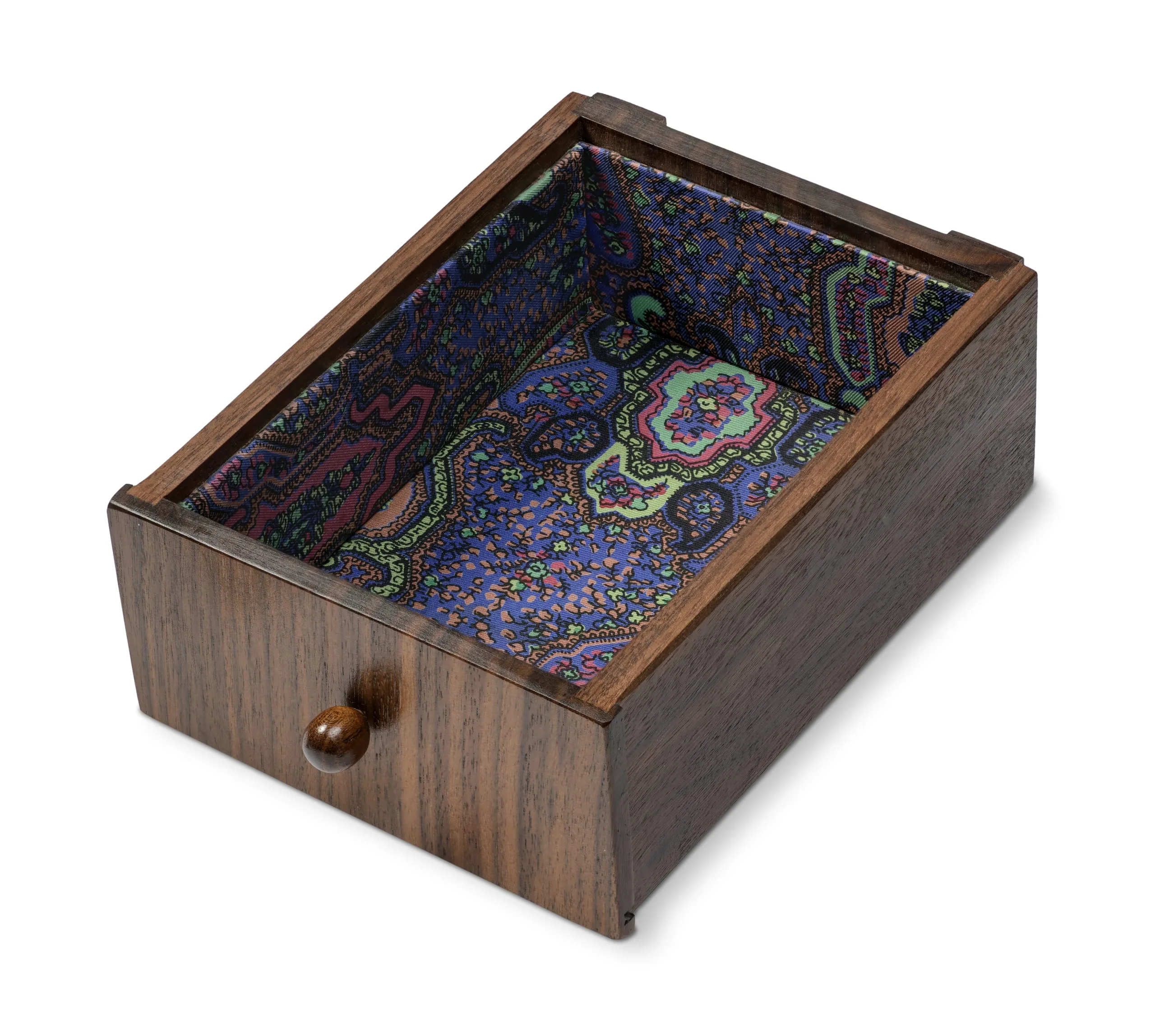
Weir-Quiton lined the drawers with a purple and lime green paisley fabric and used the piece to store her lingerie (her false eyelashes went in the drawers in the doll’s wrists). She became known for the sculptural wooden animal figures that could be used as playscapes. From the 1970s to the 1990s, she created such work for corporate lobbies, department stores, and malls throughout Southern California, including the shoe department at Orbach’s department store, located on the site of the current Petersen Automotive Museum.
Bobbye Tigerman, Marilyn B. and Calvin B. Gross Curator, Decorative Arts and Design, 2019