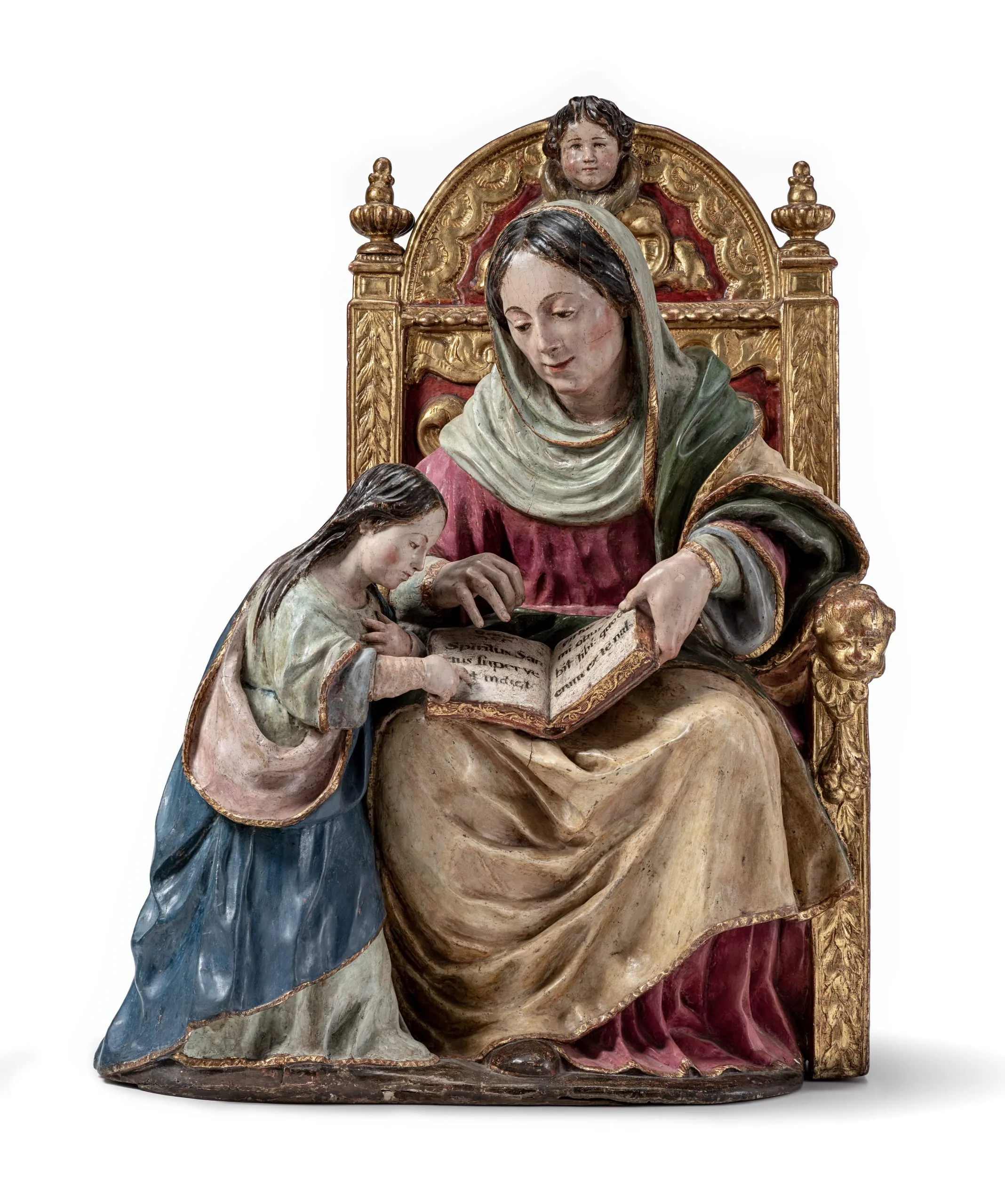
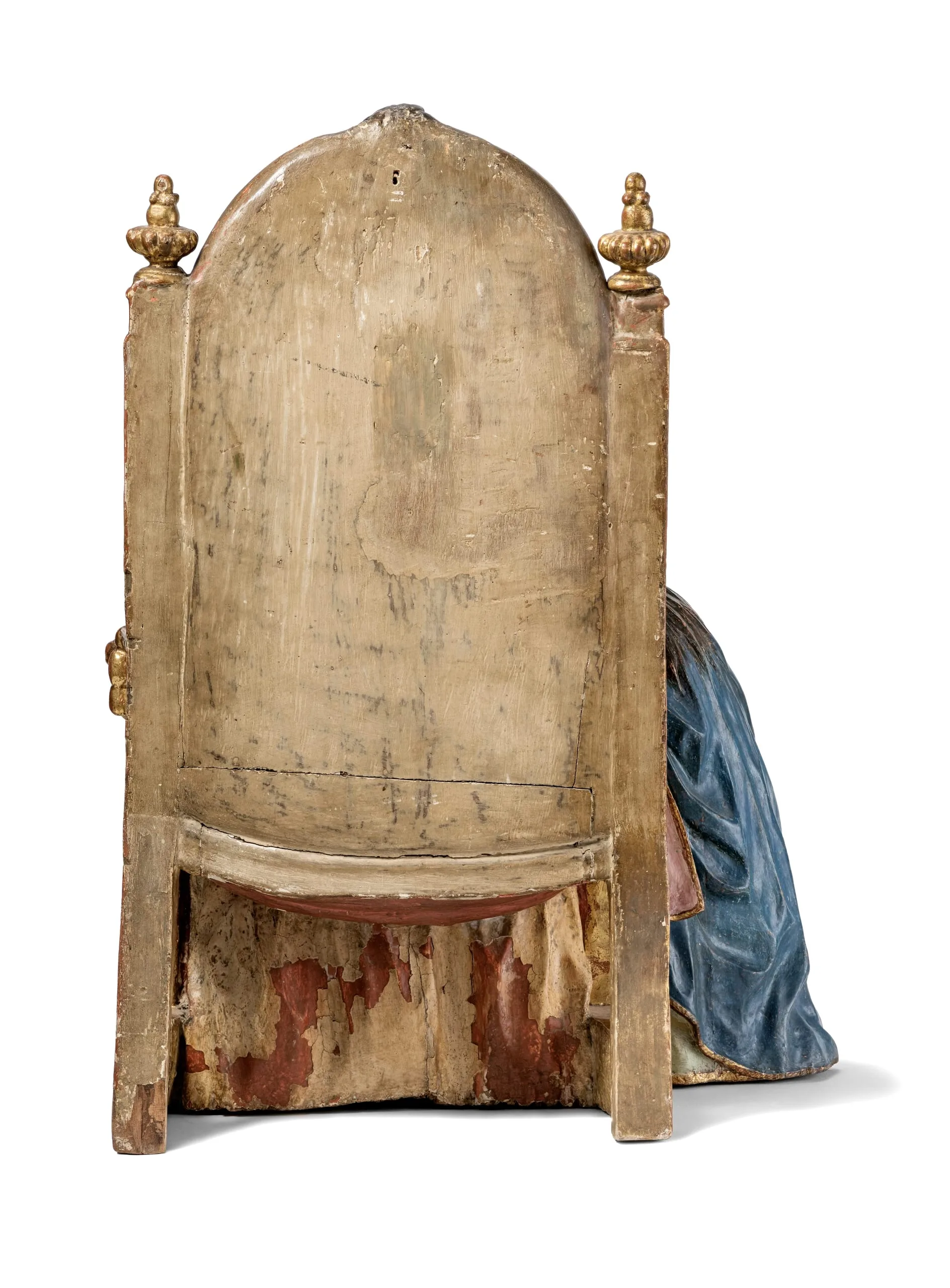
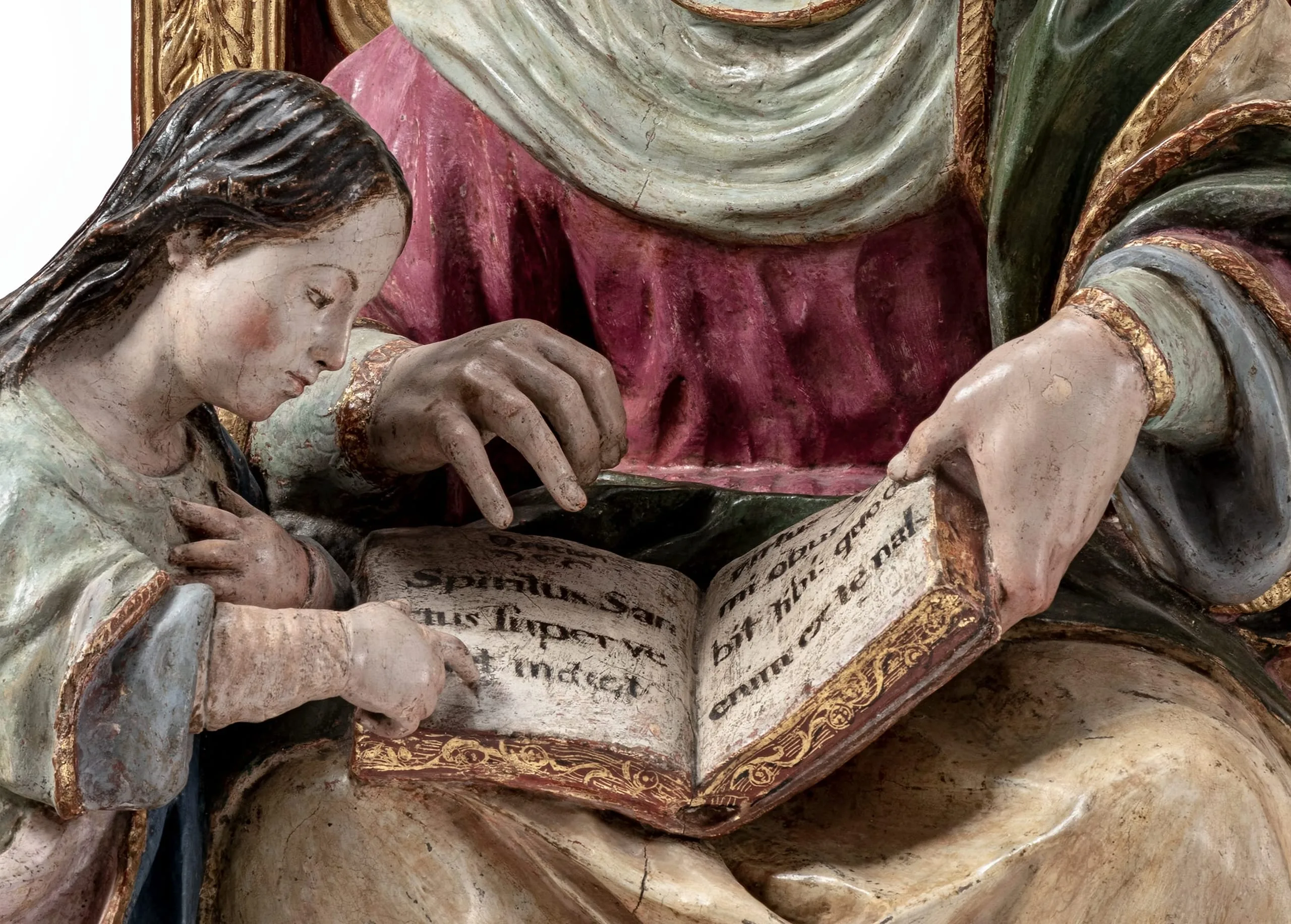
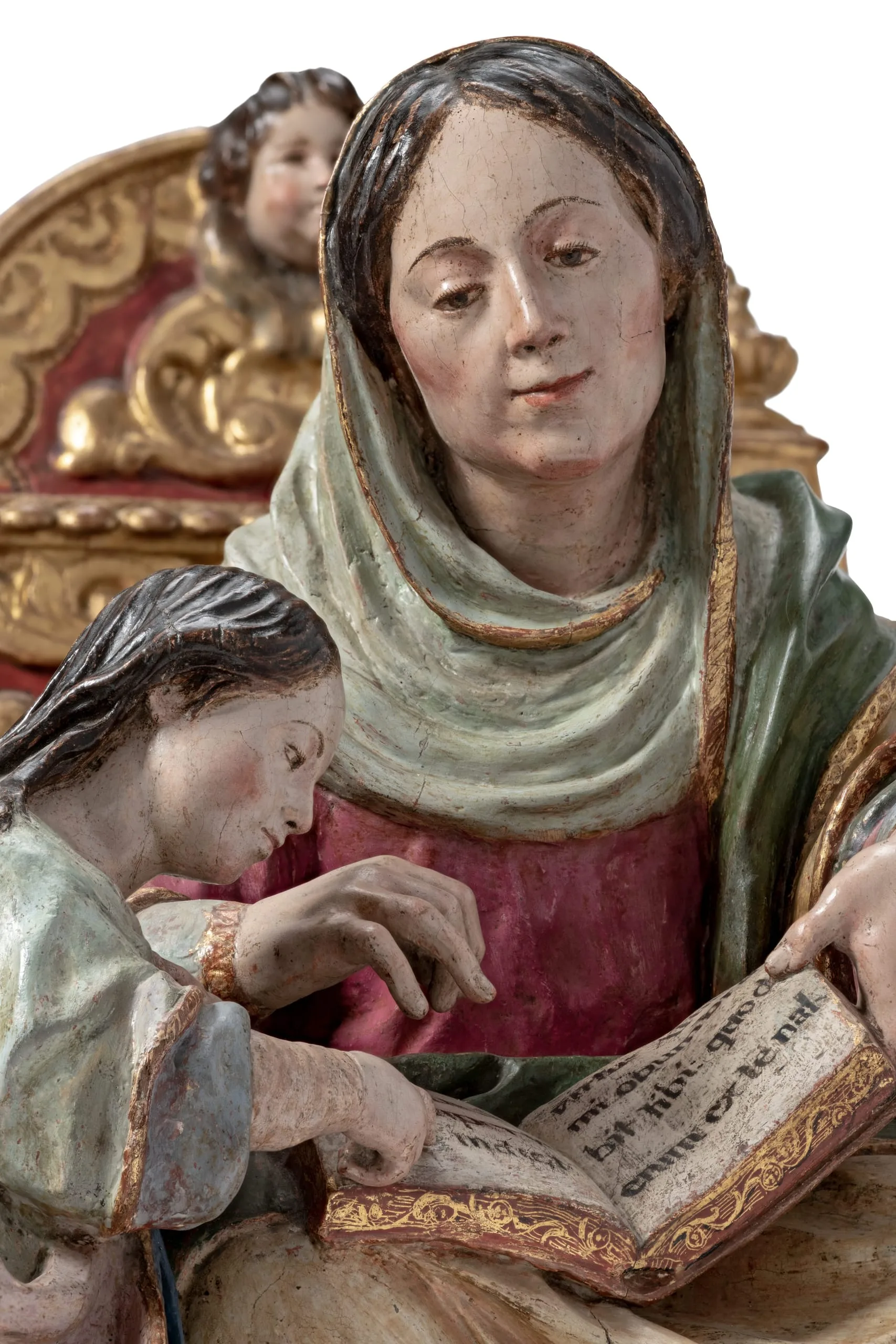
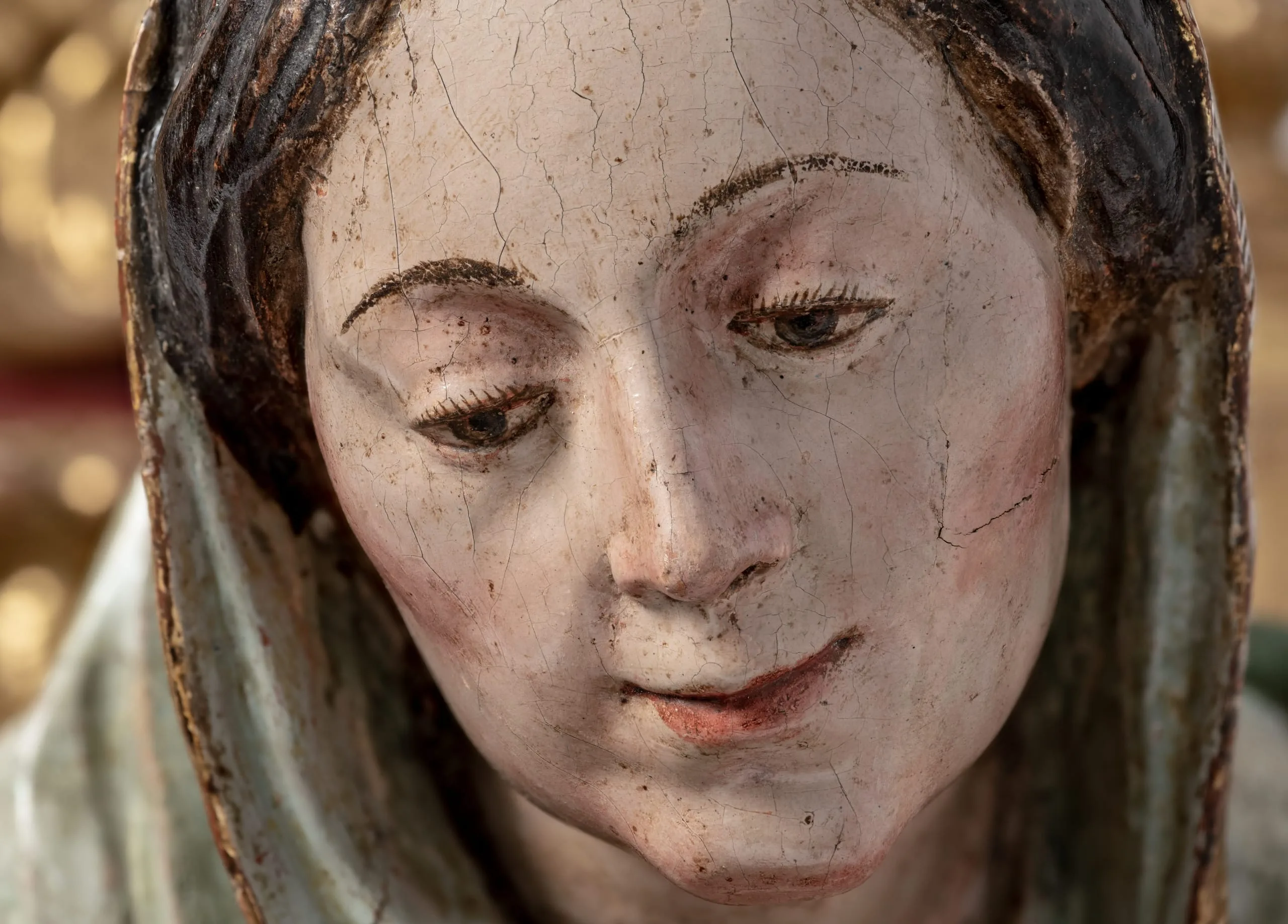
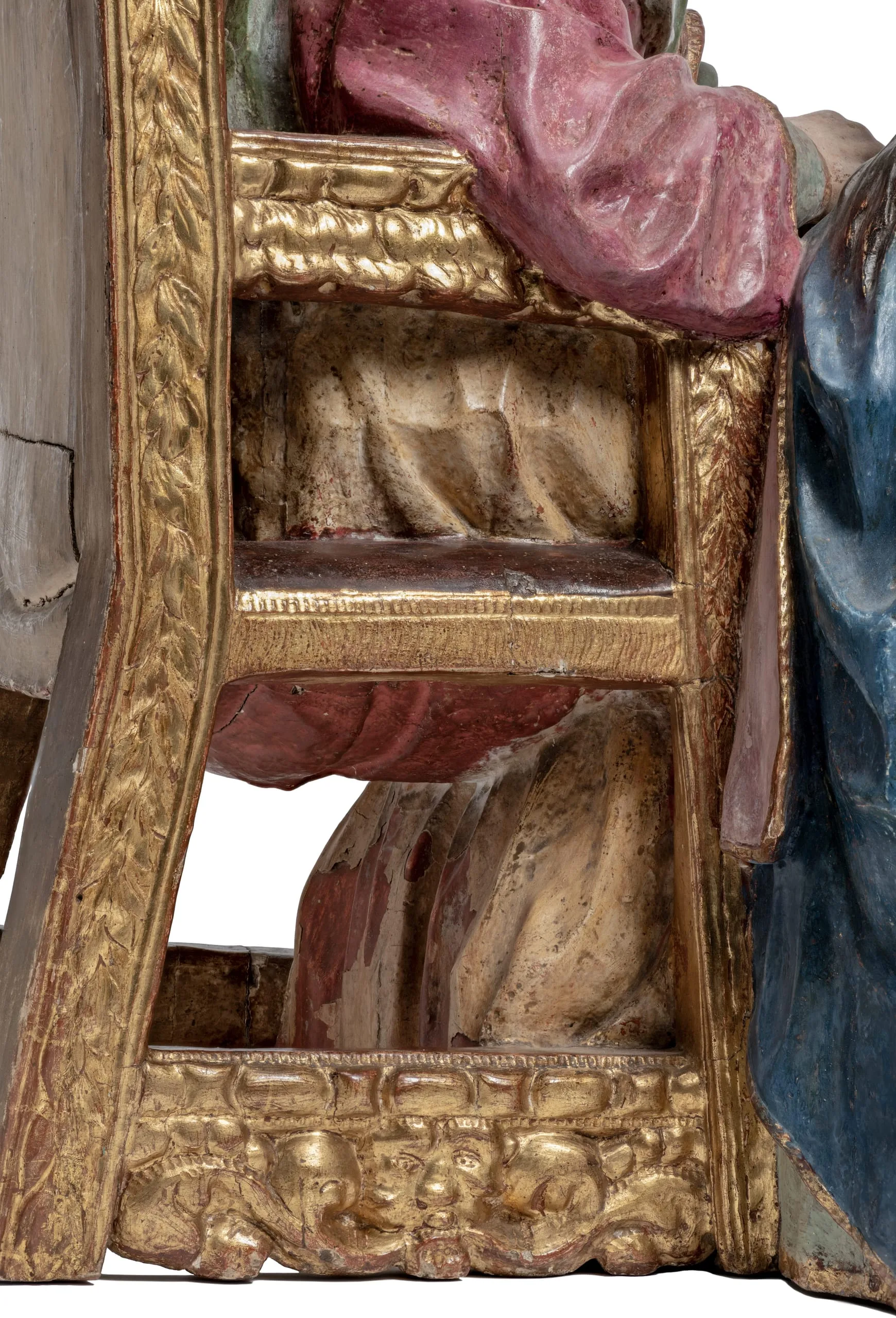
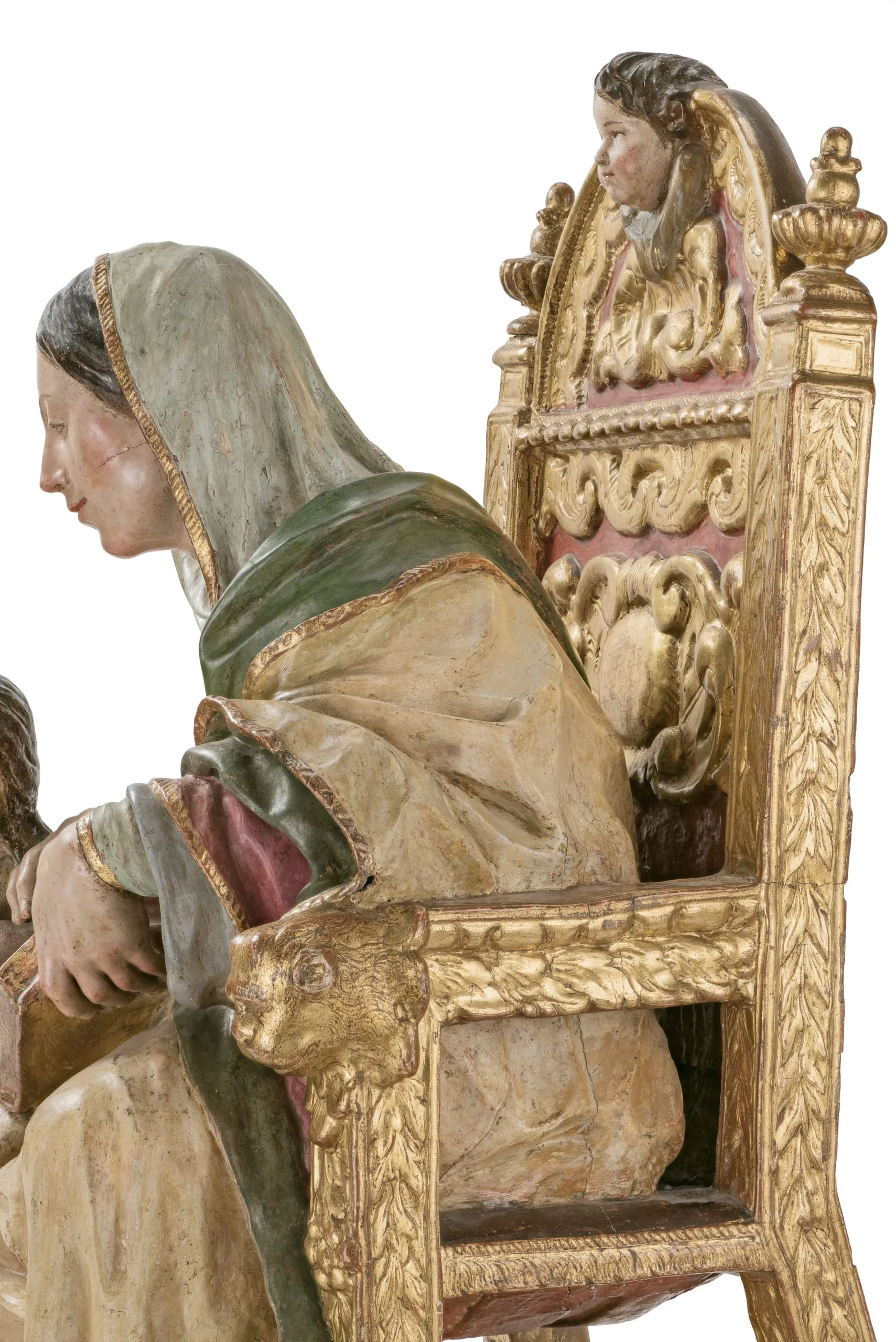
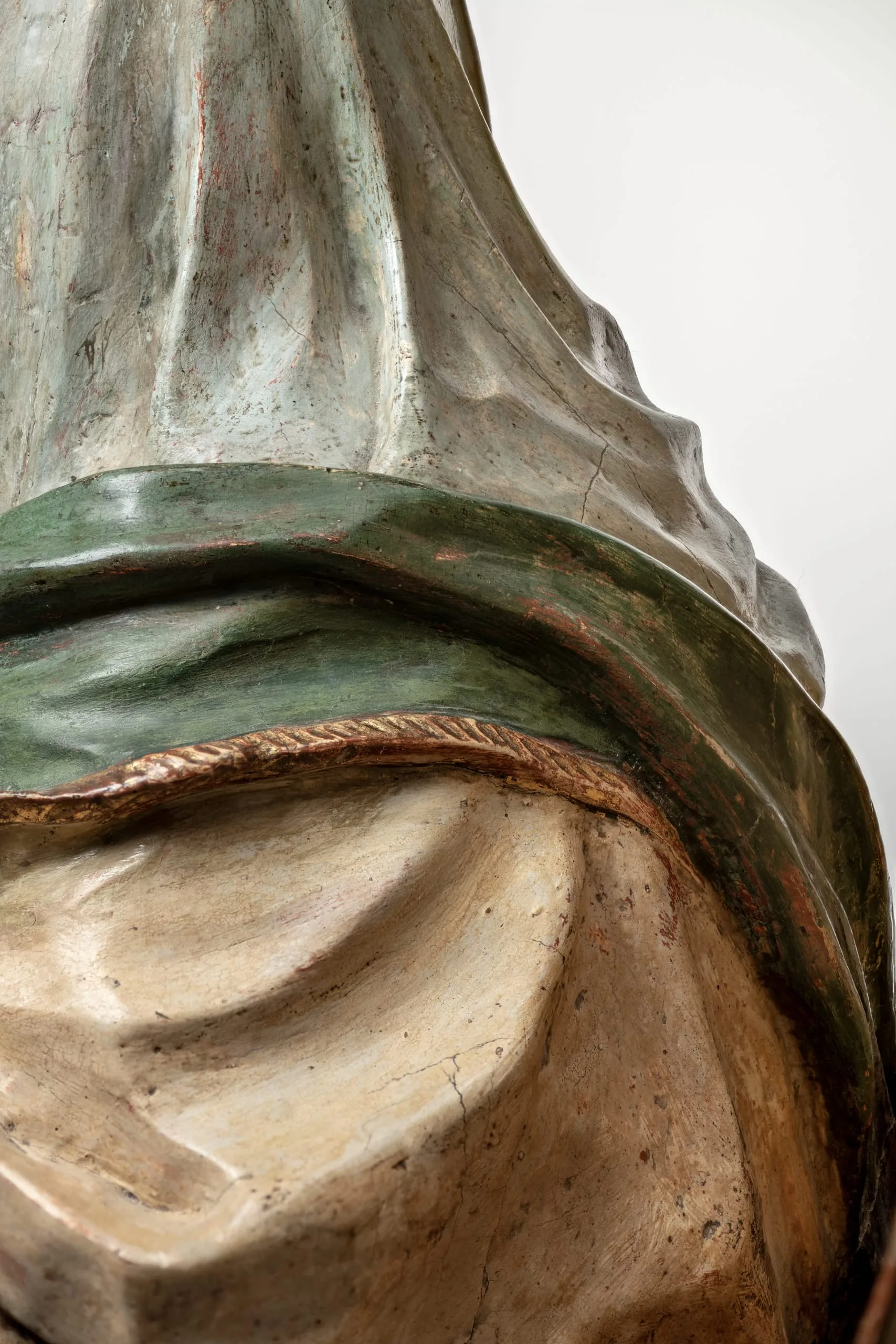
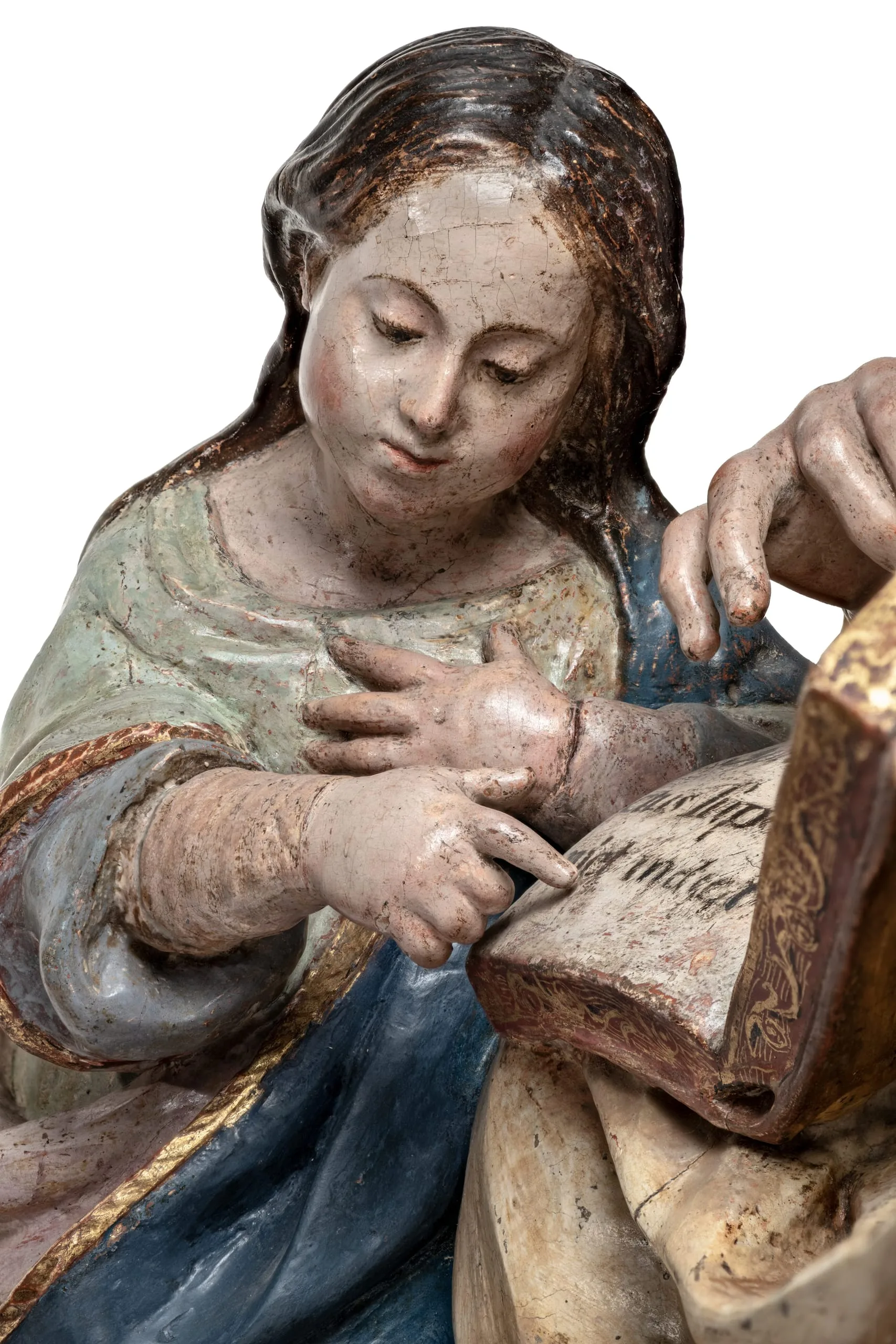
This painted wood sculpture by Luisa Roldán depicts Saint Anne tenderly teaching her young daughter, the Virgin Mary, to read scripture. Created in the 1680s, the intimate composition illustrates Mary’s early commitment to religious study. It is also a focused portrayal of female intellect, and more specifically, of female literacy, at a time when only a small portion of the population could read. The familial transmission of knowledge was a recurring theme for the eminent Roldán, the most important female sculptor of seventeenth-century Spain.
Born in Seville in 1652, Roldán apprenticed with her father, the highly successful sculptor Pedro Roldán. In his workshop, which trained many other sculptors and painters including Roldán’s future husband, Luis Antonio de los Arcos, Roldán excelled in wood carving. She ultimately rejected the theatrical severity typical of seventeenth-century Spanish sculpture, developing a softer, more sensitive approach as embodied in this work.
In an unusual move, Roldán left her father’s workshop and started her own business, fielding commissions from churches, confraternities, and private clients. Her husband helped manage the business, and her brother-in-law became her preferred painter. In the first decade of her independent career, when she created this sculpture, Roldán worked in or near Seville and Cádiz. In 1689, the year her second child was born, she moved to Madrid, and it was there, in 1692, that she became the first female court sculptor to the king, Charles II. Roldán’s unprecedented designation of “Escultora de Cámara” continued under the reign of Philip V, until her death at age fifty-three.
2025