- Title
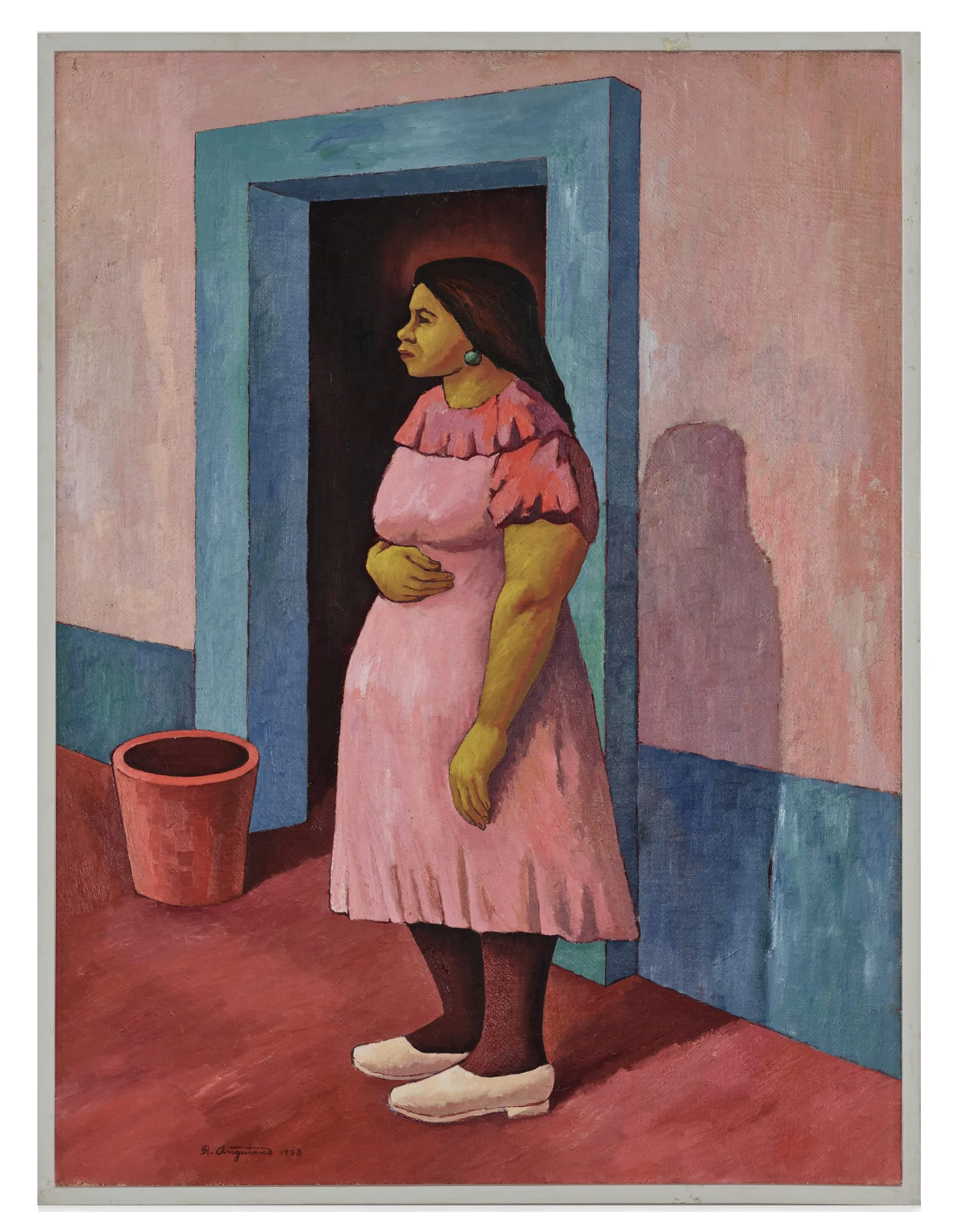
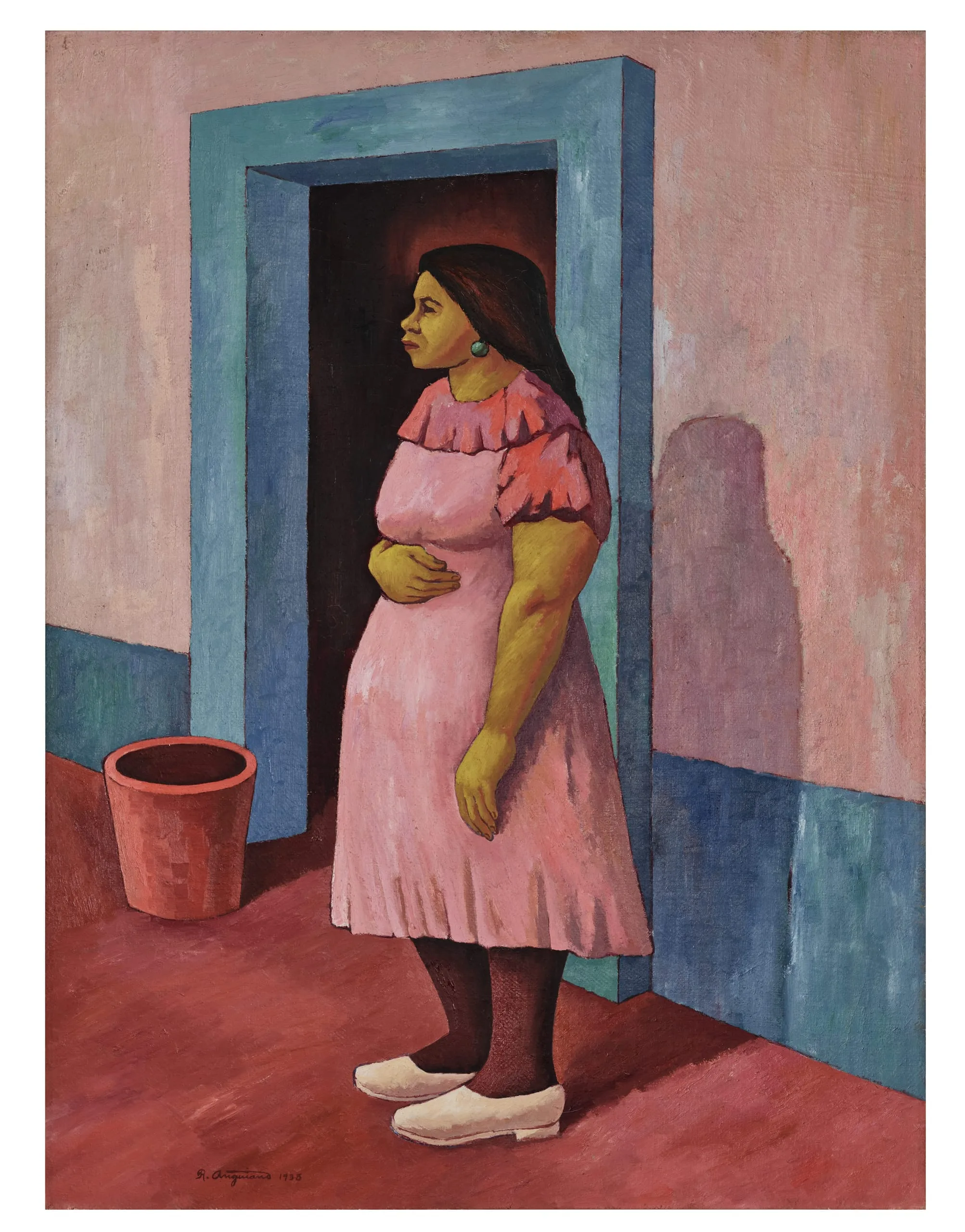
- The Servant (La sirvienta)
- Date Made
- 1938
- Medium
- Oil on canvas
- Dimensions
- 38 9/16 × 28 3/4 in. (98 × 73 cm)
- Accession Number
- M.2019.175.3
- Curatorial Notes
The Servant depicts a domestic worker taking a moment’s pause from her labors. The pinks of her dress and blouse echo the architectural setting, visually connecting the woman to her surroundings. Throughout his career, Anguiano was committed to creating works that advanced social causes. In the 1930s, he joined the Liga de Escritores y Artistas Revolucionarios (League of Revolutionary Writers and Artists) and was a founding member of the Taller de Gráfica Popular (People’s Print Workshop), two important collectives in Mexico City focused on creating art that promoted social and political change. In many of his prints and paintings, Anguiano foregrounded the daily life of the working class and paid close attention to local populations. In 1949, he embarked on an official expedition to Bonampak, a Mayan archaeological site in the state of Chiapas. His experience there reinforced his interest in depicting Mexico’s Indigenous populations.
Rachel Kaplan
2024
- Copyright
- © Estate of Raúl Anguiano / Artists Rights Society (ARS), New York / SOMAAP, Mexico City