LACMA

ShopMembershipMyLACMATickets
LACMA
Los Angeles County Museum of Art
5905 Wilshire Blvd.
Los Angeles, CA 90036
info@lacma.org
(323) 857-6000
Sign up to receive emails
Subscribe
© Museum Associates 2026
  • About LACMA
  • Jobs
  • Building LACMA
  • Host An Event
  • Unframed
  • Press
  • FAQs
  • Log in to MyLACMA
  • Privacy Policy
© Museum Associates 2026
Collections

Unidentified artist
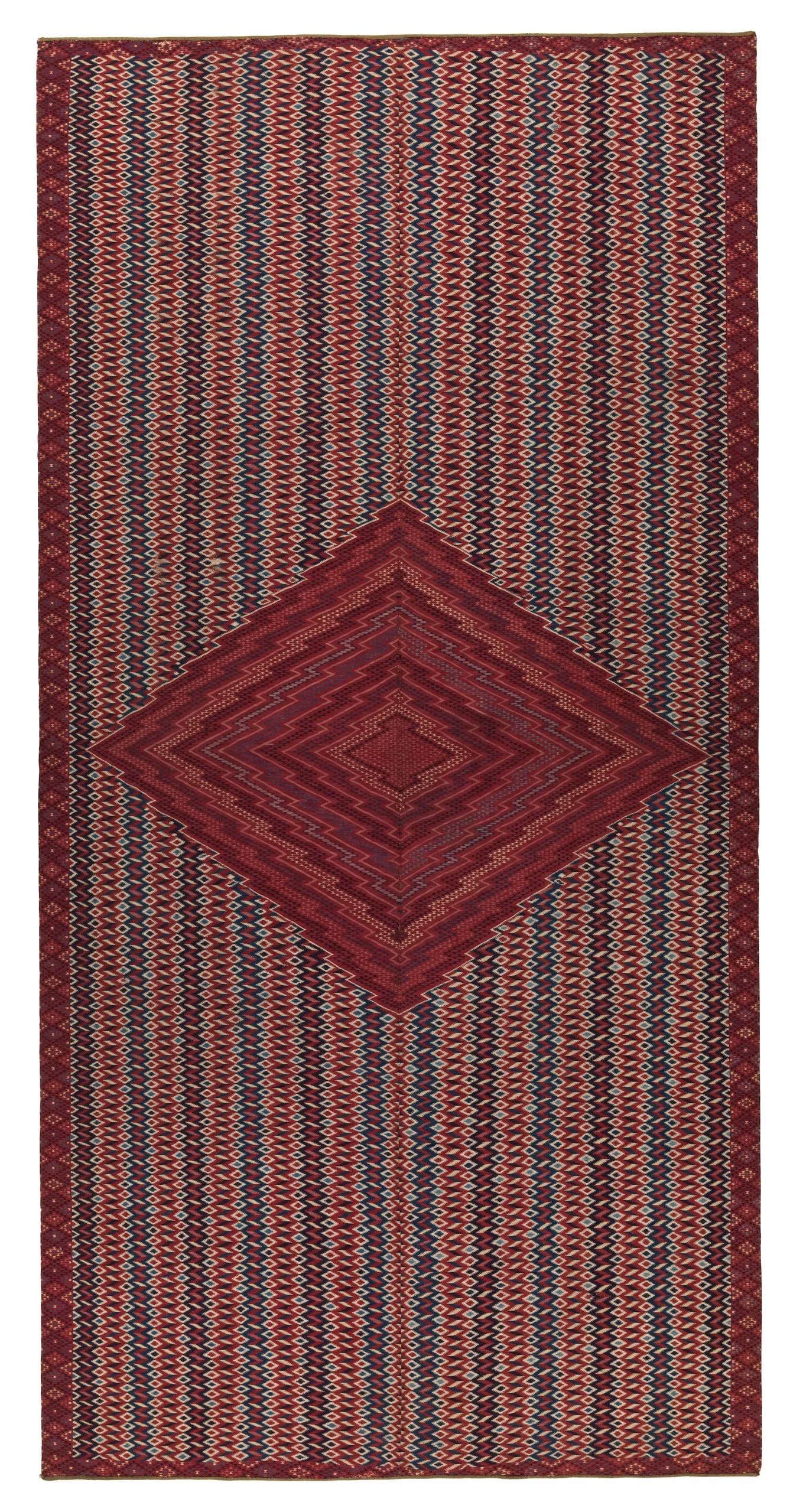
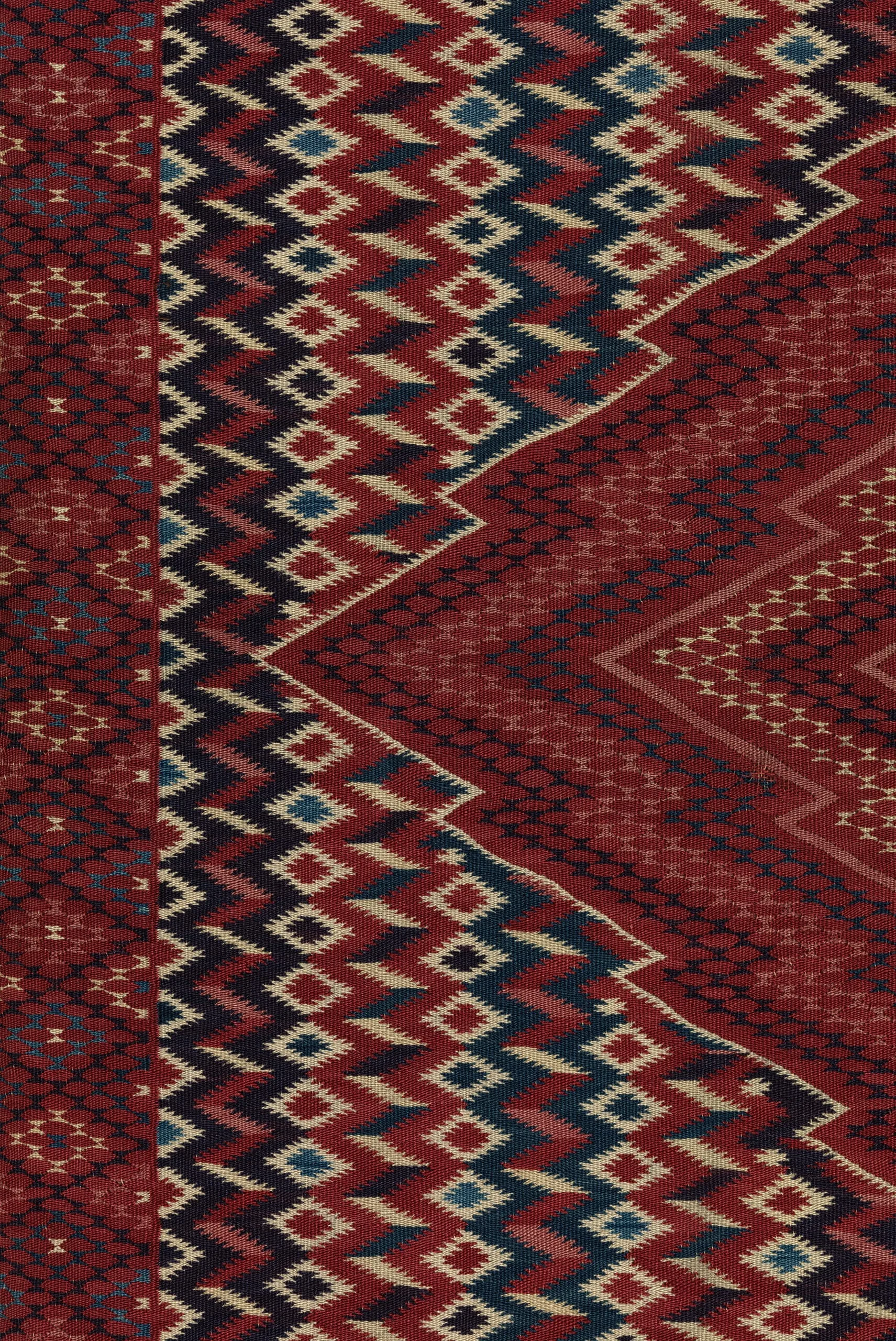
Saltillo Sarape (Sarape de Saltillo)1750-1800

Not on view
Vertical flat-woven textile in deep crimson red with allover fine zigzag striping and a large concentric diamond medallion at center
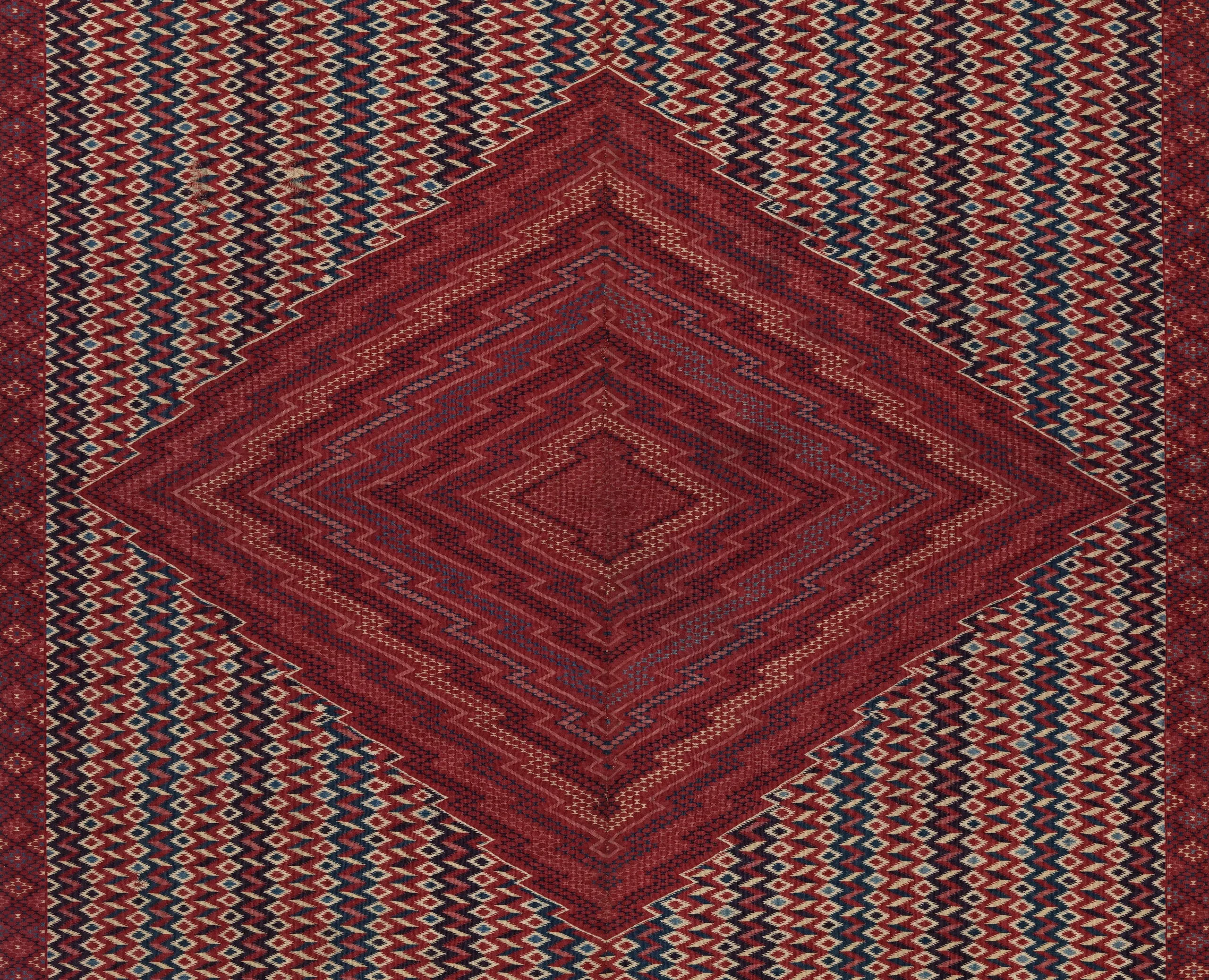
Flatwoven textile with a large central diamond medallion composed of concentric stepped lozenges in deep red, navy, and ivory, surrounded by an all-over field of small zigzag and diamond motifs in red, blue, and white.
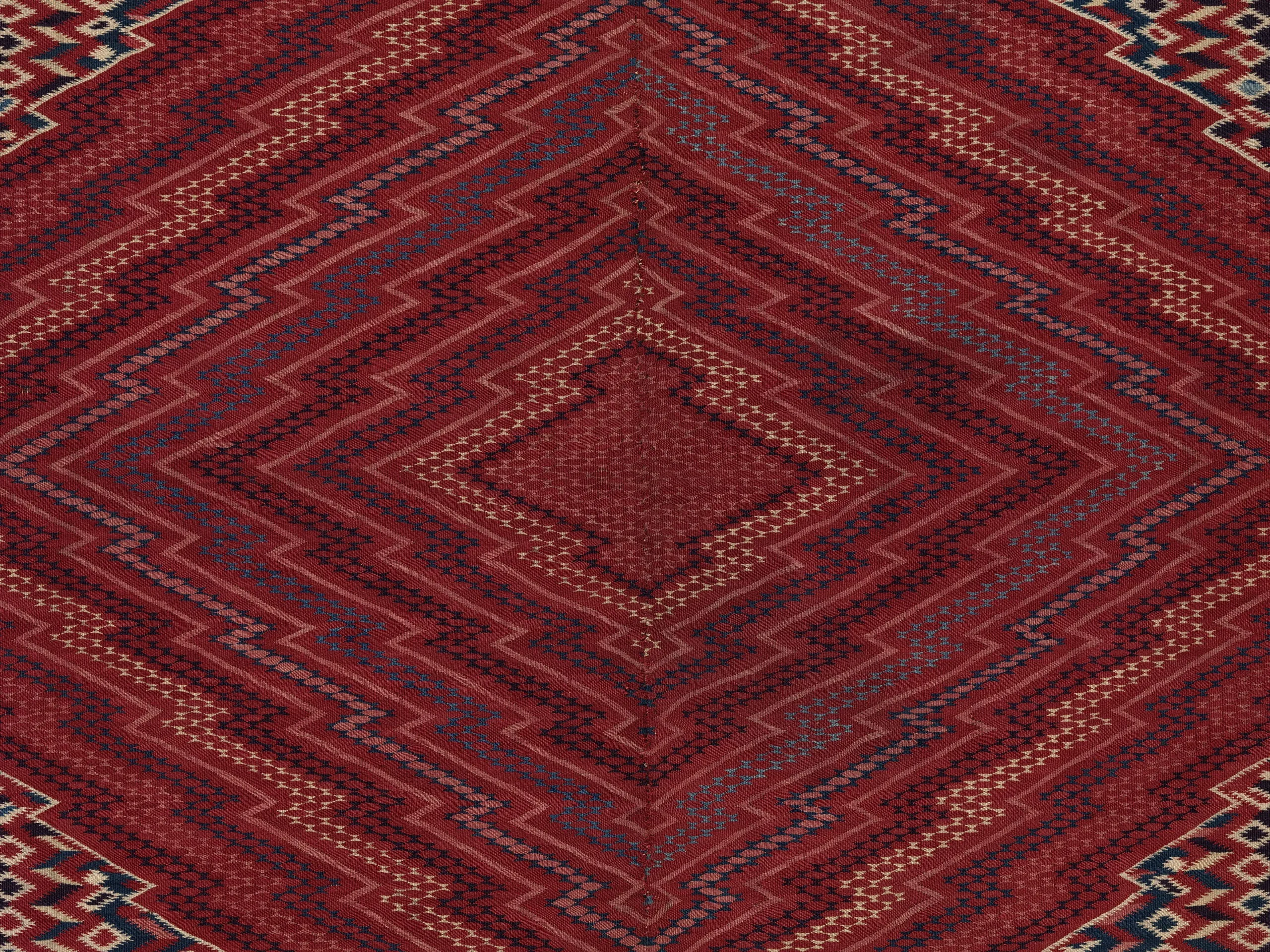
Woven textile with a large central diamond medallion formed by concentric zigzag bands in deep red, navy blue, and ivory, with finely detailed geometric borders along the edges.
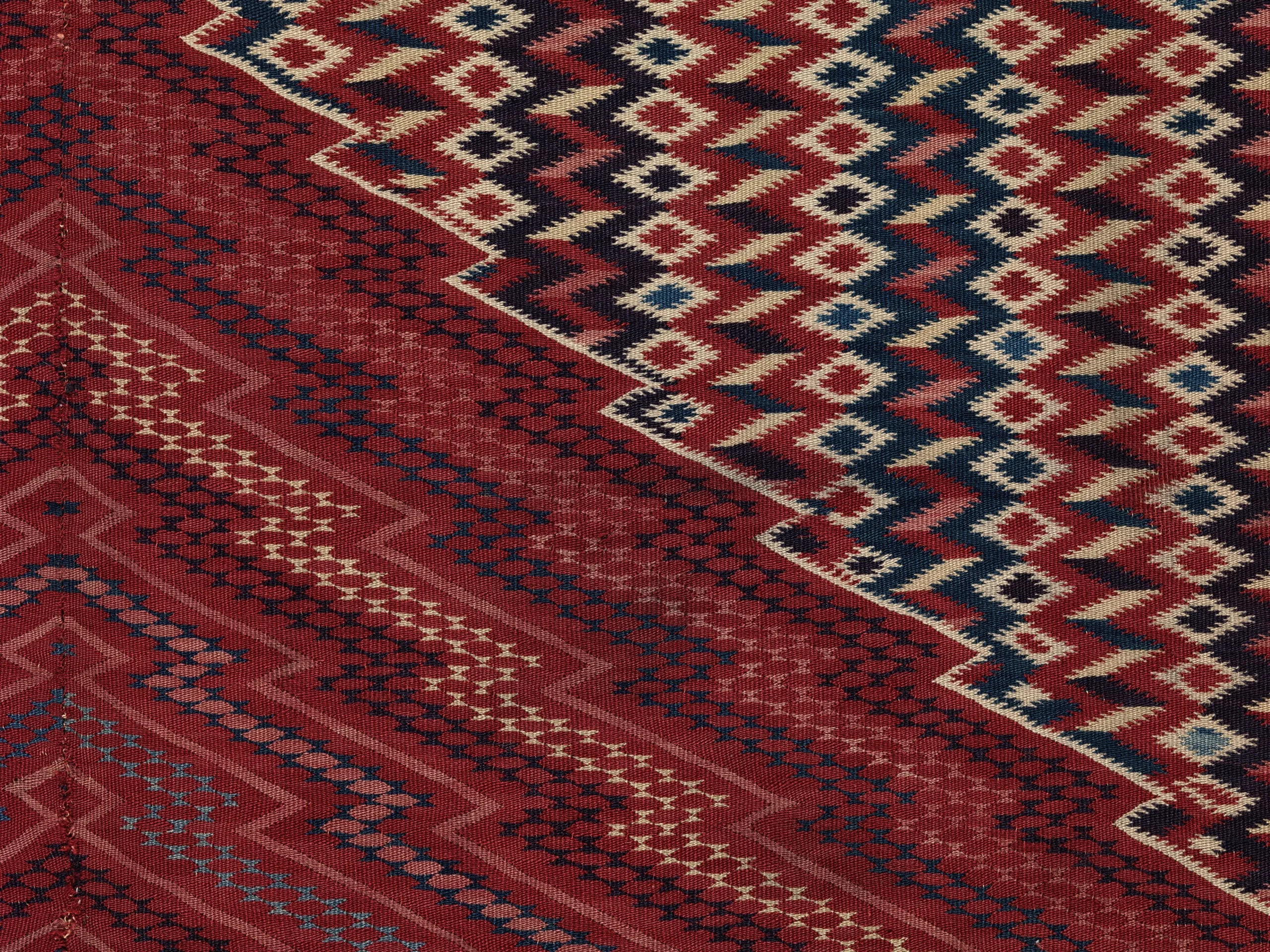
Flat-woven textile with deep red ground, featuring a diagonal band of densely patterned diamond and hooked motifs in navy, cream, and blue, bordered by zigzag stripes in the lower left field.
Woven textile with deep red ground, featuring bold zigzag bands in dark navy, ivory, and teal, flanked by repeating diamond and hourglass geometric motifs in a densely patterned border.
Artist or Maker
Unidentified artist
Title
Saltillo Sarape (Sarape de Saltillo)
Place Made
Northern Mexico
Date Made
1750-1800
Medium
Cotton and wool tapestry weave
Dimensions
97 1/8 × 48 1/2 × 1 1/8 in. (246.7 × 123.19 × 2.86 cm)
Credit Line
Ancient Americas Acquisition Fund
Accession Number
M.2021.5
Classification
Costumes
Collecting Area
Costume and Textiles
Curatorial Notes

The pulsating patterns and distinctive composition of Saltillo sarapes reflect a uniquely Mexican identity that combines textile traditions from Mesoamerica and Spain. These luxury textiles are closely associated with the wealthy horsemen of Northern Mexico’s sprawling network of haciendas that developed in the viceregal period. Named after the city of Saltillo, a prestigious weaving and trade center in the state of Coahuila, sarapes were worn by all social classes, differentiated by the fineness of the yarns and complexity of the woven patterns, with the Saltillo sarape representing the grandest and most sophisticated style of all. The extremely fine workmanship of this example is consistent with the oldest and rarest extant examples, which date to the eighteenth and early nineteenth centuries.


From exhibition Archive of the World, 2022 (for more information see the catalogue entry by Clarissa M. Esguerra in the accompanying publication, cat. no. 46, pp. 211–14)

Provenance
Private collection, Providence; James Jeter, New World Arts Collection, Santa Barbara, California, 1976; Mark Winter, Pagosa Springs, Colorado, and Jim Collins, Woody Creek, Colorado, 1981; George Shaw, Aspen; Atlantic Art Partners I LLC, New York, 1986; LACMA, 2021.
Selected Bibliography
  • Katzew, Ilona, ed. Archive of the World: Art and Imagination in Spanish America, 1500–1800: Highlights from LACMA’s Collection. Exh. Cat. Los Angeles: Los Angeles County Museum of Art; New York: DelMonico Books/D.A.P., 2022.