- Artist or Maker
- Thomas Houseago
United Kingdom, active United States, born 1972 - Title
- Rattlesnake figure (carving)
- Date Made
- 2010
- Medium
- Redwood, graphite and charcoal
- Dimensions
- 134 × 30 × 30 in. (340.36 × 76.2 × 76.2 cm)
- Accession Number
- M.2017.62
- Curatorial Notes
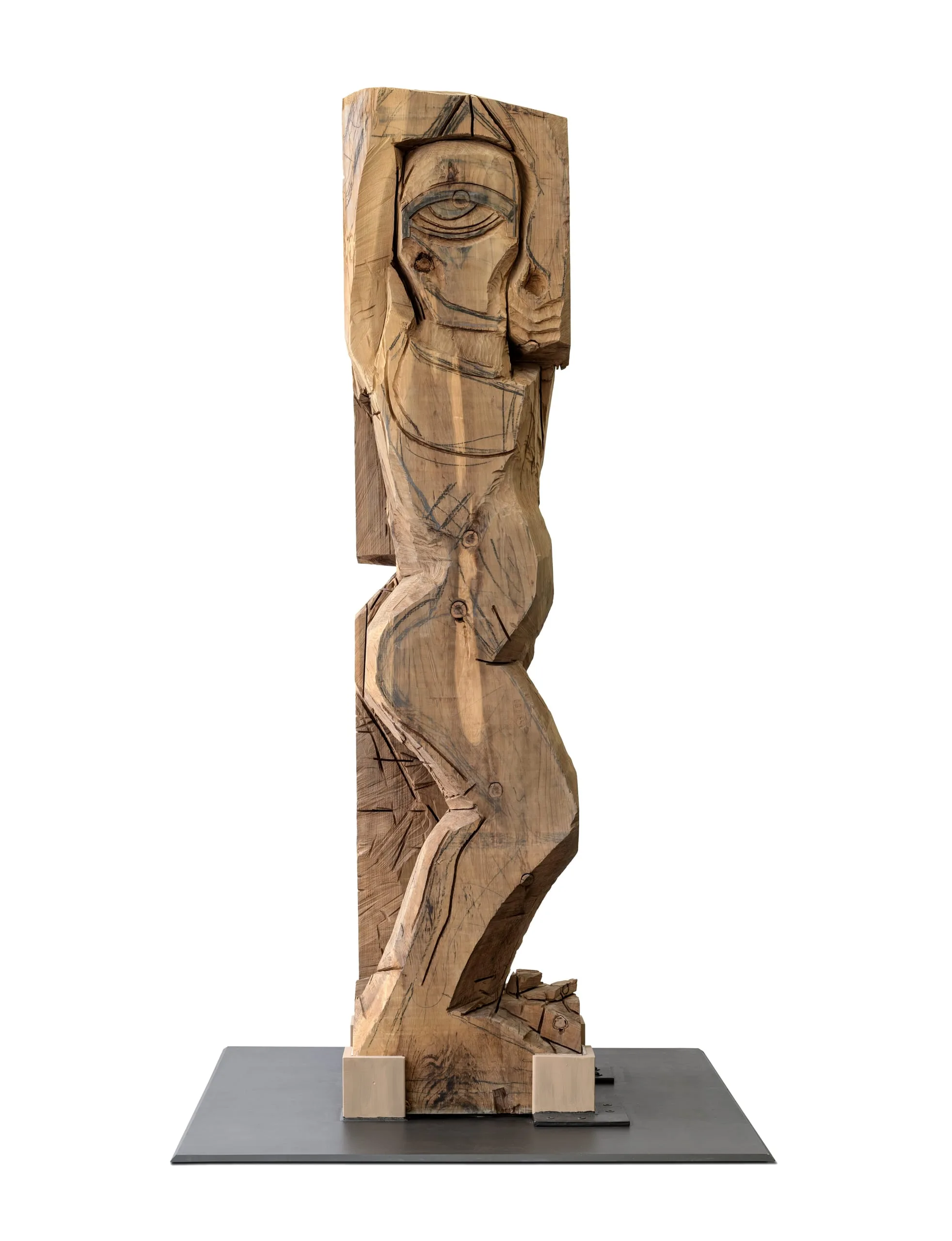
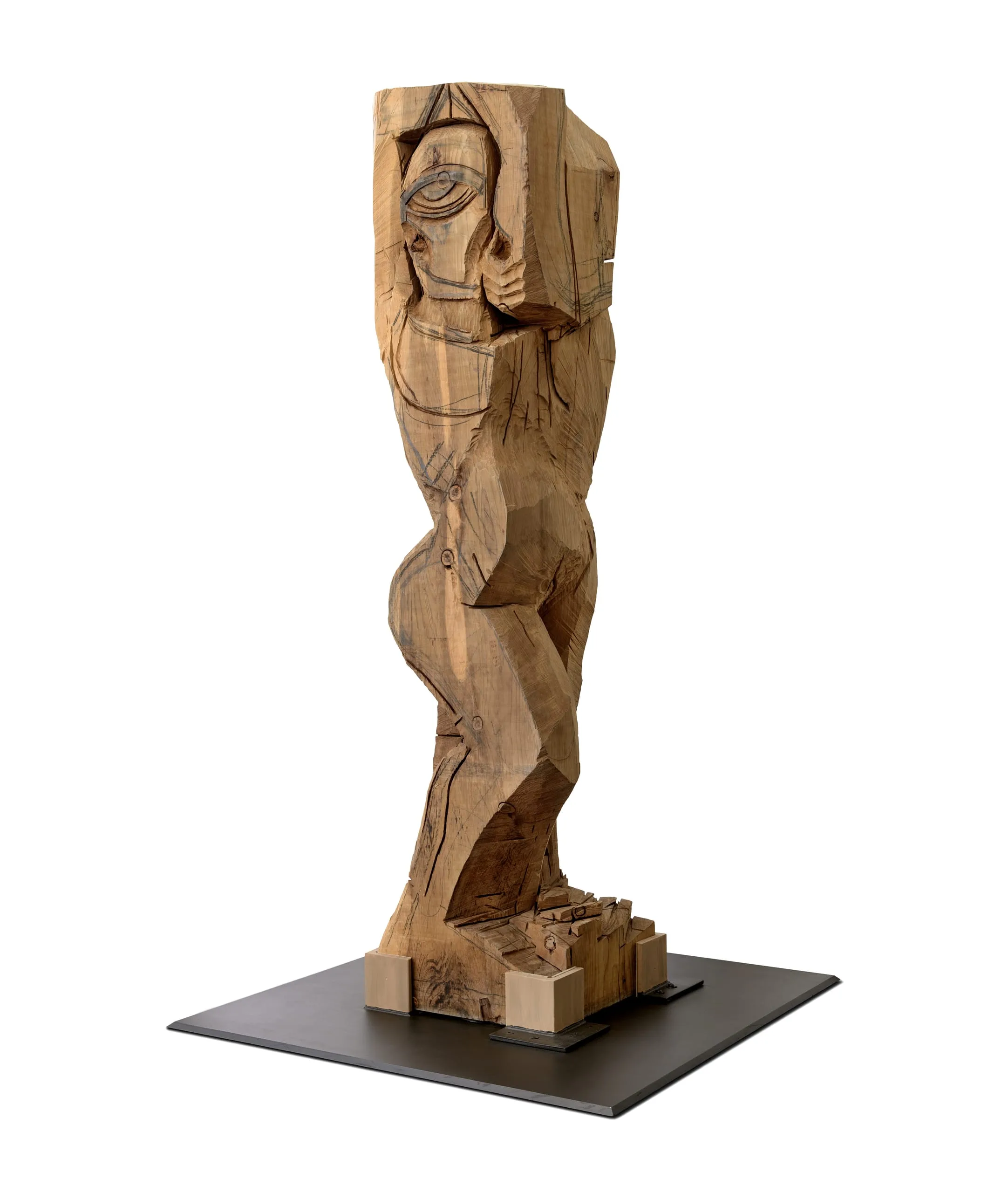
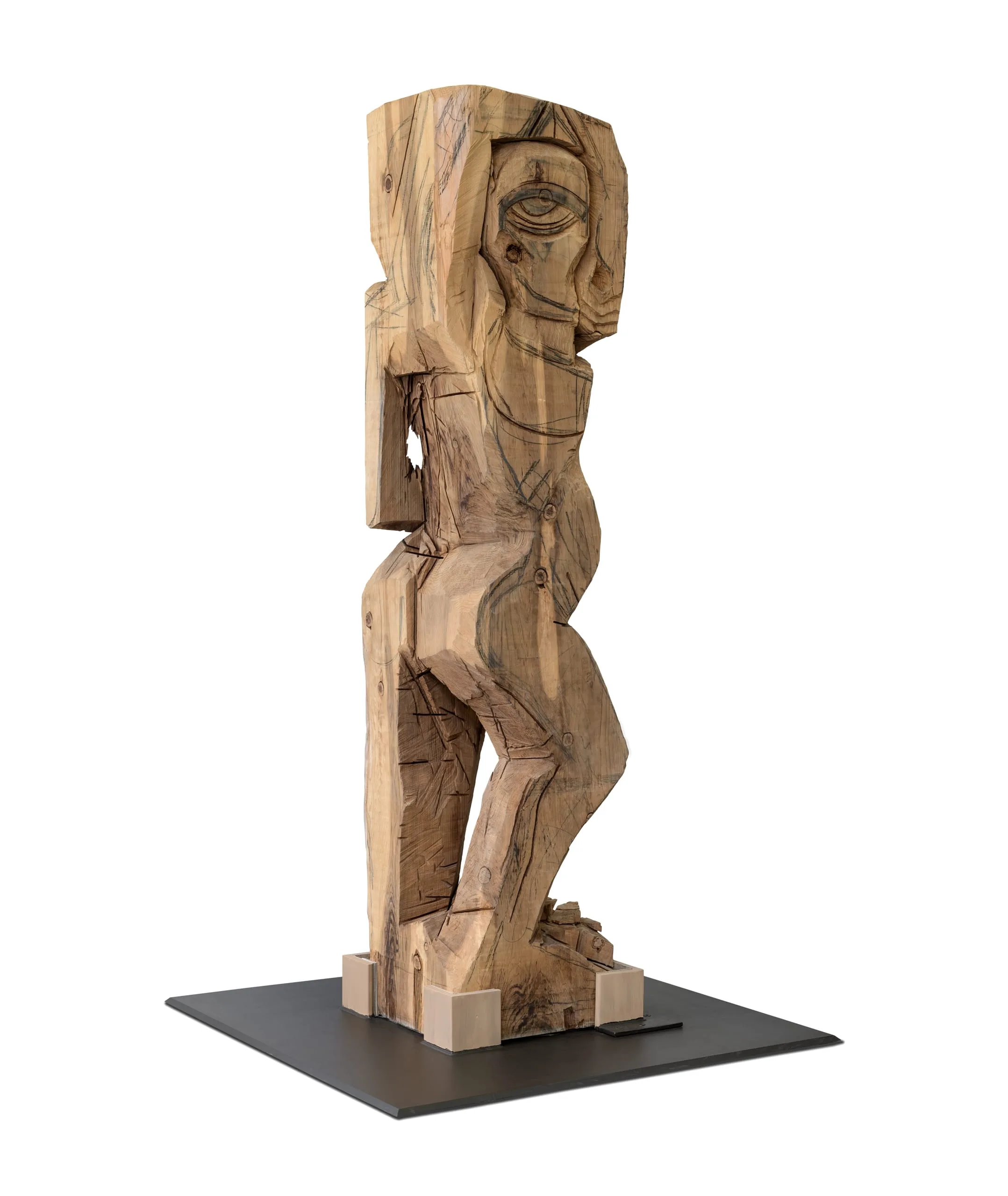
Thomas Houseago playfully subverts the expectations of sculpture. His works in plaster–freestanding sculptures and large pieces that lean or hang on the wall–are often cast in bronze and then painted; at other times his finished works are carved directly in plaster or wood. Drawing reference to both classical and modernist sculpture, Houseago’s intentionally clumsy forms trade the masterful and enduring qualities of traditional bronze or marble for the humble aesthetic of plaster, wood, and various found materials. Houseago’s “monumental” structures can appear almost comically flimsy, reducing the grandiose weight of art history into sympathetic effigies. His bulky-shouldered figures replace the grace of their contrapposto stance with awkward contortions of piecemeal appendages.
To create Rattlesnake figure (carving), one of his most monumental wood sculptures, Housego sketched a standing human form onto the flat sides of a twelve-foot high redwood block and partially carved out the figure with a rough, jagged blade. Only partly released from the block, the towering figure inevitably calls to mind Michelangelo's marble “Slaves” as well as wood sculptures carved by German Expressionist artists including Erich Heckel, Ernst Ludwig Kirchner, and Karl Schmidt-Rottluff, or the more recent wood carvings of George Baselitz. In Rattlesnake figure (carving) one feels Houseago working directly in the material, where blow by blow the figure is released from the large wooden block.
- Copyright
- © Thomas Houseago