- Title
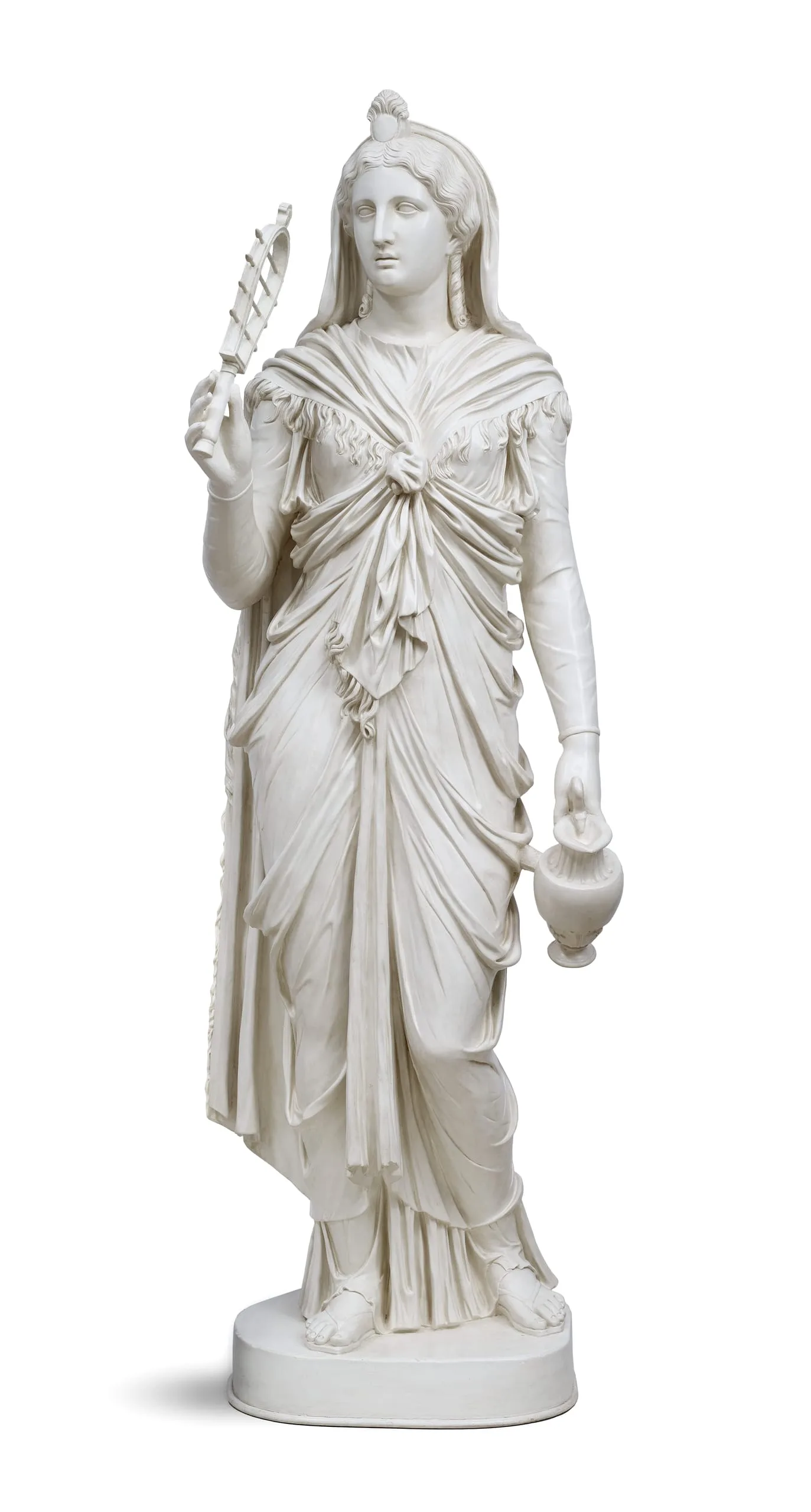
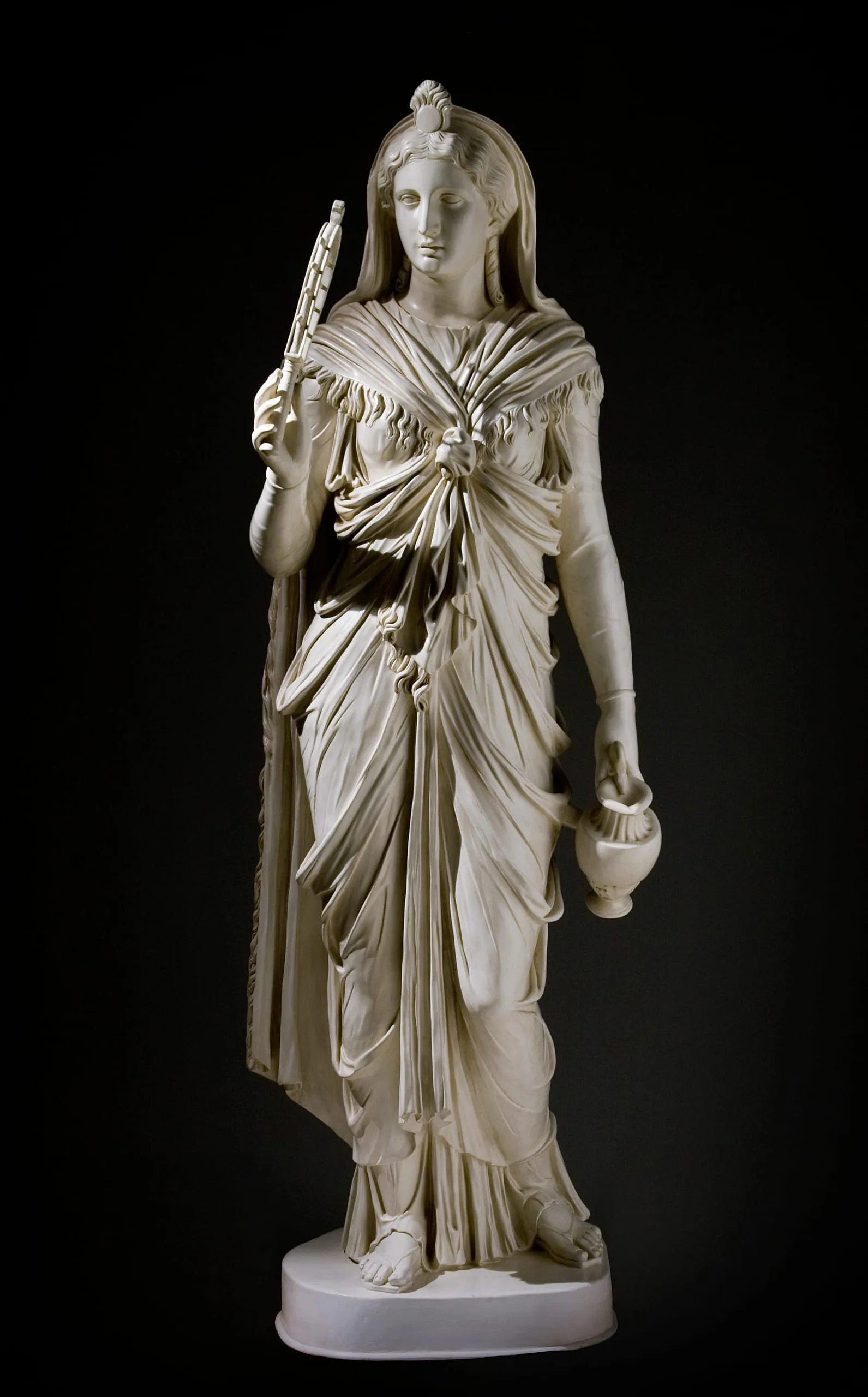
- The Capitoline 'Isis'
- Date Made
- 1767
- Medium
- Painted plaster
- Dimensions
- Overall: 75 × 24 × 26 in. (190.5 × 60.96 × 66.04 cm)
- Accession Number
- M.62.57.2
- Curatorial Notes
John Cheere specialized in lead and plaster casts of ancient Roman sculptures. The popularity of his large-scale statues, used as decor in aristocratic homes and gardens, reflected the vogue for classicism that swept Great Britain in the mid-eighteenth century. Unlike many of his contemporaries, Cheere never visited Rome. Rather, he was a workaday sculptor who operated a thriving business in an area of London known for several sculpture yards that replicated ancient Greek and Roman prototypes. Cheere’s production model combined high quality and low cost, thus guaranteeing his pieces were in great demand.
This and another sculpture in LACMA’s collection (see M.62.57.1) are two of ten plasters that Cheere made for the Gallery or Great Room of Croome Court, Worcestershire, England. The figure of Isis was cast from a mold taken from a statue in the Capitoline Museum in Rome. The mold was one of many created by the Neoclassical architect Matthew Brettingham the Younger on a visit to Italy, and it was Brettingham who gave his molds to Cheere in the 1760s.
2025
- Selected Bibliography
- Schaefer, Scott, and Peter Fusco. European Painting and Sculpture in the Los Angeles County Museum of Art: an Illustrated Summary Catalogue. Los Angeles: Los Angeles County Museum of Art, 1987.