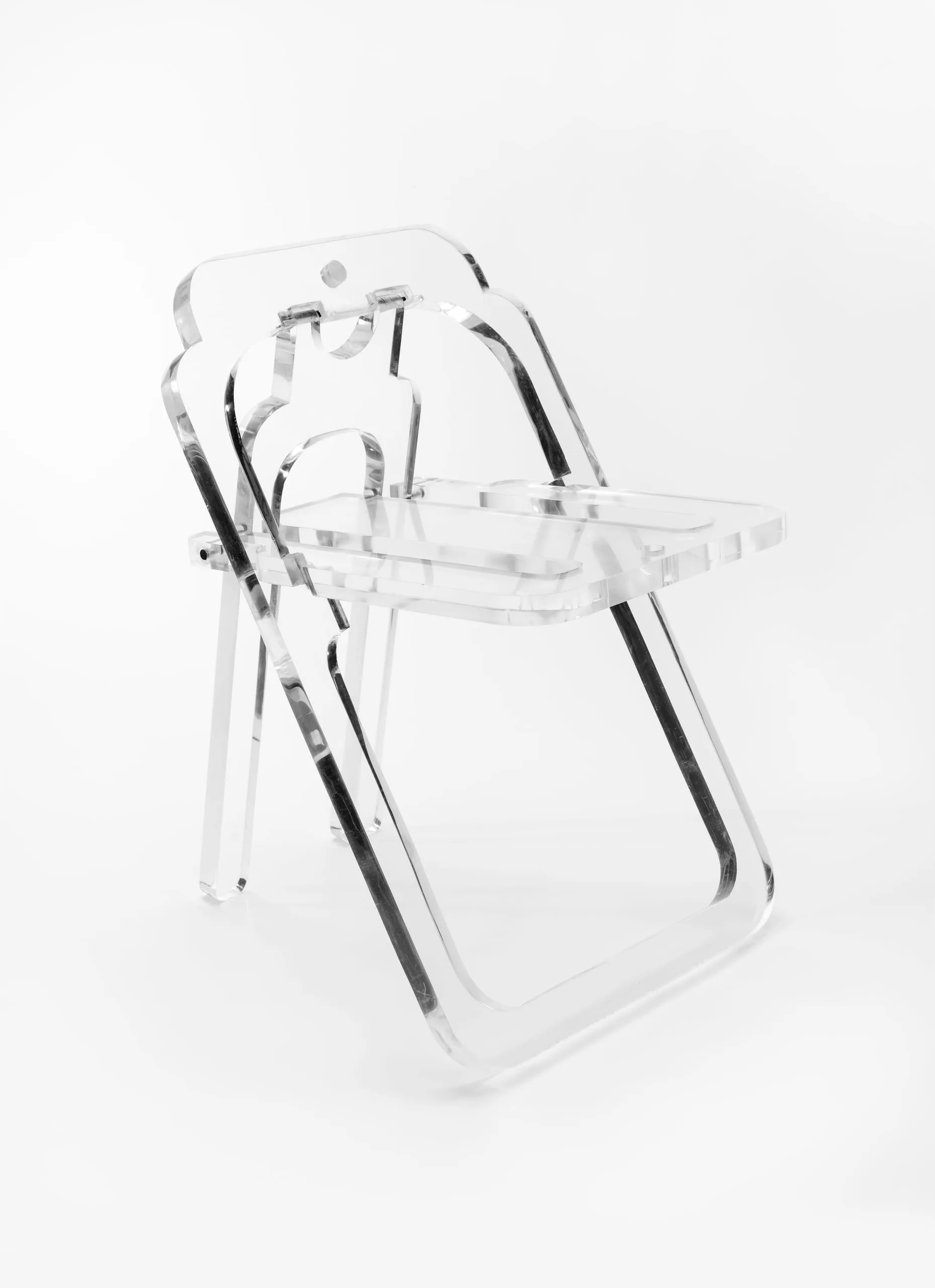
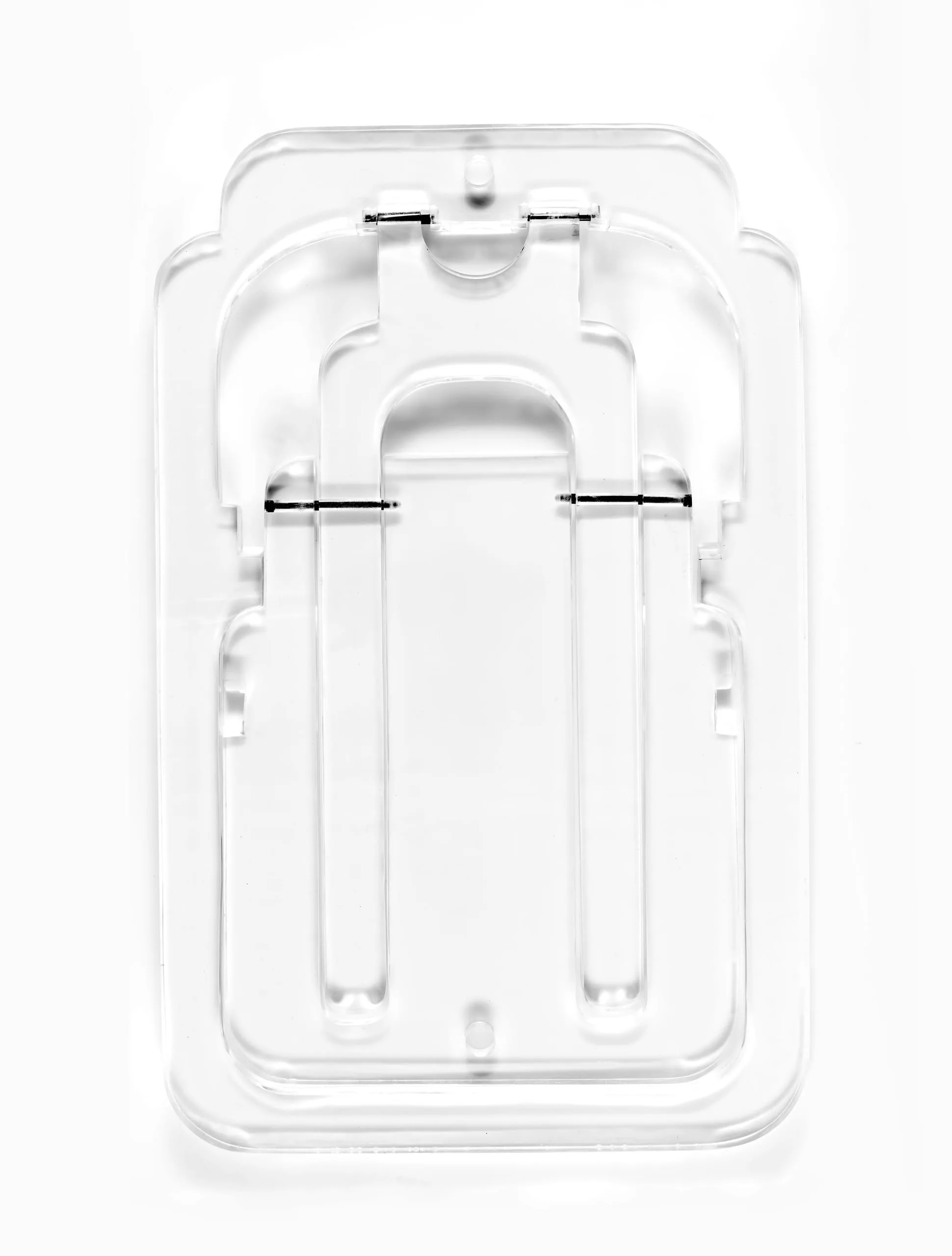
In 1977, Ricardo Blanco was invited by the Paolini plastics firm in Buenos Aires to participate in an annual salon that encouraged artists and designers to investigate acrylic as a modern artistic medium. Blanco crafted this unique, one-of-a-kind chair for the occasion, using a single sheet of Paolini acrylic to reimagine his seminal design from a few years earlier (M.2025.12). Blanco’s original Silla Plaka (Plaka Chair) was made from a series of cuts in a single sheet of plywood. The clean sculptural and geometric form of the Silla Plaka can be folded back into its original state as a flat piece of wood for easy storage and portability. The smart, simple design allowed for easy mass production, and the chair quickly became an icon of modern Argentinian design. Returning to this innovative design in plastic, Blanco pursued the artistic and practical potential of the industrial material, playing with its visual lightness and transparency.
Trained as an architect, Blanco was an important figure in the professionalization of design in Argentina. In addition to his own inventive works, he collaborated in the creation of university design programs in his homeland and was an active teacher and historian of design, serving as the founding curator of the design collection at the Museo de Arte Moderno de Buenos Aires. Fascinated with the form and function of chairs, Blanco designed more than 240 of them, of which the Silla Plaka—in both wood and plastic—remains one of his most exemplary.
Rachel Kaplan
2025