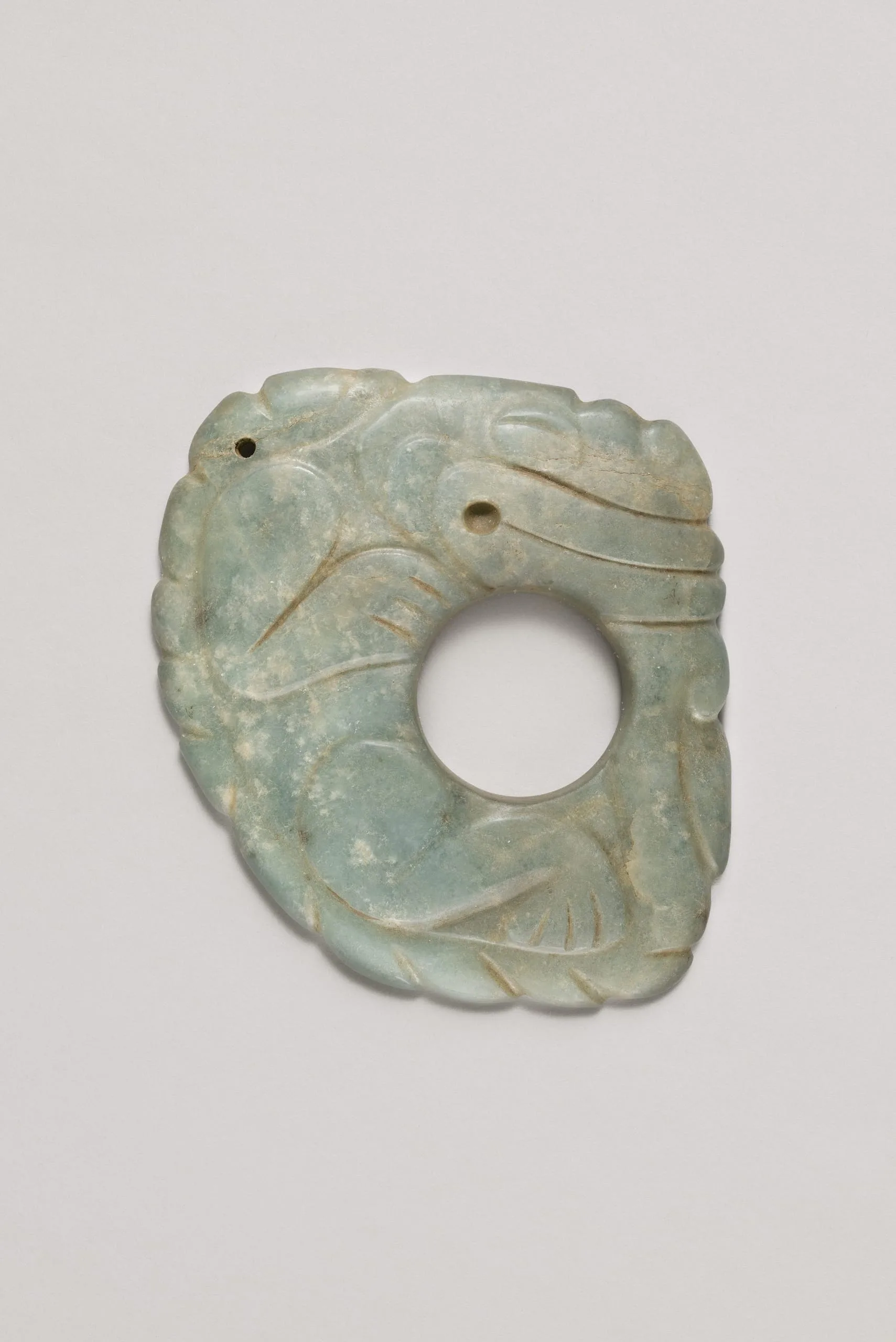
Based on the long snout, long tail, and jagged edge along its back, this pendant appears to be in the shape of a curled-up crocodilian or iguana. Several species of both animals inhabit Costa Rica, and each has qualities that make it an admirable source of inspiration as regards symbols of authority or superhuman skills. The green iguana (Iguana iguana) can grow nearly six feet long and is an excellent climber and swimmer. Black iguanas (Ctenosaura similis), meanwhile, can sprint at over 20mph, and the common basilisk (Basiliscus basiliscus) can run on water, earning it the nickname Jesus Christ lizard (lagarto de Jesús Cristo). The ferocity and toughness of the spectacled caiman (Caiman crocodilus) and American crocodile (Crocodylus acutus) are self-evident.
In wearing adornments such as this, the wearer perhaps hoped to appropriate the qualities of these animals as a source of authority or for a particular ritual action, but the reality is that we do not know the meaning of these items or how they were used.
Julia Burtenshaw
2024