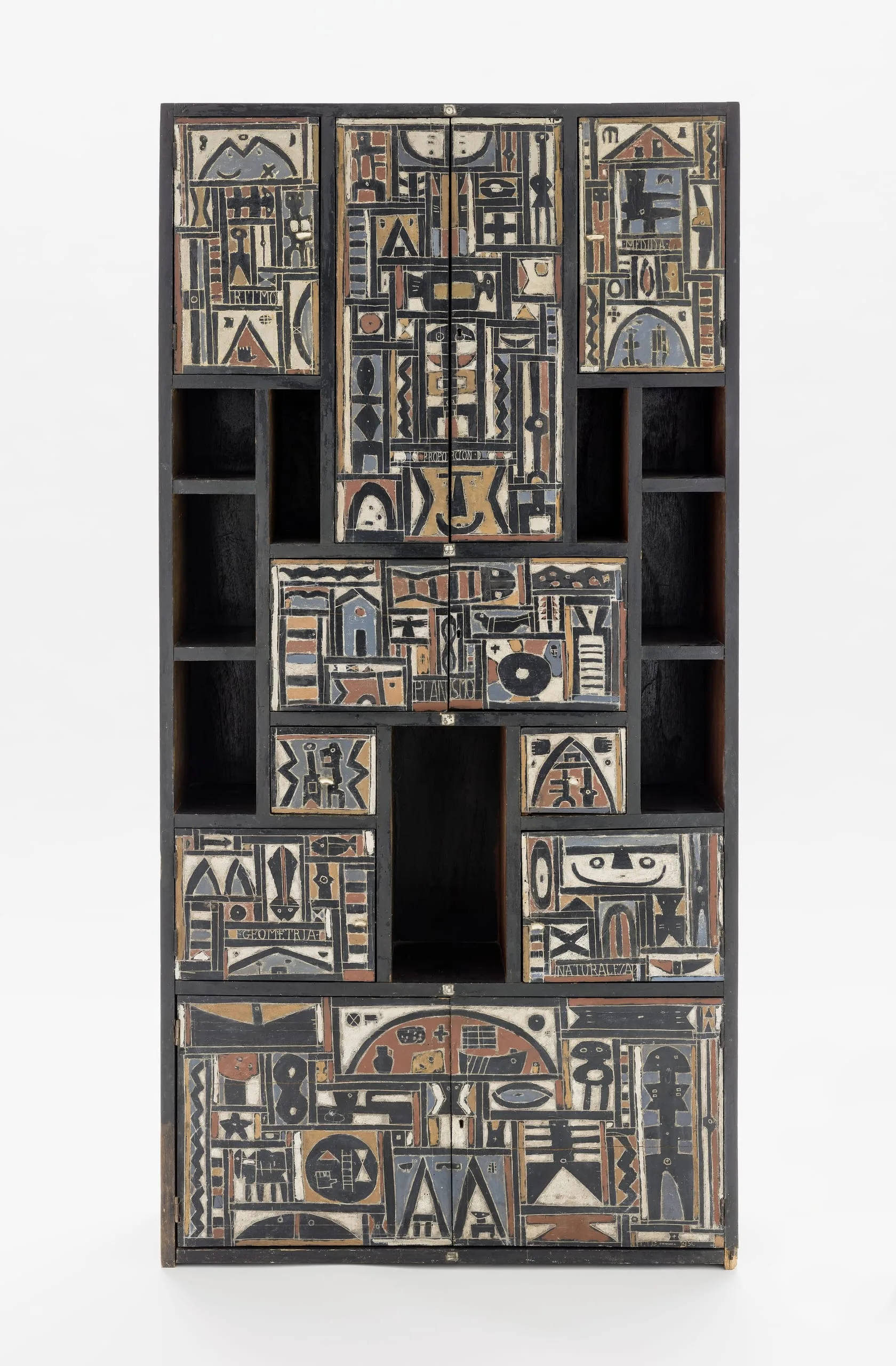
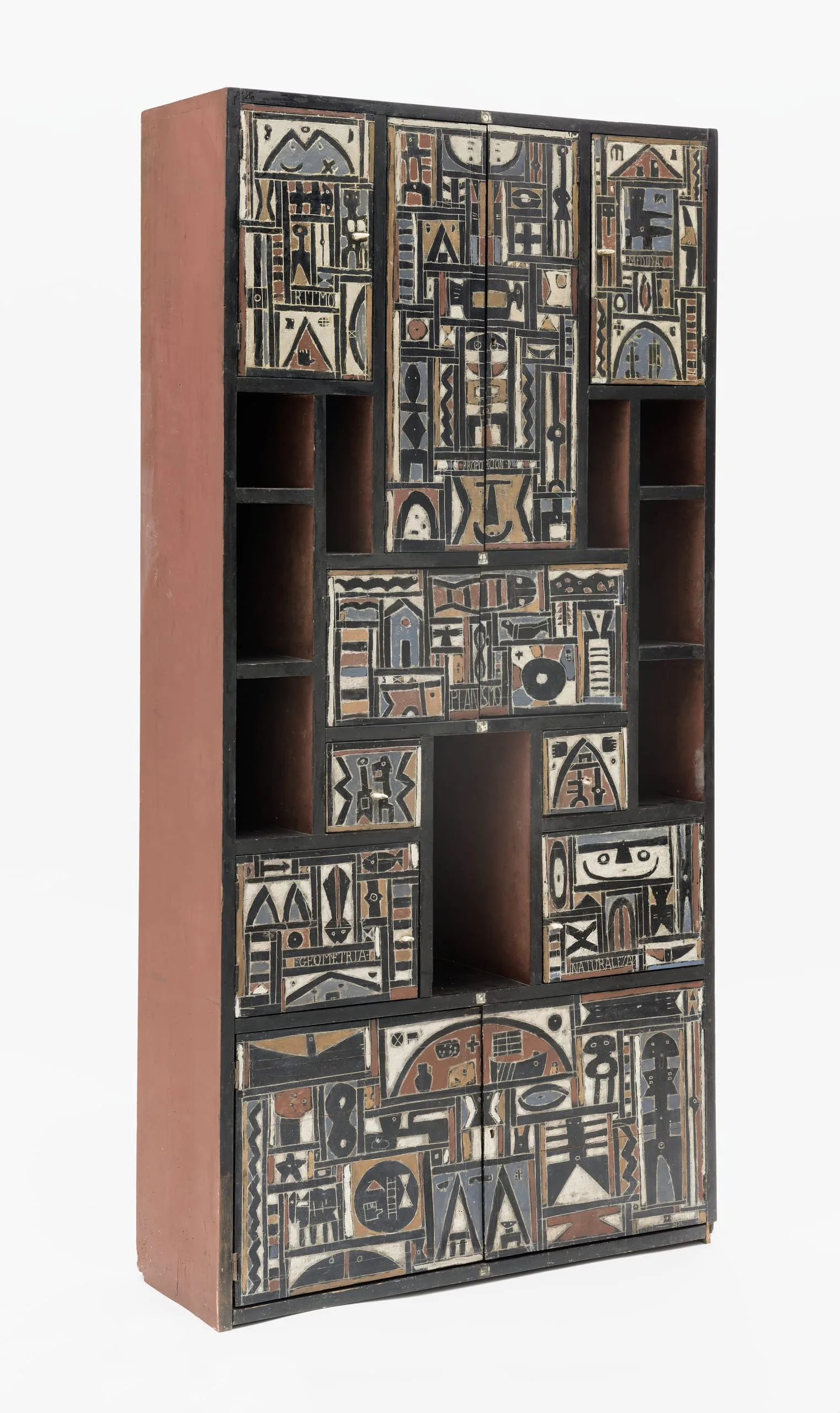
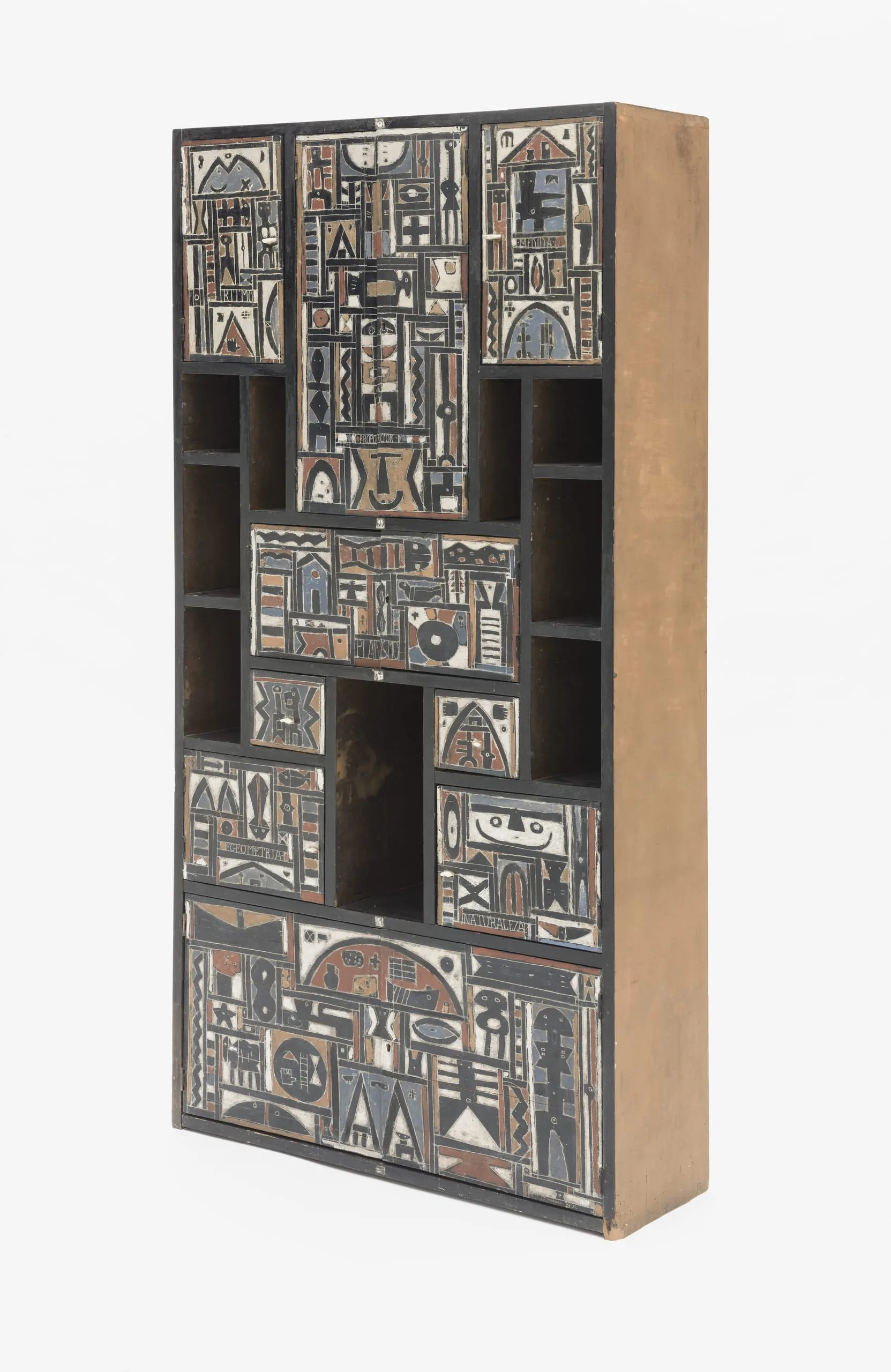
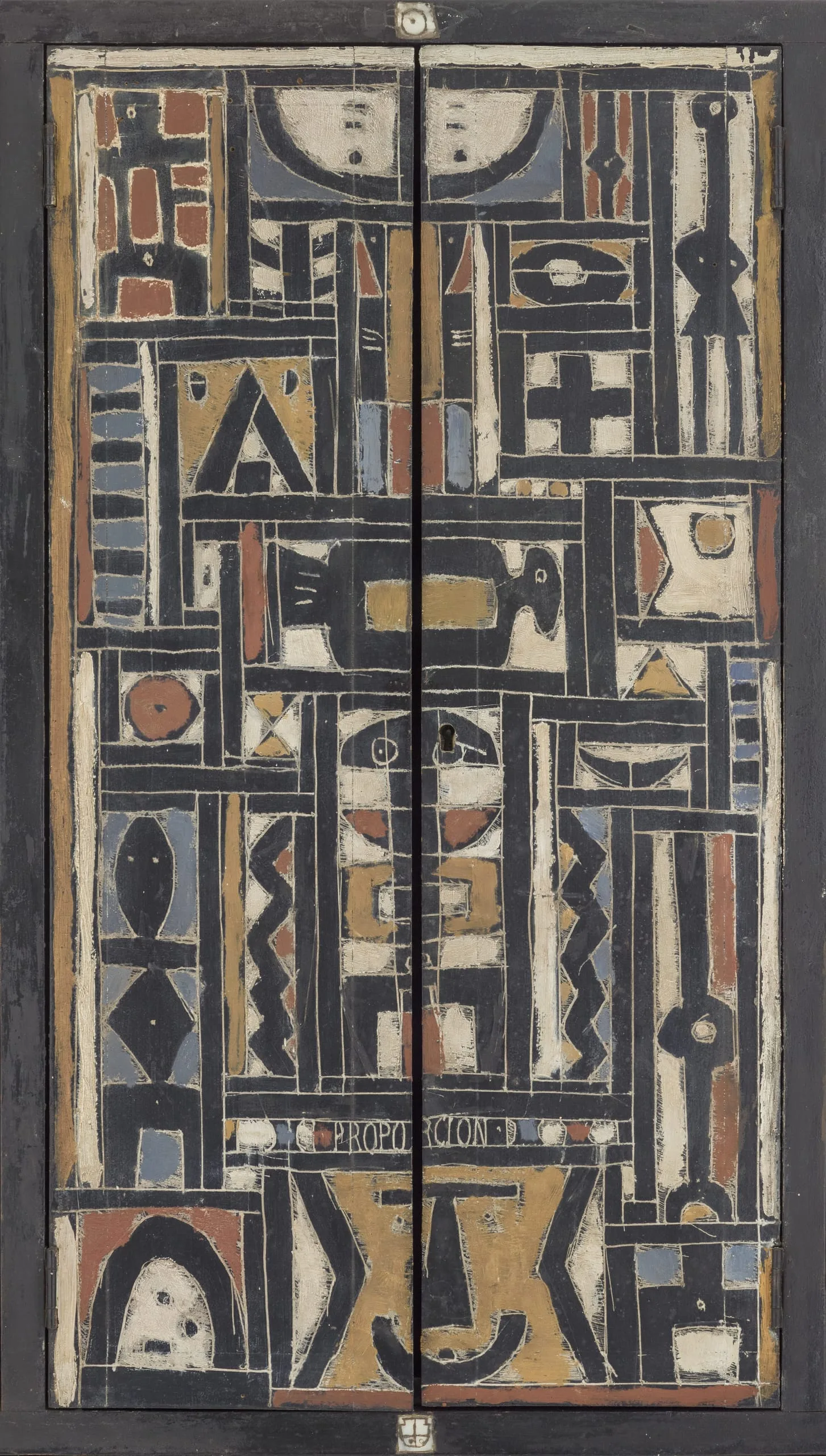
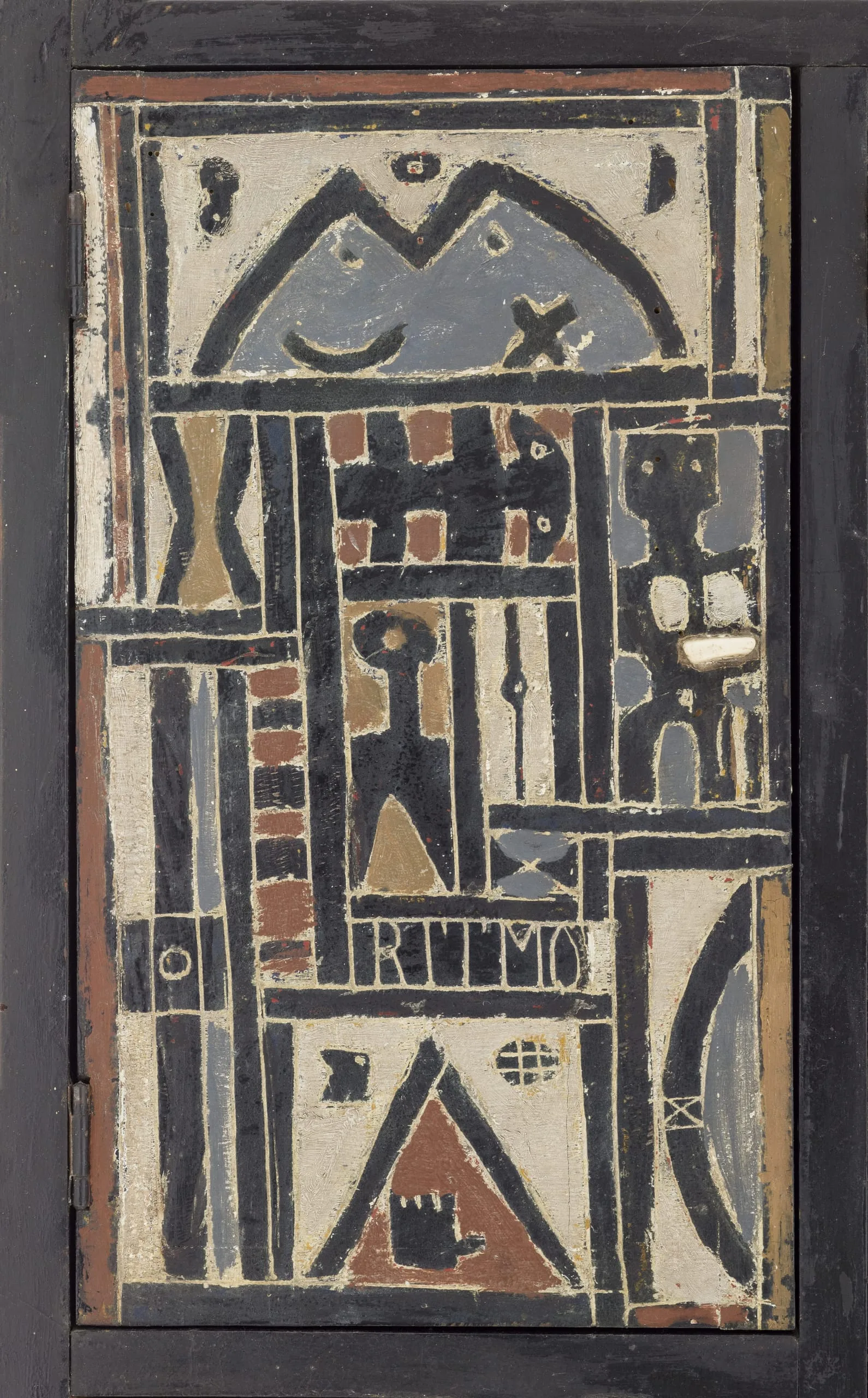
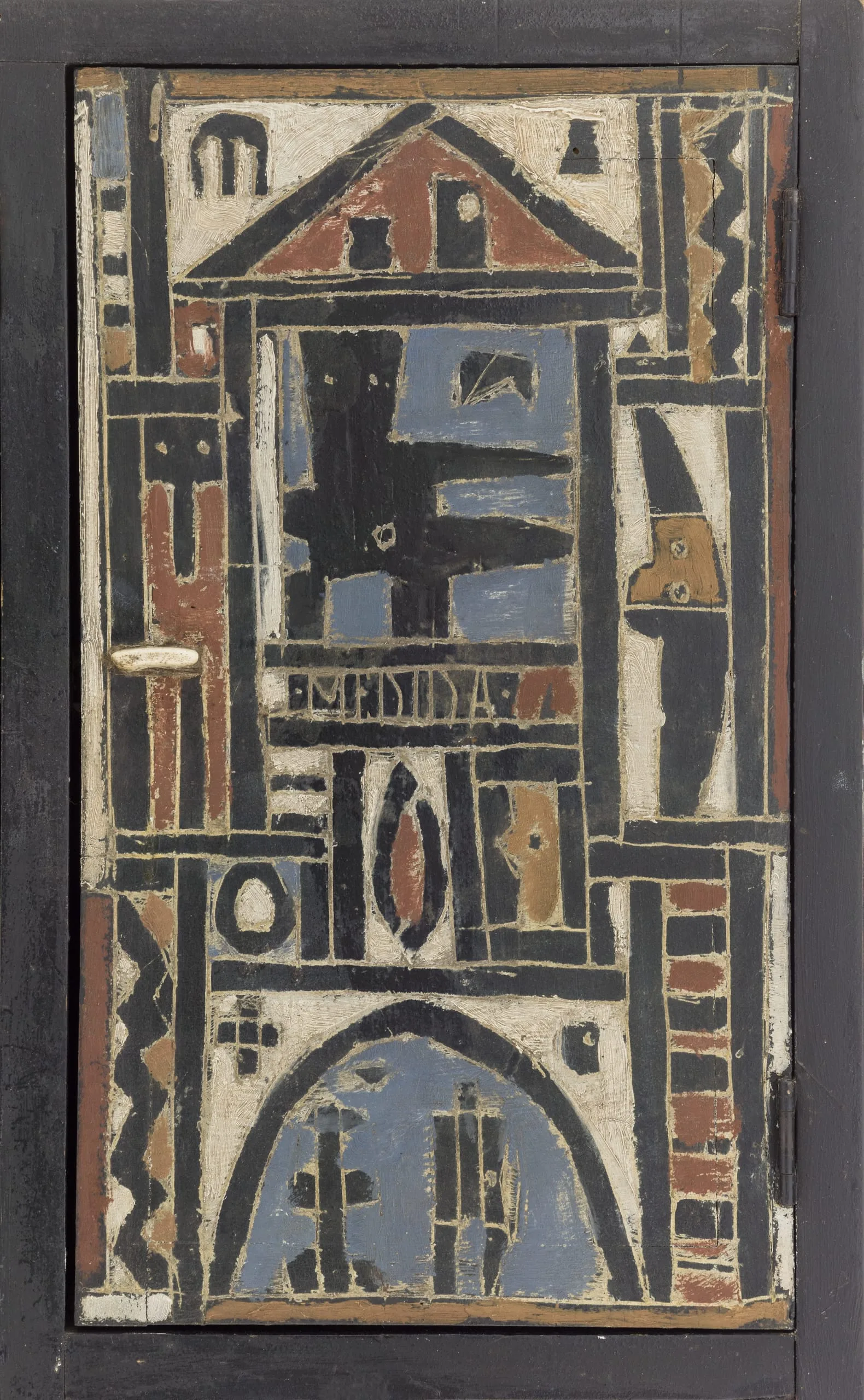
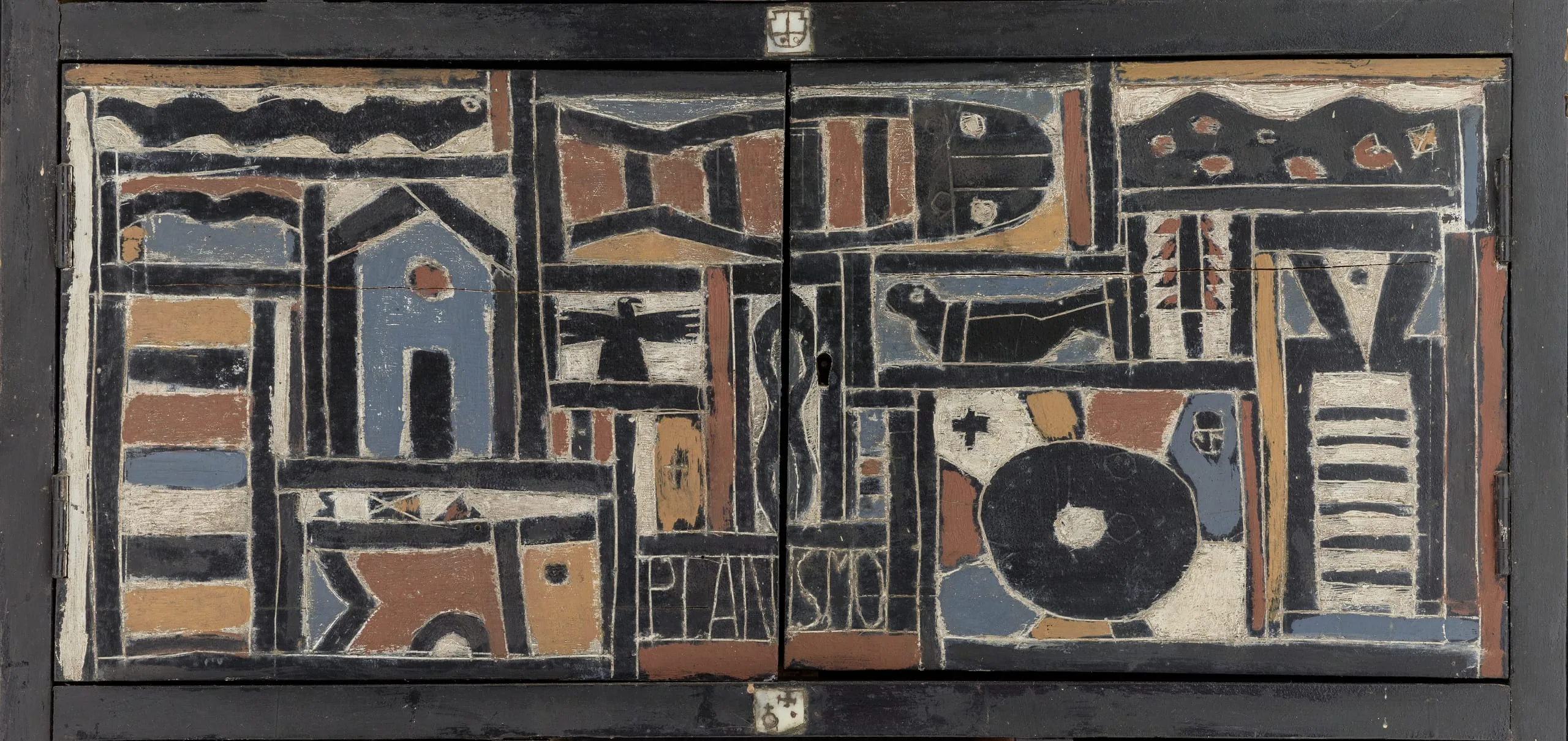
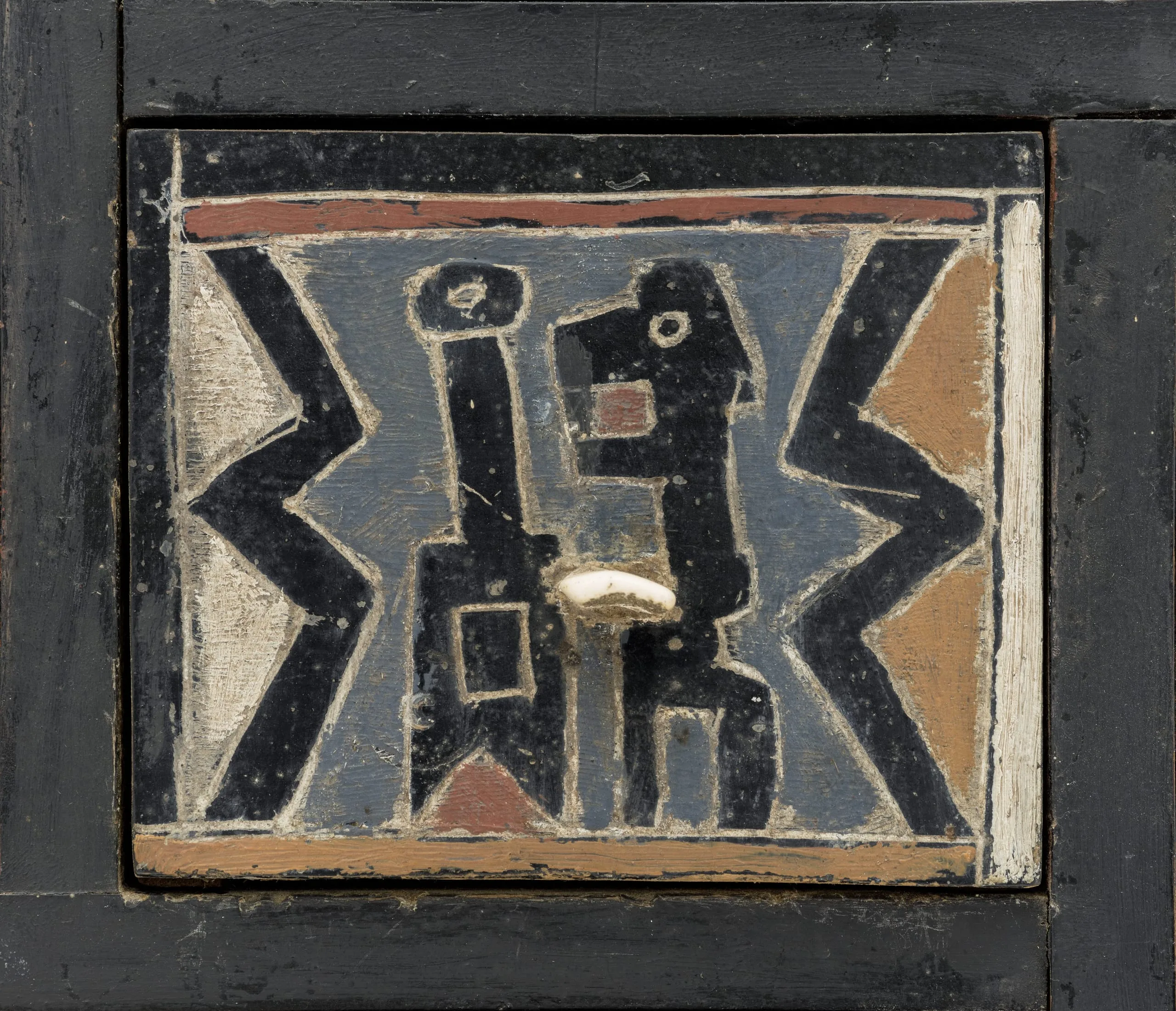
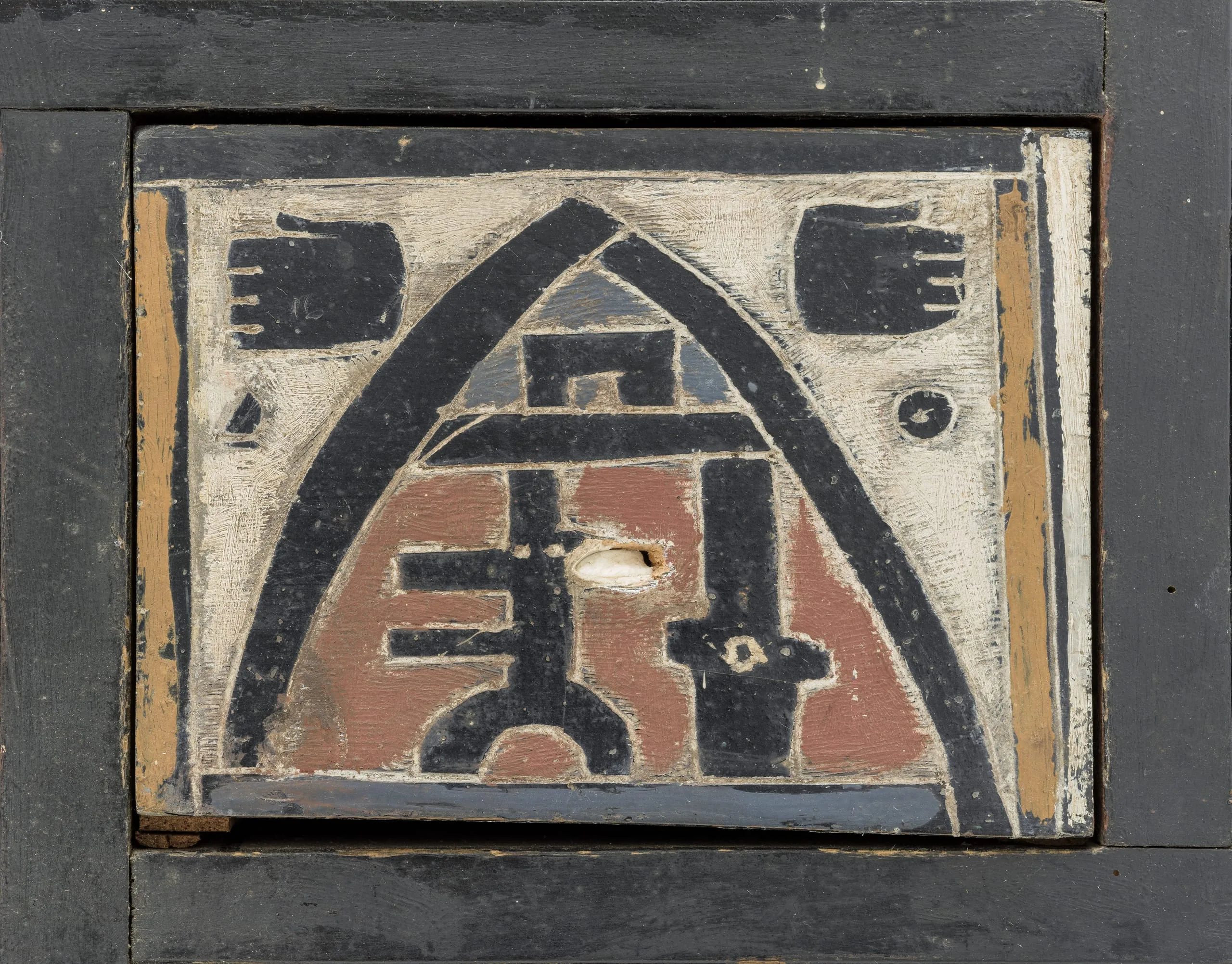
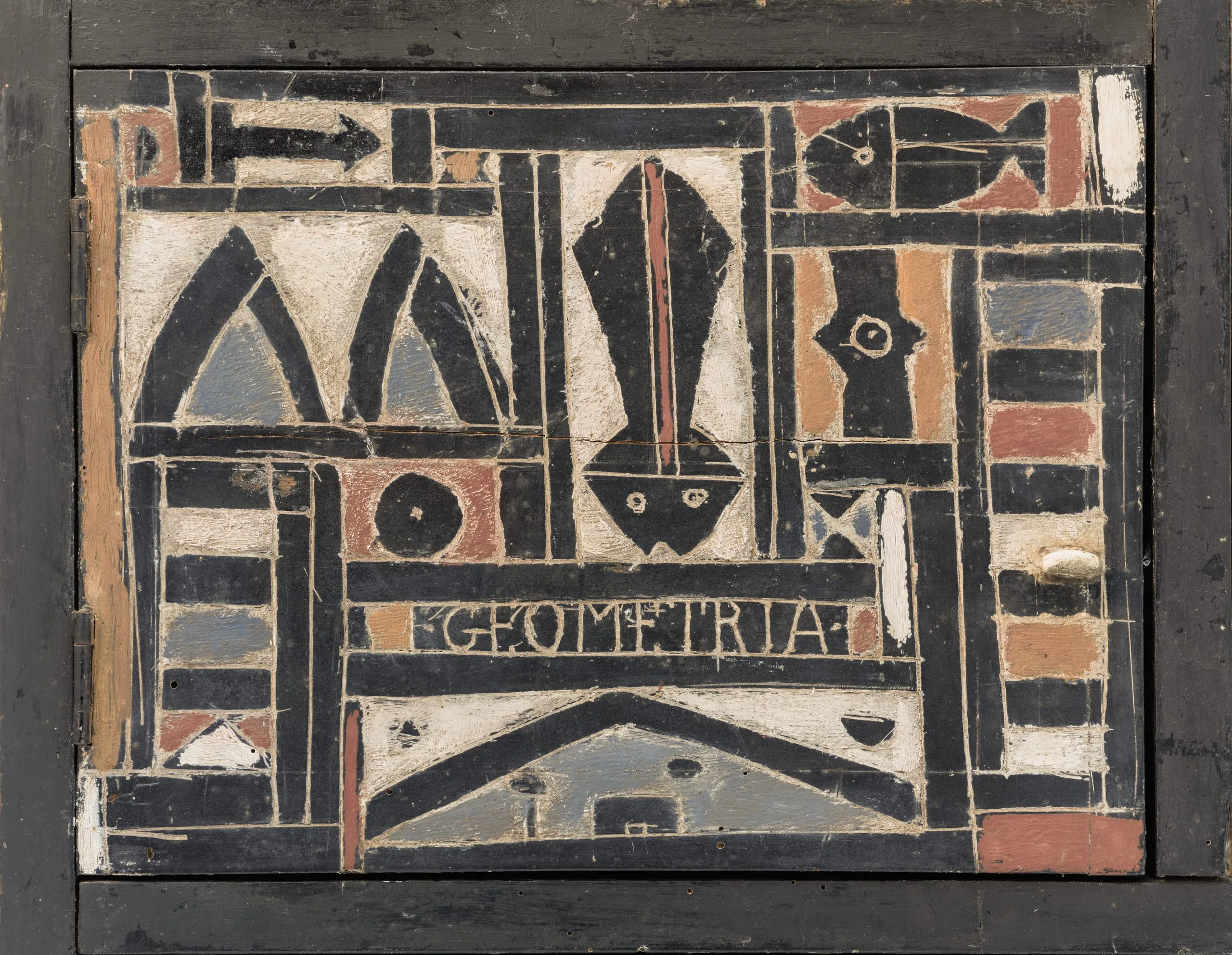
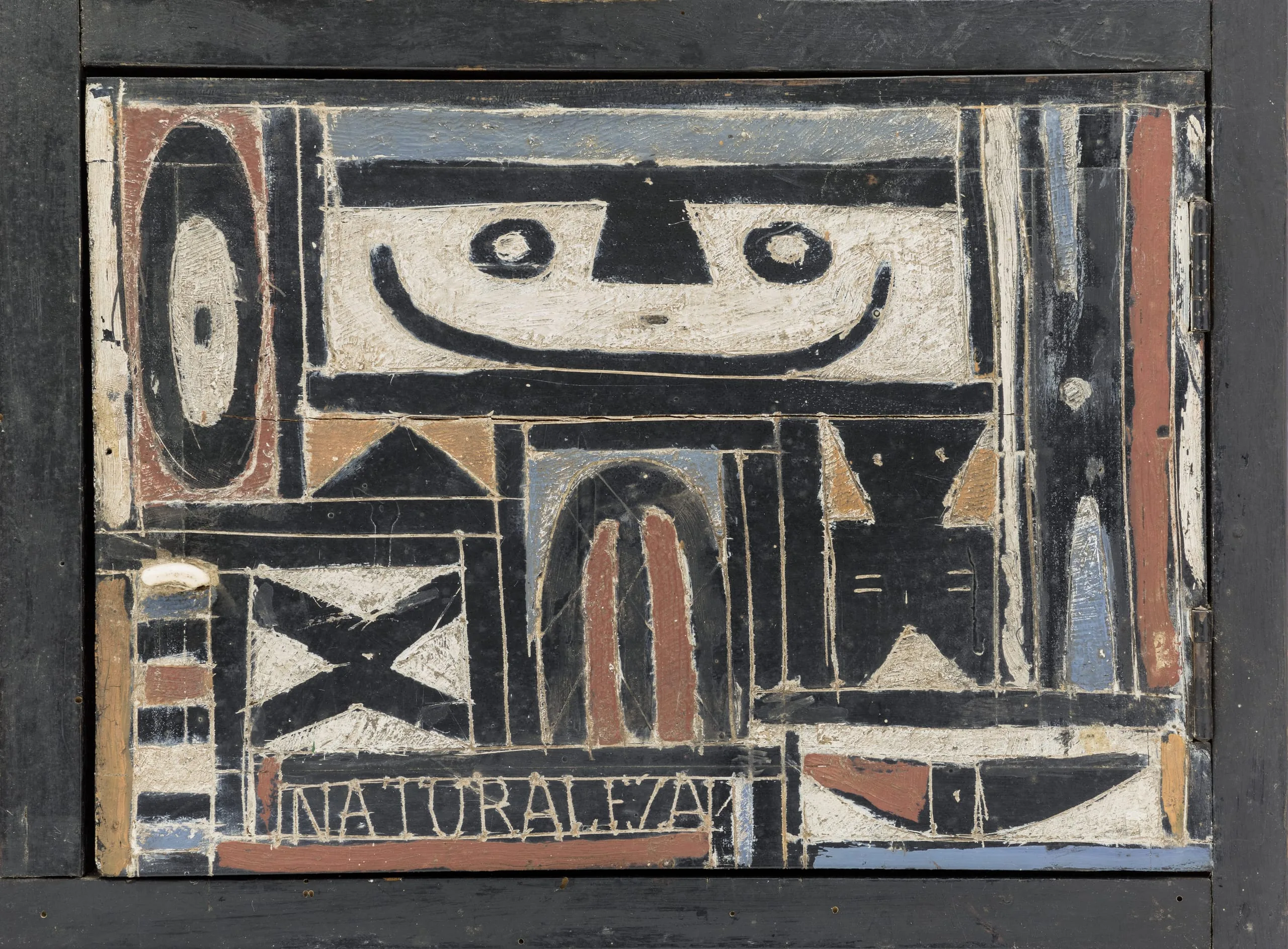
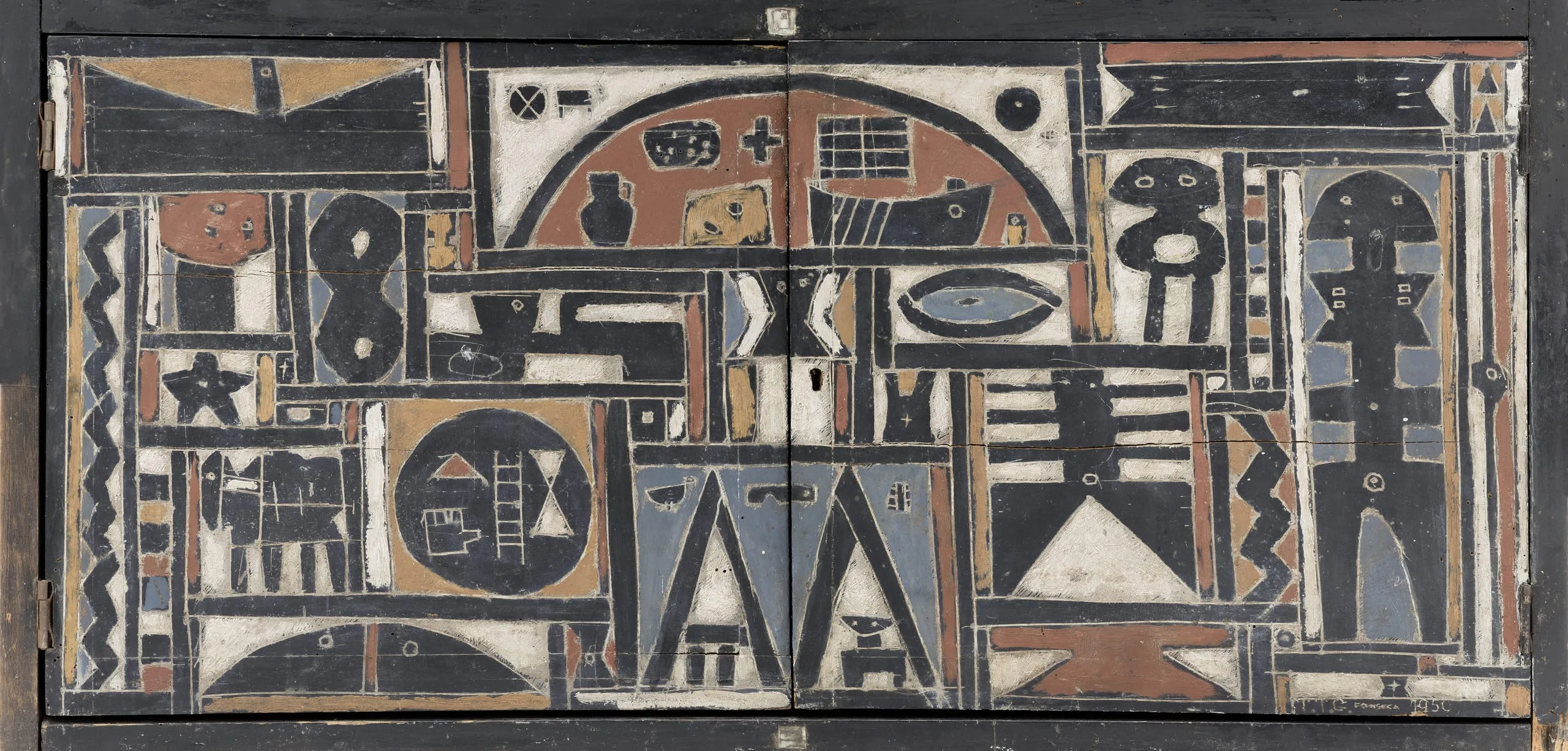
Gonzalo Fonseca was an original member of the Taller Torres-García (TTG), the historic arts-crafts workshop that Joaquín Torres-García (1874–1949) established in Montevideo in 1943. There, Torres-García taught the principles of Universal Constructivism (Constructivismo Universal; see M.2002.55), which consisted of arranging symbols in a gridlike structure and promoted the integration of art and craft in everyday life. The words inscribed on Fonseca’s cabinet—ritmo (rhythm), proporción (proportion), medida (measure), planismo (planism), geometría (geometry), and naturaleza (nature)—reflect the TTG’s principles for the creation of art. The cabinet also features archetypal or universal symbols derived from Torres-García’s interest in Indigenous forms and his teachings associated with the three planes of existence: intellectual, emotional, and physical. Recognizable symbols include the universal man (creativity), the fish (life), a triangle (reason), a five-pointed star (a reference to pentagonal symmetry), a ladder (progress), and masks of the Americas.
In 1945, along with other members of the TTG, Fonseca traveled throughout Argentina, Bolivia, and Peru to study ancient art. This experience, along with later trips to Europe and the Middle East in the 1950s, was pivotal for his formal and theoretical approach to art. For Torres-García and his followers, Constructivism was more than a system for structuring the surface of a canvas, wall, or object: it entailed a whole philosophy of life that depended on its ritual application according to systems used in ancient cultures, especially those including mystical proportions such as the golden section. Geometry could be found in the pyramids and Gothic cathedrals, Byzantine, Egyptian, and Inka art. The grid and the symbols were all part of the same process and were imbued with profound spiritual meaning.
Ilona Katzew
2024