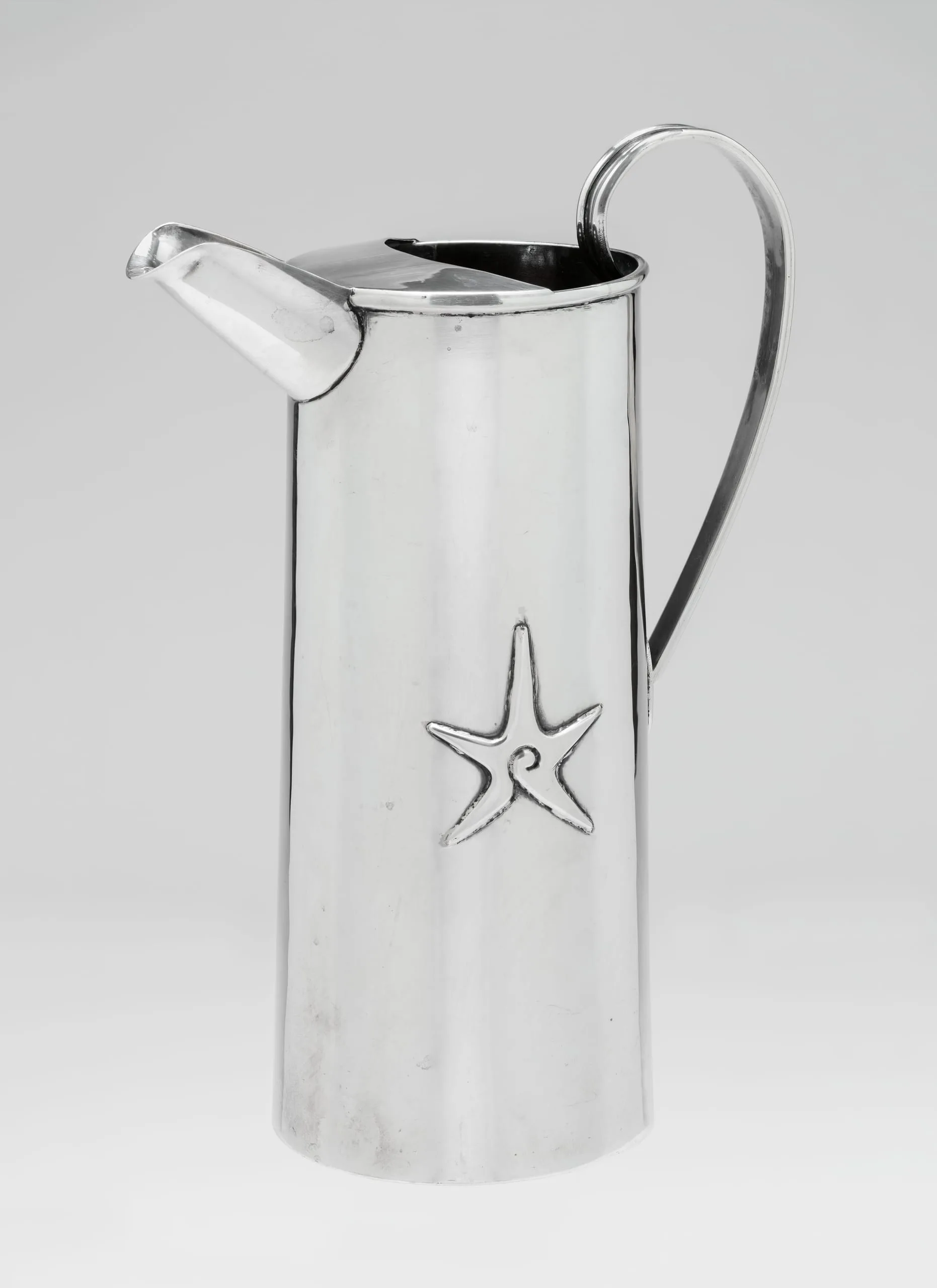
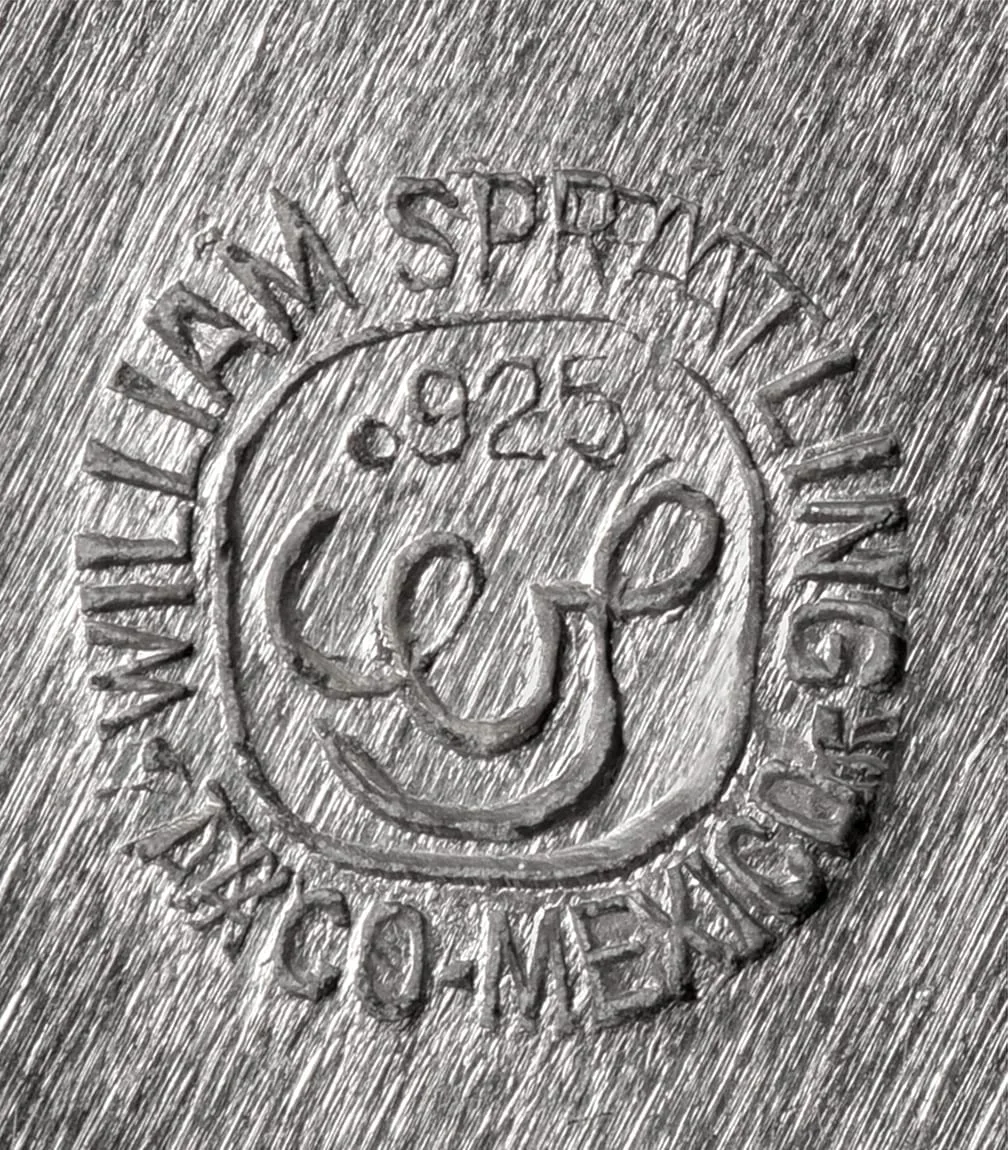
In the 1950s, William Spratling was commissioned to create a line of silver items for the new Hotel Pierre Marqués in Acapulco. When the hotel opened in 1957, Spratling’s designs—including pitchers, ashtrays, key rings, champagne buckets, and mugs—joined chairs by Cuban-Mexican designer Clara Porset (1895–1981) and gardens by Mexican architect Luis Barragán (1902–1988) to showcase the hotel’s embrace of modern design. The application of a silver starlike conch on Spratling’s objects became the signature logo of the hotel. The nautical motif, fitting for a beachfront property, has its roots in Mesoamerican art. An ardent student of ancient Mexico, Spratling was familiar with this shell motif, which appears in objects such as a footed vessel in LACMA’s collection (M.86.311.48). Highly valued in Mesoamerica, shells bore associations with fertility, water, and the spiritual powers of particular deities. Though this pitcher shares the recognizable motif of Spratling’s Pierre Marqués line, the designer made this example for his friend, the artist Millard Sheets (1907–1989).
Trained as an architect, Spratling moved from New Orleans to Taxco, Mexico, where he established his first silver workshop in 1931. Working alongside master silversmiths and local apprentices, in 1935 he opened his famed Taller de Las Delicias, which attracted a cohort of international artists, intellectuals, and Hollywood celebrities. Spratling’s emphasis on craftsmanship and his experimentation with different sources, including Mesoamerican art, Art Deco, and modernism, contributed to his great success and helped revitalize the Mexican silver industry.
Rachel Kaplan
2025