- Title
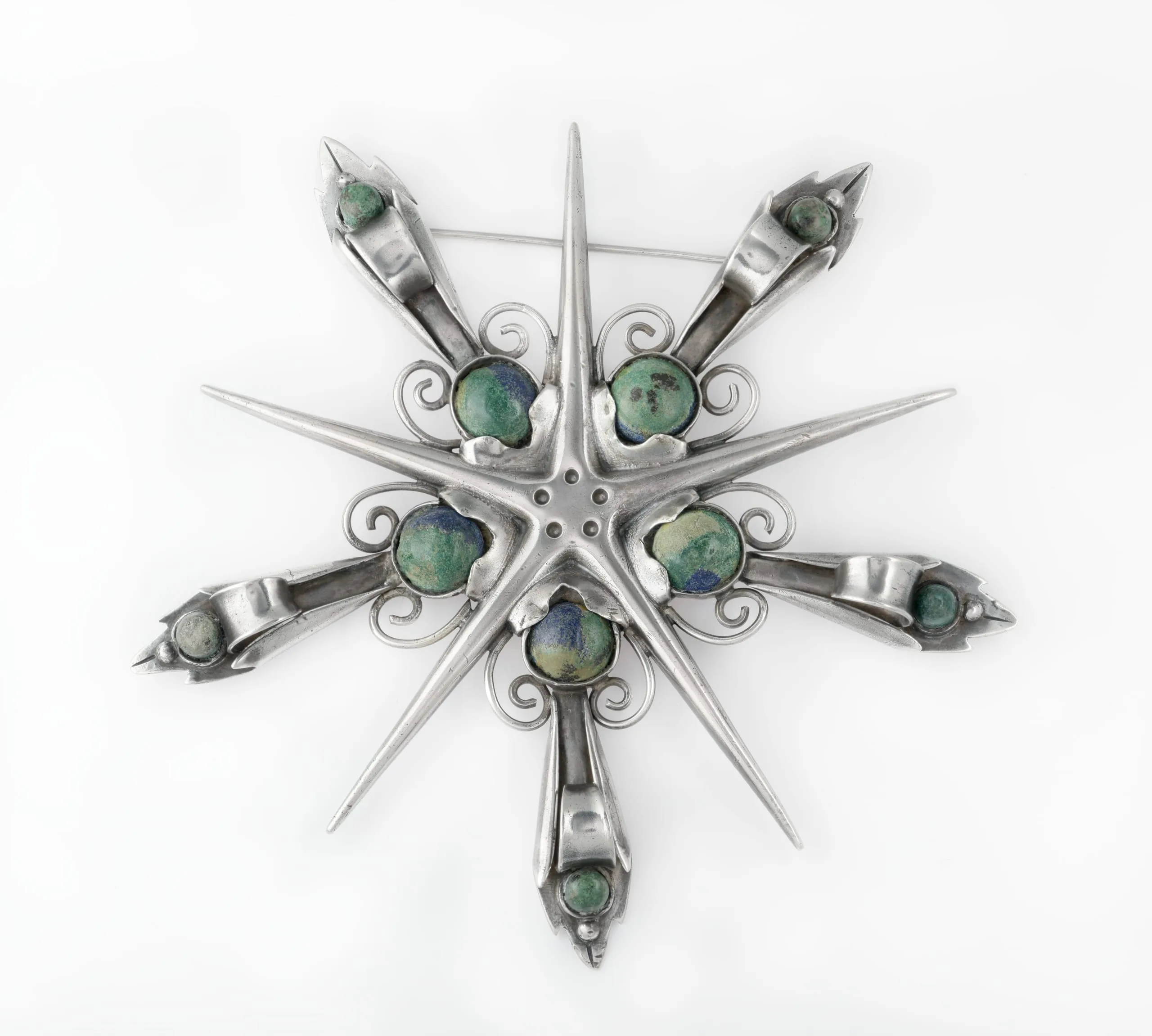
- Star Brooch (Prendedor en forma de estrella)
- Date Made
- 1944-1946
- Medium
- Silver, azurite, and malachite
- Dimensions
- 4 5/16 × 4 5/16 × 1/2 in. (11 × 11 × 1.27 cm)
- Accession Number
- M.2015.249.2
- Curatorial Notes
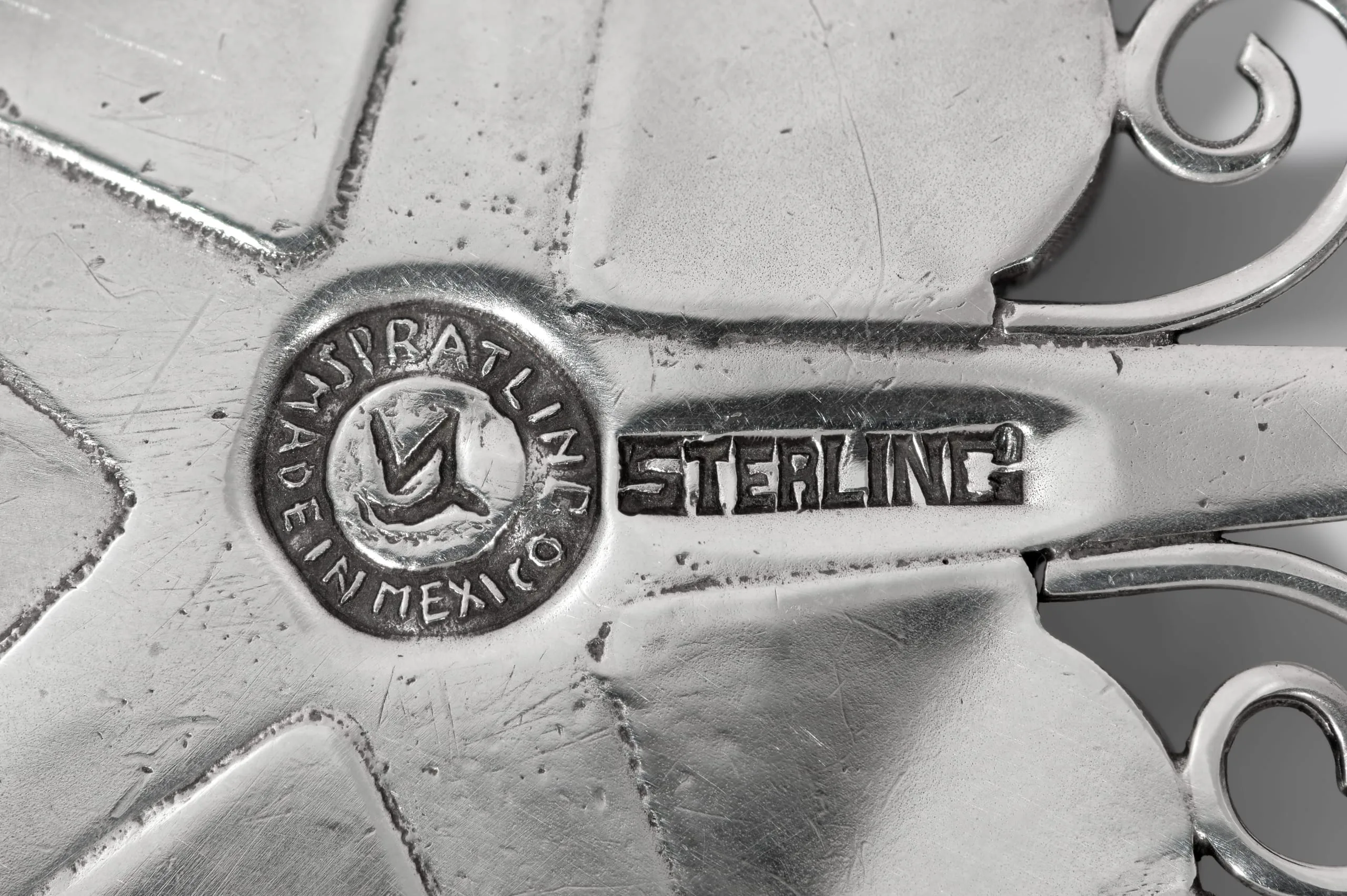
William Spratling was a leading figure in the resurgence of the Mexican silver industry in the twentieth century. This starburst brooch, which combines silver with azurite and malachite, is representative of Spratling’s interest in alternating contrasting materials and colors (see also M.2015.249.1). He first used the blue and green minerals in 1944, which became a hallmark of many of his subsequent designs.
An architect from New Orleans, Spratling established his first workshop in Taxco, Mexico, in 1931, working alongside a local master silversmith and several young apprentices. A brilliant marketing strategist, Spratling set out to reinvigorate Taxco’s economy by employing local artisans, catalyzing a renaissance in the Mexican silver industry. Insistence on handiwork and experimentation contributed to a thriving local industry. Designers and craftspeople drew on and creatively reinterpreted a variety of sources, including Mesoamerican art, Arts and Crafts, Art Deco, and modernist motifs.
Ilona Katzew
2024
- Copyright
- © artist or artist's estate