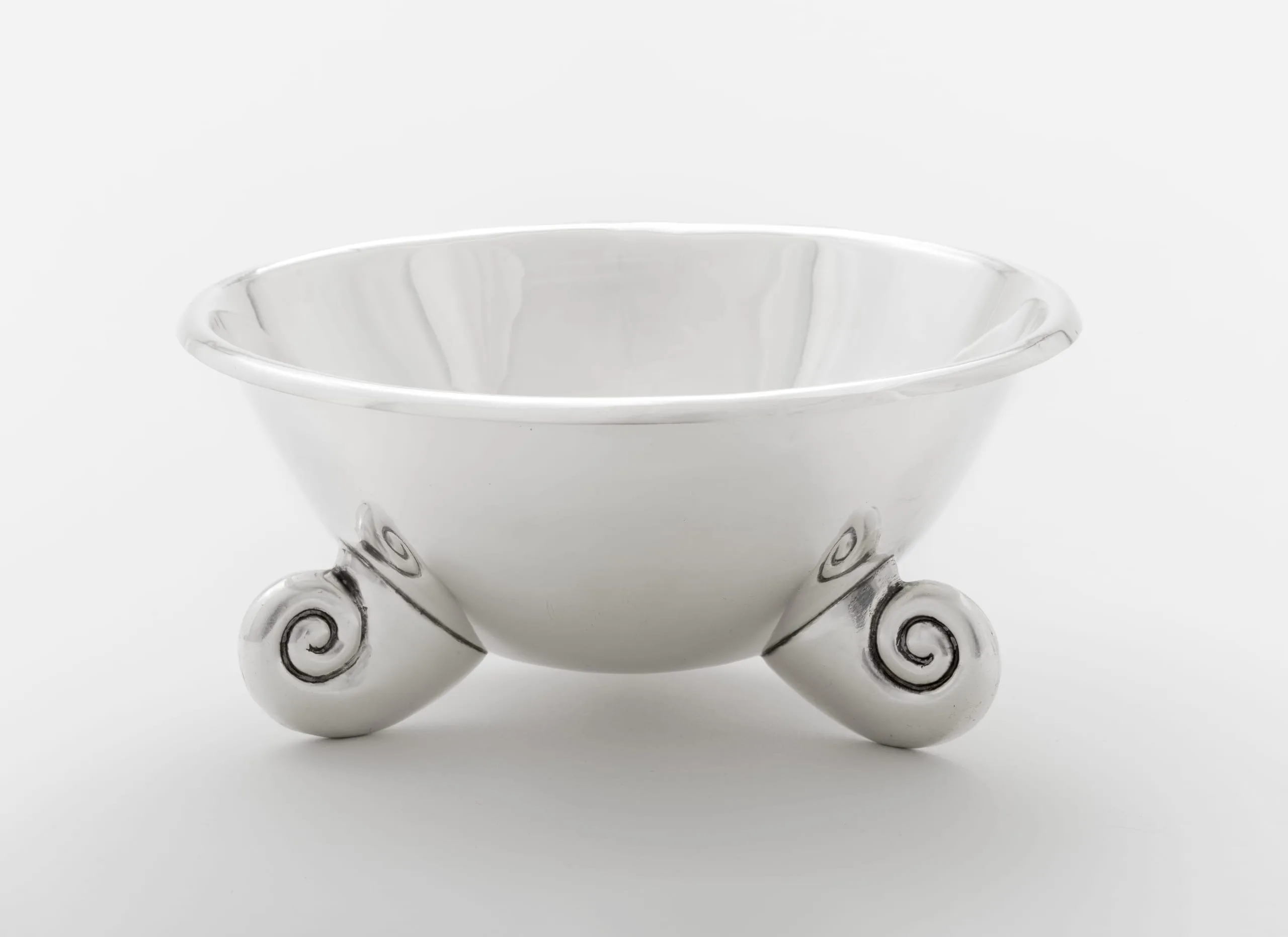
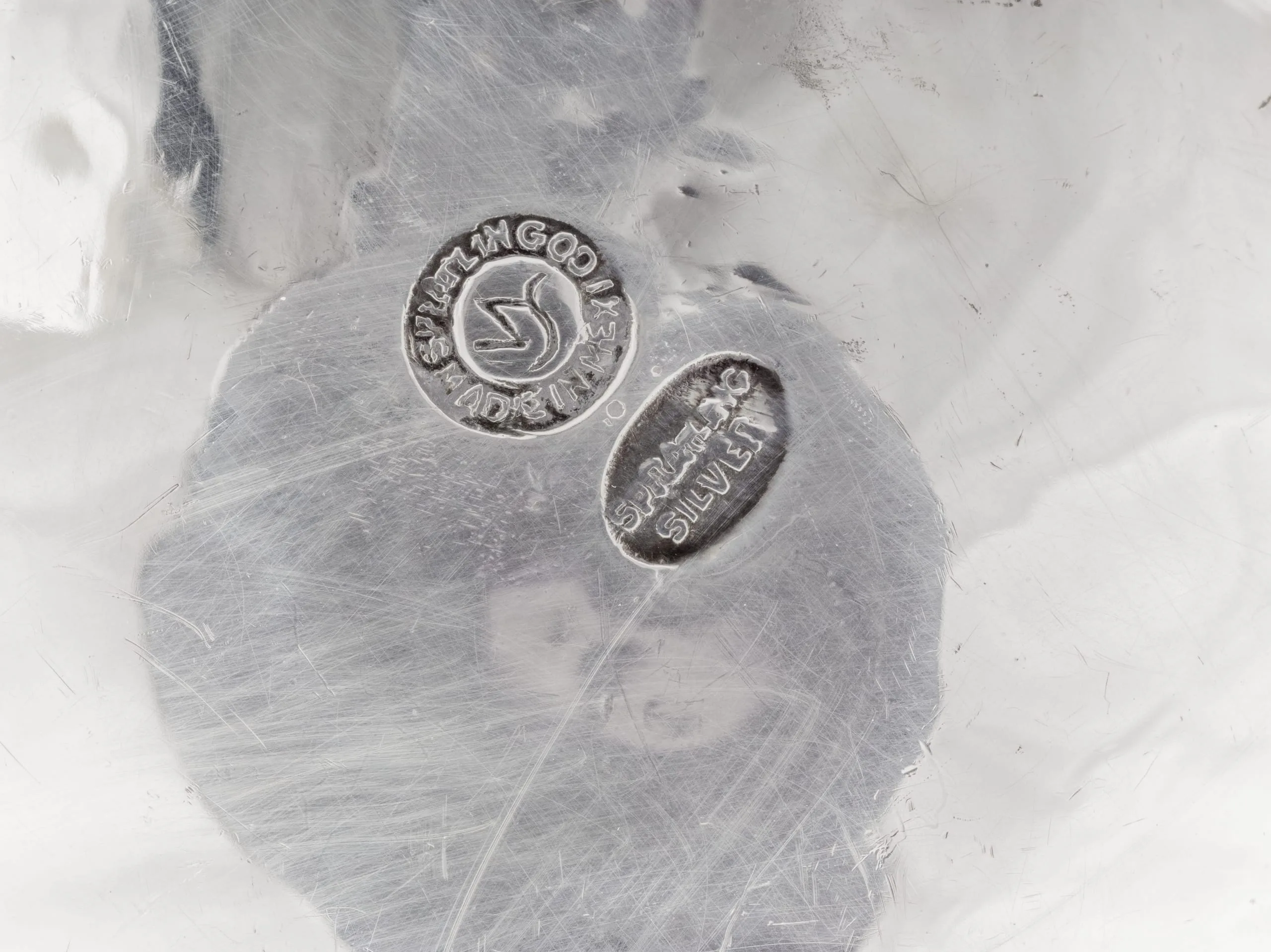
William Spratling’s modern silver designs often followed metalsmithing traditions that were practiced in Mexico before the arrival of the Spaniards. To make works such as this bowl, artisans hammered a flat disk around a form to raise it into the shape of the vessel. The tripod base recalls Mesoamerican ceramic vessels (AC1993.217.26), while the feet represent conch shells—a motif that Spratling also adapted from ancient objects (M.86.311.48) and to which he returned throughout his career (M.2015.249.12).
Trained as an architect, Spratling moved from New Orleans to Taxco, Mexico, where he established his first silver workshop in 1931. Working alongside master silversmiths and local apprentices, in 1935 he opened his famed Taller de Las Delicias, which attracted a cohort of international artists, intellectuals, and Hollywood celebrities. Spratling’s emphasis on craftsmanship and his experimentation with different sources, including Mesoamerican art, Art Deco, and modernism, contributed to his great success and helped revitalize the Mexican silver industry.
Rachel Kaplan
2024