LACMA

ShopMembershipMyLACMATickets
LACMA
Los Angeles County Museum of Art
5905 Wilshire Blvd.
Los Angeles, CA 90036
info@lacma.org
(323) 857-6000
Sign up to receive emails
Subscribe
© Museum Associates 2026
  • About LACMA
  • Jobs
  • Building LACMA
  • Host An Event
  • Unframed
  • Press
  • FAQs
  • Log in to MyLACMA
  • Privacy Policy
© Museum Associates 2026
Collections

William Spratling
Box with Monkey Motif (Caja con motivo de mono)1956-1962

Not on view
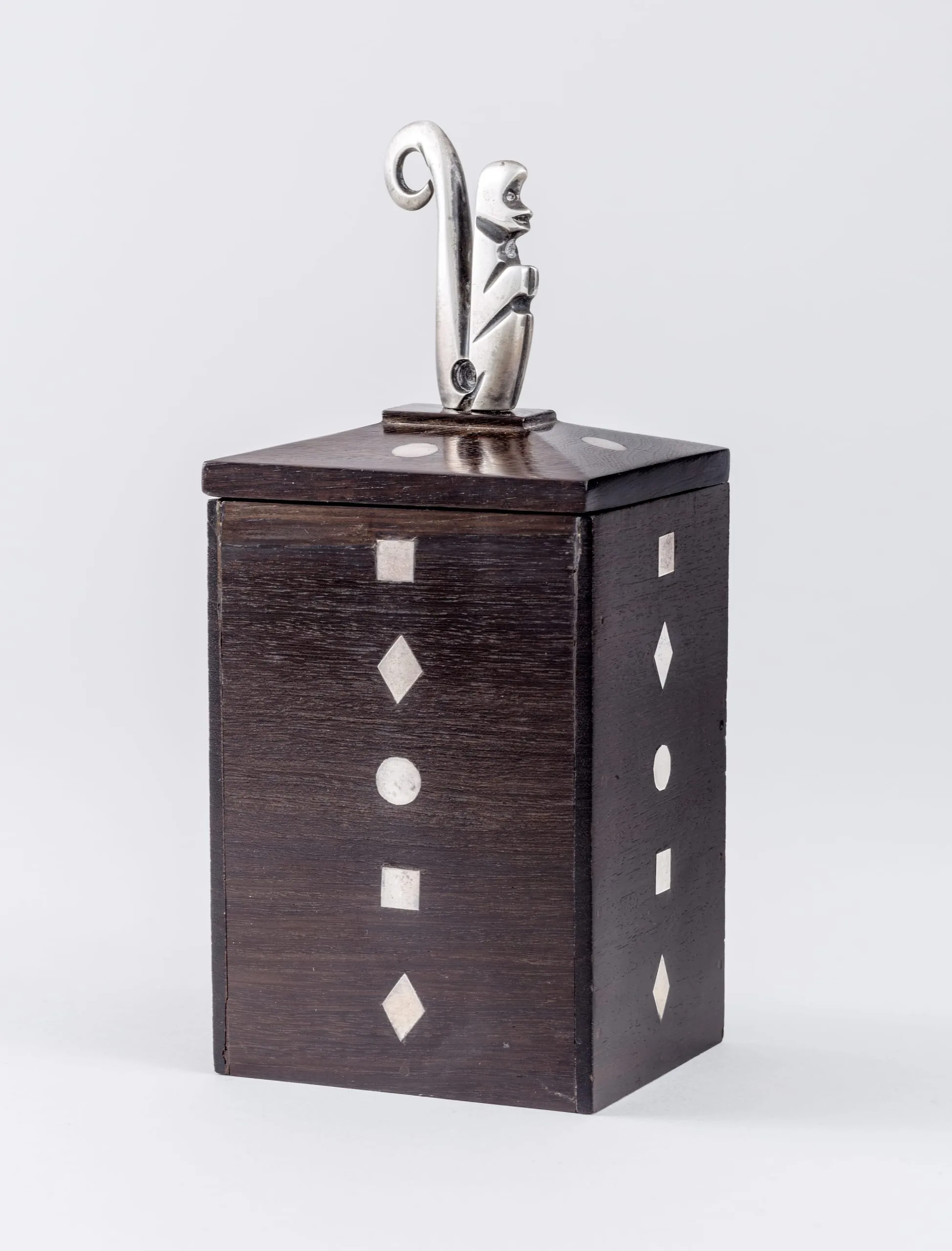
Small rectangular wooden box with dark espresso grain, inlaid with cream geometric shapes, topped by a polished silver stylized figure with a curling scroll above its head
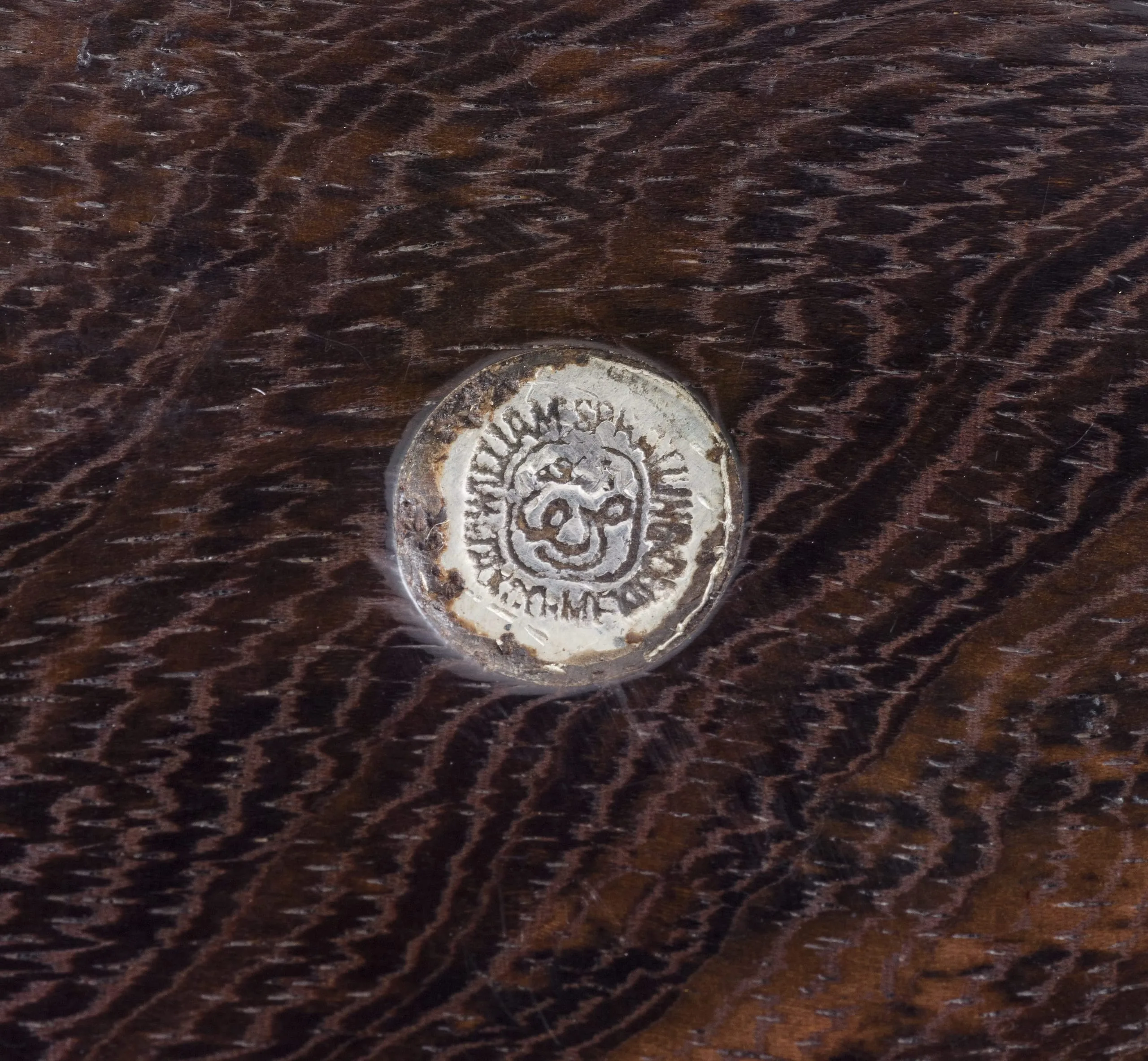
Close-up photograph of a small circular silver maker's mark or hallmark affixed to a dark wood surface with visible grain, bearing a central face motif surrounded by stamped text along the border.
Artist or Maker
William Spratling
United States, active Mexico, 1900-1967
Title
Box with Monkey Motif (Caja con motivo de mono)
Place Made
Mexico, Taxco
Date Made
1956-1962
Medium
Rosewood, silver
Dimensions
a) 2 3/4 × 2 3/4 × 2 3/8 in. (6.99 × 6.99 × 6.03 cm) b) 3 3/4 × 2 3/4 × 2 3/8 in. (9.53 × 6.99 × 6.03 cm) a-b) 6 1/2 × 2 3/4 × 2 3/8 in. (16.19 × 6.99 × 6.03 cm)
Credit Line
Gift of Ronald A. Belkin, Long Beach, California
Accession Number
M.2015.190.1a-b
Classification
Furnishings
Collecting Area
Latin American Art
Curatorial Notes

In this charming design by William Spratling, a stylized silver monkey is perched atop a simple rosewood box. Spratling studied Mesoamerican art, frequently adapting its motifs in his silver designs. Monkeys were highly symbolic animals, featuring in Mexica and Maya creation myths. The one here recalls carved stone Mezcala examples (M.86.311.21), while the overall design of the container crowned with a monkey is reminiscent of Maya precedents (see M.2010.115.1017a-b and M.2010.115.1016a-b). Spratling often combined silver with more “humble” substances such as local rosewood. According to the designer, despite the varying commercial value of these two distinct materials, they came from the same earth and visually enhanced one another. He found the contrast of the dark wood and shiny silver particularly pleasing.

Trained as an architect, Spratling moved from New Orleans to Taxco, Mexico, where he established his first silver workshop in 1931. Working alongside master silversmiths and local apprentices, in 1935 he opened his famed Taller de Las Delicias, which attracted a cohort of international artists, intellectuals, and Hollywood celebrities. Spratling’s emphasis on craftsmanship and his experimentation with different sources, including Mesoamerican art, Art Deco, and modernism, contributed to his great success and helped revitalize the Mexican silver industry.

Rachel Kaplan

2025
Selected Bibliography
  • Kaplan, Wendy, ed. Found in Translation: Design in California and Mexico, 1915-1985. Los Angeles: Los Angeles County Museum of Art; Munich: DelMonico Books-Prestel, 2017.
Copyright
© artist or artist's estate