LACMA

ShopMembershipMyLACMATickets
LACMA
Los Angeles County Museum of Art
5905 Wilshire Blvd.
Los Angeles, CA 90036
info@lacma.org
(323) 857-6000
Sign up to receive emails
Subscribe
© Museum Associates 2025

Museum Hours

Monday

11 am–6 pm

Tuesday

11 am–6 pm

Wednesday

Closed

Thursday

11 am–6 pm

Friday

11 am–8 pm

Saturday

10 am–7 pm

Sunday

10 am–7 pm


  • About LACMA
  • Jobs
  • Building LACMA
  • Host An Event
  • Unframed
  • Press
  • FAQs
  • Log in to MyLACMA
  • Privacy Policy
© Museum Associates 2025
Collections

Unidentified artist
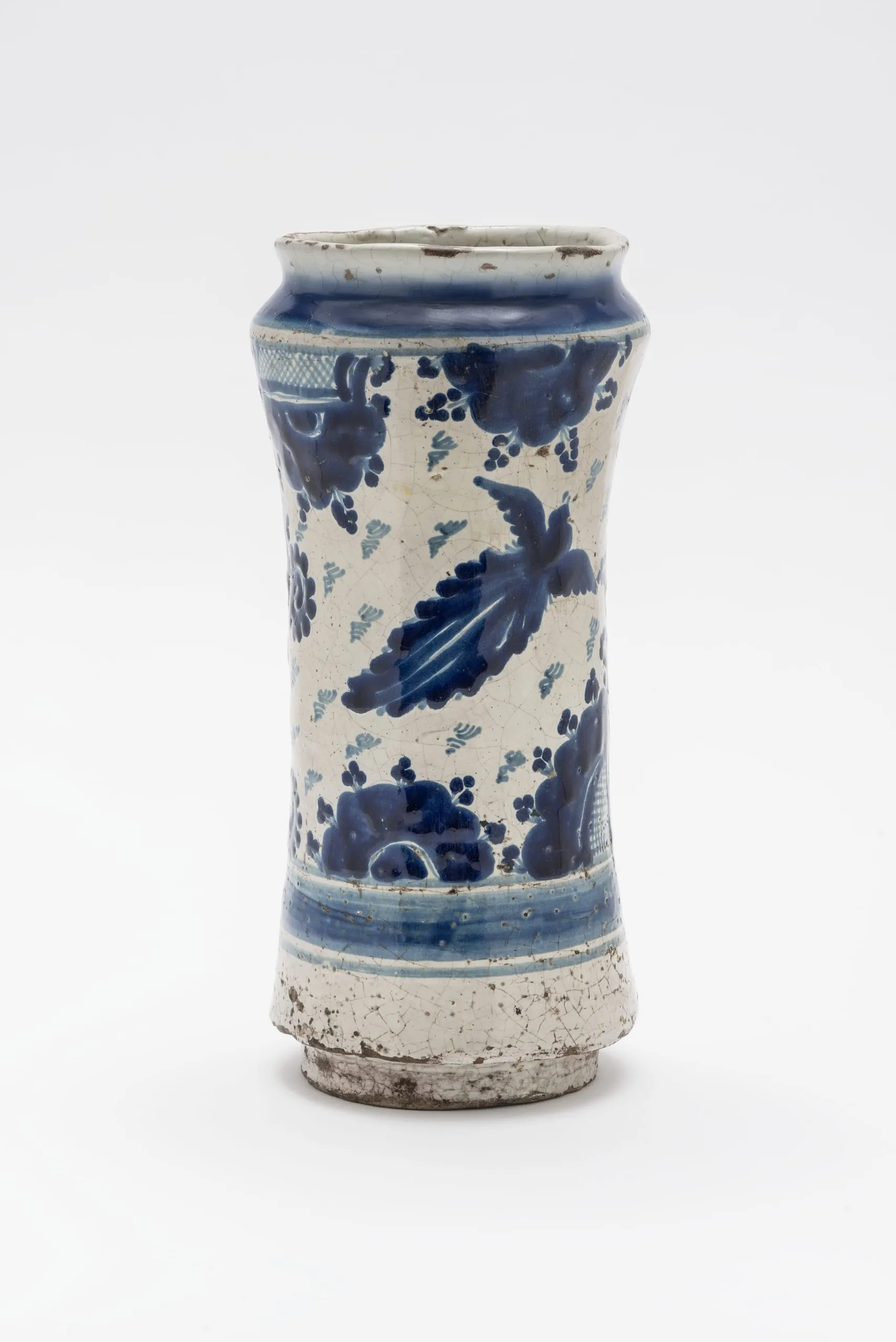
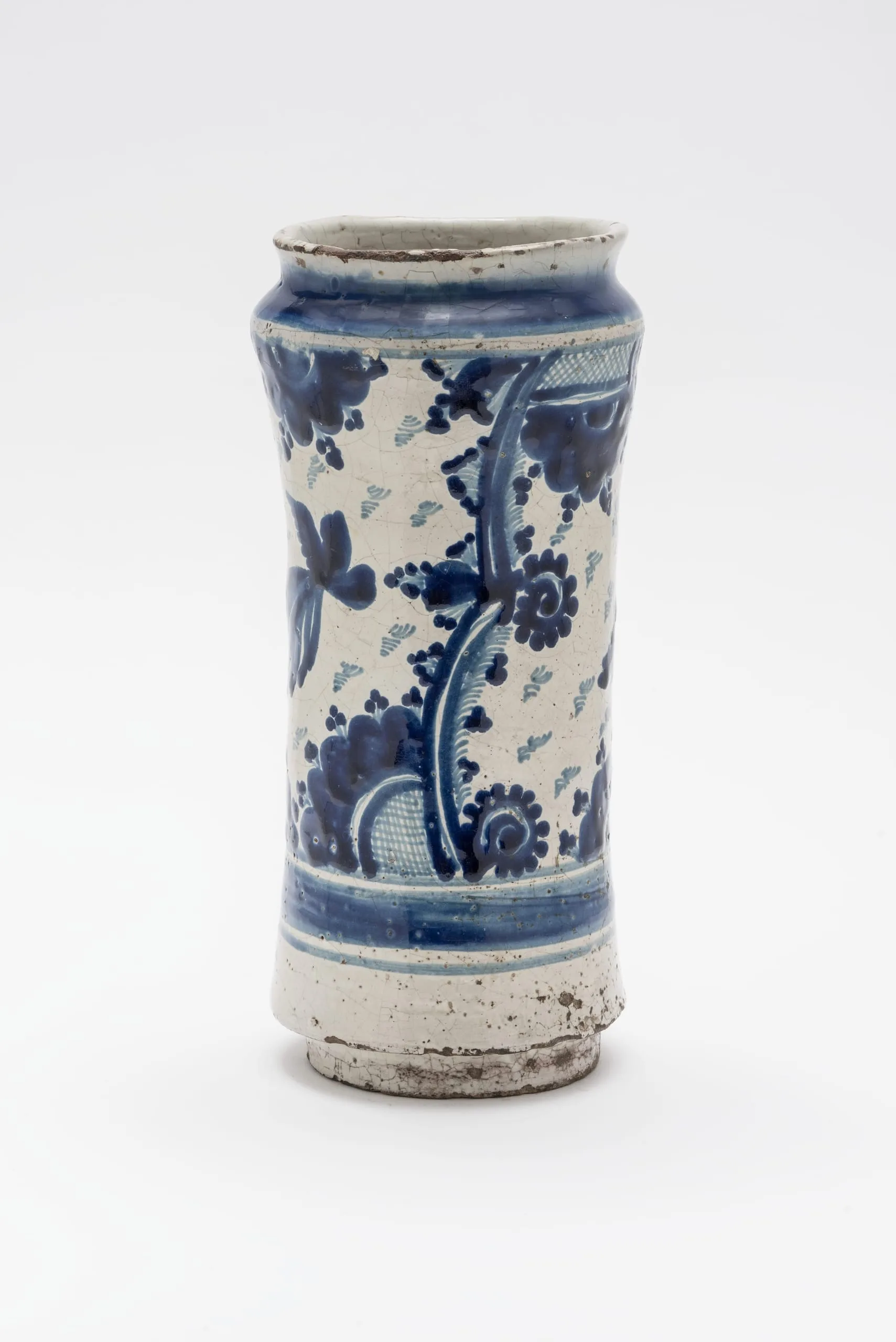
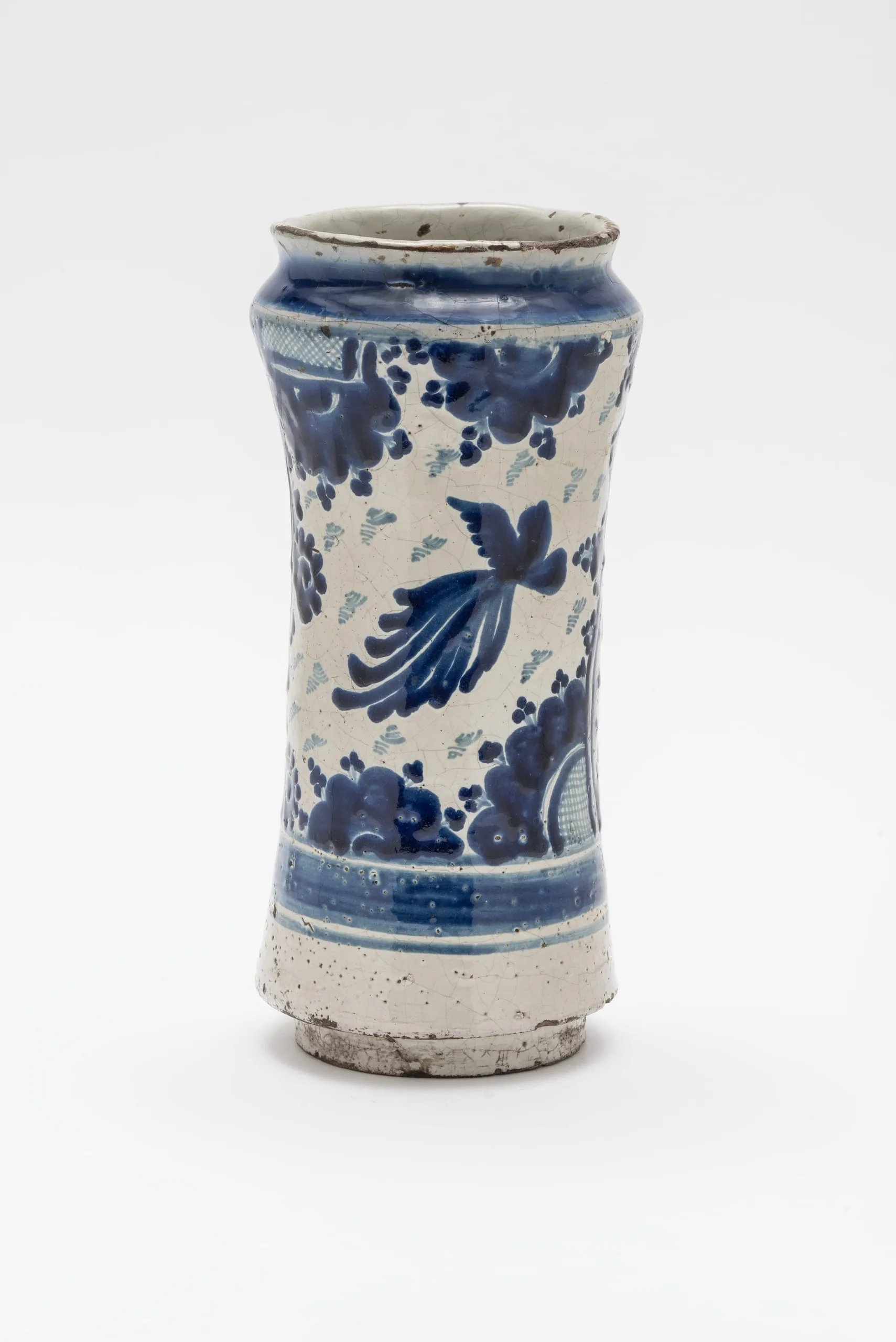
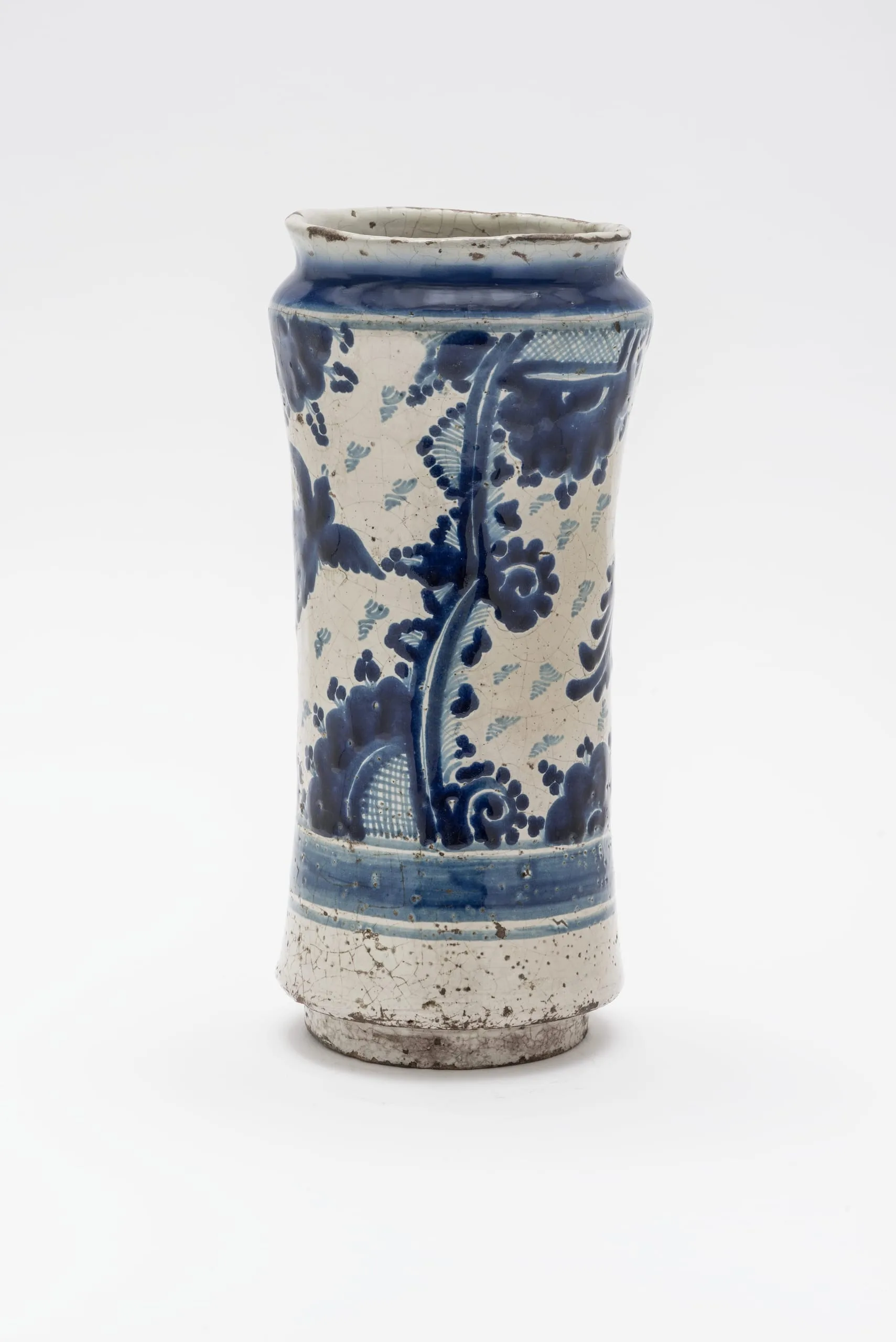
Apothecary Jar (Albarelo)circa 1750-1800

Not on view
Tin-glazed ceramic albarello with cylindrical waisted form, decorated in cobalt blue with a central bird in flight, leafy motifs, and scattered brushwork on a white ground
Tin-glazed earthenware albarello, cylindrical with slightly waisted form, decorated in cobalt blue on white with scrolling floral and leaf motifs; horizontal bands at neck and base, with visible wear and chipping to the lower body.
Tin-glazed earthenware albarello, cylindrical with slightly waisted form, decorated in cobalt blue on white with a bird in flight amid floral and foliage motifs, horizontal banded borders at rim and base, with visible wear and chipping.
Ceramic albarello, cylindrical pharmacy jar with slightly waisted form, decorated in cobalt blue on white tin glaze with scrolling foliage and floral motifs; chipped rim and worn base reveal underlying earthenware body.
Artist or Maker
Unidentified artist
Title
Apothecary Jar (Albarelo)
Place Made
Mexico, Puebla de los Ángeles
Date Made
circa 1750-1800
Medium
Tin-glazed earthenware
Dimensions
9 3/4 × 4 1/4 in. (24.77 × 10.8 cm)
Credit Line
Gift of Ronald A. Belkin, Long Beach, California
Accession Number
M.2015.69.6
Classification
Furnishings
Collecting Area
Latin American Art
Curatorial Notes

In the sixteenth and seventeenth centuries, the Mexican city of Puebla became a production center for fine earthen-ware and tiles later known as "Talavera poblana." The earliest Puebla majolica (tin-glazed earthenware) shows Spanish and Hispano-Islamic influences. However, Puebla is best known for the Chinese-inspired blue-and-white majolica it began producing in the second quarter of the seventeenth century, which remained popular throughout the eighteenth century. The importation of Asian goods to the Spanish colonies via the Manila Galleon greatly impacted the development of Talavera poblana. The apothecary jar was a common shape used by Spanish and Mexican pharmacies to store herbs and ointments; it was likely kept on a shelf and covered with cloth or leather.


Provenance

Charles Rodney Sadleir, Cuernavaca, Mexico; Bonhams & Butterfields, San Francisco, November 3, 2003, lot 2531; Ronald A. Belkin, Long Beach, California, 2003; LACMA, 2015.