LACMA

ShopMembershipMyLACMATickets
LACMA
Los Angeles County Museum of Art
5905 Wilshire Blvd.
Los Angeles, CA 90036
info@lacma.org
(323) 857-6000
Sign up to receive emails
Subscribe
© Museum Associates 2025

Museum Hours

Monday

11 am–6 pm

Tuesday

11 am–6 pm

Wednesday

Closed

Thursday

11 am–6 pm

Friday

11 am–8 pm

Saturday

10 am–7 pm

Sunday

10 am–7 pm


  • About LACMA
  • Jobs
  • Building LACMA
  • Host An Event
  • Unframed
  • Press
  • FAQs
  • Log in to MyLACMA
  • Privacy Policy
© Museum Associates 2025
Collections

Unidentified artist
Camphorwood Trunk (Baúl de alcánfor)first half of the 19th century

Not on view
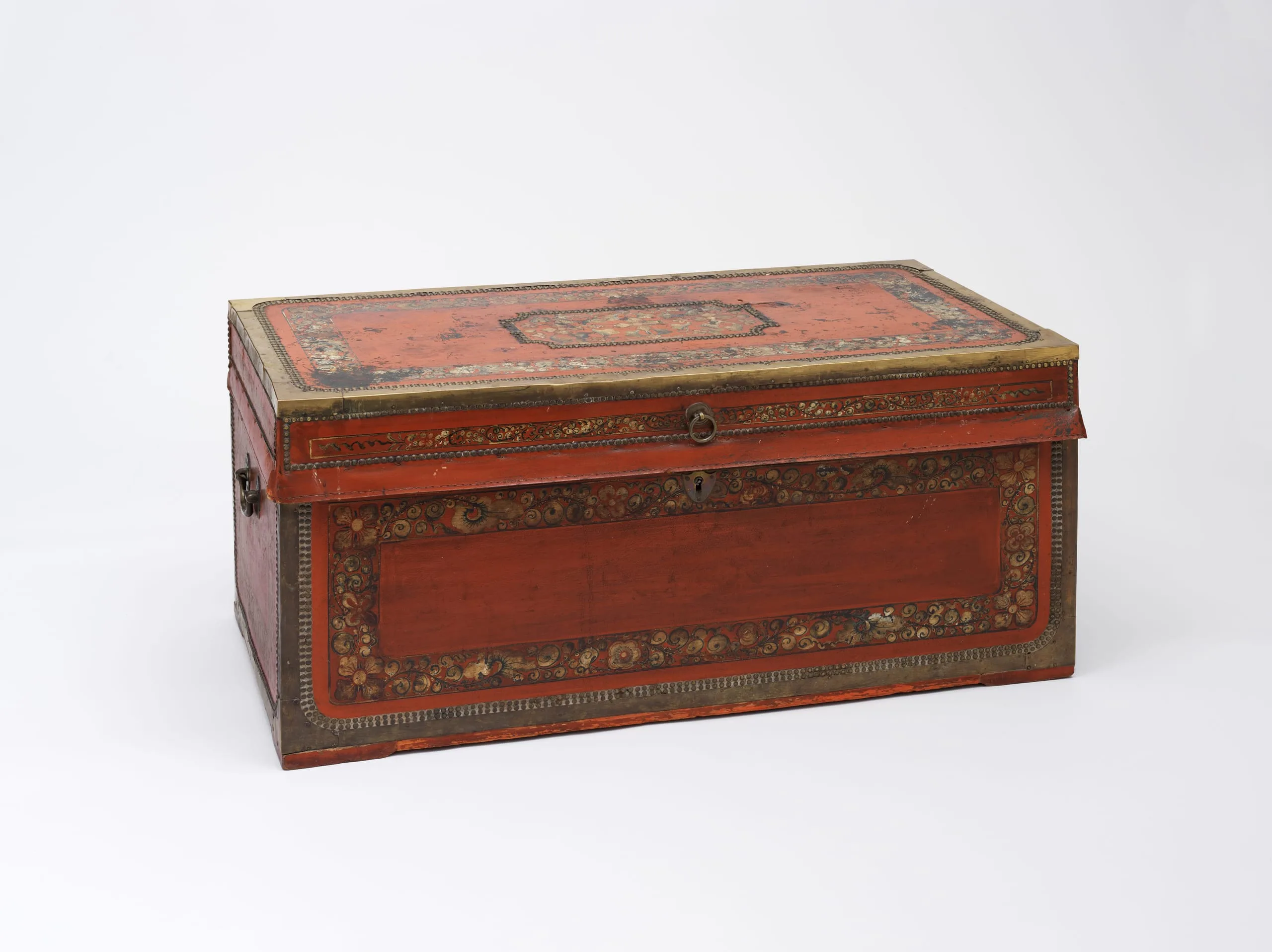
Rectangular painted wooden trunk with vermillion-red ground, brass trim, and floral border decoration enclosing plain red panels on the front and side
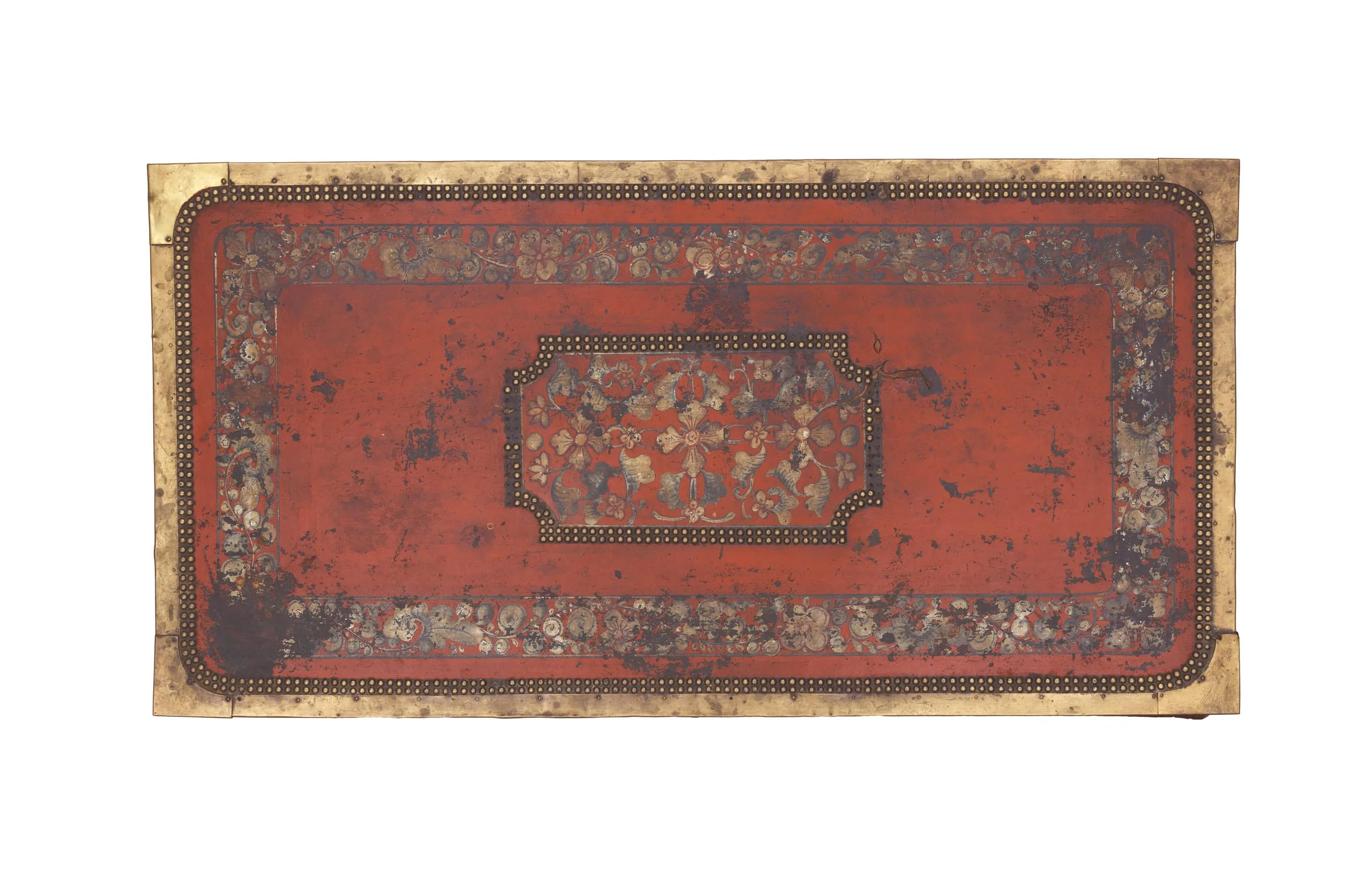
Rectangular lacquered panel with brass-edged border and rows of brass studs, red ground with central cartouche of polychrome floral decoration, surrounded by a wide floral border; surface shows significant wear and loss.
Artist or Maker
Unidentified artist
Title
Camphorwood Trunk (Baúl de alcánfor)
Place Made
China, made for export market, including Latin America
Date Made
first half of the 19th century
Medium
Leather, camphorwood, brass, polychrome
Dimensions
19 × 41 1/2 × 21 1/2 in. (48.26 × 105.41 × 54.61 cm)
Credit Line
Gift of Ronald A. Belkin, Long Beach, California
Accession Number
M.2015.69.5
Classification
Furnishings
Collecting Area
Latin American Art
Curatorial Notes

Covered in red leather and adorned with painted floral borders and brass mountings, this trunk is made of fragrant camphorwood and was produced exclusively for export, likely in Canton, China. Camphorwood, which comes from a large evergreen native to China, Indonesia, and Brazil, was long used in China to make cabinets for storing important documents, as the wood naturally repels insects. Due to the natural insecticidal properties of the wood, these trunks were also very popular with the military, whose woolen uniforms faced constant infestation on long campaigns. The trunks were made in various sizes, usually in nesting sets that ranged from two to five feet in length. The smallest trunk would often be packed with tea. The leather was generally painted and ornamented with floral motifs or decorative swags fashioned of tacks. By the eighteenth century, European traders regularly commissioned orders of Western style furniture from Chinese craftsmen, often providing a design or sample to be copied. While many examples of Spanish colonial decorative arts adapt Oriental types and decorative motifs, these travel trunks, also called "sea trunks," were specifically made by Chinese workshops for Western consumption, many of which found their way to Latin America and the US.


JoAnna Reyes Walton, Research Assistant, Latin American Art, 2015
Provenance

Estate of Lafayette “Lafe” Pence Speirs, Los Angeles; Abell Auction Company, Commerce, California, 2003; Ronald A. Belkin, Long Beach, California, 2003; LACMA, 2015.