LACMA

ShopMembershipMyLACMATickets
LACMA
Los Angeles County Museum of Art
5905 Wilshire Blvd.
Los Angeles, CA 90036
info@lacma.org
(323) 857-6000
Sign up to receive emails
Subscribe
© Museum Associates 2025

Museum Hours

Monday

11 am–6 pm

Tuesday

11 am–6 pm

Wednesday

Closed

Thursday

11 am–6 pm

Friday

11 am–8 pm

Saturday

10 am–7 pm

Sunday

10 am–7 pm


  • About LACMA
  • Jobs
  • Building LACMA
  • Host An Event
  • Unframed
  • Press
  • FAQs
  • Log in to MyLACMA
  • Privacy Policy
© Museum Associates 2025
Collections

Pedro Friedeberg
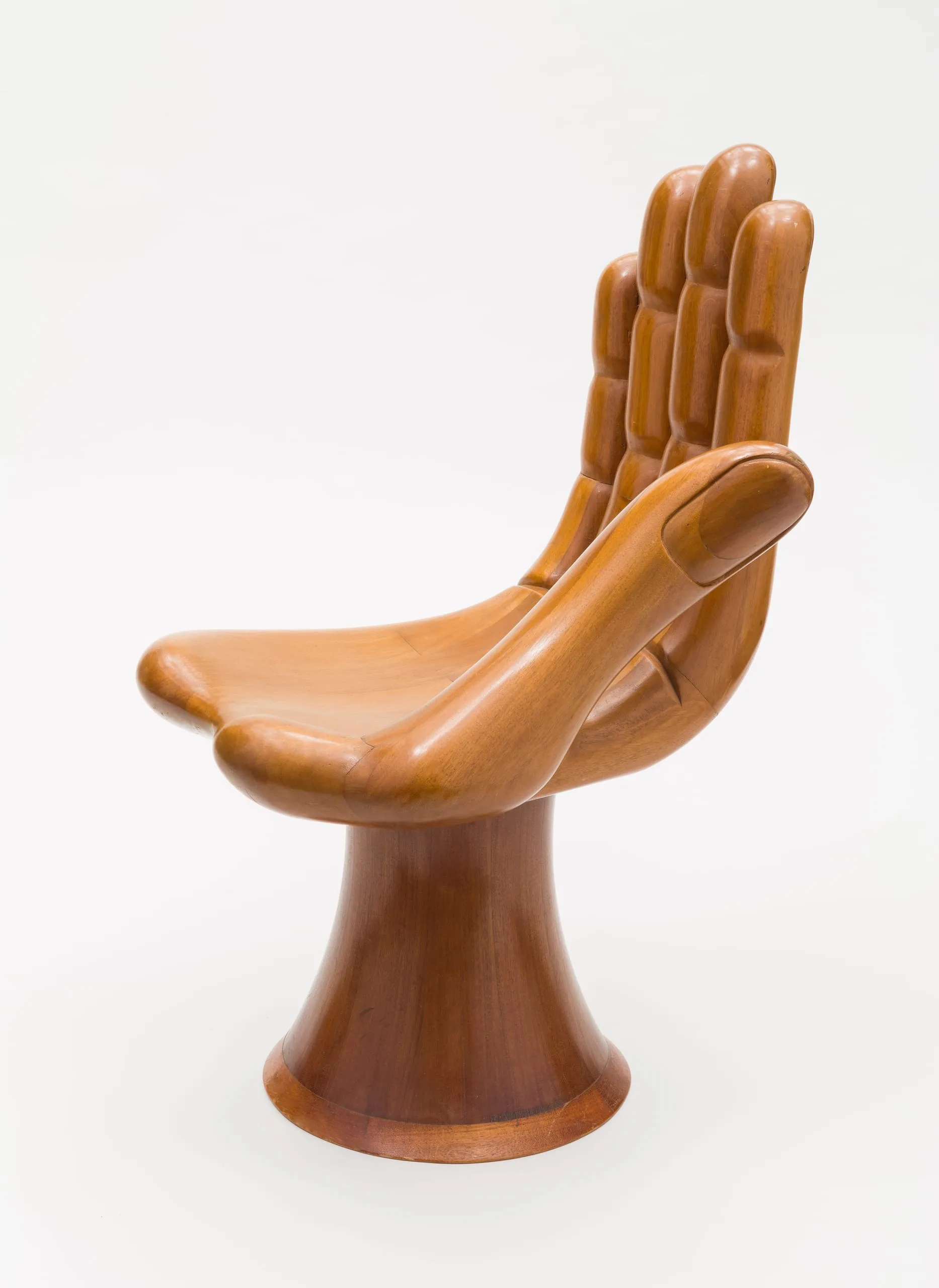
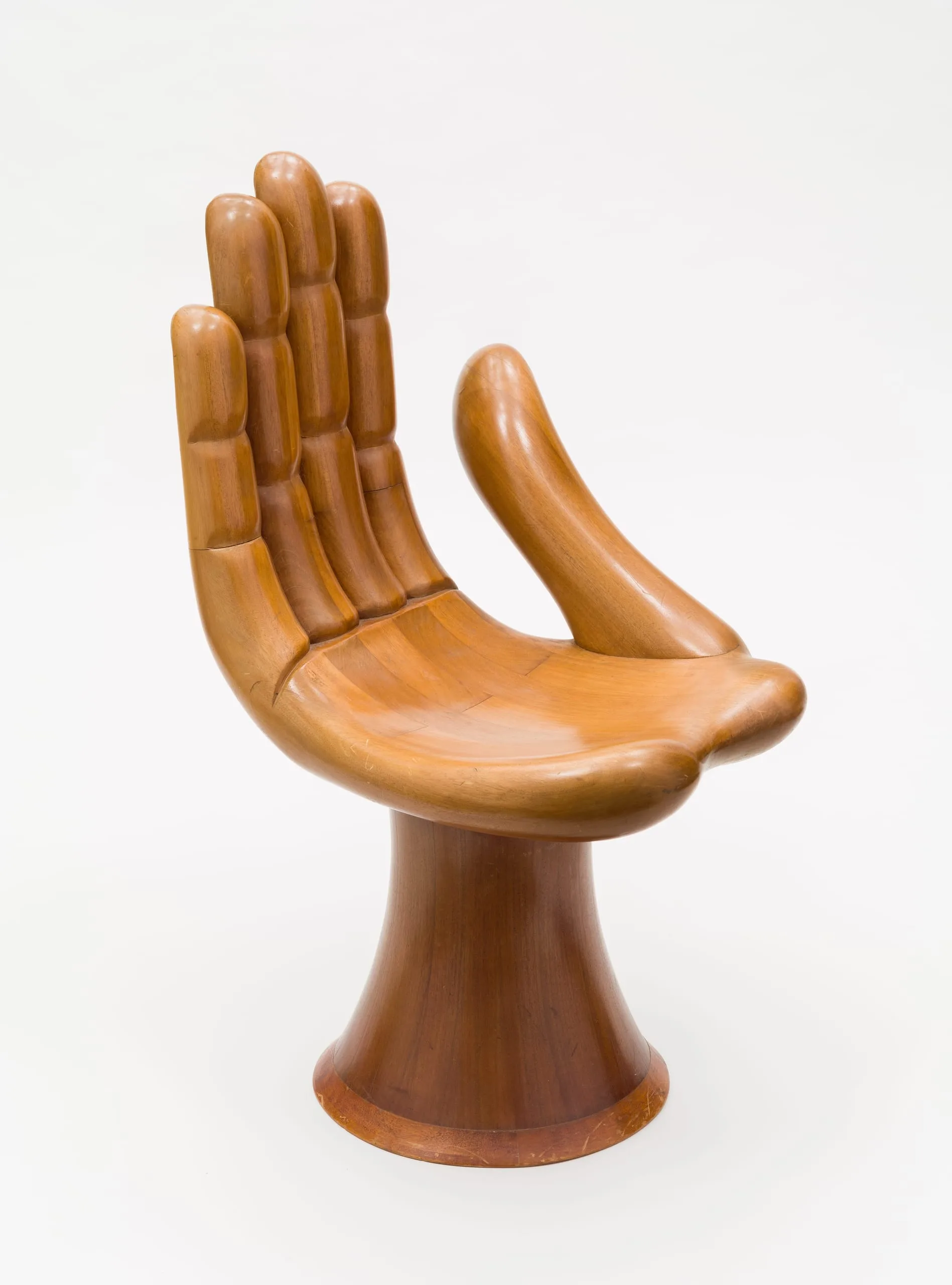
Hand chair1964 or 1965

Not on view
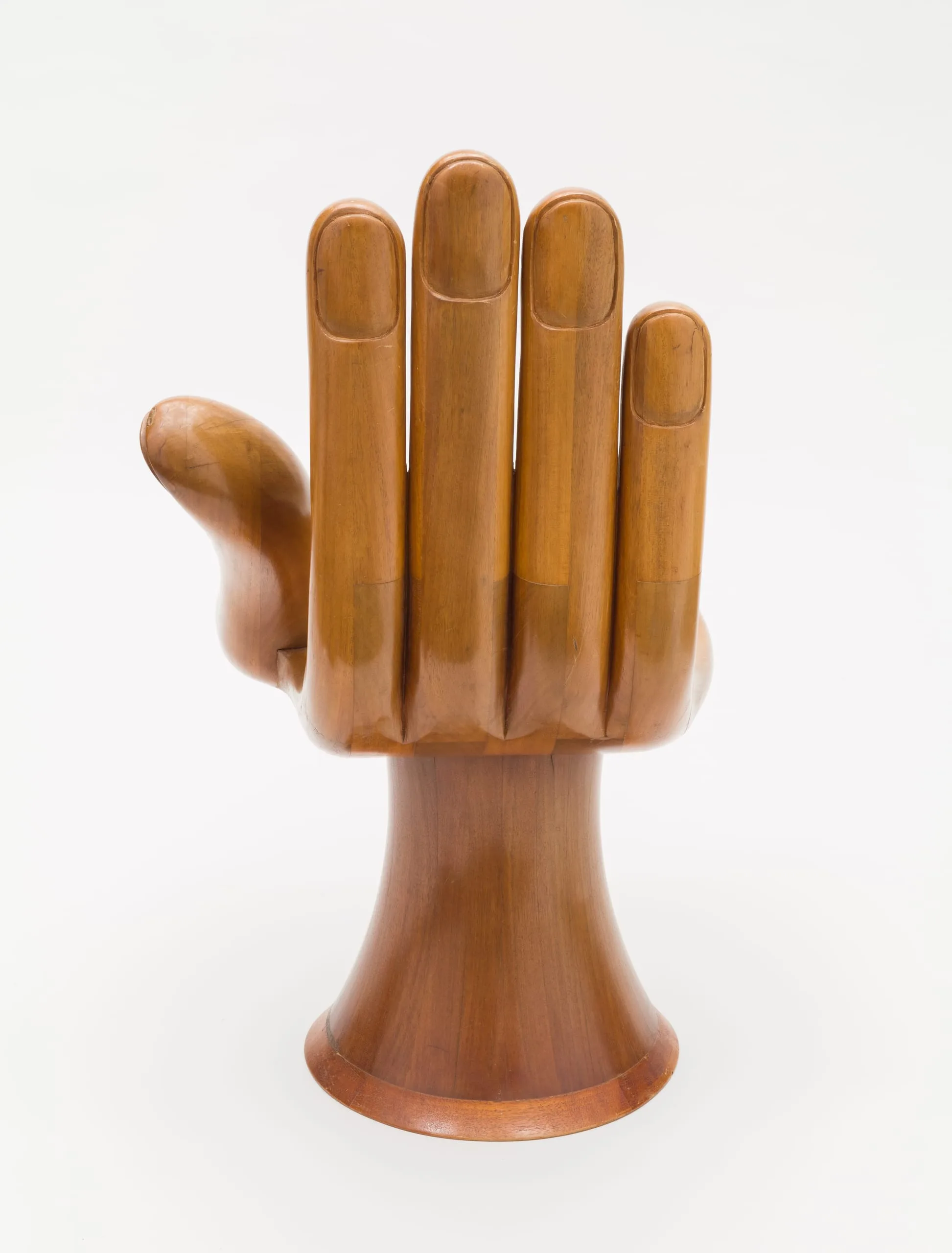
Wooden chair carved in the form of a human hand, with fingers forming the backrest, thumb and pinky as armrests, palm as seat, mounted on a trumpet-shaped pedestal base
Carved wooden chair in warm caramel-toned wood, shaped entirely as a human hand with fingers forming the backrest, thumb serving as one armrest, and the palm as the seat, mounted on a smooth trumpet-shaped pedestal base.
Carved wooden chair in the form of an upright human hand with five fingers extended, mounted on a flared pedestal base; smooth finish in warm medium-brown tones.
Designer
Pedro Friedeberg
Italy, Florence, active Mexico, Mexico City, 1936-2026
Made by
José González
active Mexico
Title
Hand chair
Place Made
Mexico, Mexico City
Date Made
1964 or 1965
Medium
Mahogany
Dimensions
33 7/8 × 19 11/16 × 18 1/2 in. (86 × 50 × 47 cm)
Credit Line
Gift of the 2015 Decorative Arts and Design Acquisition Committee (DA²)
Accession Number
M.2015.63
Classification
Furnishings
Collecting Area
Decorative Arts and Design
Curatorial Notes

In a 1964 interview, Mexican artist and designer Pedro Friedeberg declared his certainty that "very soon now humanity will arrive at a marvelous epoch totally devoid of Knoll chairs or Danish coffee tables, and the obscenity of Japanese rock gardens five thousand miles from Kyoto." His most famous creation, the sculptural Hand chair stands testament to his stance against the impersonal geometries of international style modernism, which dominated civic architecture in mid-twentieth century Mexico. Friedeberg designed the original Hand Chair in the early 1960s, employing master carpenter José González to carve the first example from mahogany. Though the artist had conceived the piece as a unique sculpture, the witty form, with its elegantly long fingers, quickly garnered attention. He received orders from artistic clients in Mexico and abroad, among them celebrities such as Yul Brynner and Roman Polanski. He developed many iterations, altering the color (from untreated wood to gold and silver leaf to black, white or red paint) and form (from a conical base to a large foot or several smaller feet). A regular fixture in fashionable shelter magazines, the chair has spawned countless copies.


Staci Steinberger, Associate Curator, Decorative Arts and Design
Selected Bibliography
  • Kaplan, Wendy, ed. Found in Translation: Design in California and Mexico, 1915-1985. Los Angeles: Los Angeles County Museum of Art; Munich: DelMonico Books-Prestel, 2017.