LACMA

ShopMembershipMyLACMATickets
LACMA
Los Angeles County Museum of Art
5905 Wilshire Blvd.
Los Angeles, CA 90036
info@lacma.org
(323) 857-6000
Sign up to receive emails
Subscribe
© Museum Associates 2025

Museum Hours

Monday

11 am–6 pm

Tuesday

11 am–6 pm

Wednesday

Closed

Thursday

11 am–6 pm

Friday

11 am–8 pm

Saturday

10 am–7 pm

Sunday

10 am–7 pm


  • About LACMA
  • Jobs
  • Building LACMA
  • Host An Event
  • Unframed
  • Press
  • FAQs
  • Log in to MyLACMA
  • Privacy Policy
© Museum Associates 2025
Collections

William Spratling
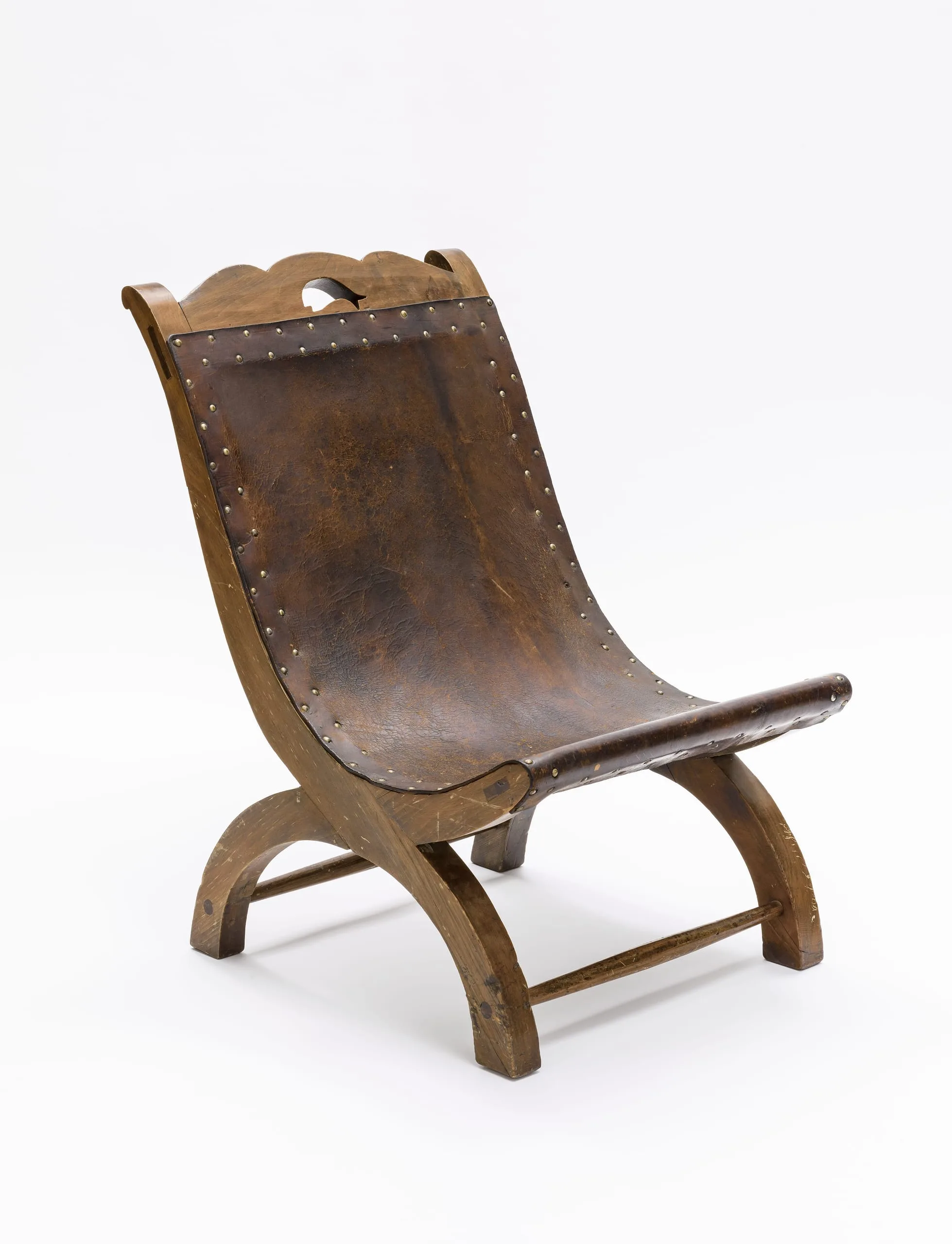
Butaca Chaircirca 1940

Not on view
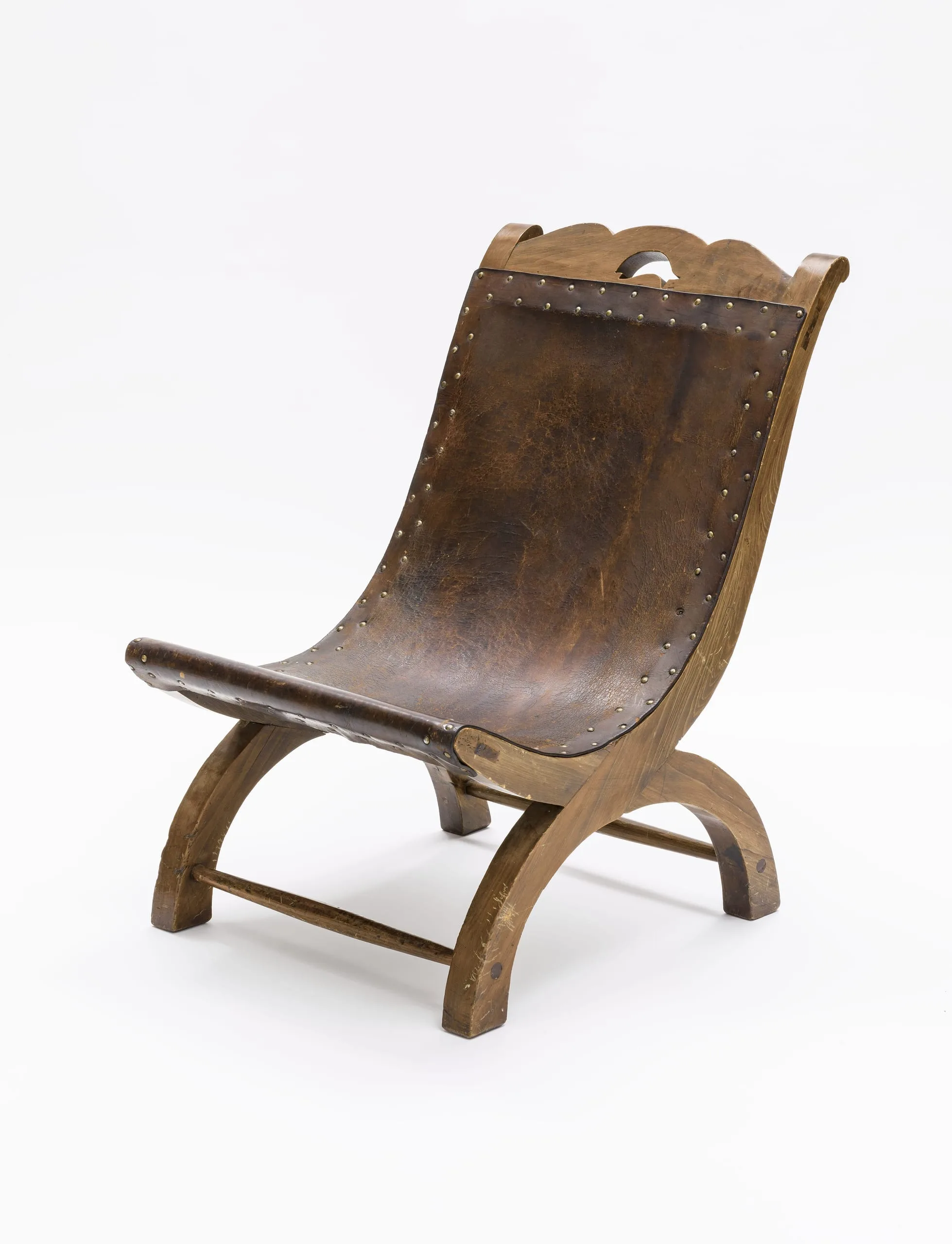
Wooden chair with arched legs, scalloped crest rail, and worn dark brown leather seat and back secured with metal tack trim
Wooden lounge chair with a curved, low-slung form; dark brown leather seat and back secured with rows of brass nailhead trim; scalloped crest rail with a cutout handle; arched legs joined by a stretcher.
Artist or Maker
William Spratling
United States, active Mexico, 1900-1967
Title
Butaca Chair
Date Made
circa 1940
Medium
Wood, leather, brass-plated steel
Dimensions
32 × 21 × 26 1/2 in. (81.28 × 53.34 × 67.31 cm)
Credit Line
Purchased with funds provided by the Bernard and Edith Lewin Collection of Mexican Art Deaccession Fund
Accession Number
M.2015.10
Classification
Furnishings
Collecting Area
Latin American Art
Curatorial Notes

William Spratling is one of Mexico’s most famed modern designers. In 1931 he opened a silver workshop and craft studio in Taxco, the Taller de Las Delicias. By 1941 Spratling’s works were selling outside of Mexico in the U.S. to places like Neiman-Marcus, Bonwit Teller, and Saks Fifth Avenue. Although Spratling is best known for his jewelry designs, the Taller de Las Delicias also produced an array of tinware, hand-loomed wool rugs and blankets, and wood and leather furniture.


Spratling was one of the first designers to revive the butaca (butaque), a type of ranch-style easy chair with distinctive crossed supports, of which he created several variations. The butaca is a hybrid household object thought to have originated in the Caribbean. Its overall shape and low height probably derive from pre-Columbian ritual seats, while its rigid forms, materials, complex wood joinery, and iron nails, are influenced by Spanish state folding chairs known as sillas de caderas, which arrived in the New World with the early settlers. In Mexico, the butaca became popular in towns of the Yucatan and Veracruz. The chair’s sturdy materials—wood, leather, and brass—were ideal to withstand the harsh coastal environments. In the late eighteenth and early nineteenth centuries, the port of Campeche, in Yucatan, became the most important manufacturing center of the butaca (hence sometimes the chair type is simply referred to as a Campeche chair), many which were exported throughout the Americas.


Aside from Spratling, other modern designers working in Mexico also revisited the popular chair form in the 1930s and 40s, including the Cuban-born Clara Porset (1932–1981), Luis Barragán (1902–1988), Héctor Aguilar (1905–1986), and Don Shoemaker (d. 1990). Spratling’s butaca is made of sabino wood, a Mexican cypress, with a leather sling seat which is held in place by brass tacks that are ornamentally arranged in a zig-zag pattern along the edges. The scalloped top crest rail features a fish cut-out. The reverse of the top crest rail displays Spratling’s hallmark: a burned WS brand alongside the word Taxco.


Ilona Katzew, Curator and Department Head, Latin American Art

Selected Bibliography
  • Kaplan, Wendy, ed. Found in Translation: Design in California and Mexico, 1915-1985. Los Angeles: Los Angeles County Museum of Art; Munich: DelMonico Books-Prestel, 2017.