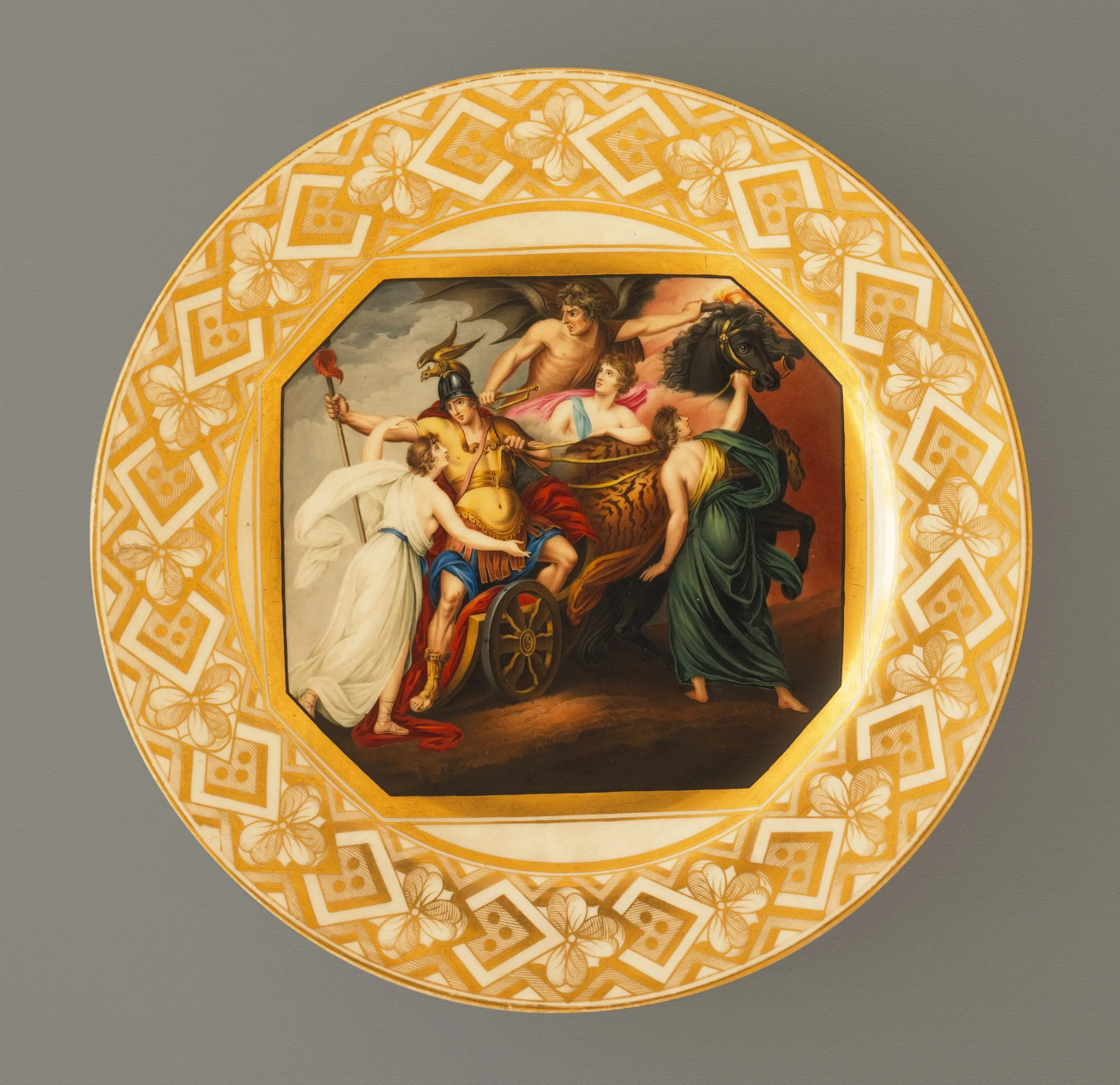
By the end of the eighteenth century, British ceramic manufacturers had perfected the production of porcelain to a very high degree. Factories became tourist destinations in the new industrial age, and large firms opened commercial showrooms in London to promote their wares. Around the same time, matched dinner services became fashionable in wealthy households. Individual plates like this one were available to customers, who could select from a range of available designs. The scene on this plate is based on an engraving after an oil painting by William Artaud, The Triumph of Mercy (1788), which in turn depicts a scene from an earlier poem, “Ode to Mercy,” by William Collins. Large and dramatic, Artaud’s painting was exhibited in London as part of the “Poets Gallery” created by Thomas Macklin, an entrepreneur who also proposed the serial publication of engravings of 100 paintings. The “Triumph of Mercy” subject first appears in Chamberlain’s Factory records in 1800. The company earned a reputation for its fine painting of biblical, classical, and Shakespearean subjects, as well as landscapes and sporting events. The delicacy of this hand-painted plate suggests that it was destined for display in a cabinet rather than for use.