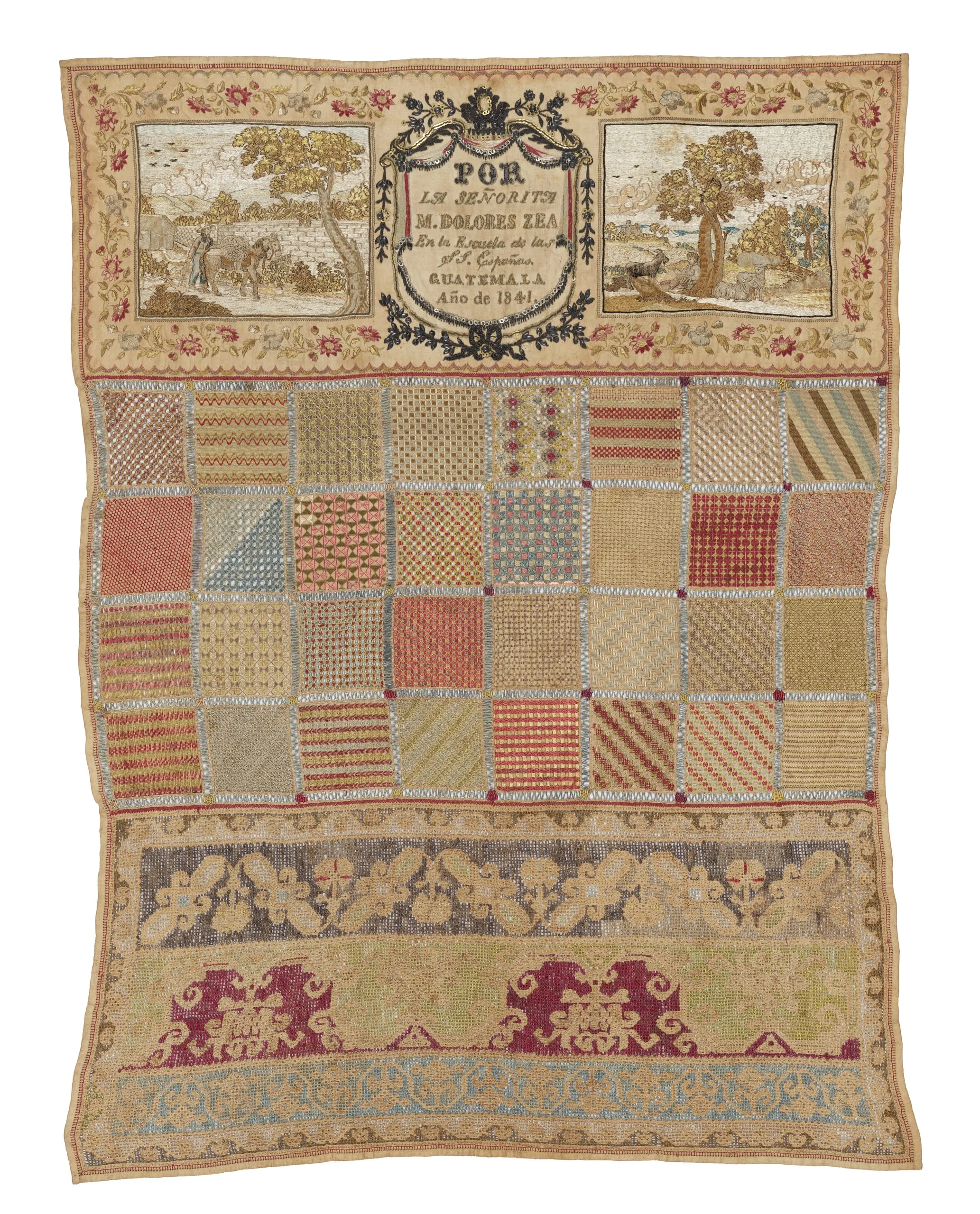
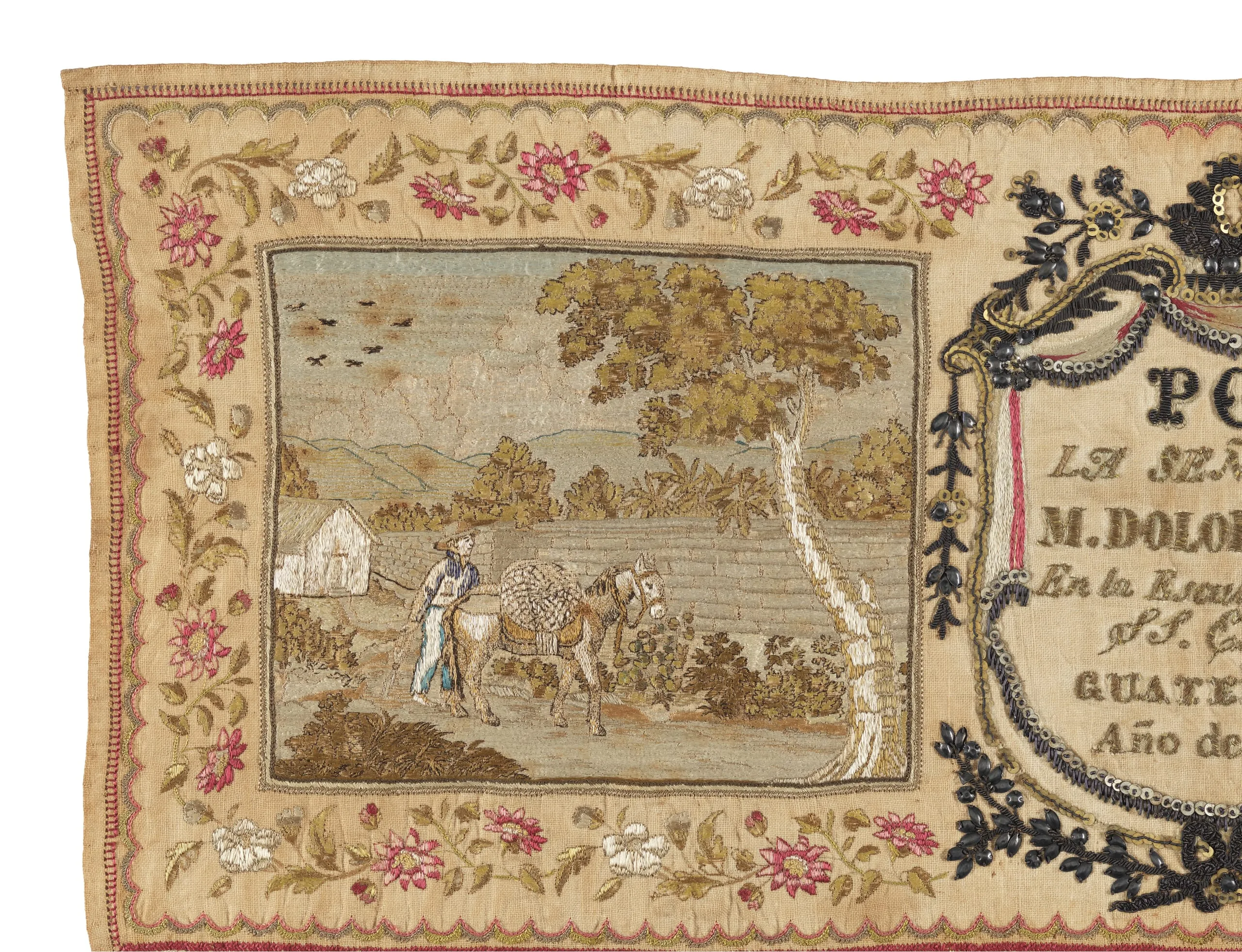
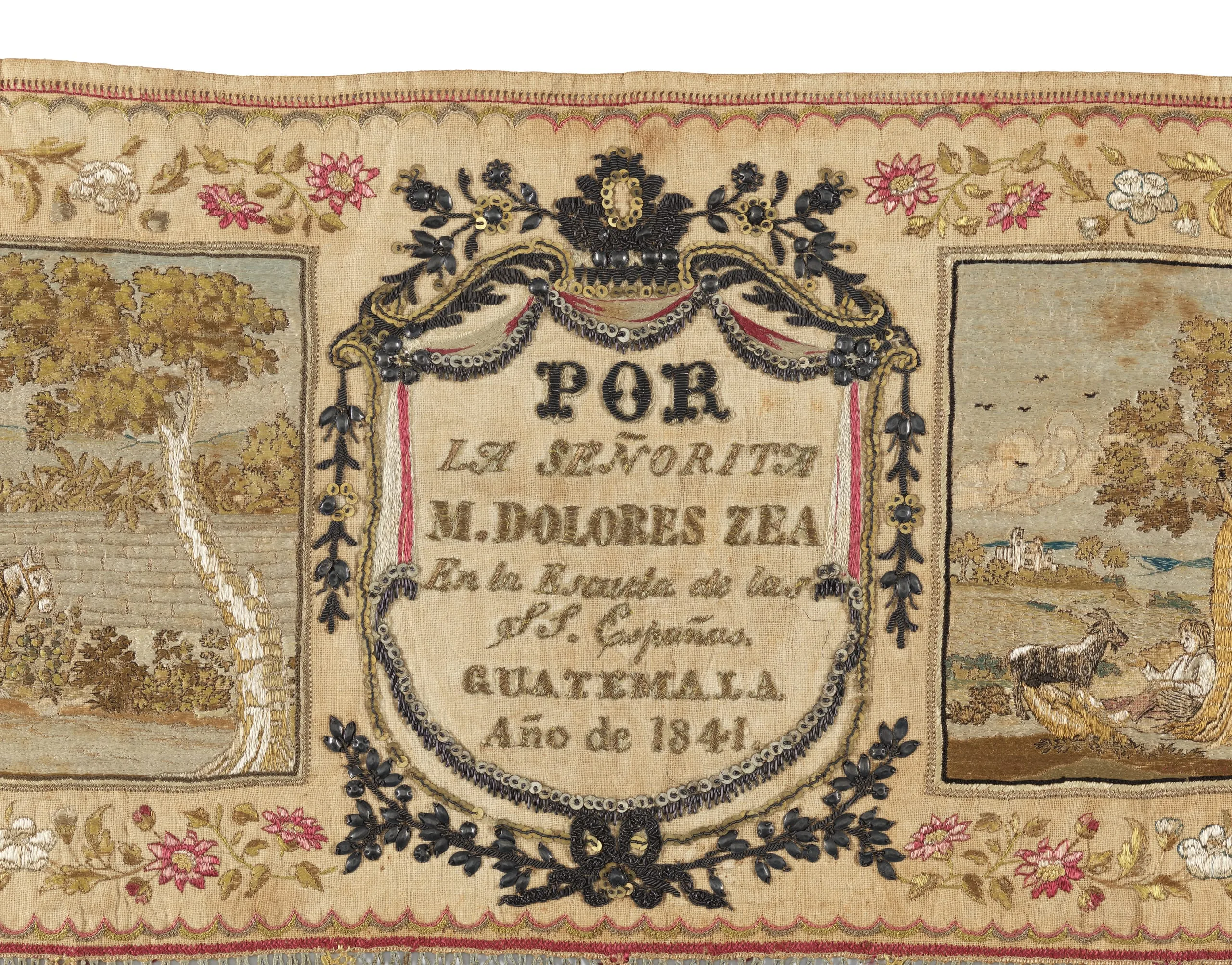
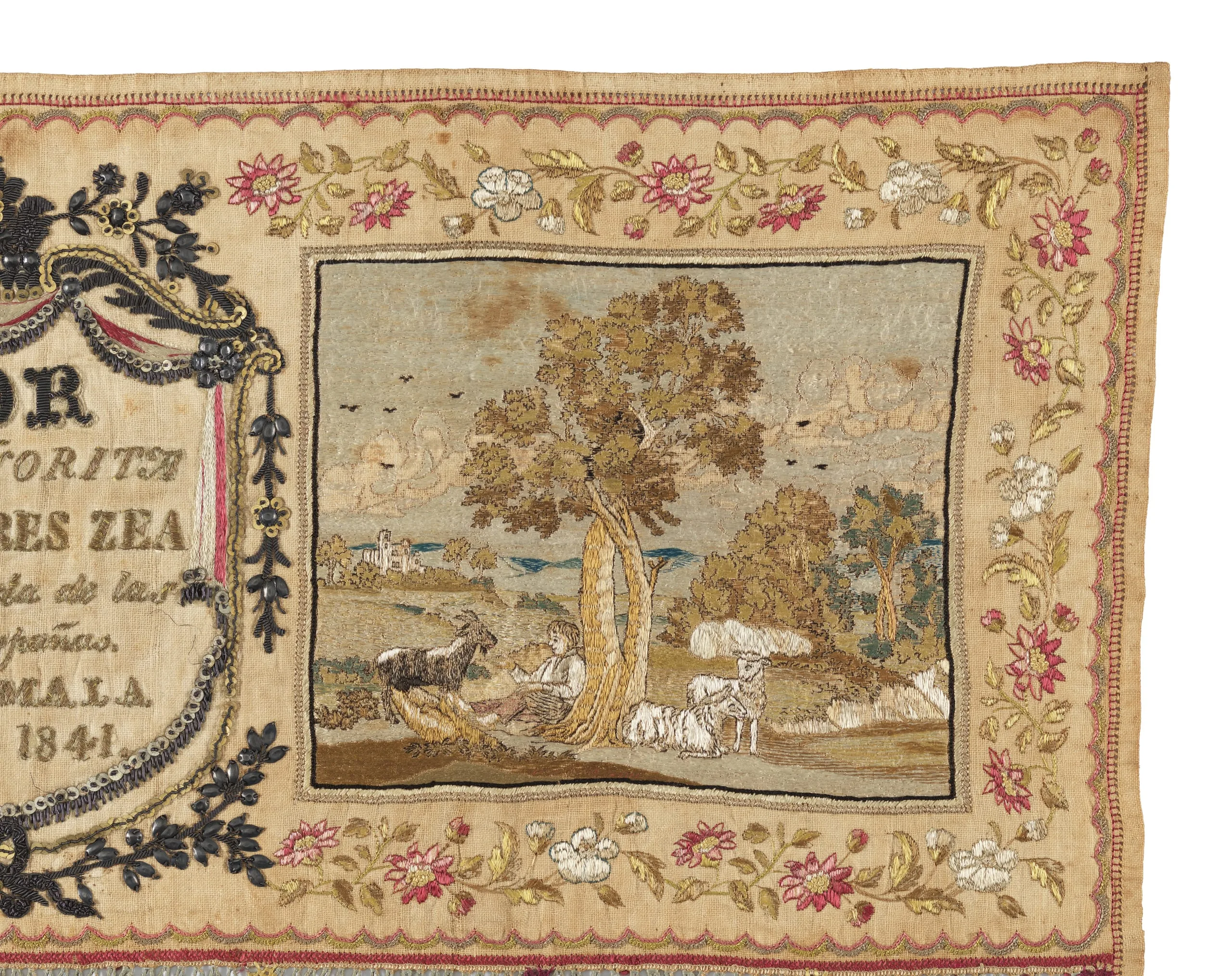
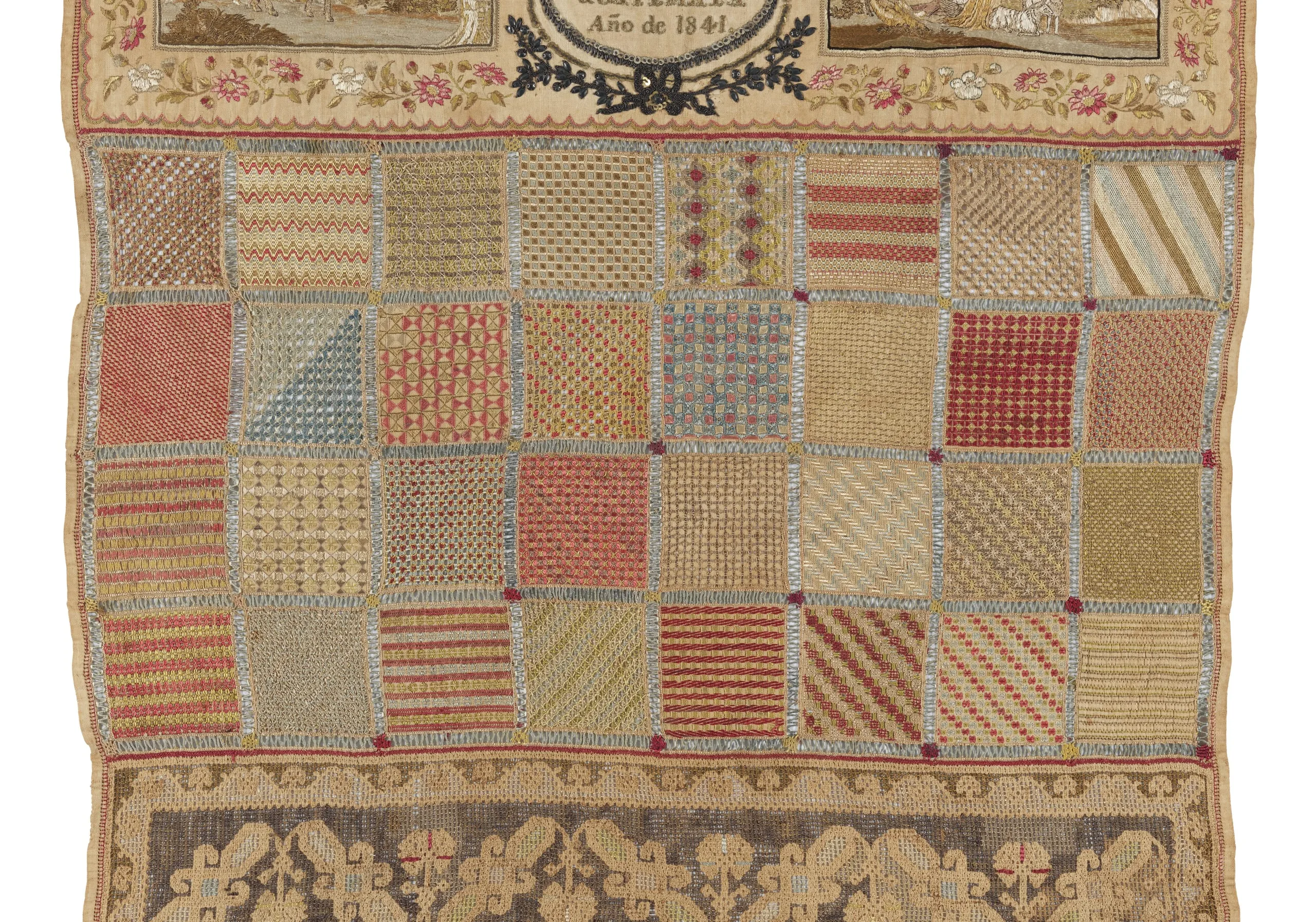
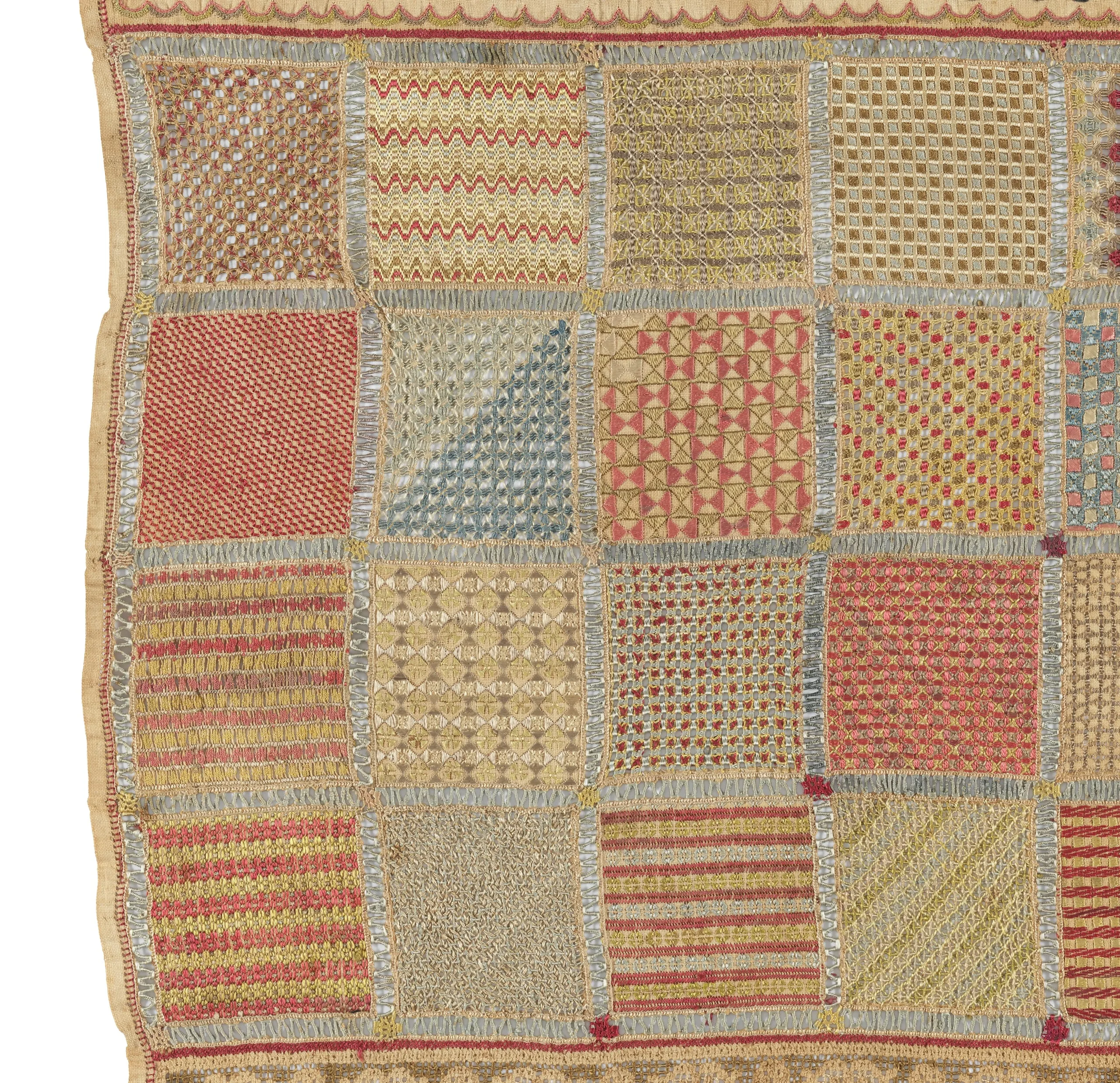
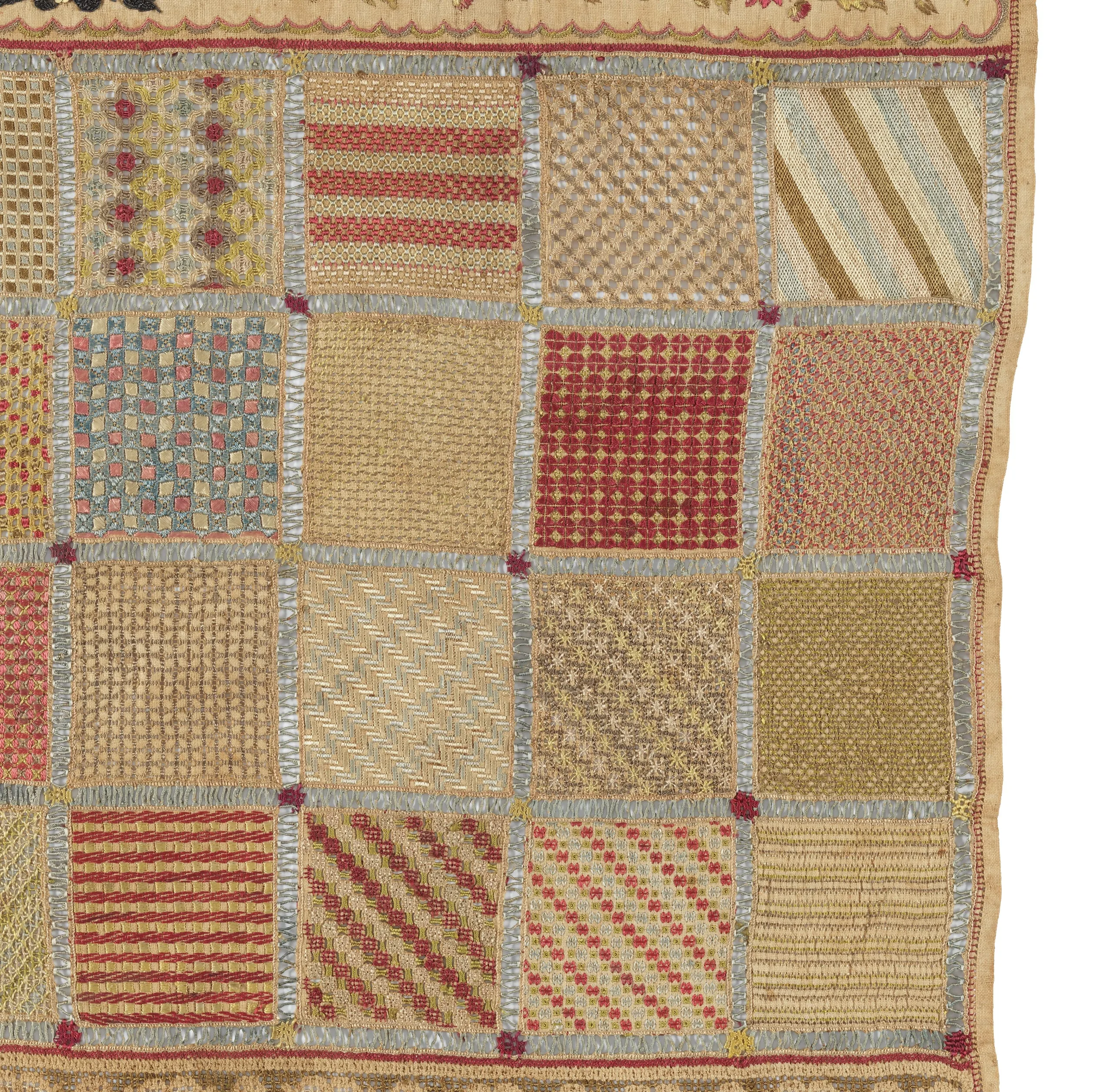
Elaborate embroidered panels such as this, known as samplers, were made by young girls as a compendium of needlework. By the sixteenth century, the tradition was firmly established in Europe. Fine examples were produced in the viceroyalty of Mexico, with some of the earliest extant examples dating to the eighteenth century. This intricate sampler, which was created by M. Dolores Zea in Guatemala in 1841, is stylistically similar to Swedish and Danish works, attesting to the perfection that some techniques produced, particularly drawn thread work.
From exhibition Archive of the World, 2022 (for more information see the catalogue entry by Alejandra Mayela Flores Enríquez in the accompanying publication, cat. nos. 92–93, pp. 346–50)