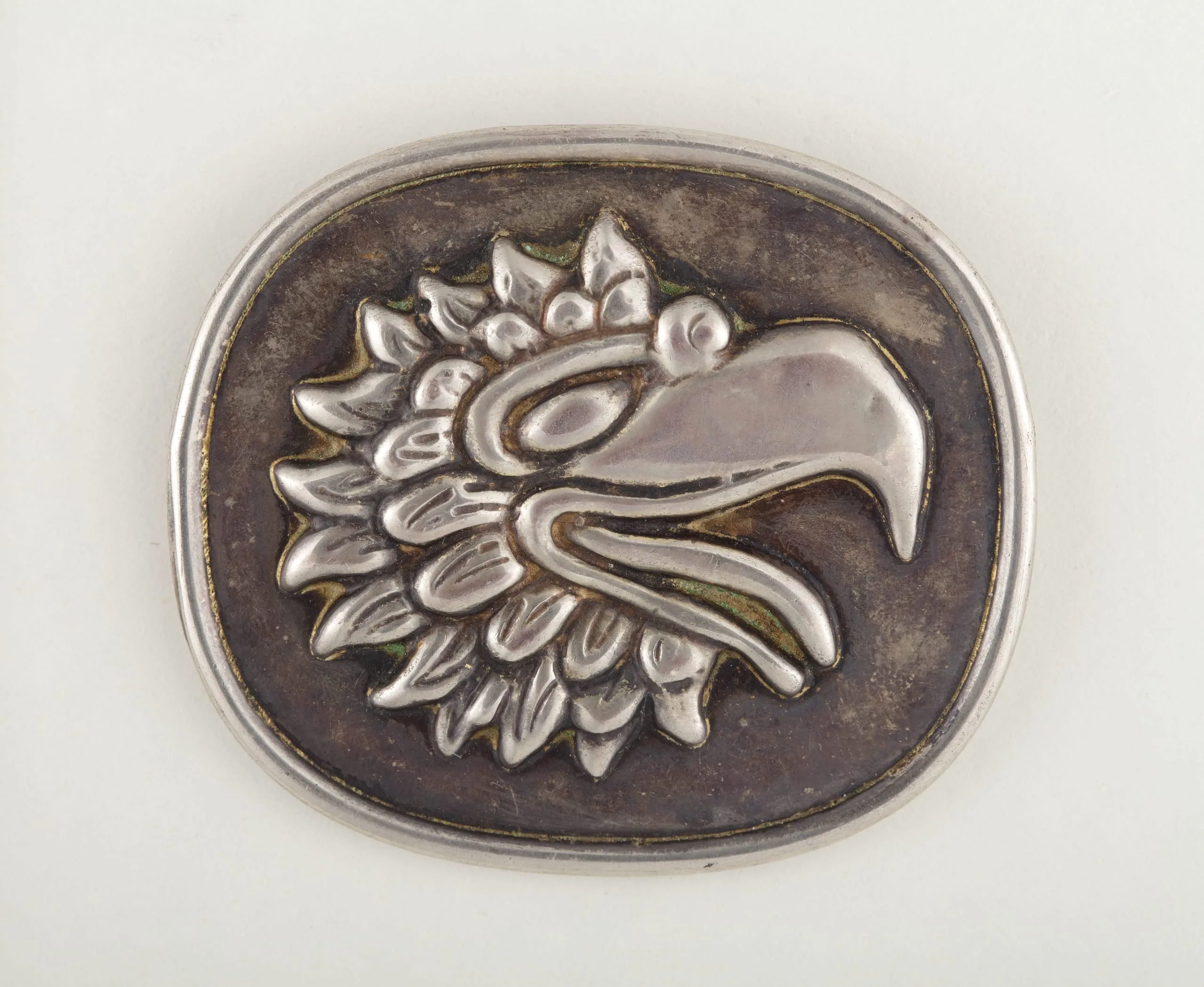
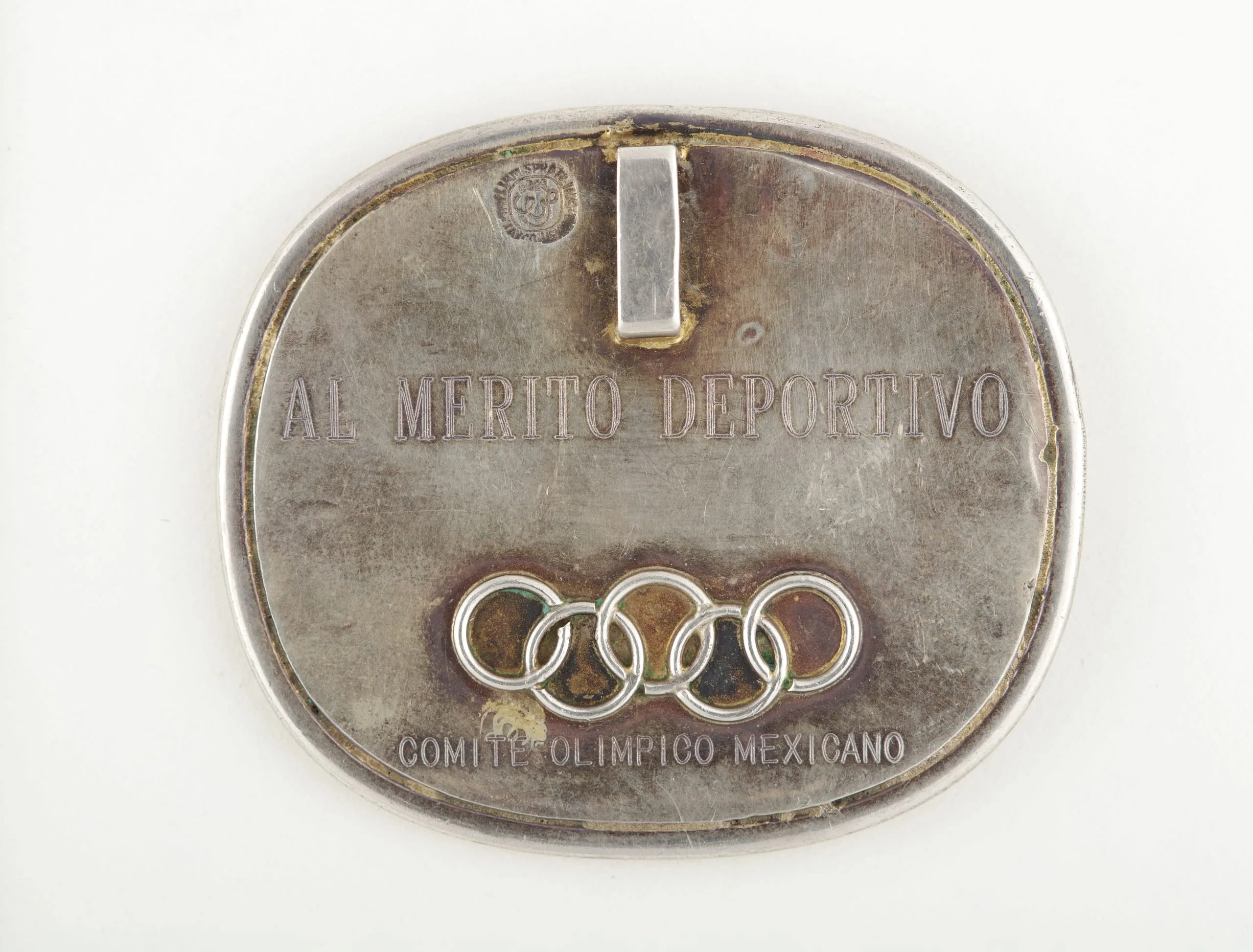
In 1963, William Spratling registered the rights to an eagle-head logo in anticipation of the upcoming 1968 Summer Olympics in Mexico City. In the years that followed, he used the silver logo on a range of designs, including a wood box, a set of dominoes, a bottle opener, and 110 medallions, such as this one. The medallions feature Spratling’s eagle on the front and the Olympic rings on the back, along with the words al mérito deportivo (for sporting achievement) and comité olímpico mexicano (Mexican Olympic Committee).
Although Spratling created other Olympic designs inspired by Mesoamerican sports, his choice of the eagle for this medallion is significant. The eagle played a special role in the mythical founding of Tenochtitlan (the Mexica or Aztec capital and site of present-day Mexico City), where the Mexica encountered an eagle perched on a cactus as it devoured a serpent. This scene is the central emblem of the Mexican flag. Spratling’s stylized eagle profile with a curved beak recalls Mesoamerican examples such as a labret (lip ornament) in the form of an eagle head (AC1992.134.29).
Trained as an architect, Spratling moved from New Orleans to Taxco, Mexico, where he established his first silver workshop in 1931. Working alongside master silversmiths and local apprentices, in 1935 he opened his famed Taller de Las Delicias, which attracted a cohort of international artists, intellectuals, and Hollywood celebrities. Spratling’s emphasis on craftsmanship and his experimentation with different sources, including Mesoamerican art, Art Deco, and modernism, contributed to his great success and helped revitalize the Mexican silver industry. Unfortunately, he did not live to see the Olympics, dying in August 1967 after a massive heart attack that followed a high-speed car crash.
Rachel Kaplan
2025