- Title
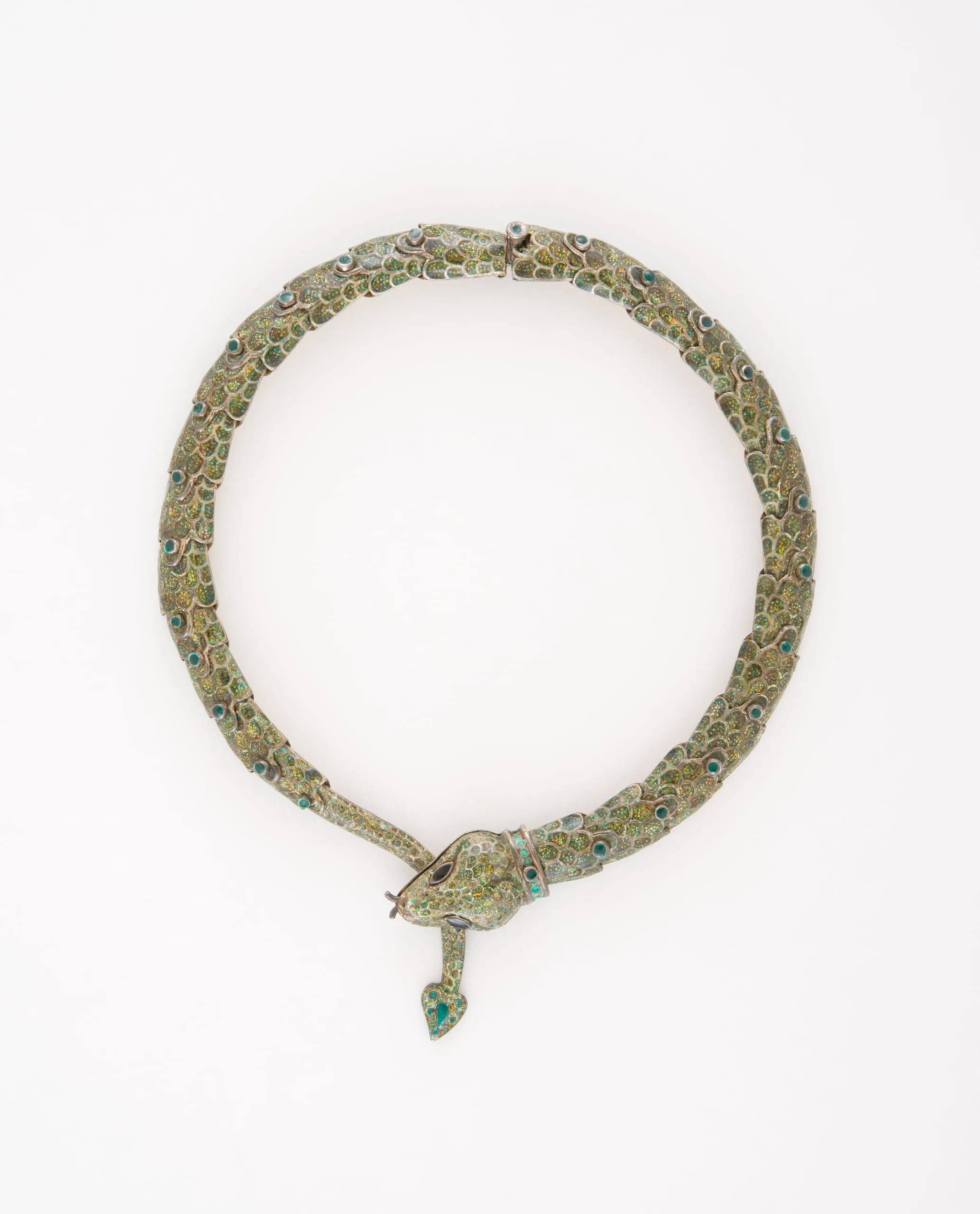
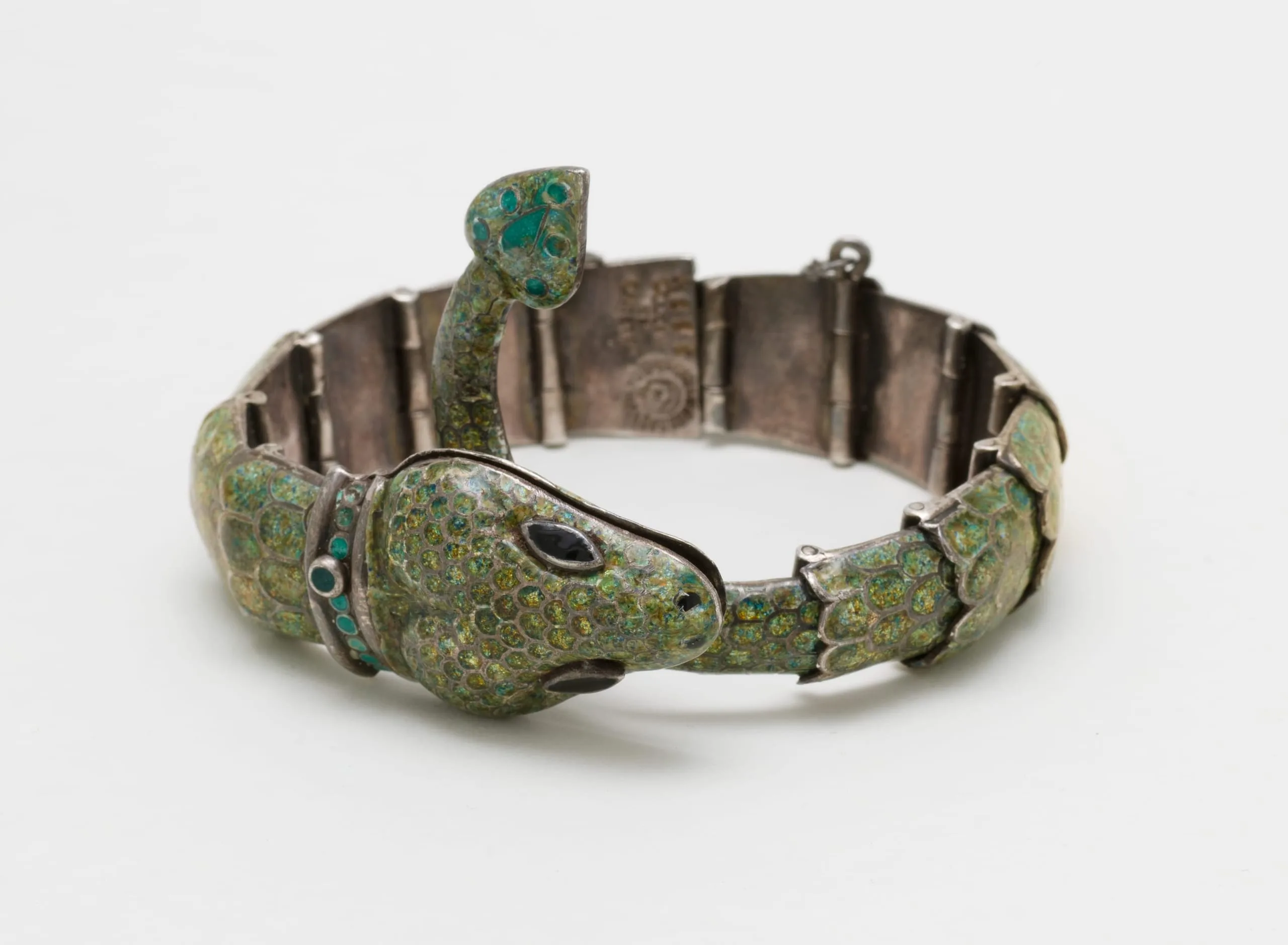
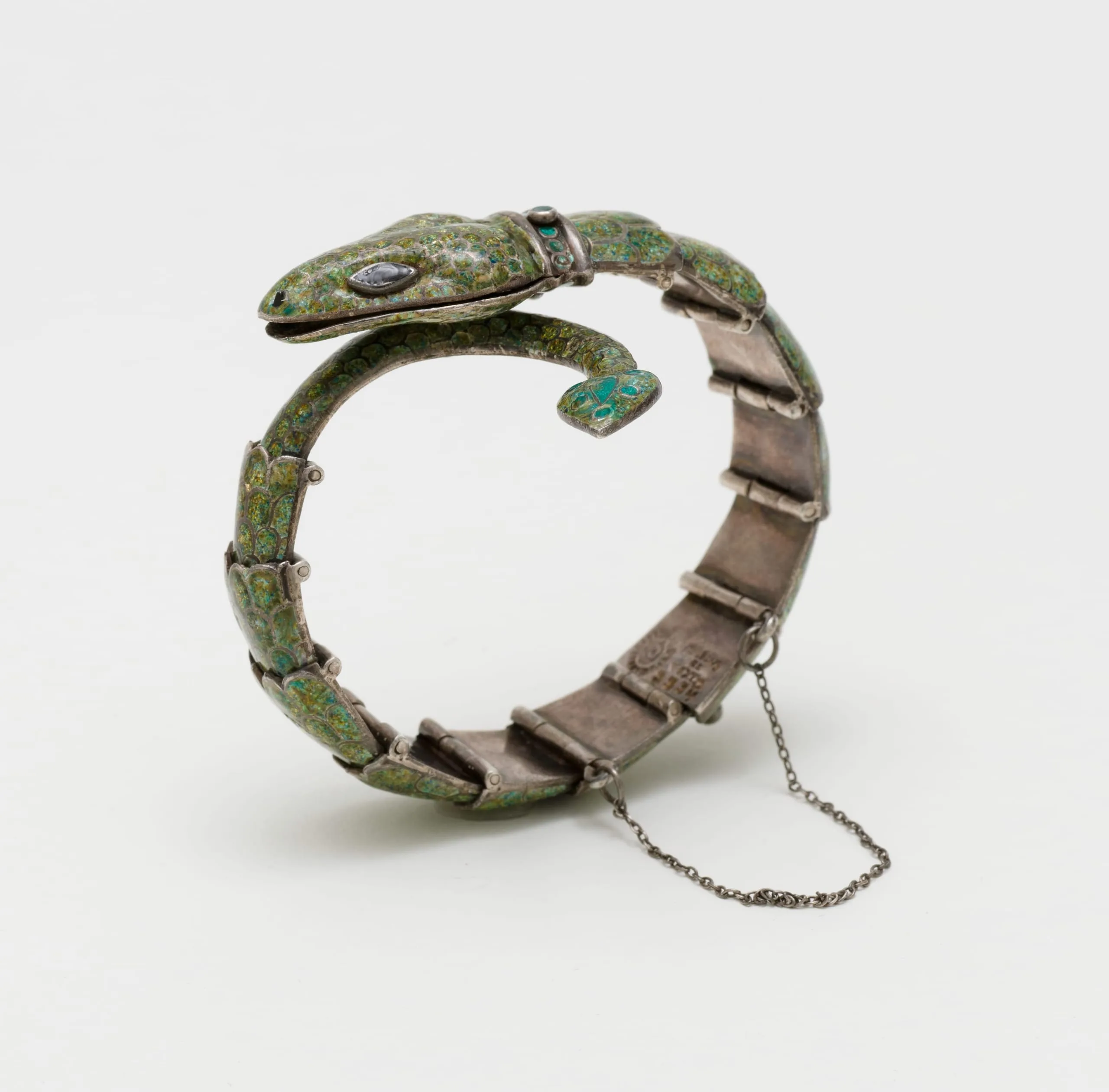
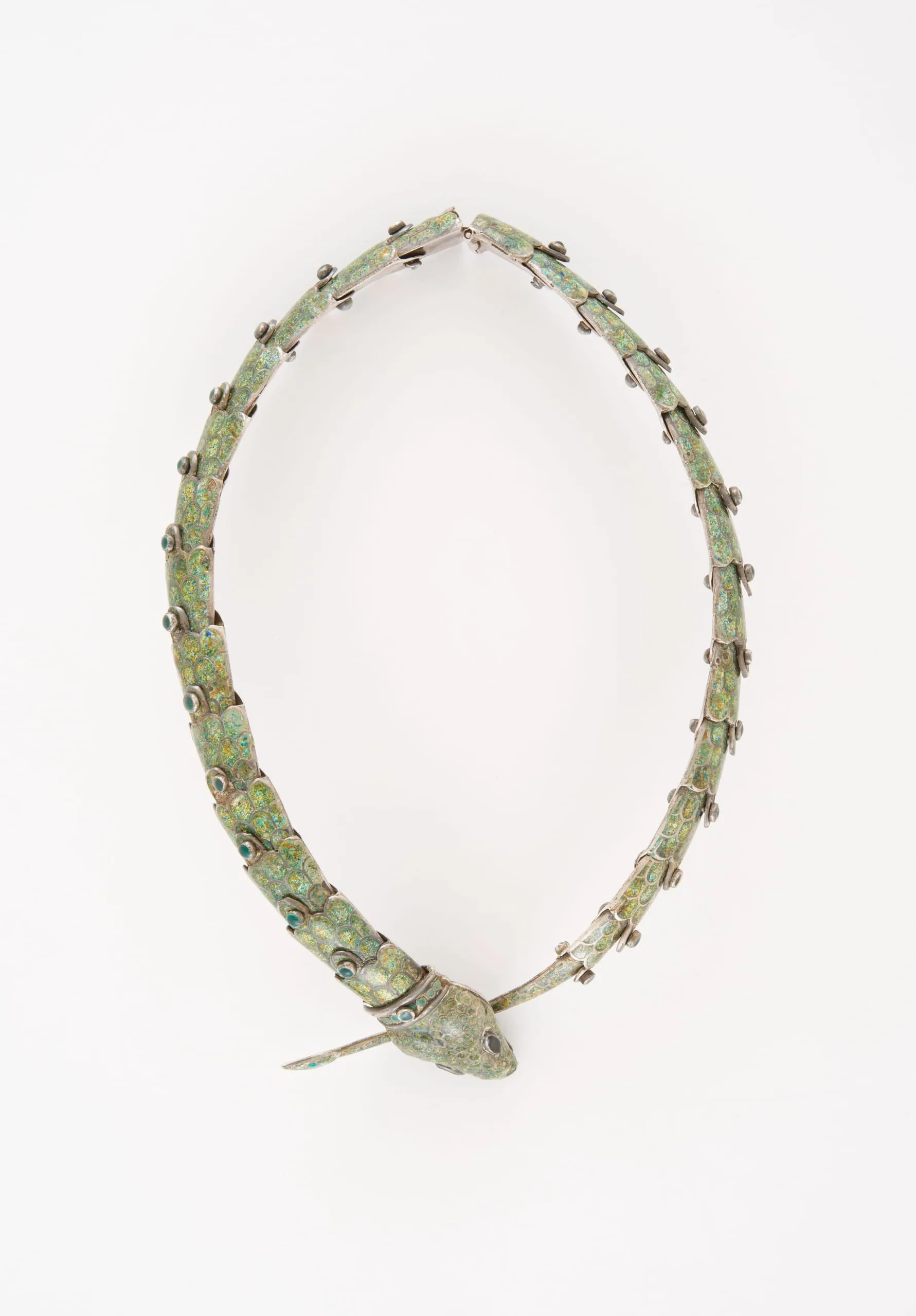
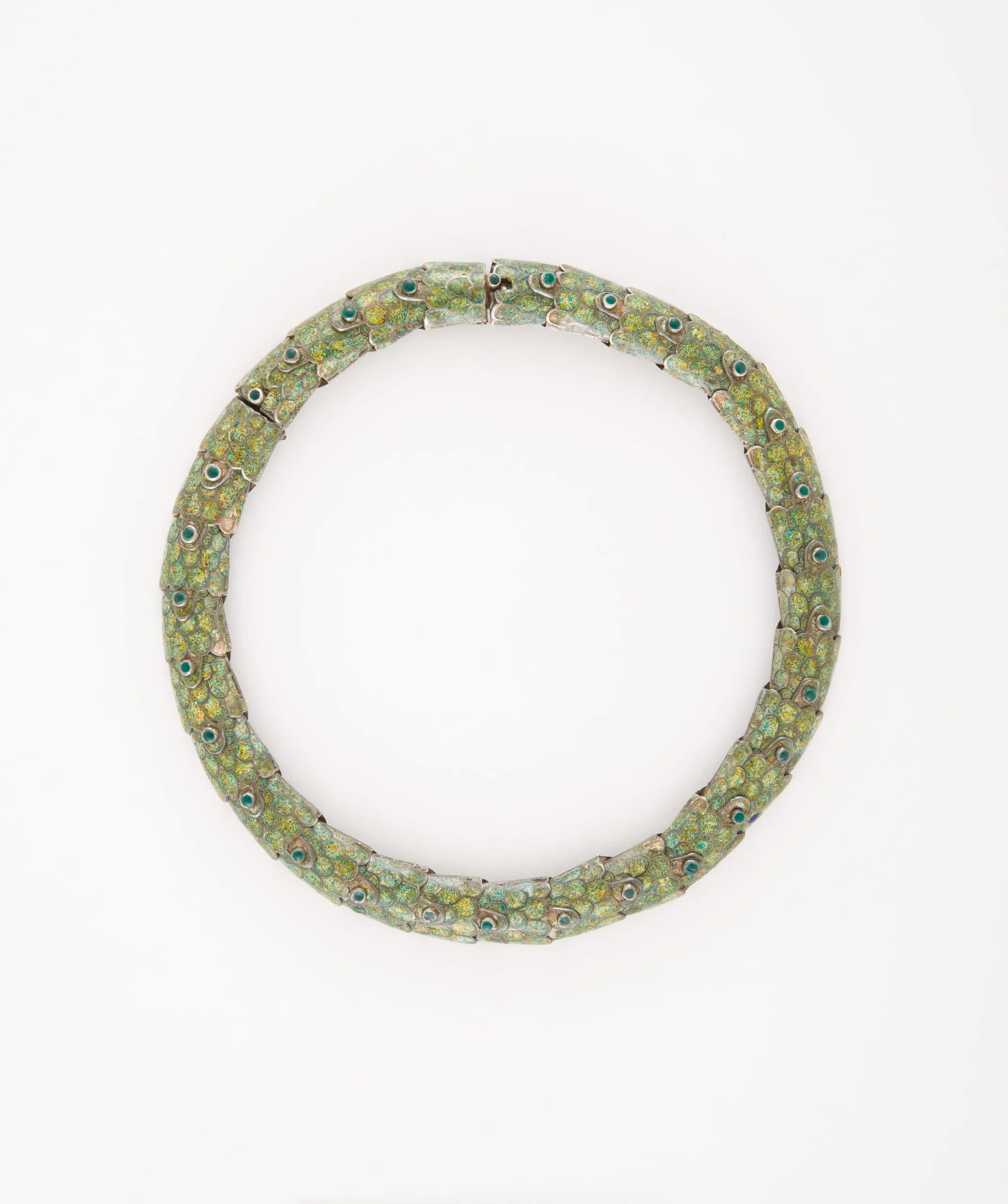
- Snake Necklace, Bracelet, and Belt (Collar, pulcera, y cinturón en forma de serpiente)
- Date Made
- circa 1955
- Medium
- Silver, enamel
- Dimensions
- a) Necklace: 15 3/4 × 1 1/2 in. (40.01 × 3.81 cm); b) Bracelet: 6 3/4 × 5/8 × 3 in. (17.15 × 1.59 cm); Bracelet diameter (closed): 3 in. (7.62 cm); c) Belt with snake length: 14 in. (35.56 cm); Belt with snake diameter (closed): 57 1/4 in. (18.42 cm); d) Belt extension length: 17 in. (43.18 cm)
- Accession Number
- M.2014.246a-d
- Curatorial Notes
Margot van Voorhies Carr became well known for jewelry that combined silver and fine enamelwork. This set of serpentine accessories is one of her most celebrated designs. The necklace, bracelet, and belt represent a snake eating its own tail. Each element is individually articulated (the necklace, for example, is composed of twenty-six parts). The rivets that hold the pieces together are not only functional but are incorporated into the design. The use of enamel throughout introduces color, enhancing the lifelike feel of the silver snakes.
Born in San Francisco, Carr had a lifelong fascination with Asian art. She met the silver designer Antonio Castillo (1917–2000) in 1937 while visiting Taxco, the epicenter of the modern Mexican silver industry. After the two married, she became the lead designer in his workshop Los Castillo, which was established in 1939. Following their divorce in 1946, Margot opened her own workshop known as Margot de Taxco. The addition of champlevé, an enamel-on-metal technique, was a distinctive feature of many of Margot’s designs. She employed women to execute the enamelwork, another departure from Taxco’s male-dominated workshops.
Rachel Kaplan
2025
- Copyright
- © artist or artist's estate