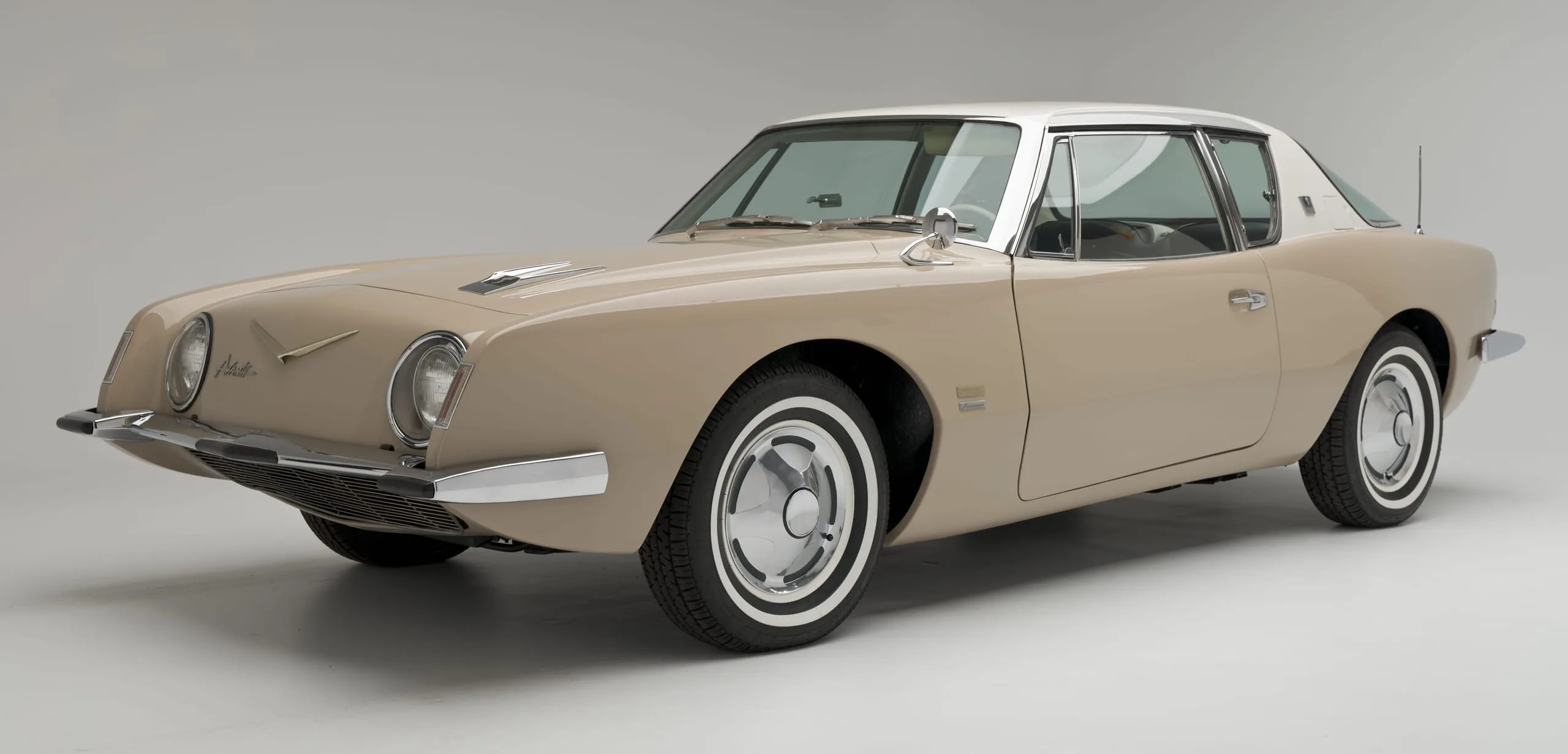
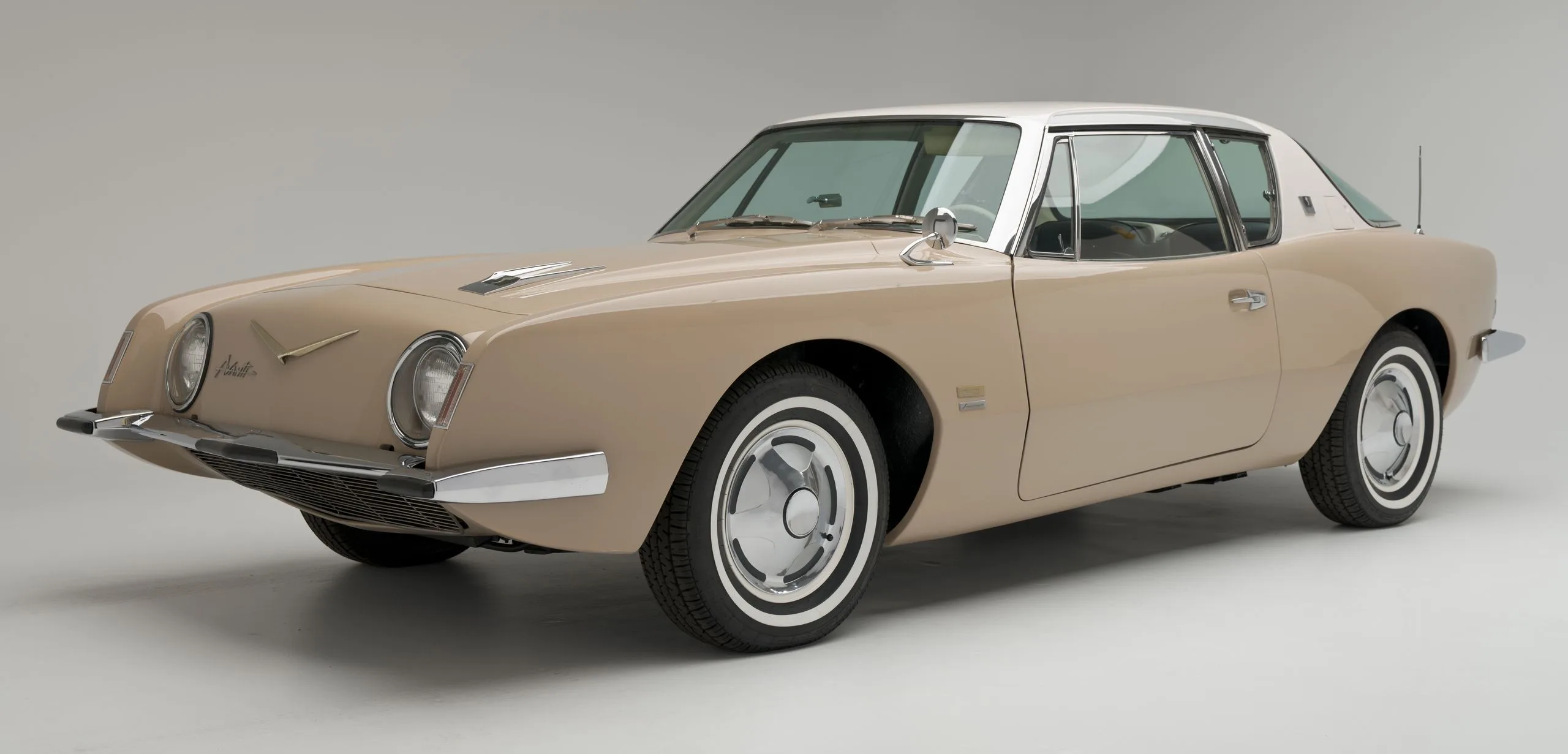
One of the few industrial designers to be featured on the cover of Time magazine, Raymond Loewy created some of the most iconic streamline designs of his era, including the Lucky Strike package, the Coldspot refrigerator, and a series of cars for Studebaker. In 1961, shortly after becoming president of Studebaker-Packard in South Bend, Indiana, Sherwood Egbert commissioned Loewy to design a sports car that would rescue the failing company. Loewy accepted the offer on the condition that design work could be carried out at his home in Palm Springs, California. Within a month, Loewy’s design team produced a 1/8-inch scale clay model of the Avanti (“forward” in Italian). The car debuted at the New York Auto Show in April 1962, a record time considering that it typically took Detroit three years to unveil new models. The press initially showered praise on the Avanti, and orders poured in. It went from zero to sixty in less than seven seconds and reached an astonishing 196 mph at the Bonneville Salt Flats. It also served as honorary pace car at the 1962 Indianapolis 500. However, due to manufacturing difficulties with the fiberglass body, few orders were filled and demand waned. On December 9, 1963, Studebaker ceased domestic production. Only 4,643 Avantis were built.
The Avanti was cherished by its designer, who owned two—one in Paris, and this one, which he kept in Palm Springs. He customized it in a number of ways: the tritone paint job, the aluminum disks on the inner door sills, the exhaust cutout cables that increased the car’s top speed, and the special plaques affixed to the body that identified it as a Loewy design and noted its speed record. The car also has all the premium features that were available, including power steering, electric windows, a built-in roll bar, and a Paxton supercharged engine. It thus embodies the ingenuity and pursuit of progress through advanced technologies associated with postwar Southern California.
Bobbye Tigerman
2014