LACMA

ShopMembershipMyLACMATickets
LACMA
Los Angeles County Museum of Art
5905 Wilshire Blvd.
Los Angeles, CA 90036
info@lacma.org
(323) 857-6000
Sign up to receive emails
Subscribe
© Museum Associates 2026
  • About LACMA
  • Jobs
  • Building LACMA
  • Host An Event
  • Unframed
  • Press
  • FAQs
  • Log in to MyLACMA
  • Privacy Policy
© Museum Associates 2026
Collections

Jean-Auguste Dominique Ingres
Odalisquecirca 1830

On view:
Geffen Galleries, Classical Revivals in Europe and America
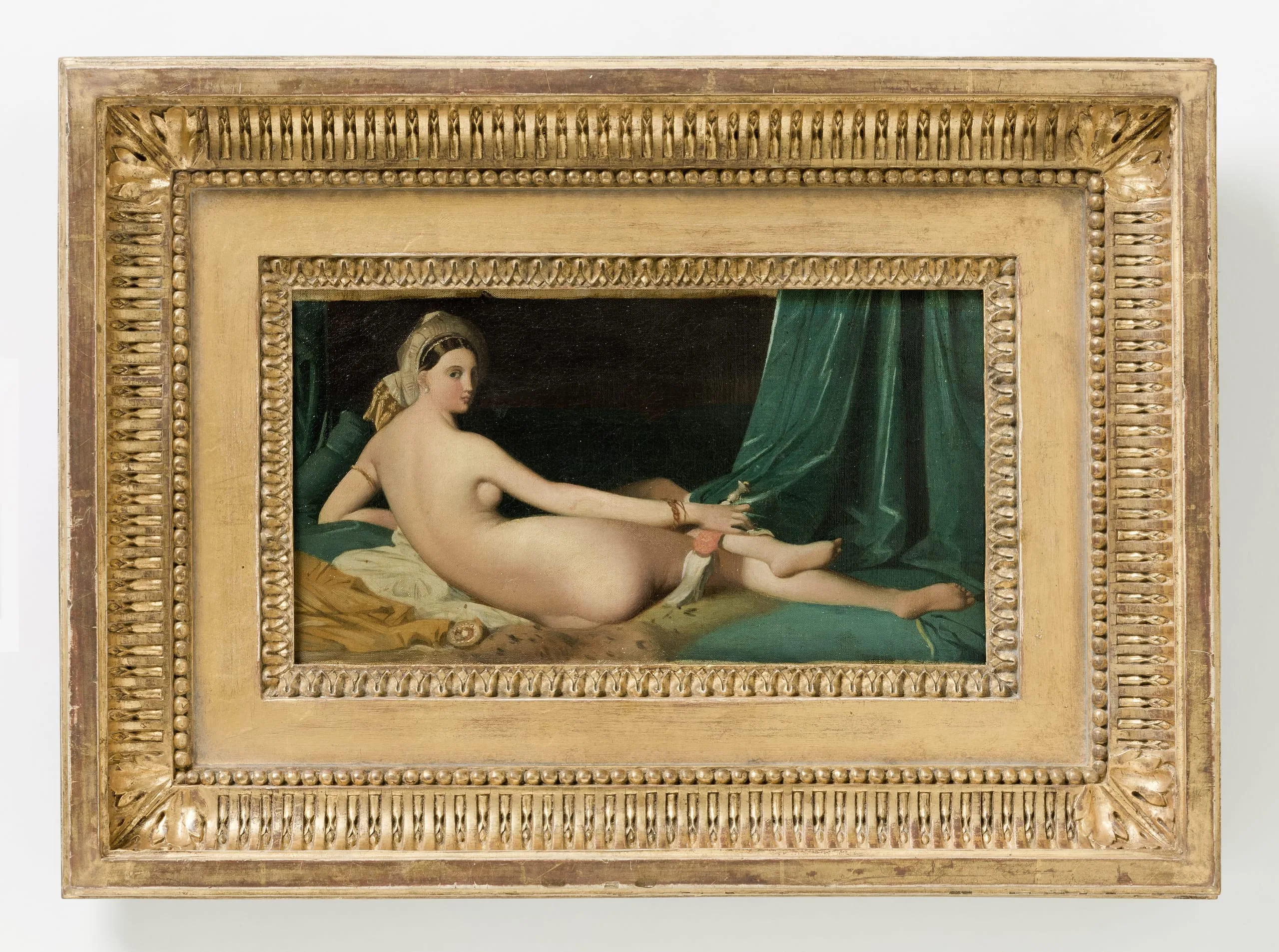
Small horizontal oil painting of a reclining nude woman viewed from behind, turning her head to look over her shoulder, with teal drapery and gold fabric, in an ornate gilt frame
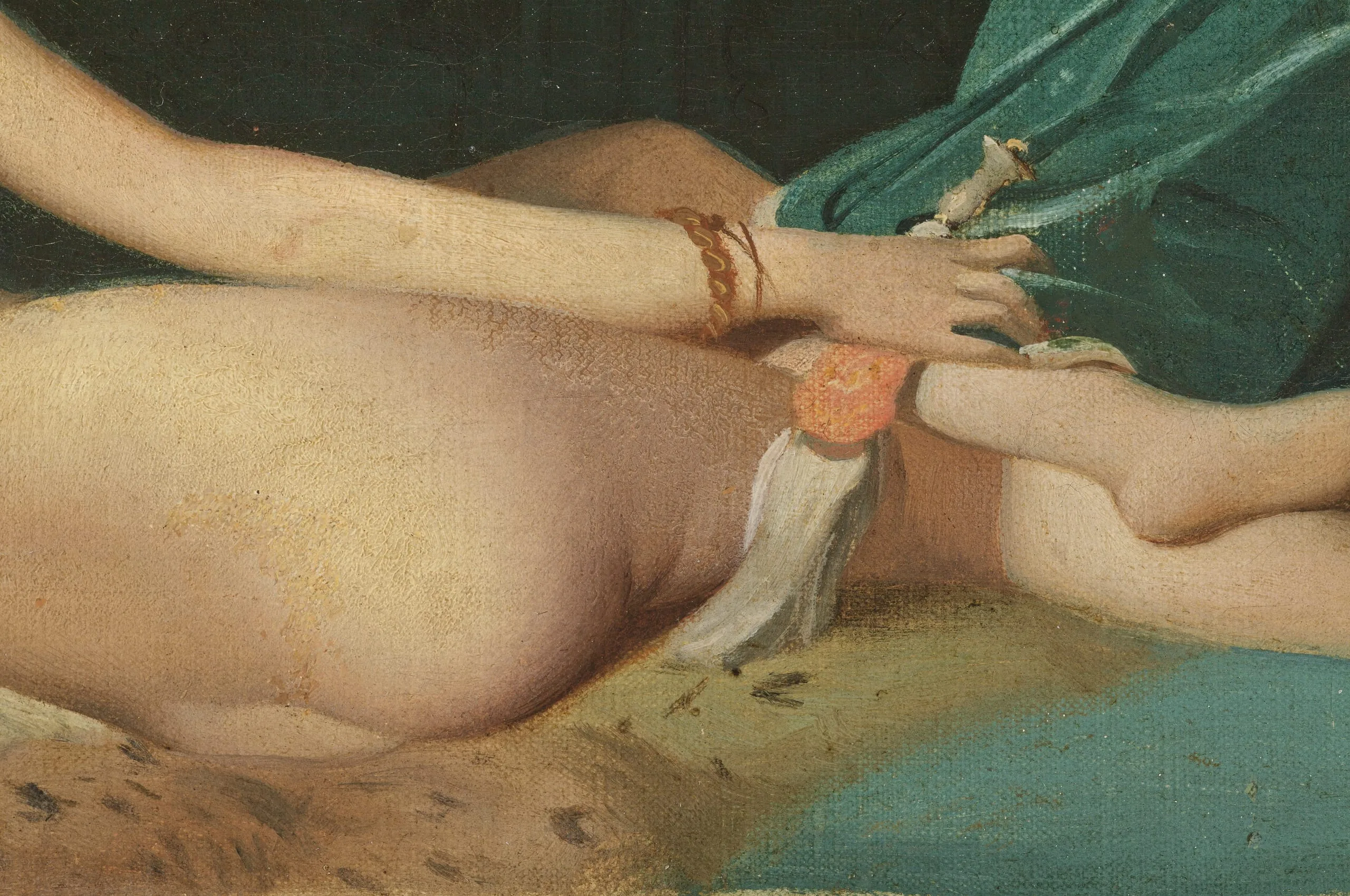
Oil painting detail showing a reclining nude figure on a tan surface, with a hand wearing a beaded bracelet holding a small orange vessel from which white liquid pours, against teal drapery, with smooth academic brushwork.
Artist or Maker
Jean-Auguste Dominique Ingres
France, Montauban, 1780-1867
Title
Odalisque
Date Made
circa 1830
Medium
Oil on canvas
Dimensions
Overall: 5 5/8 × 9 9/16 in. (14.3 × 24.3 cm) Frame: 11 1/4 × 15 1/2 × 2 1/4 in. (28.58 × 39.37 × 5.72 cm)
Credit Line
Gift of the 2014 Collectors Committee
Accession Number
M.2014.64
Classification
Paintings
Collecting Area
European Painting and Sculpture
Curatorial Notes

Ingres’s Grande Odalisque of 1814 has long been recognized as a landmark not only in the artist’s oeuvre but also in the development of the life-size reclining nude as a subject of European art. The theme dates to antiquity and was frequently addressed by European artists, from Titian to Goya to Picasso and Matisse. Despite the Grande Odalisque’s negative reception at the 1819 Paris Salon, Ingres made no fewer than eight reduced versions, including this diminutive painting. Indeed, by 1820, about ten years before LACMA’s picture was produced, the artist recorded in an inventory that he had executed “several small repetitions.” These are not studies toward larger compositions; rather, they are later iterations that reimagine and reinvent the subject on a smaller scale, easy for circulation and suited to intimate viewing environments.

The nude figure of Ingres’s odalisque departs from a realistic portrayal of the human figure. She has “no bones, no muscle, no blood,” as one critic complained, and instead derives from the painter’s imagination. Odalisques—from the Turkish odalik, a term for female slaves in the sultan’s harem—were a repeated trope in Ingres’s time. A product of French colonial expansion in North Africa and the Middle East, these images were engineered for the consumption of the Western European male gaze. Rather than engaging with the cultural and historical complexities of female sexual bondage, artists depicted the female nude as a generalized, exoticized outsider.

2025
Selected Bibliography
  • Marandel, J. Patrice. Abecedario: Collecting and Recollecting. Los Angeles: Art Catalogues; LACMA, 2017.

Related Unframed

Related Unframed

50 Works 50 Weeks: Jean-Auguste-Dominique Ingres’s “Odalisque”
  • June 25, 2025
  • European Painting and Sculpture Department
New Acquisition: Jean-Auguste-Dominique Ingres, Odalisque
  • April 29, 2014
LACMA Acquires 10 Artworks During 2014 Collectors Committee Weekend
  • April 28, 2014
This Weekend at LACMA: Elizabeth Taylor in Iran, British Television Ad Awards, Jane Fonda Film Series, and More
  • February 25, 2011