- Title
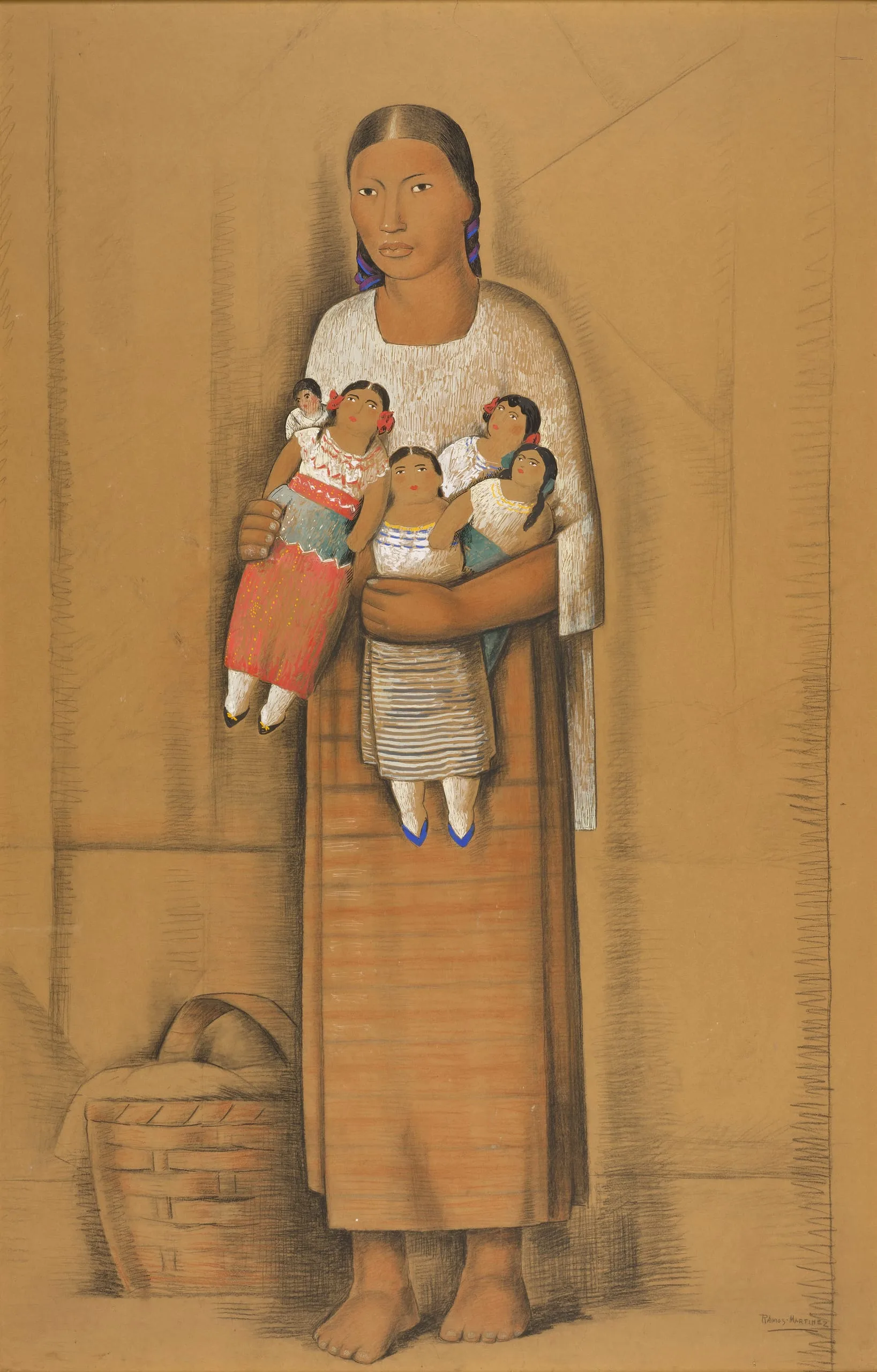
- Young Woman with Dolls (Mujer joven con muñecas)
- Date Made
- circa 1935
- Medium
- Tempera, conté crayon, and charcoal on illustration board
- Dimensions
- Panel: 65 × 42 in. (165.1 × 106.68 cm); frame: 76 1/2 × 52 × 2 in. (194.31 × 132.08 × 5.08 cm)
- Accession Number
- M.2012.190
- Curatorial Notes
After moving to Los Angeles in 1929, Alfredo Ramos Martínez continued to paint scenes inspired by his homeland. His subjects were aligned with the indigenismo movement, which promoted representations of Mexico’s Indigenous populations to construct a national visual identity. Pleasant scenes such as this also appealed to the artist’s Hollywood patrons at a time when Mexican art and subjects were widely popular in the United States. Here, the young woman holds five dolls, a nod to the contemporary fascination with Mexican folk art. The artist emphasizes the popular handicraft by employing bright tempera paint, in contrast to the more muted background rendered in charcoal and conté crayón. The resonance between the woman and her dolls—all in white blouses, long skirts, and braided pigtails—hints at the commodification of both the Indigenous woman and her craft.
Rachel Kaplan
2024
- Copyright
- © The Alfredo Ramos Martinez Research Project, reproduced by permission