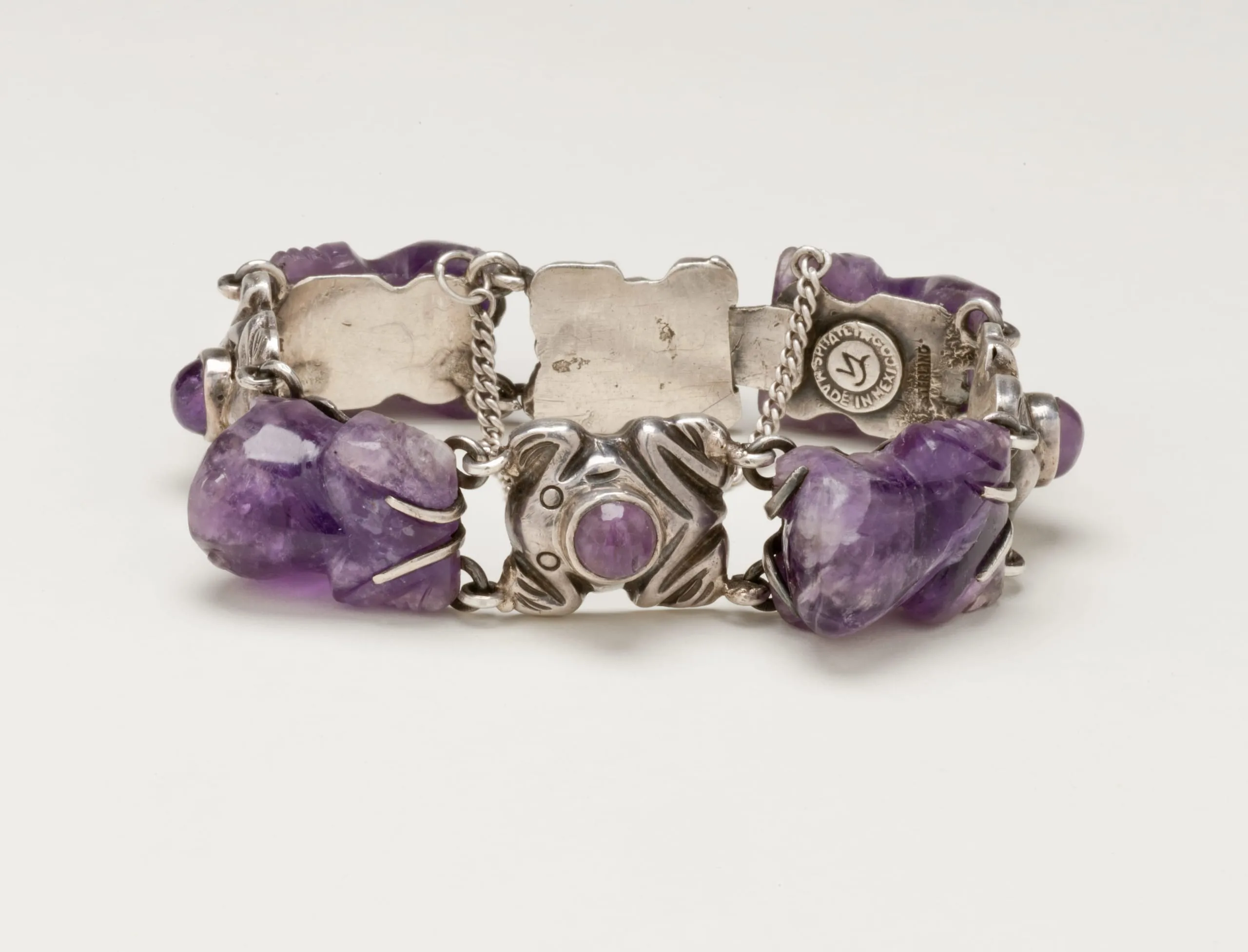
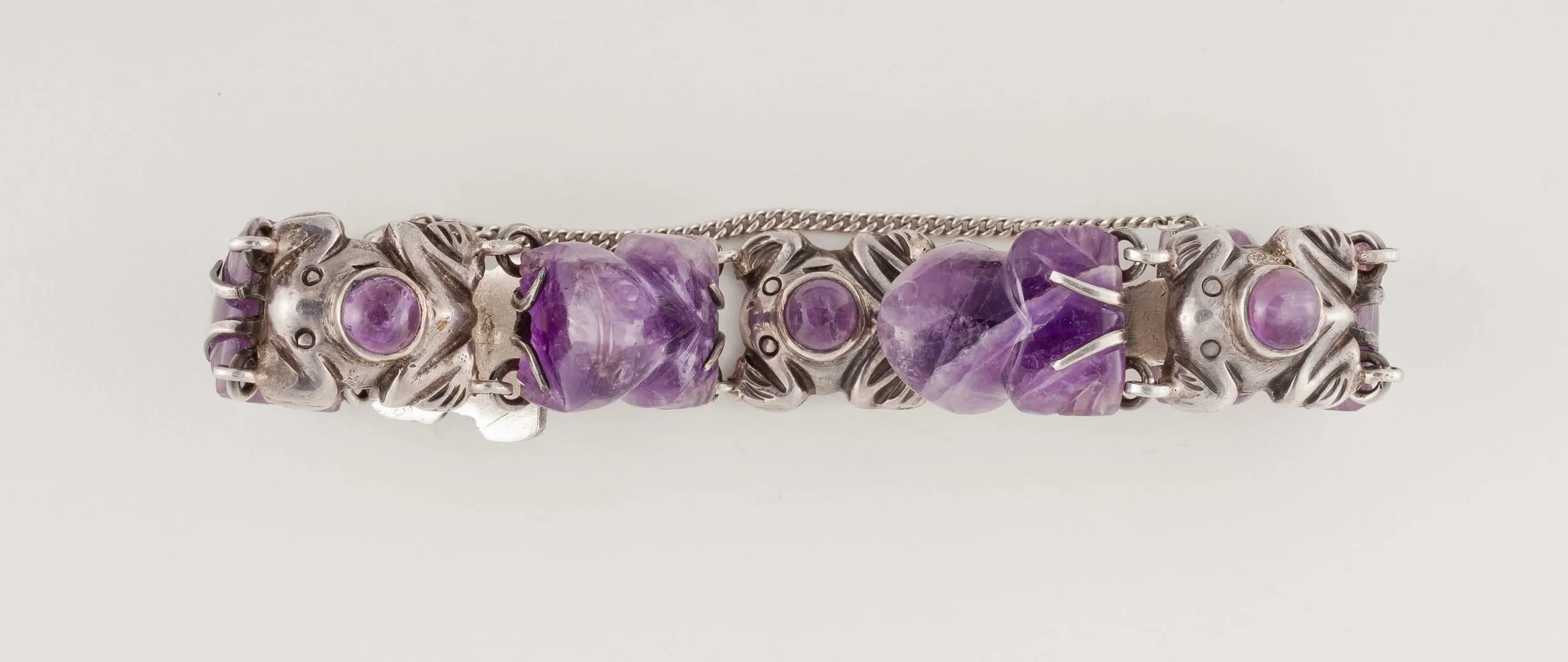
In this bracelet, amethyst frogs alternate with silver ones inlaid with the purple quartz. William Spratling often used amethyst—an inexpensive and readily available material—in his designs to contrast the colorful stone against the silver. According to the Chicago travel writer William Chandler “Chan” Forman (1903–1992), Spratling purchased seventeen small carved amethyst frogs that had been excavated from a Zapotec tomb at Monte Albán, near Oaxaca. An avid collector of Mesoamerican art, he frequently drew inspiration from ancient objects and motifs, and his Monte Albán frogs likely inspired the ones in this bracelet. Spratling also purportedly used the ancient frogs themselves in some of his designs.
Trained as an architect, Spratling moved from New Orleans to Taxco, Mexico, where he established his first silver workshop in 1931. Working alongside master silversmiths and local apprentices, in 1935 he opened his famed Taller de Las Delicias, which attracted a cohort of international artists, intellectuals, and Hollywood celebrities. Spratling’s emphasis on craftsmanship and his experimentation with different sources, including Mesoamerican art, Art Deco, and modernism, contributed to his great success and helped revitalize the Mexican silver industry. Héctor Aguilar (1905–1986), one of his apprentices, went on to establish his own silver workshop, and designed a box crowned with a carved amethyst frog (M.2013.4.19a-b), demonstrating the synergy across Taxco’s silver workshops.
Rachel Kaplan
2025