- Title
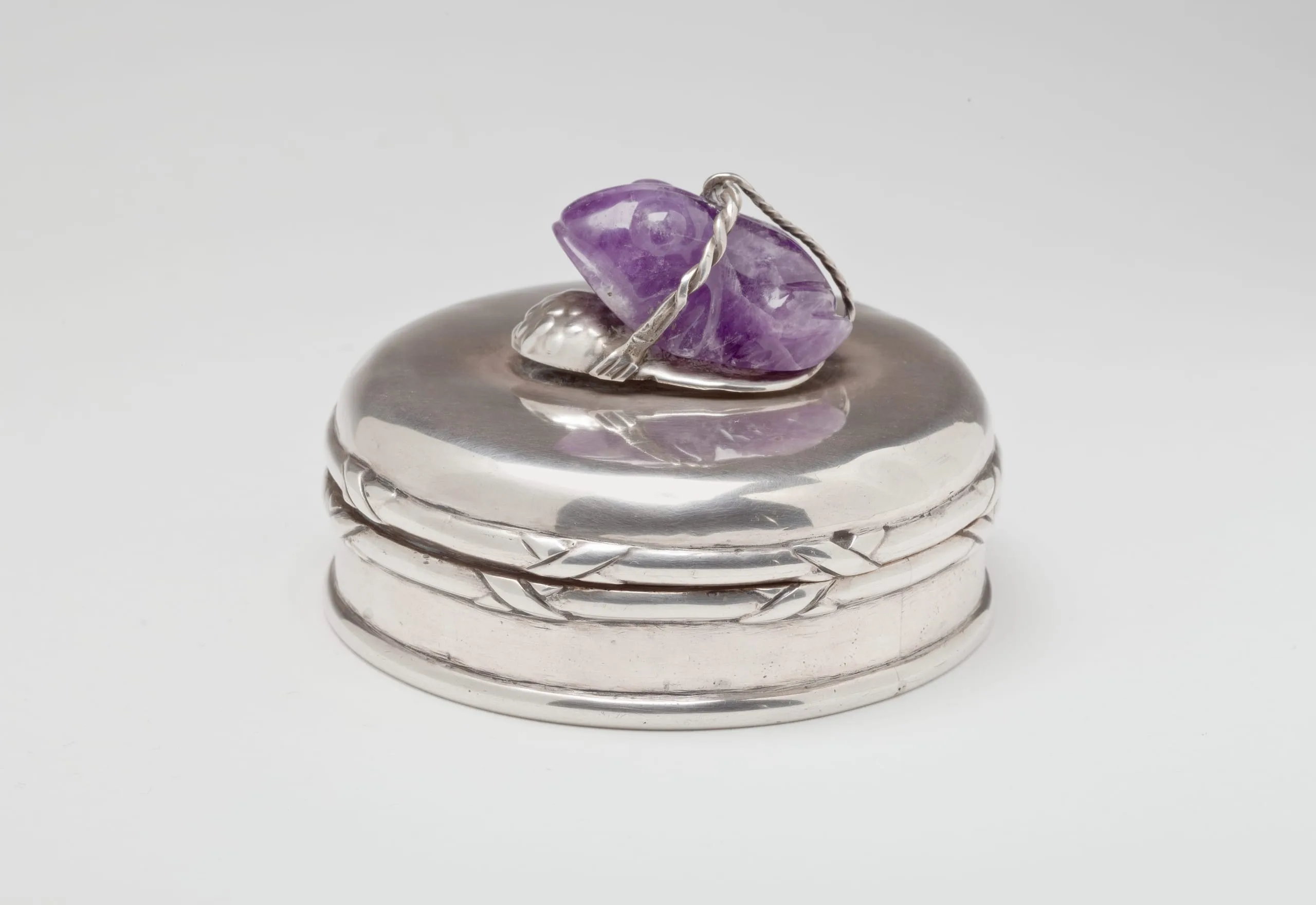
- Frog Box (Caja con rana)
- Date Made
- circa 1940-1945
- Medium
- Silver, amethyst
- Dimensions
- 1 3/4 × 3 1/4 in. (4.45 × 8.26 cm); diameter: 3 1/4 in. (8.26 cm)
- Accession Number
- M.2013.4.19a-b
- Curatorial Notes
A frog carved from an amethyst stone perches on the lid of this round box. Like other Mexican silver designers, Héctor Aguilar often used amethyst—an inexpensive and readily available local material—to enhance his works. Aguilar’s nephew remembered summer afternoons searching for stone and pottery fragments near the family hacienda to integrate into his uncle’s designs, including pieces of amethyst. Aguilar was also an avid collector of Mesoamerican art and drew inspiration from ancient motifs and symbols, such as the frog (see M.2010.115.121, a Maya ceramic vessel in LACMA’s collection with a similarly angled frog inside).
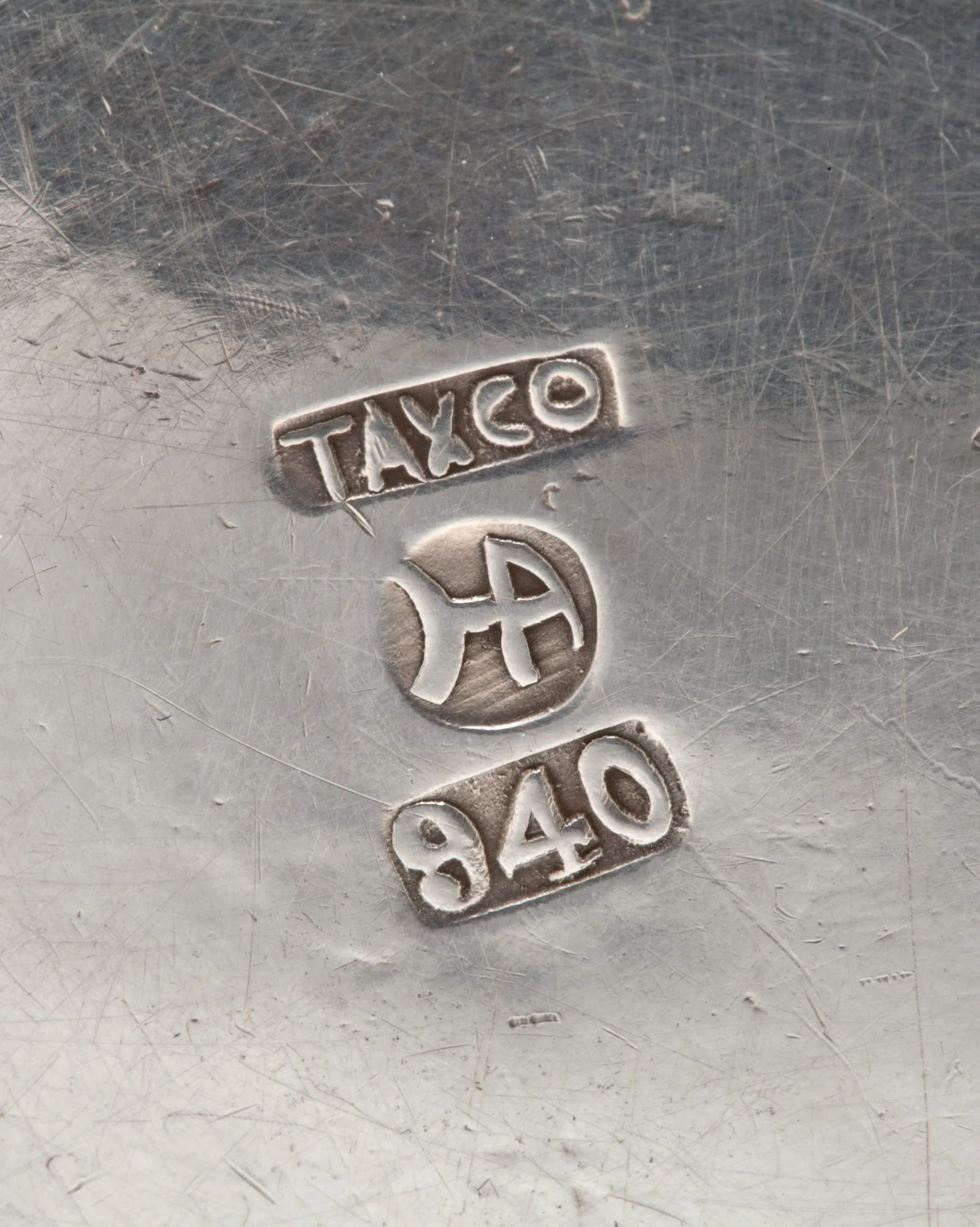
Aguilar’s fascination with ancient art and history led to his work as a tour guide, which turned out to be a fateful profession. He met his future wife, Lois Smith Cartwright, while she was traveling in Mexico in 1935; the following year, the newlyweds visited Taxco, a center of the silver industry. Aguilar had previously brought tour groups to William Spratling’s renowned Taller de Las Delicias (established in 1935). Spratling subsequently hired Aguilar to manage the workshop before the latter forged out on his own. Aguilar and Cartwright founded the Taller Borda in 1939, and their workshop became known for the high quality of its elaborate works.
Rachel Kaplan
2025
- Copyright
- © artist or artist's estate