LACMA

ShopMembershipMyLACMATickets
LACMA
Los Angeles County Museum of Art
5905 Wilshire Blvd.
Los Angeles, CA 90036
info@lacma.org
(323) 857-6000
Sign up to receive emails
Subscribe
© Museum Associates 2026
  • About LACMA
  • Jobs
  • Building LACMA
  • Host An Event
  • Unframed
  • Press
  • FAQs
  • Log in to MyLACMA
  • Privacy Policy
© Museum Associates 2026
Collections

William Spratling
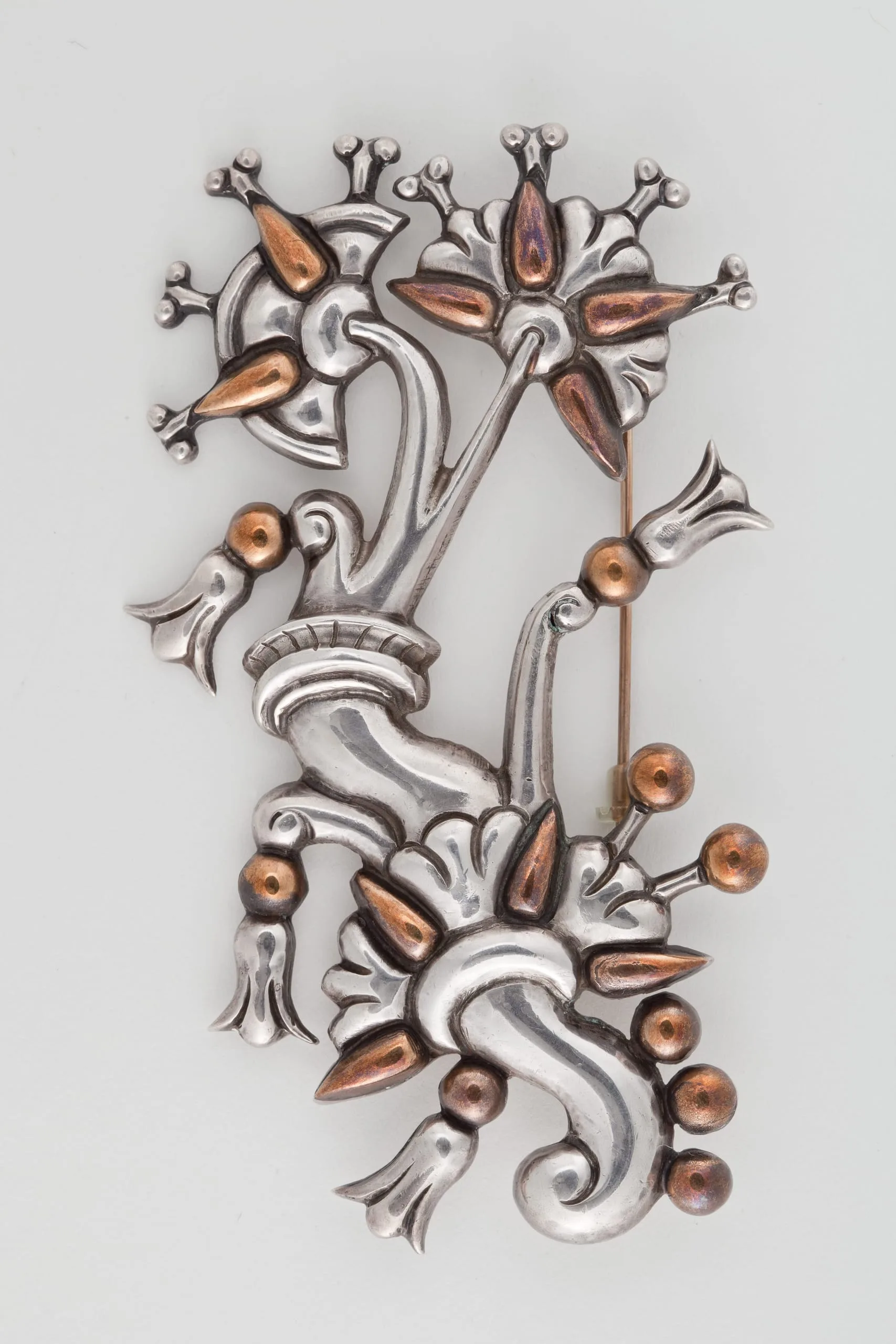
Tree of Life Brooch (Prendedor en forma de Árbol de la Vida)circa 1938-1944

Not on view
Silver and copper-toned metal brooch with stylized flowers, ribbon scrollwork, and clusters of spherical beads in high relief
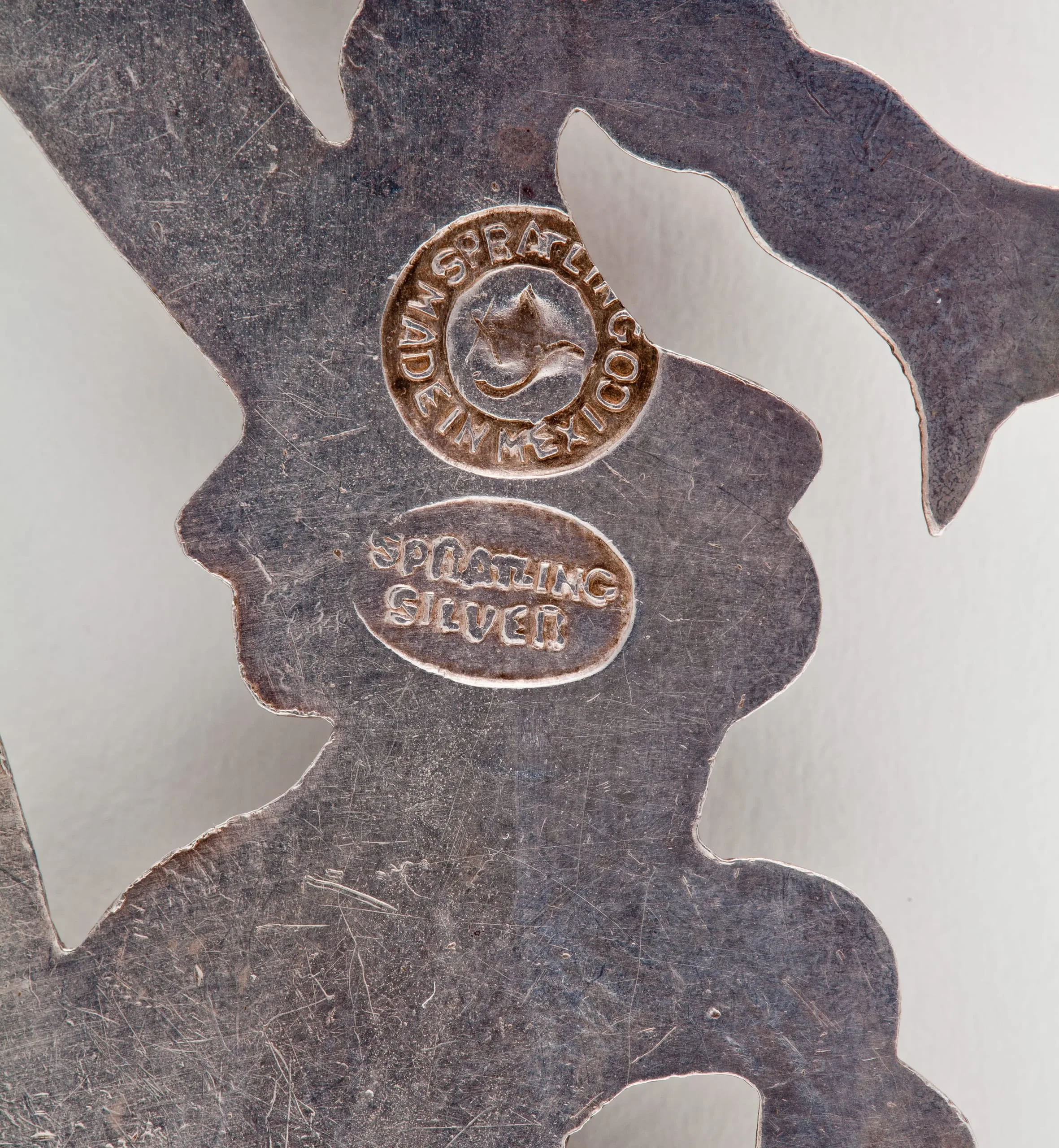
Reverse side of a flat silver object showing two stamped maker's marks: a circular mark reading 'Spratling Made in Mexico' with a small animal motif, and an oval mark reading 'Spratling Silver,' both in raised lettering against oxidized silver.
Artist or Maker
William Spratling
United States, active Mexico, 1900-1967
Title
Tree of Life Brooch (Prendedor en forma de Árbol de la Vida)
Place Made
Mexico, Taxco
Date Made
circa 1938-1944
Medium
Silver, copper
Dimensions
4 3/8 × 2 1/2 × 1 in. (11.11 × 6.35 × 2.54 cm)
Credit Line
Gift of Ronald A. Belkin, Long Beach, California
Accession Number
M.2013.4.9
Classification
Jewelry and Adornments
Collecting Area
Latin American Art
Curatorial Notes

William Spratling designed this brooch based on an image in the Codex Fejérváry-Mayer. An exemplary tonalamatl (ritual and divinatory almanac), the codex is a rare surviving manuscript created before the Spaniards arrived in Central Mexico. Spratling’s brooch is inspired by a scene on the twenty-ninth page (http://www.famsi.org/research/pohl/jpcodices/fejervary_mayer/img_fm29.html) in which the water goddess Chalchiuhtlicue sits before a flowering tree. Transforming the tree into three dimensions with silver and copper, Spratling captured the ancient artist’s sense of movement through the tree’s winding trunk and swirling branches.

Trained as an architect, Spratling moved from New Orleans to Taxco, Mexico, where he established his first silver workshop in 1931. Working alongside master silversmiths and local apprentices, in 1935 he opened his famed Taller de Las Delicias, which attracted a cohort of international artists, intellectuals, and Hollywood celebrities. Spratling’s emphasis on craftsmanship and his experimentation with different sources, including Mesoamerican art, Art Deco, and modernism, contributed to his great success and helped revitalize the Mexican silver industry.

Rachel Kaplan

2024
Copyright
© artist or artist's estate