LACMA

ShopMembershipMyLACMATickets
LACMA
Los Angeles County Museum of Art
5905 Wilshire Blvd.
Los Angeles, CA 90036
info@lacma.org
(323) 857-6000
Sign up to receive emails
Subscribe
© Museum Associates 2026
  • About LACMA
  • Jobs
  • Building LACMA
  • Host An Event
  • Unframed
  • Press
  • FAQs
  • Log in to MyLACMA
  • Privacy Policy
© Museum Associates 2026
Collections

Adler & Sullivan
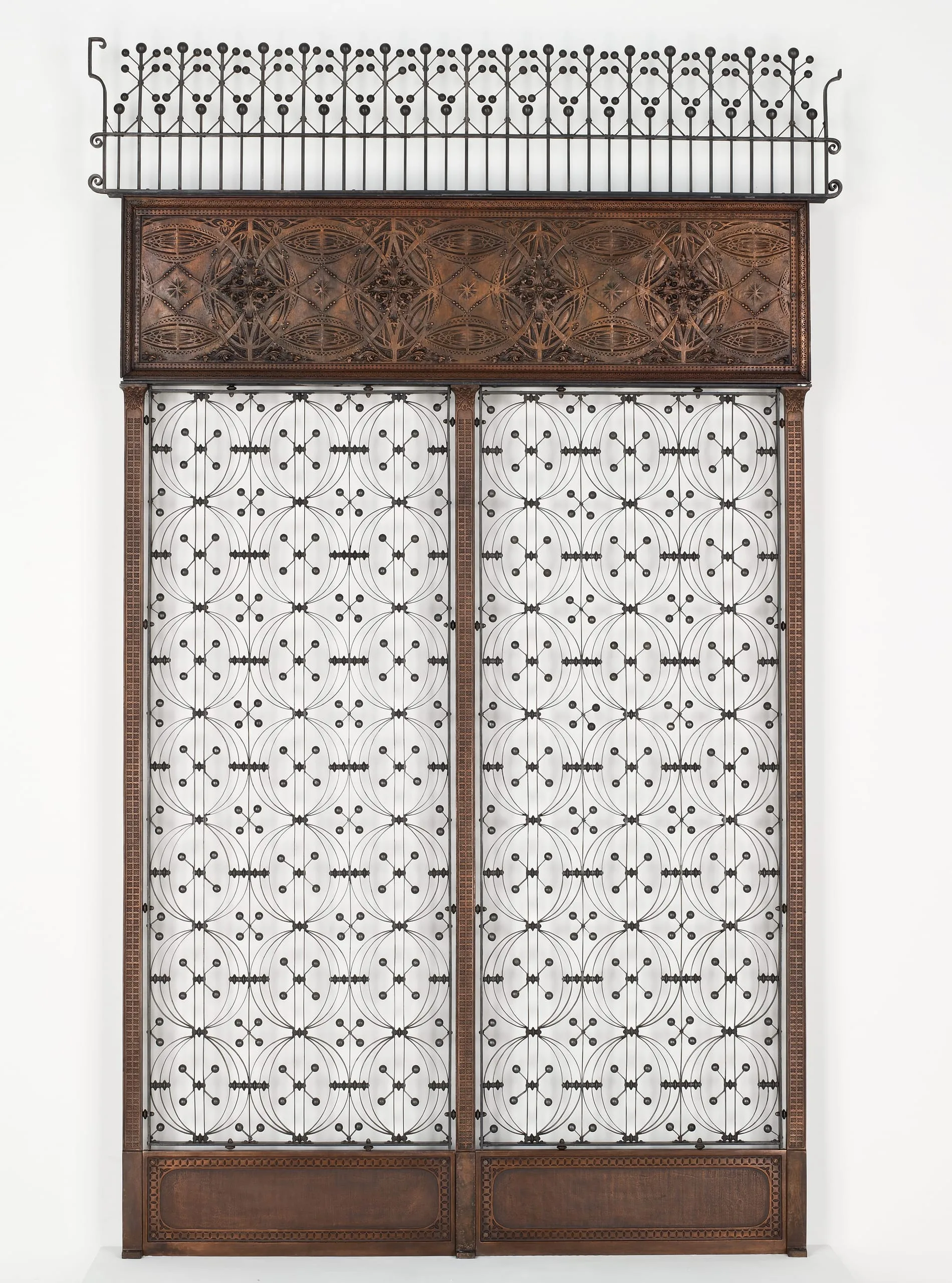
Elevator Surround from the Chicago Stock Exchange Building1892-1894

On view:
Geffen Galleries, Responses to Industrialization
Architectural double door with wrought iron grillework, carved transom panel, and projecting iron railing, in reddish-brown metal with repeating curvilinear and berry motifs
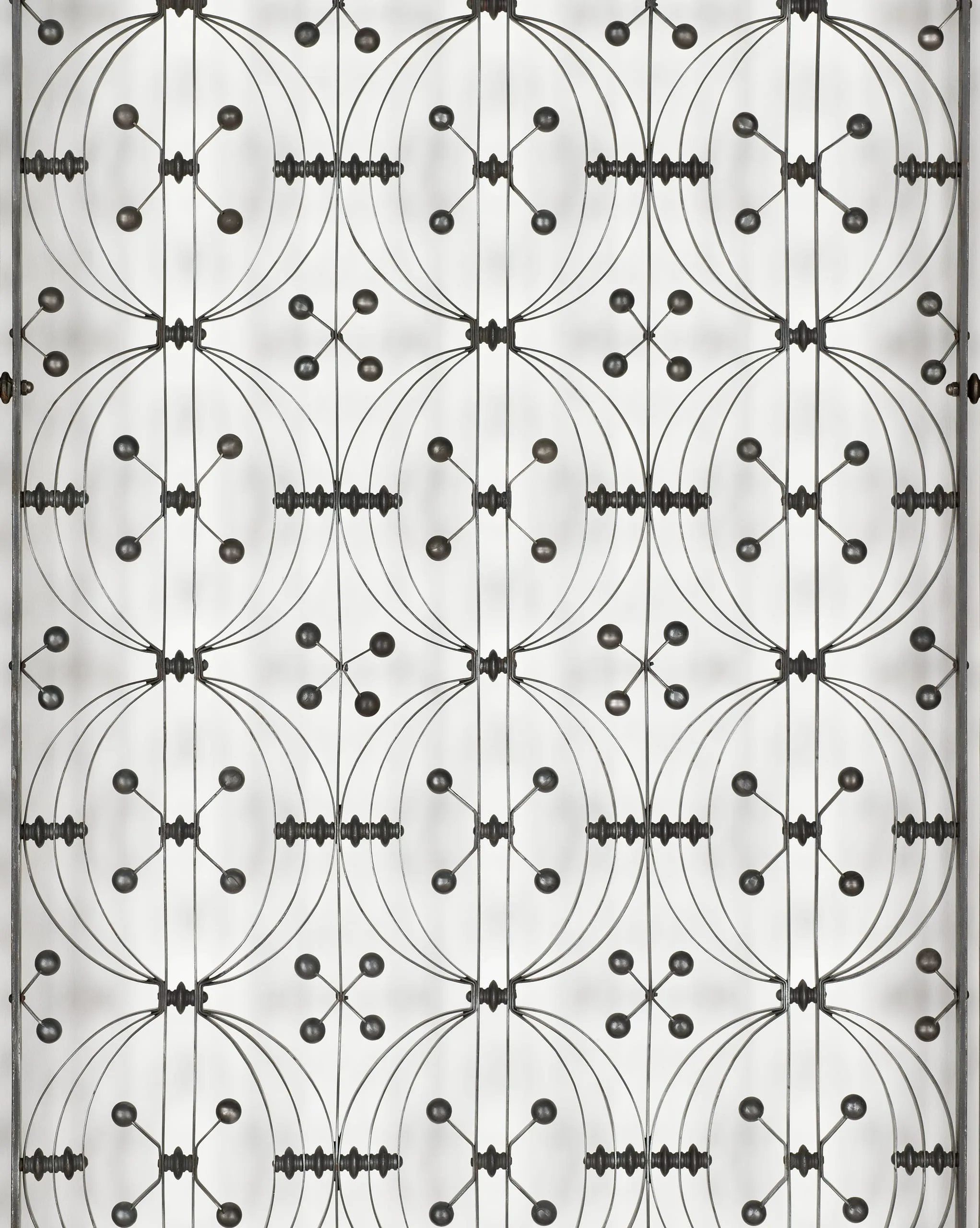
Wrought iron decorative panel with repeating geometric pattern of overlapping circles and radiating lines, accented with spherical ball finials and turned spindle connectors against a light background.
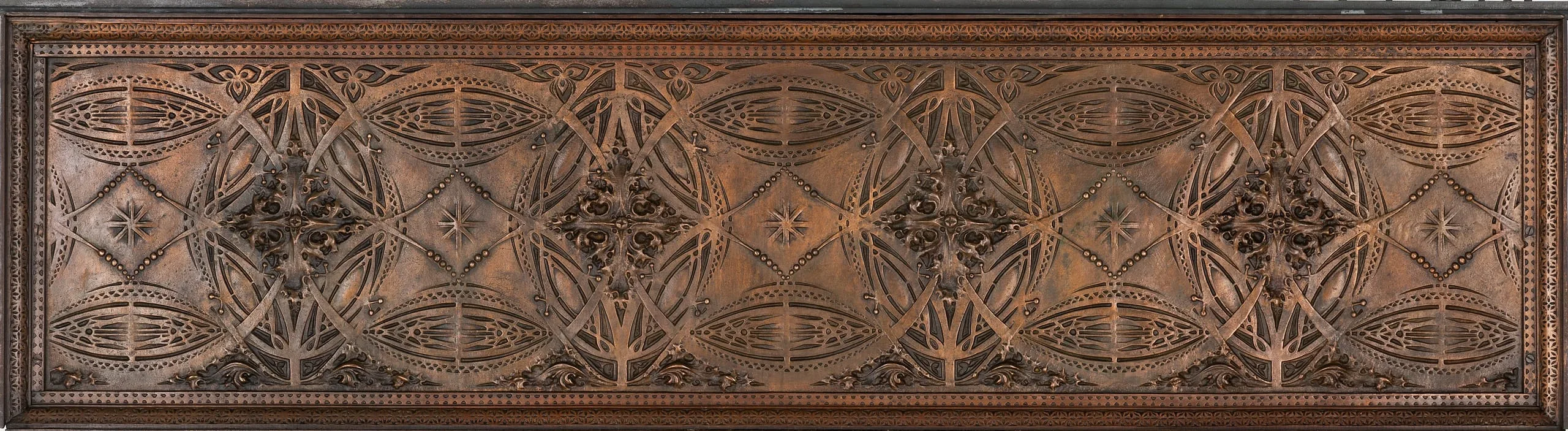
Rectangular carved wood panel with deep relief decoration in warm brown tones, featuring a repeating pattern of interlocking diamond lattice, elongated oval forms, foliate scrollwork, and eight-pointed star rosettes within a beaded border.
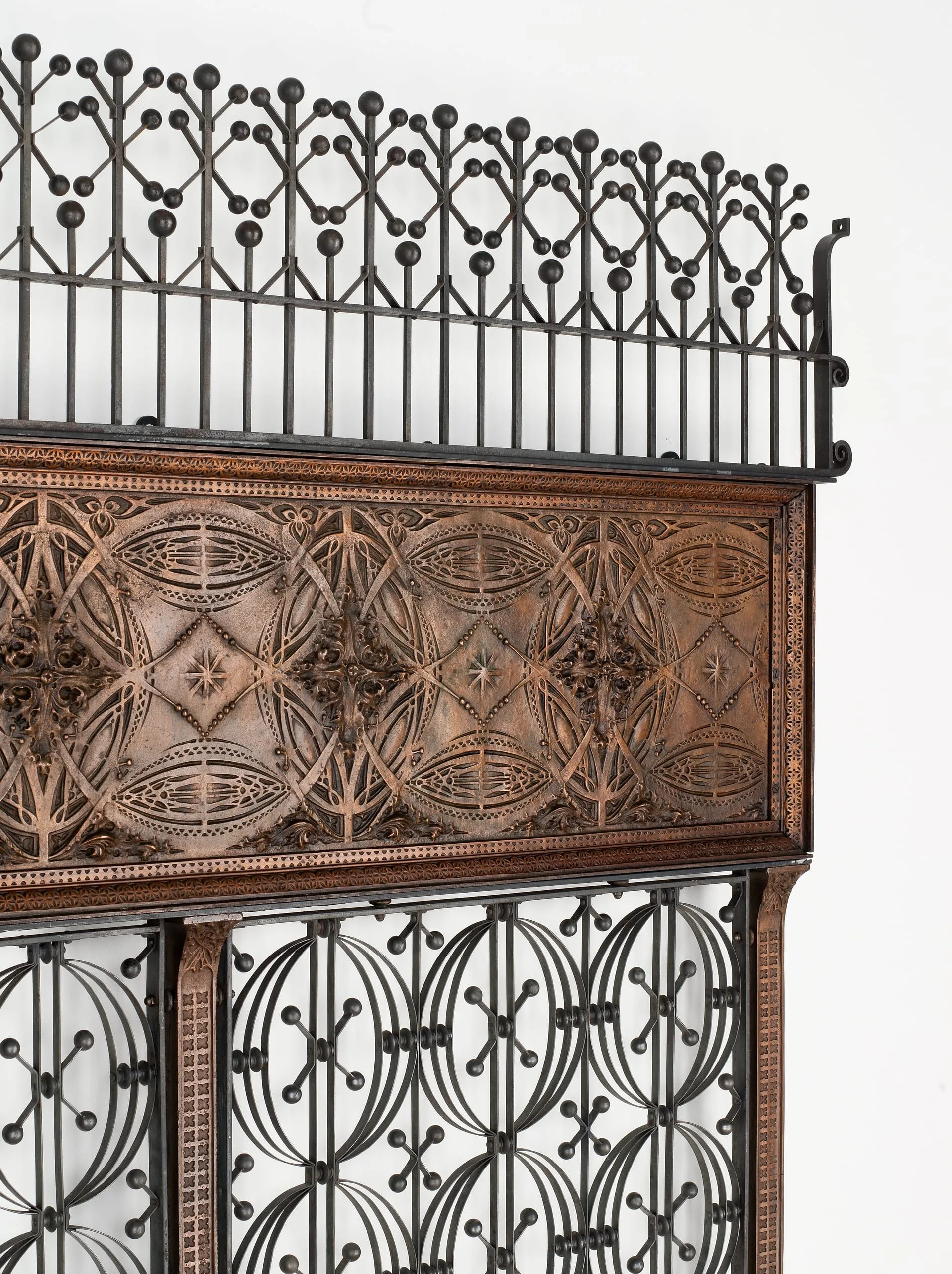
Architectural metalwork fragment combining a wrought iron railing with ball finials above a horizontal copper or bronze panel, densely ornamented with repoussé interlacing ovals, star rosettes, and geometric lattice patterns; below, wrought iron grillework features curved interlocking forms with spherical accents.
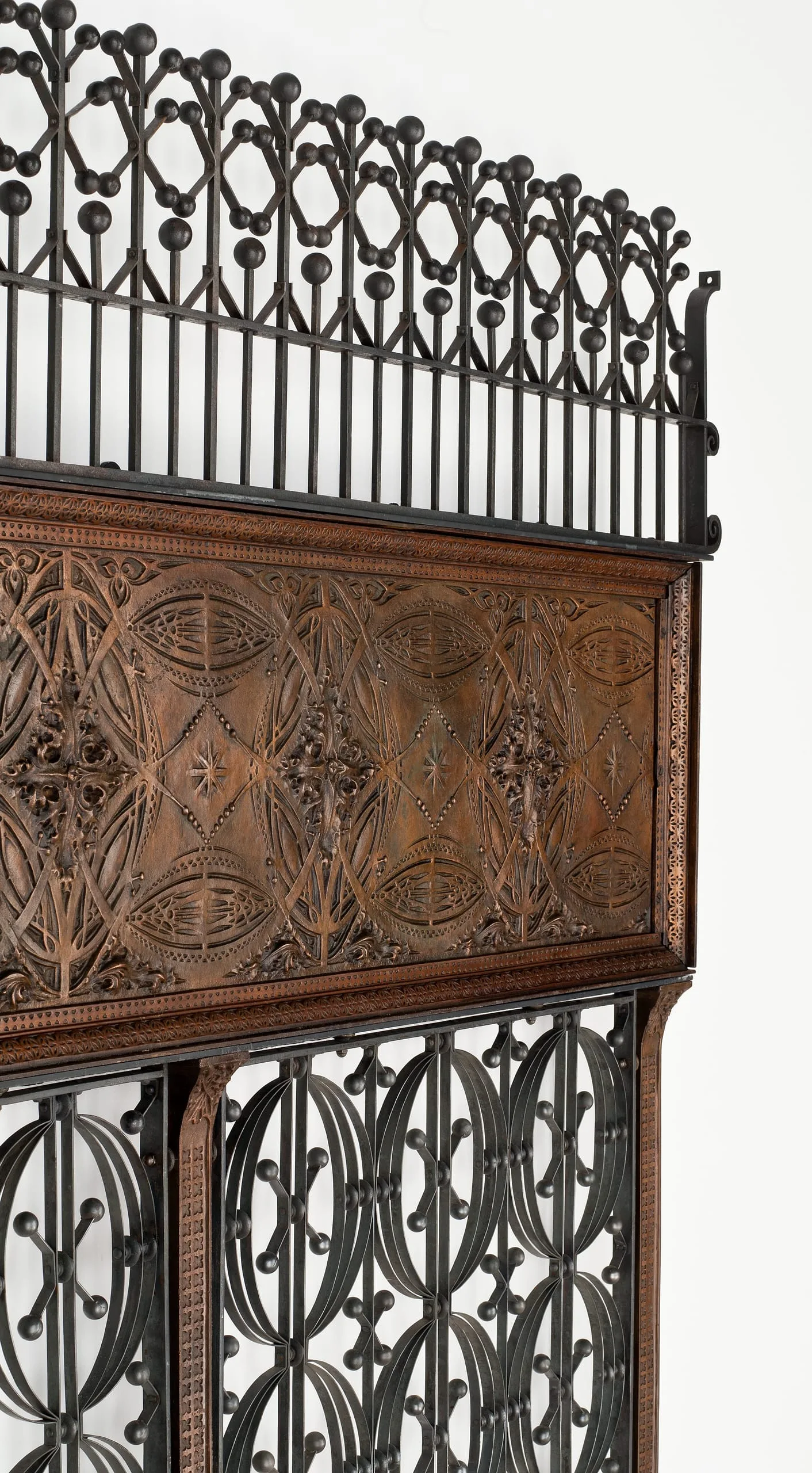
Architectural fragment combining wrought iron grillwork and carved wood panel; upper iron crest features repeating spherical finials and interlaced arches, middle section shows densely carved walnut-toned wood with interlocking oval and star geometric patterns, lower section returns to dark iron scrollwork with vertical bars and curved foliate forms.
Architect
Adler & Sullivan
United States, active 1883-1895
Designed by
Louis Henri Sullivan
Manufacturer
Winslow Brothers Co.
United States, Illinois, Chicago, 1887-1921
Title
Elevator Surround from the Chicago Stock Exchange Building
Place Made
United States
Date Made
1892-1894
Medium
Electroplated copper finish over cast iron, wrought iron
Dimensions
Overall: 118 x 74 x 5 1/2 in. (299.72 x 187.96 x 13.97 cm)
Credit Line
Gift of the 2012 Collectors Committee
Accession Number
M.2012.32a-i
Classification
Sculpture
Collecting Area
Decorative Arts and Design
Curatorial Notes

Beginning in the 1880s, Louis Sullivan advocated the creation of a new American architecture through the simplification of mass and ornamentation based on the growth of plants, as illustrated in this cast-bronze elevator grille from the Chicago Stock Exchange Building. Its masterful combination of geometric and organic forms—simple circle outlines with intricately detailed interior patterns—exemplify why Sullivan is considered the father of modern American architecture. Through his voluminous writings and innovative buildings, Sullivan became the philosophical leader of Prairie School architects and their search for a regional style that “echoed the spirit of the prairies of the great Middle West, which to them embodies the essence of democracy” (Pond 1918). Many of the most important American architects of the mid-twentieth century launched their careers in the Chicago office of Sullivan and his partner Dankmar Adler, including George Grant Elmslie, William Gray Purcell, George Washington Maher, Irving Gill, and most famously, Frank Lloyd Wright.

The thirteen-story, richly ornamented Stock Exchange (1892−94) was the largest office complex designed by Adler & Sullivan. It consolidates Sullivan’s experimentation with steel-framed skyscrapers, a type of structure then in its infancy. The three-part composition—a prominent entrance, a simplified and uniform midsection, and an ornate cornice—denotes the different uses of the building’s floors. In 1896, Sullivan codified these ideas in his landmark essay “The Tall Building Artistically Considered,” where he declared that “form ever follows function”—arguing that a building’s exterior should reflect the activities within. These words became the clarion call of all pioneers of modernism in the revolutionary decades that followed.

Wendy Kaplan, Department Head and Curator, Decorative Arts and Design

Adapted from the 2012 text

Bibliography

Pond 1918. Irving Pond. The Meaning of Architecture. Boston: Marshall Jones, 1918.
Related Unframed

Related Unframed

New Acquisition: Elevator Surround from the Chicago Stock Exchange Building
  • April 24, 2012
Collectors Committee Acquires Seven Works
  • April 23, 2012