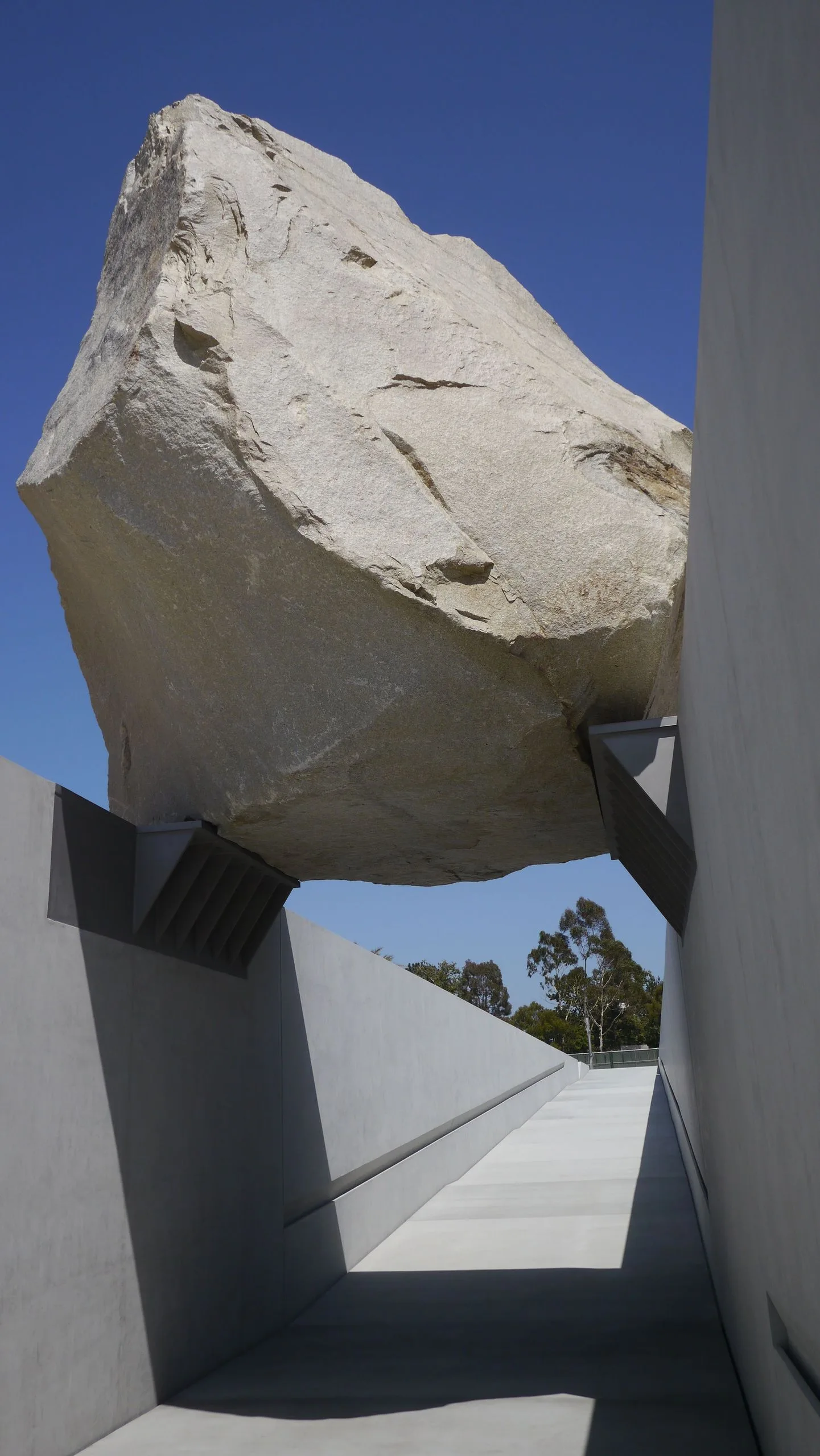
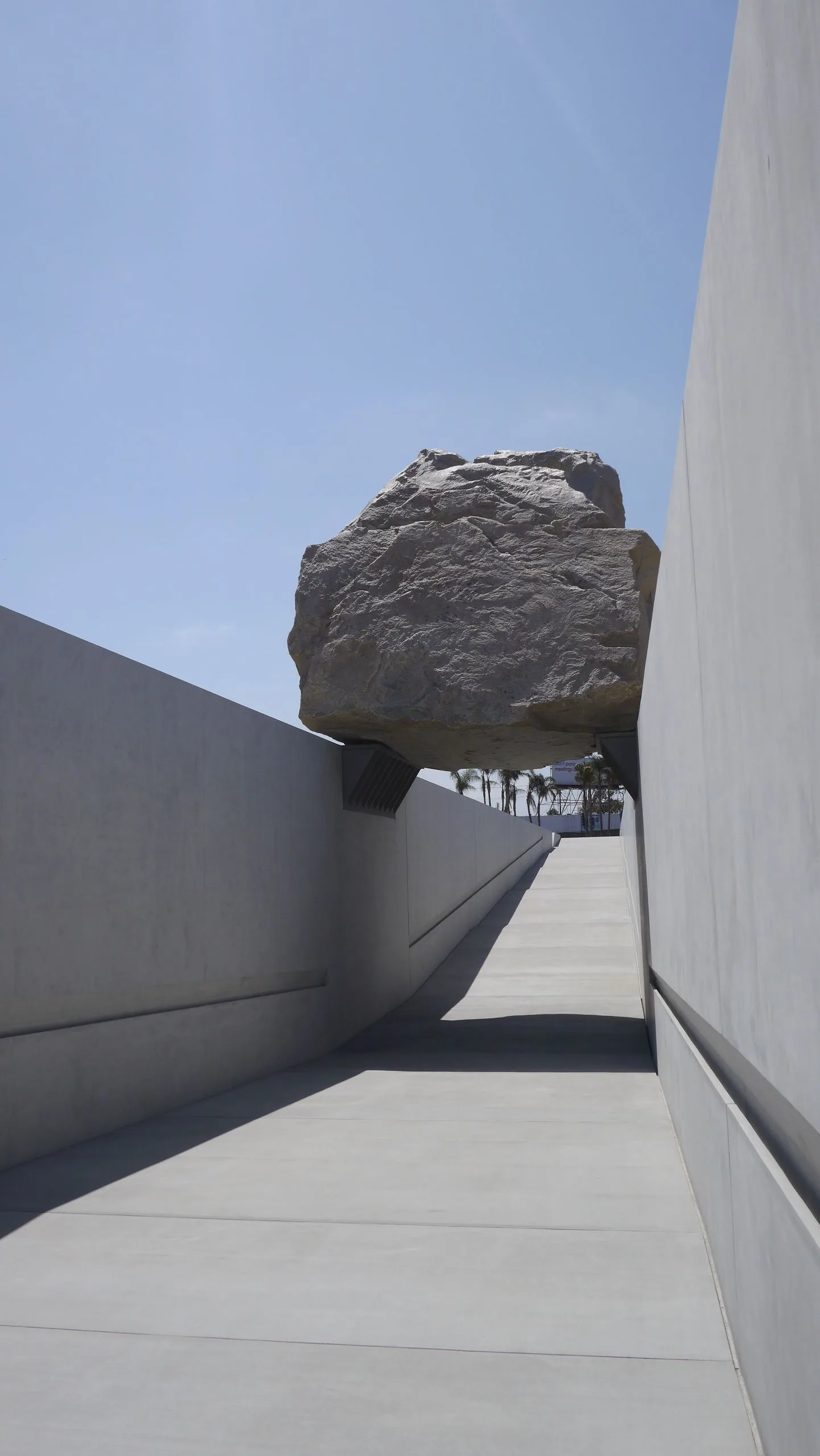
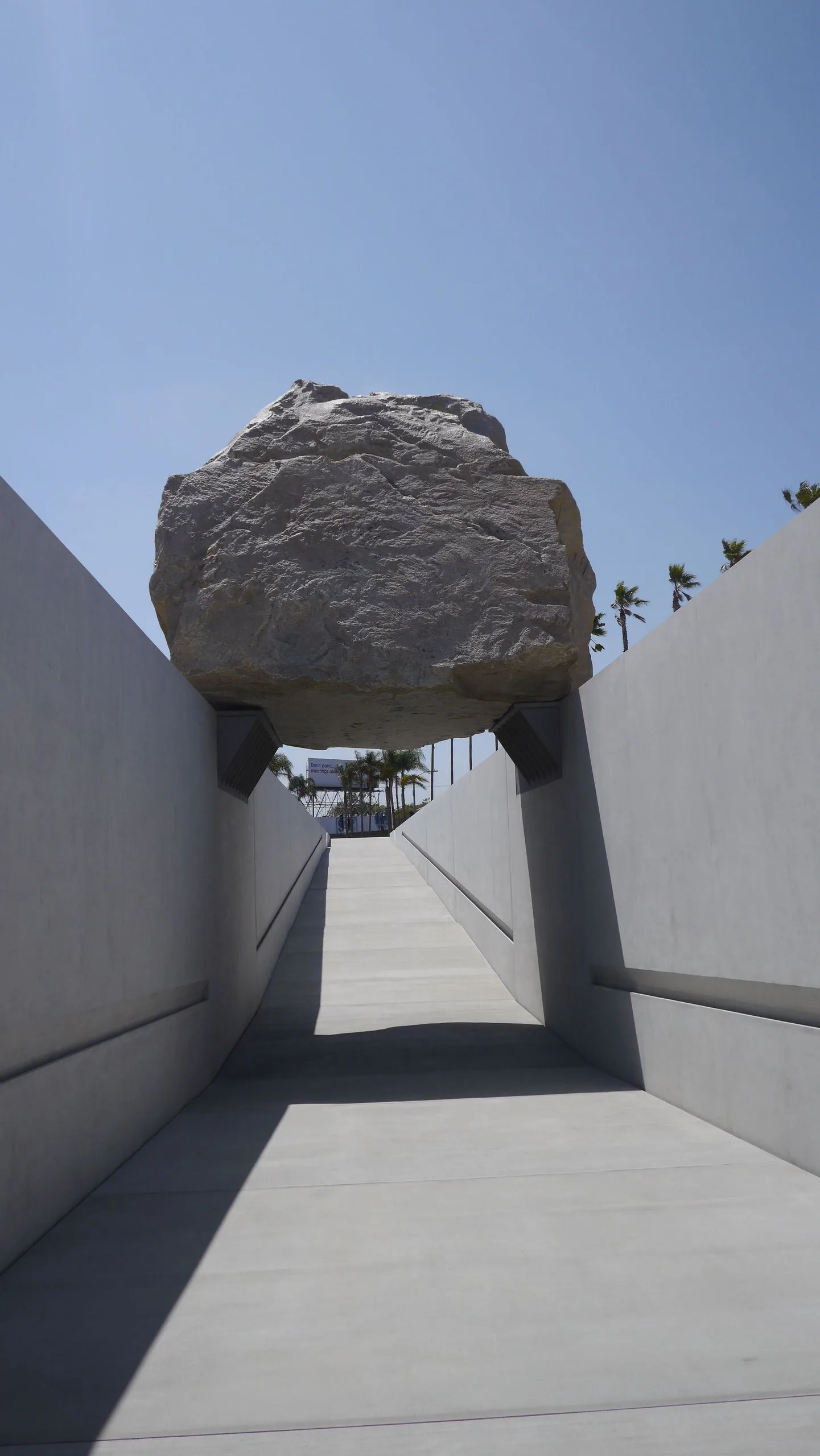
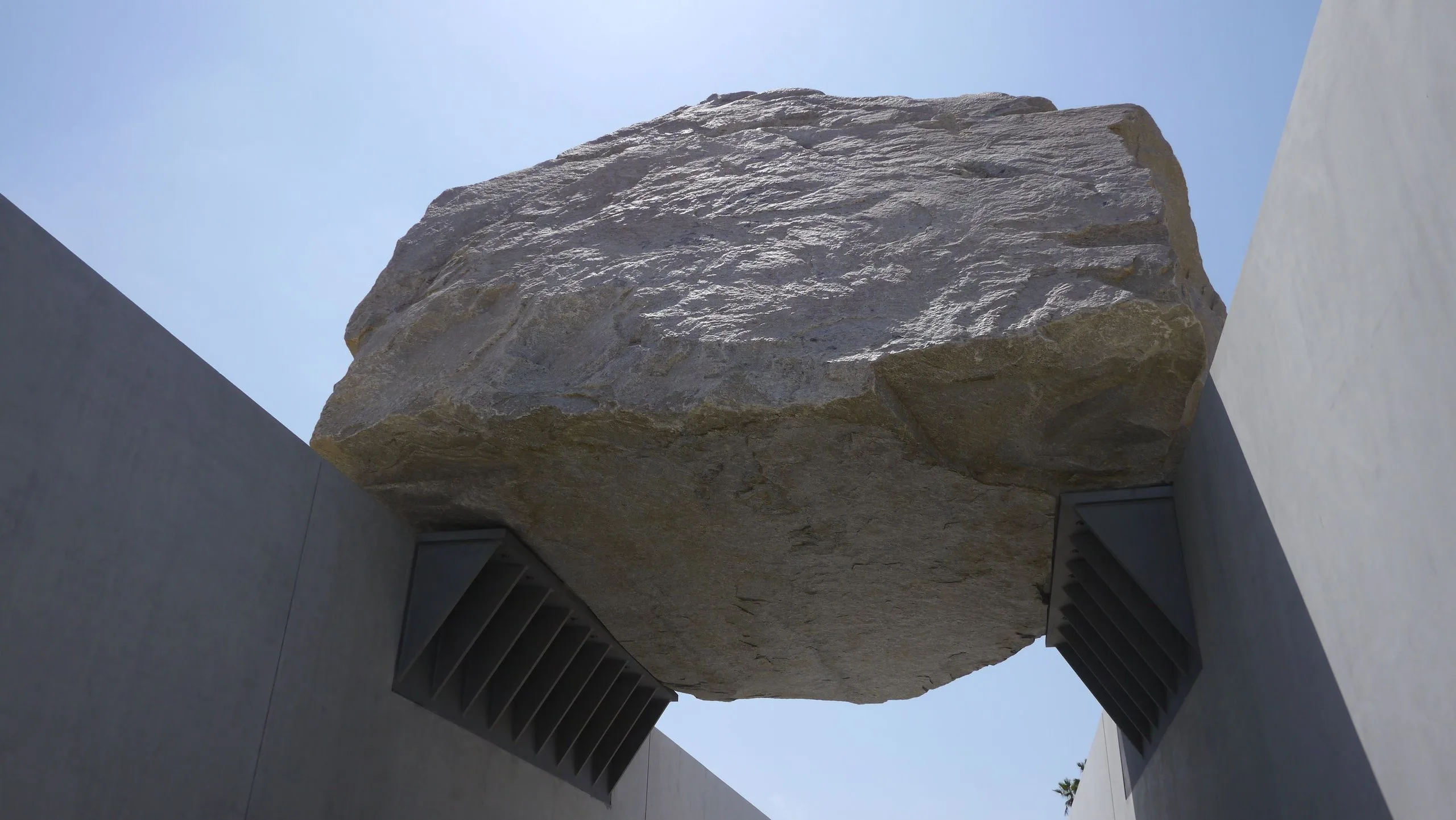
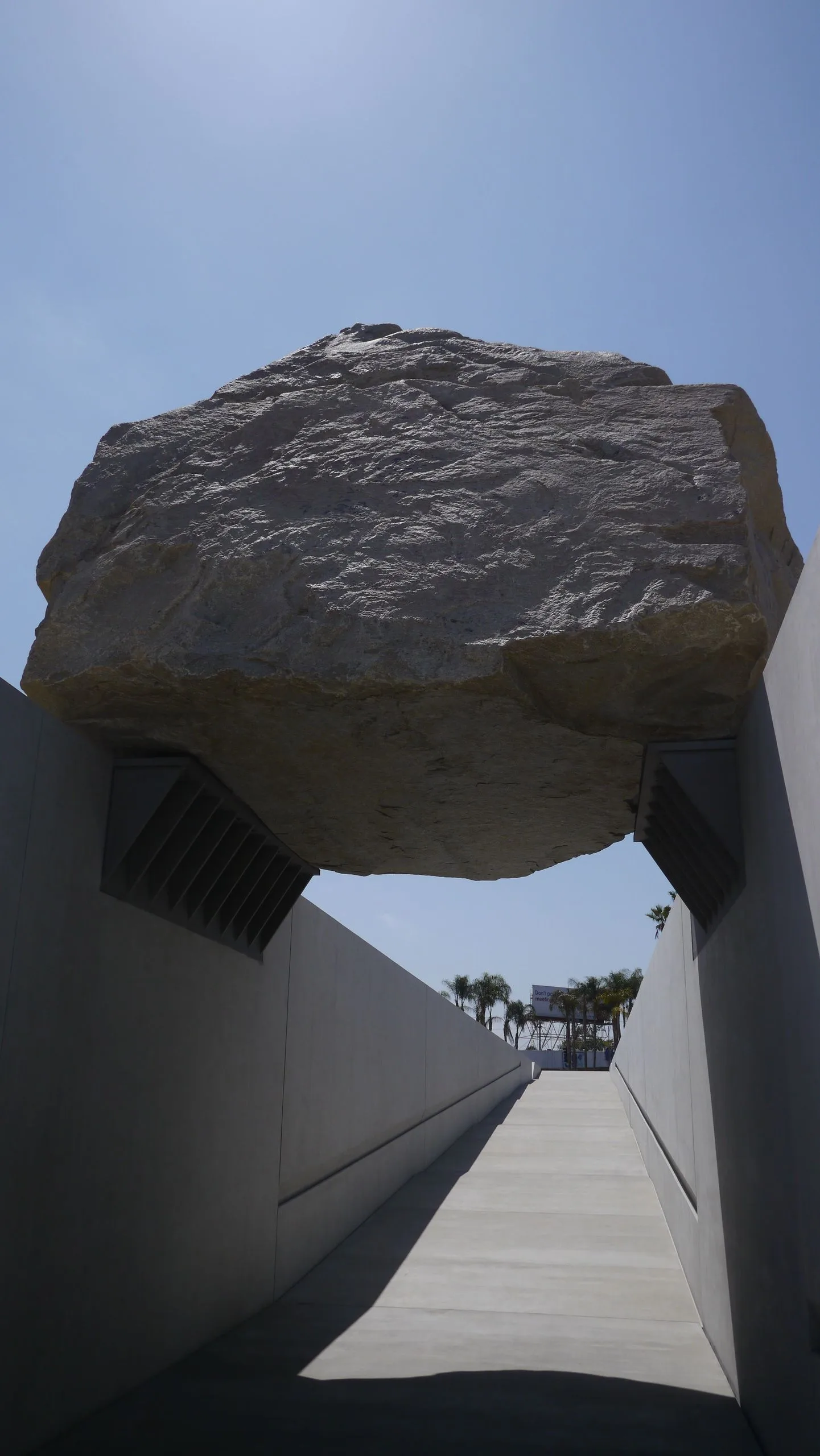
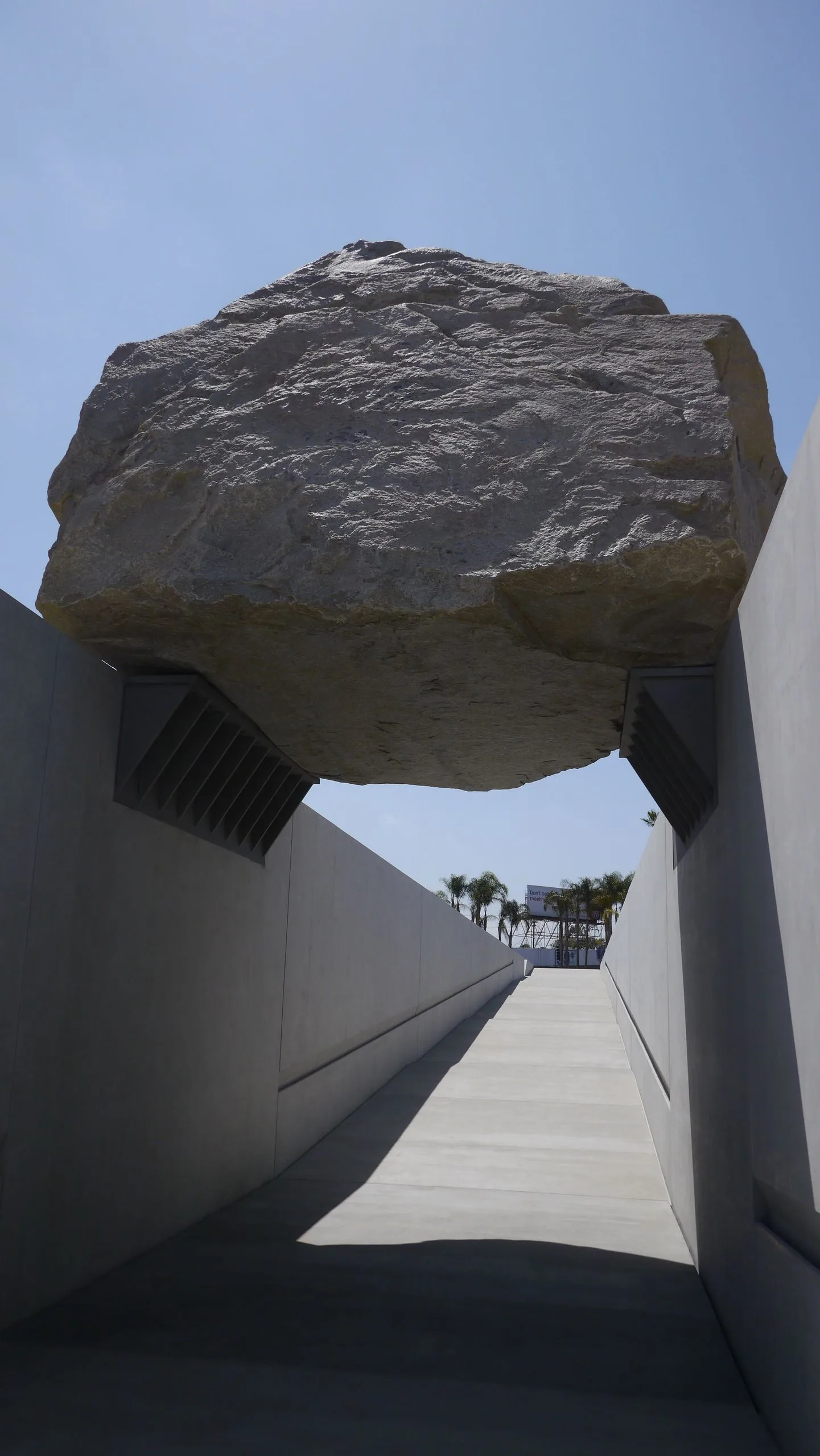
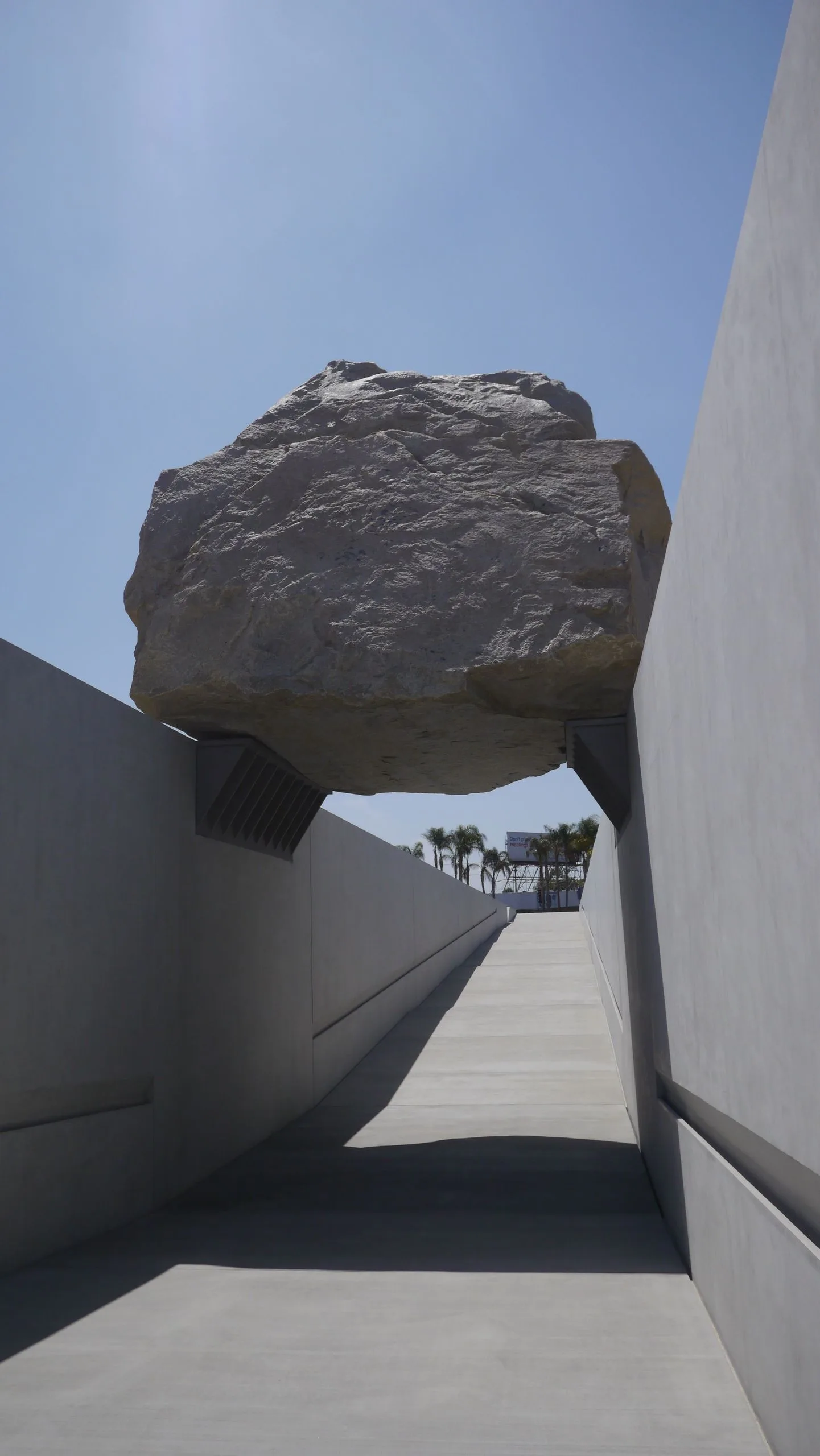
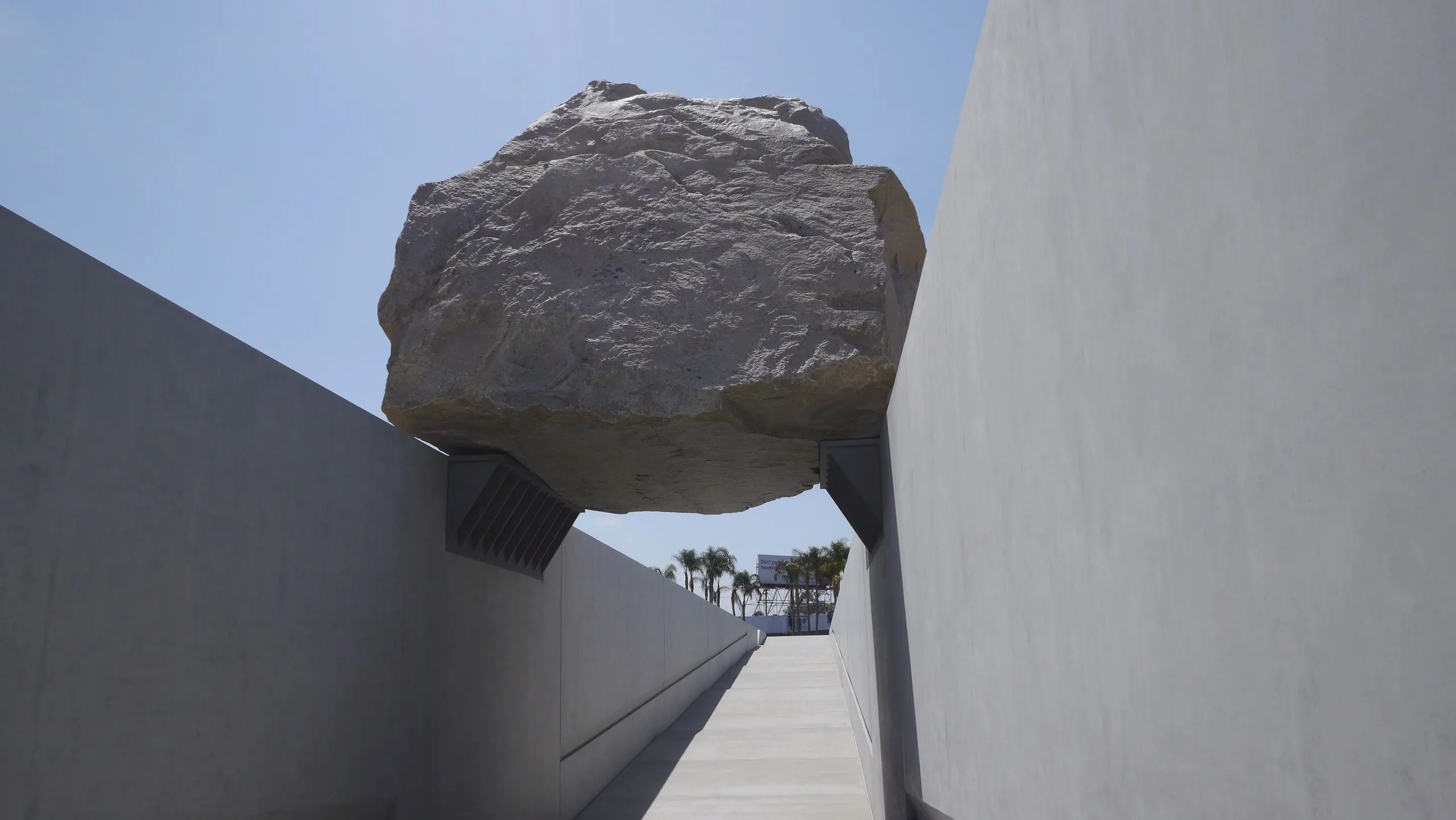
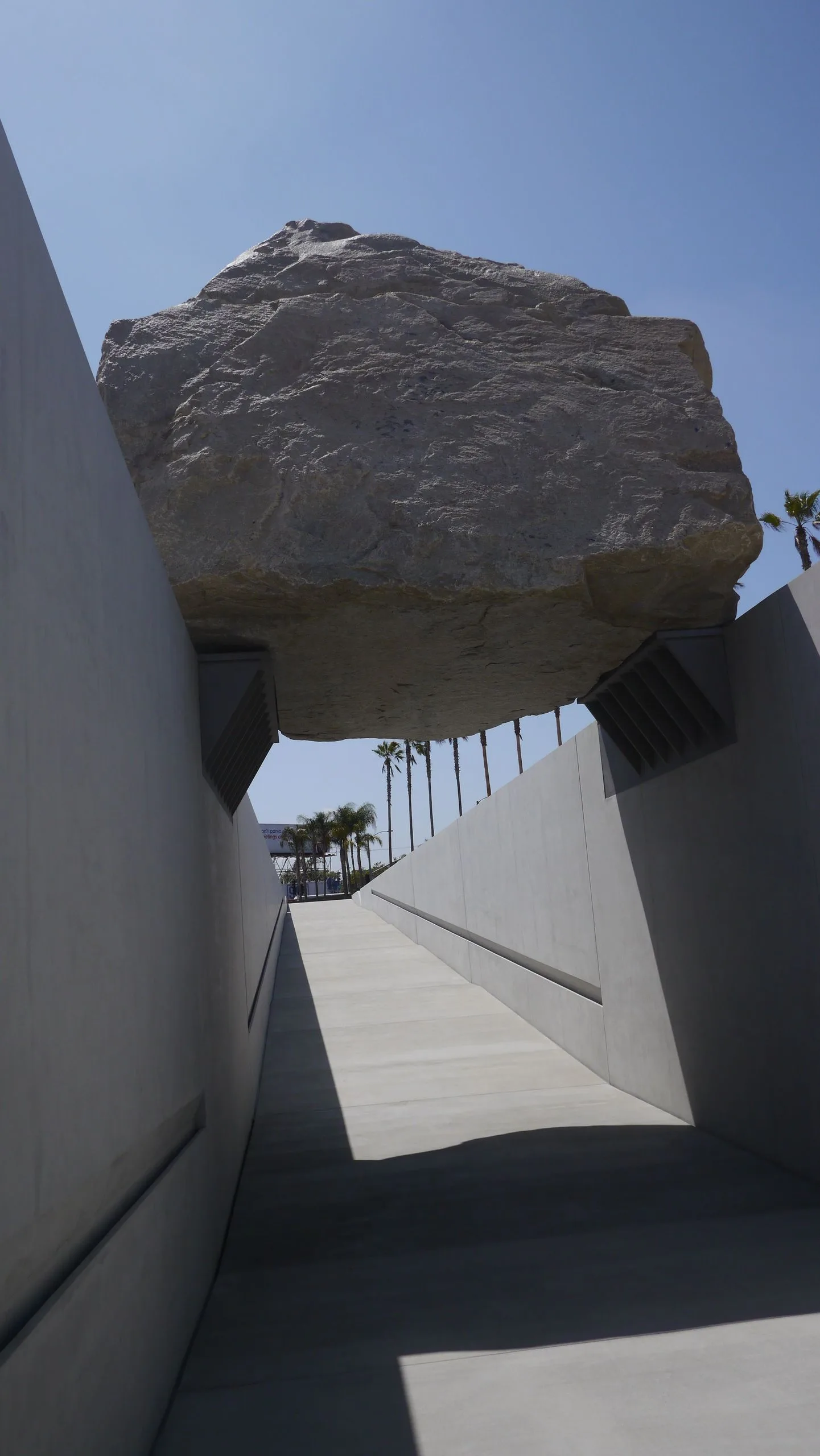
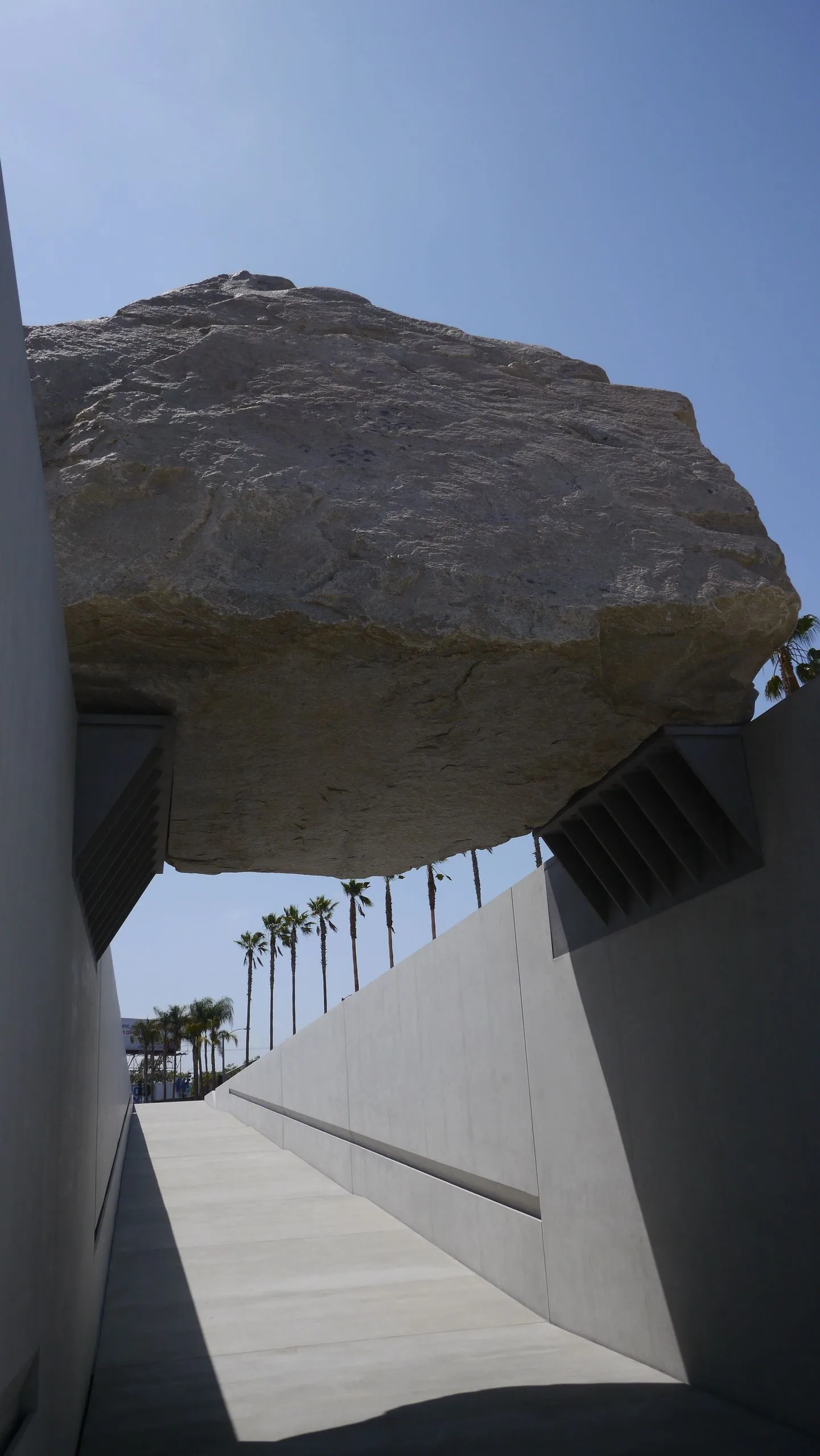
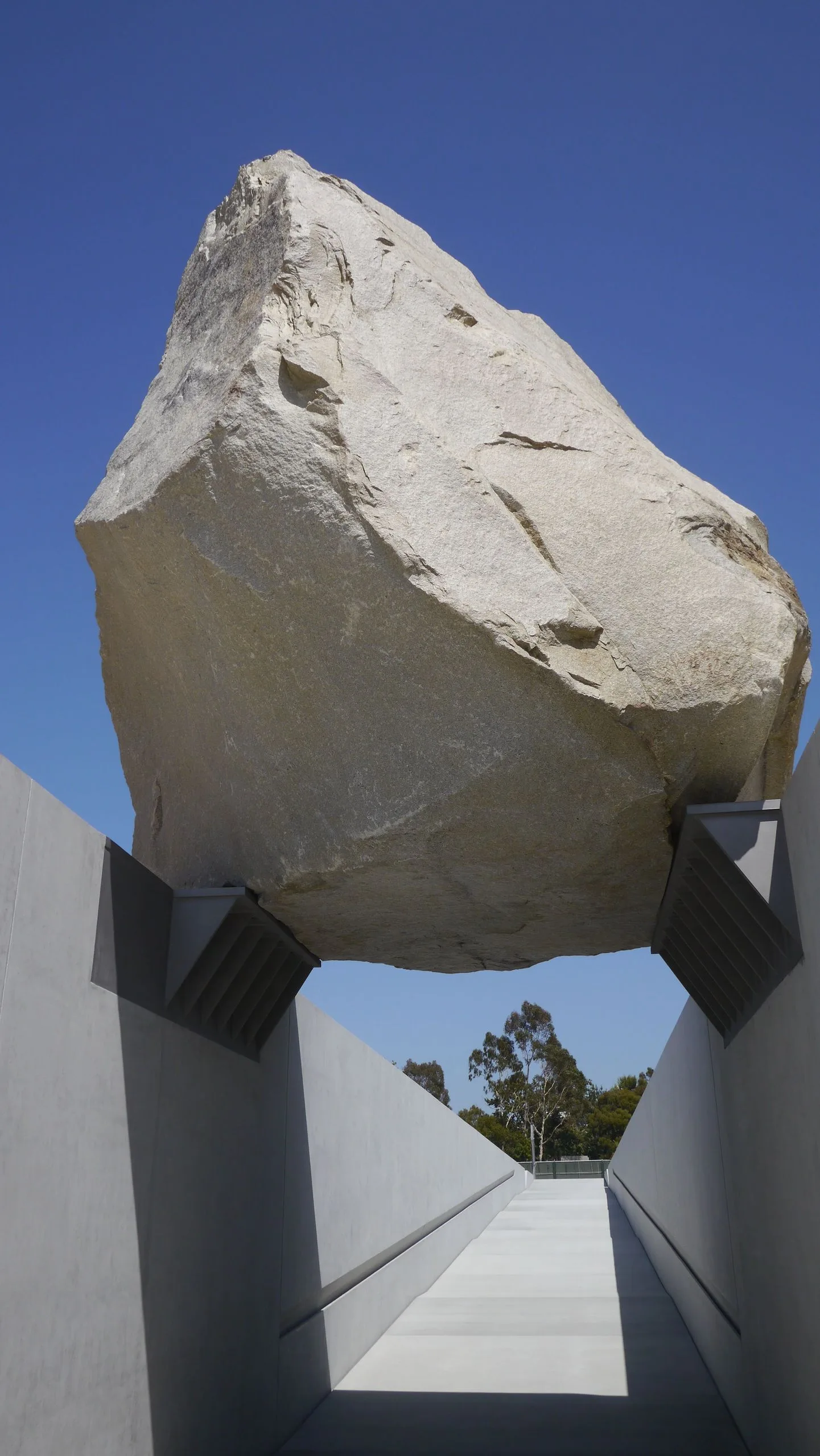
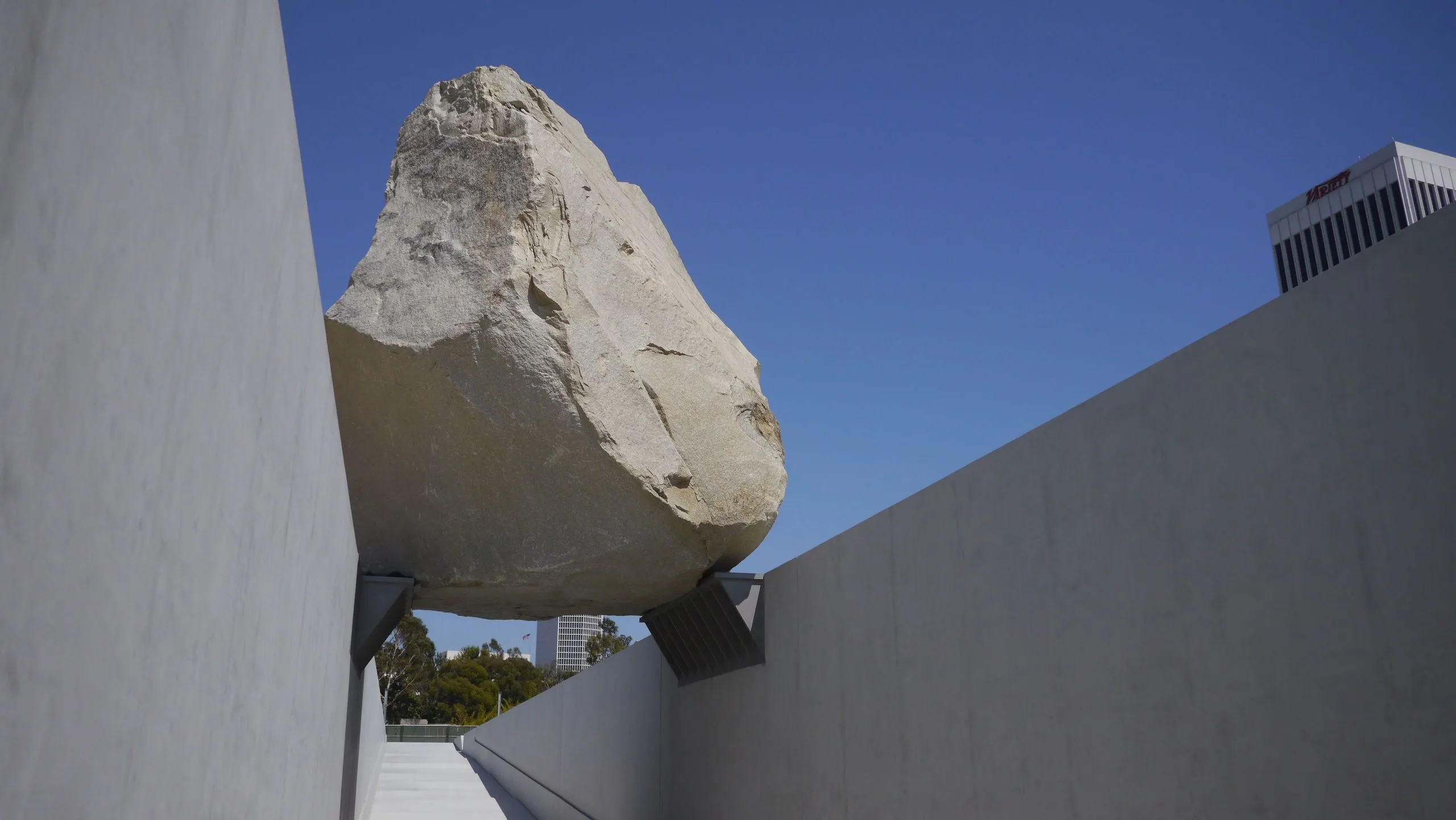
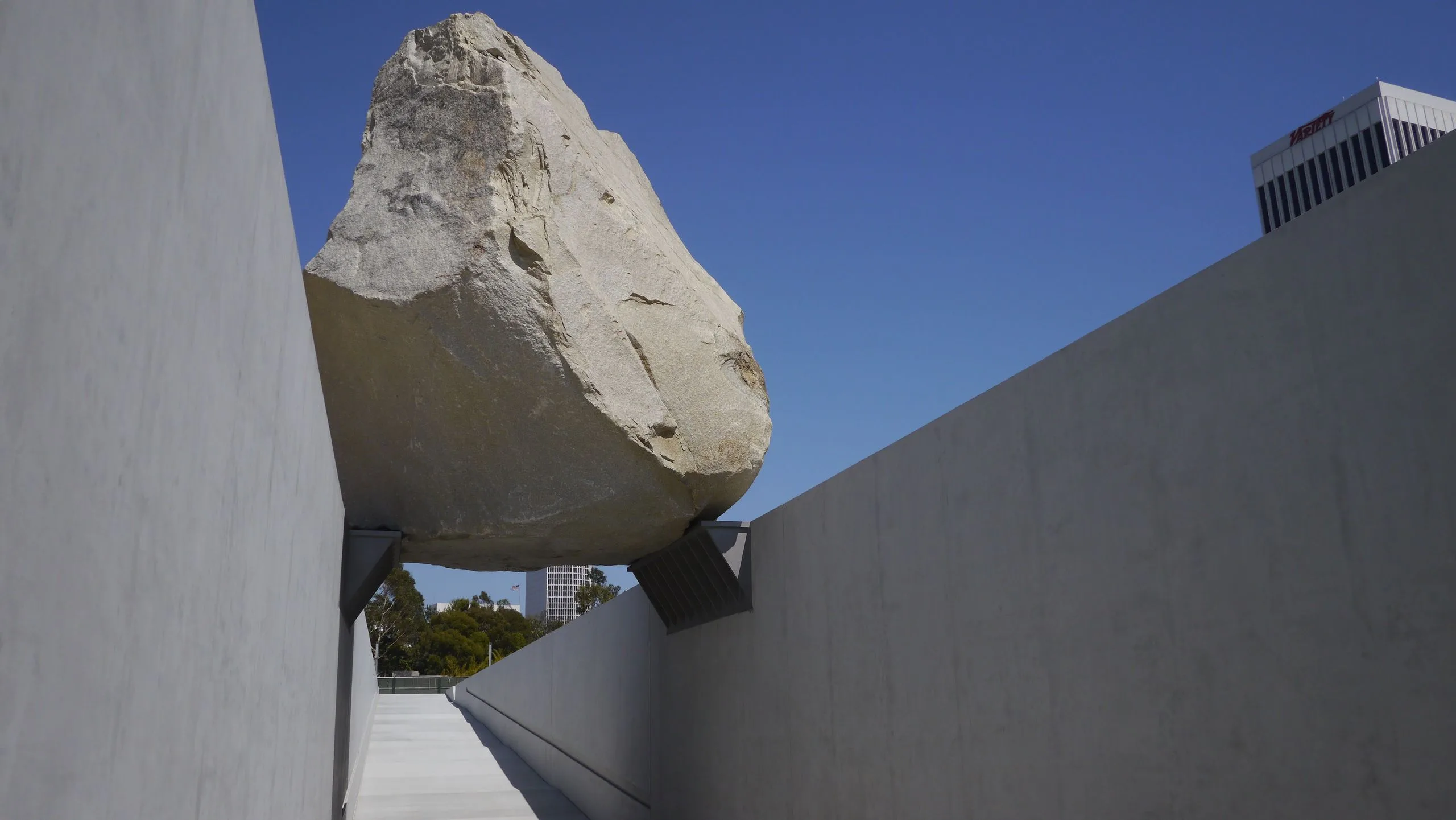
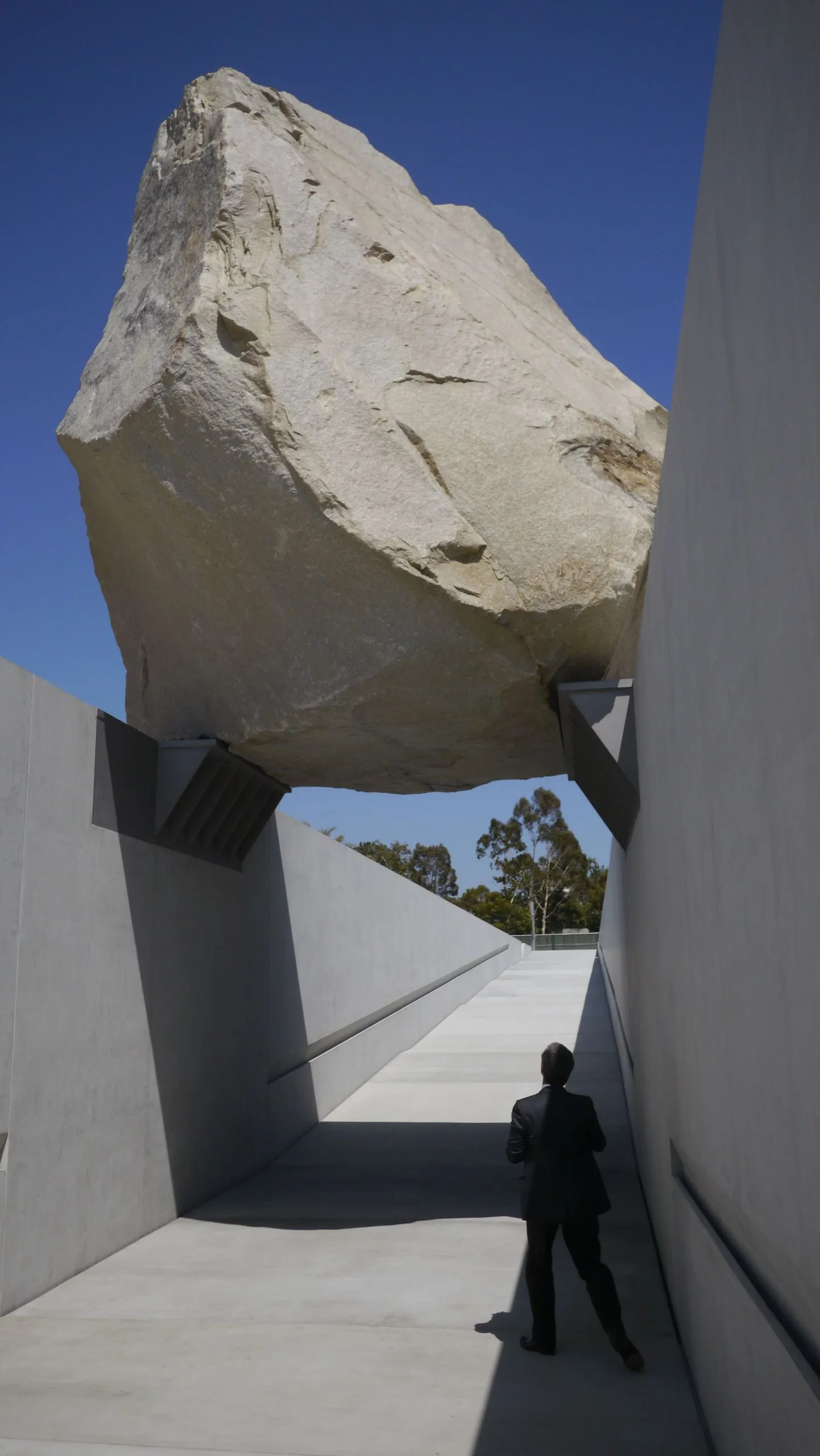
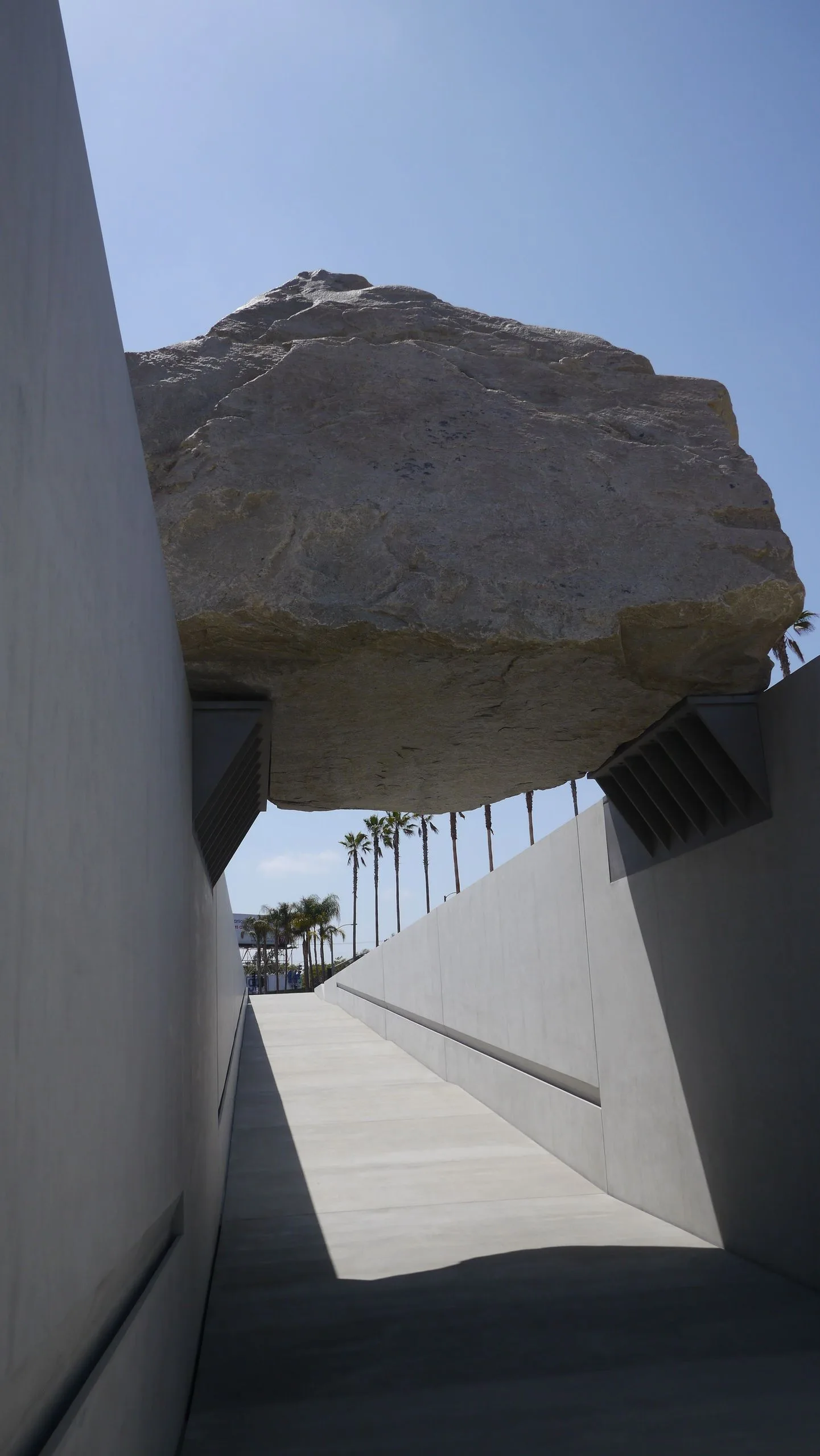
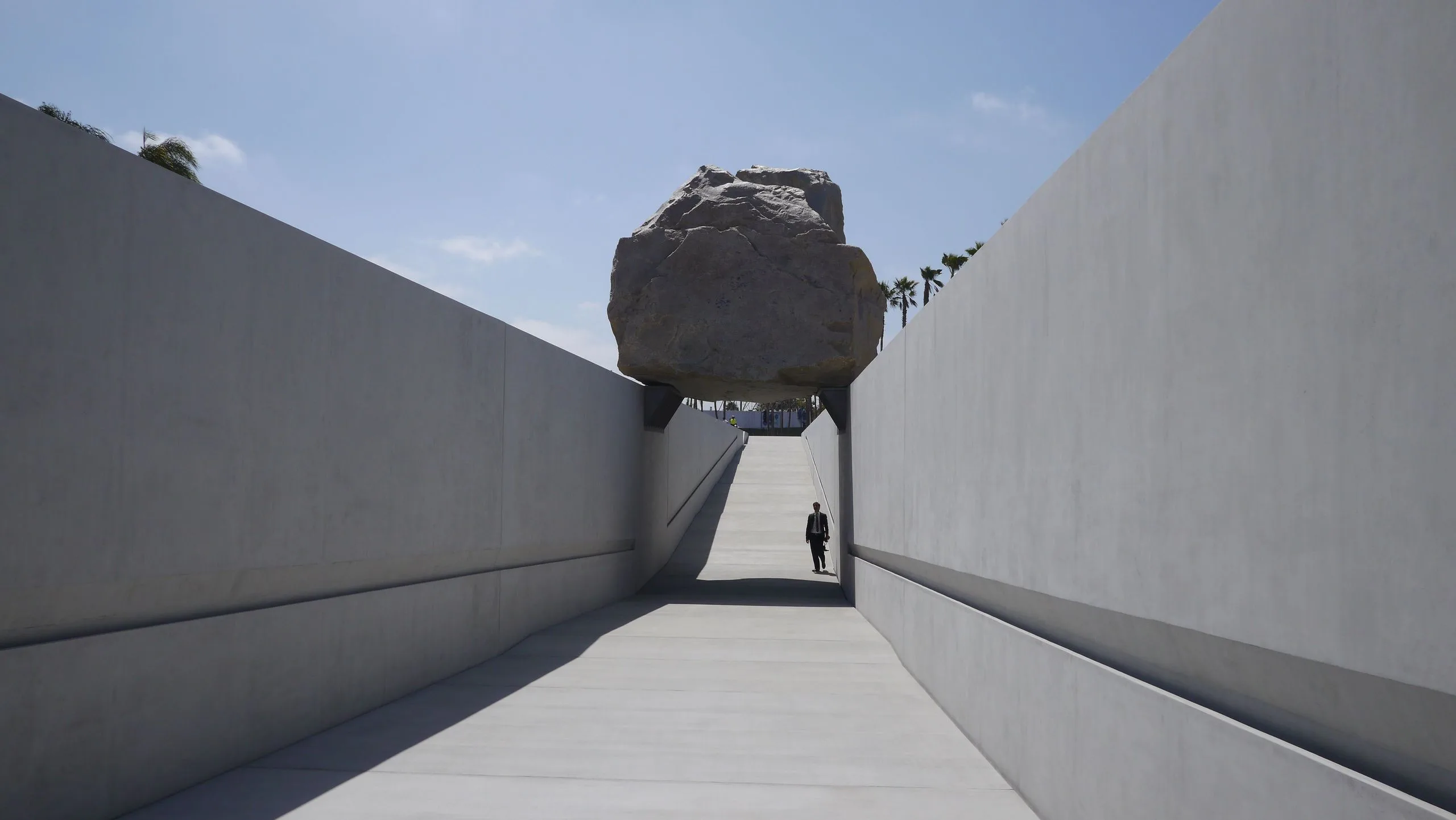
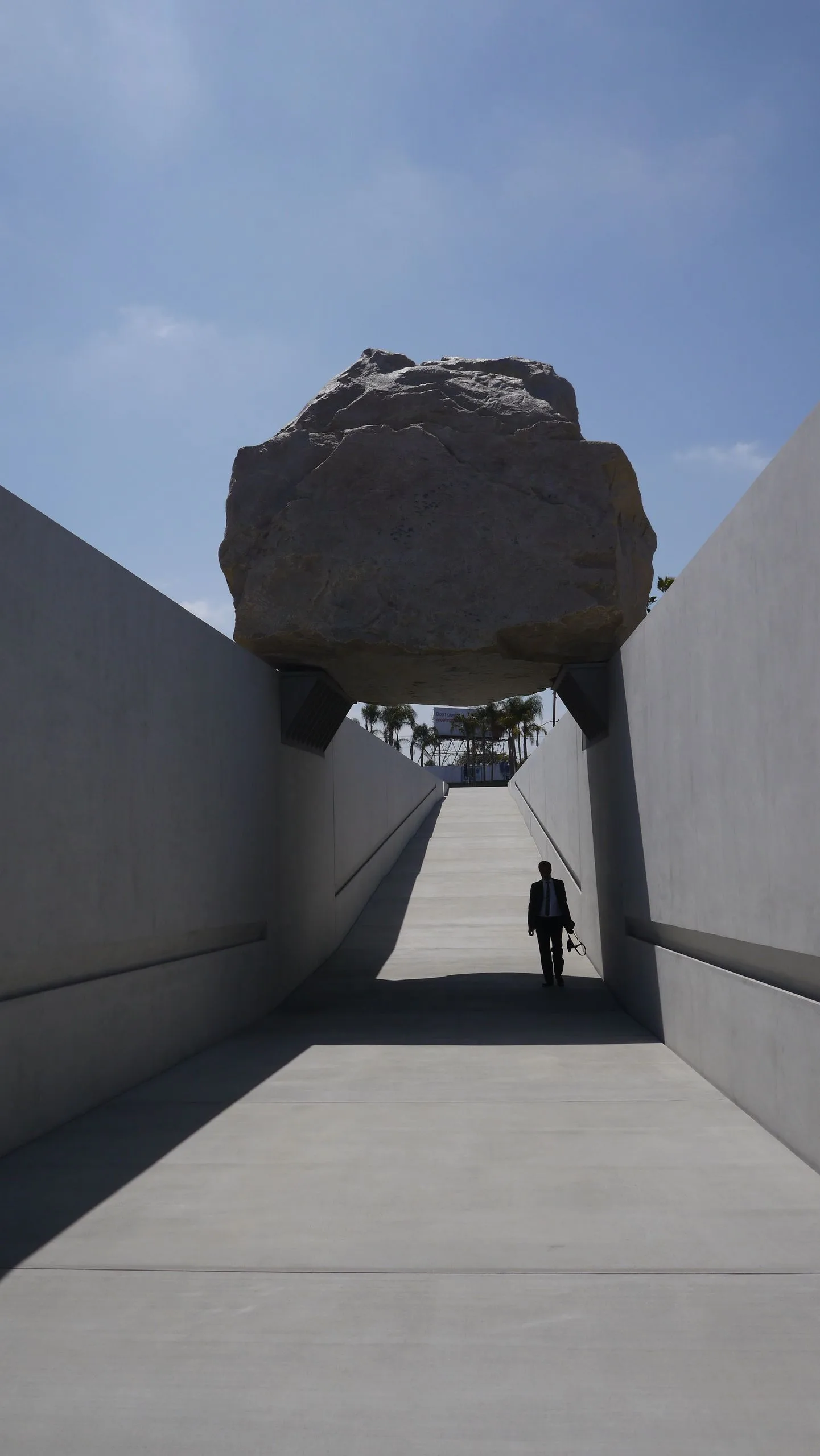
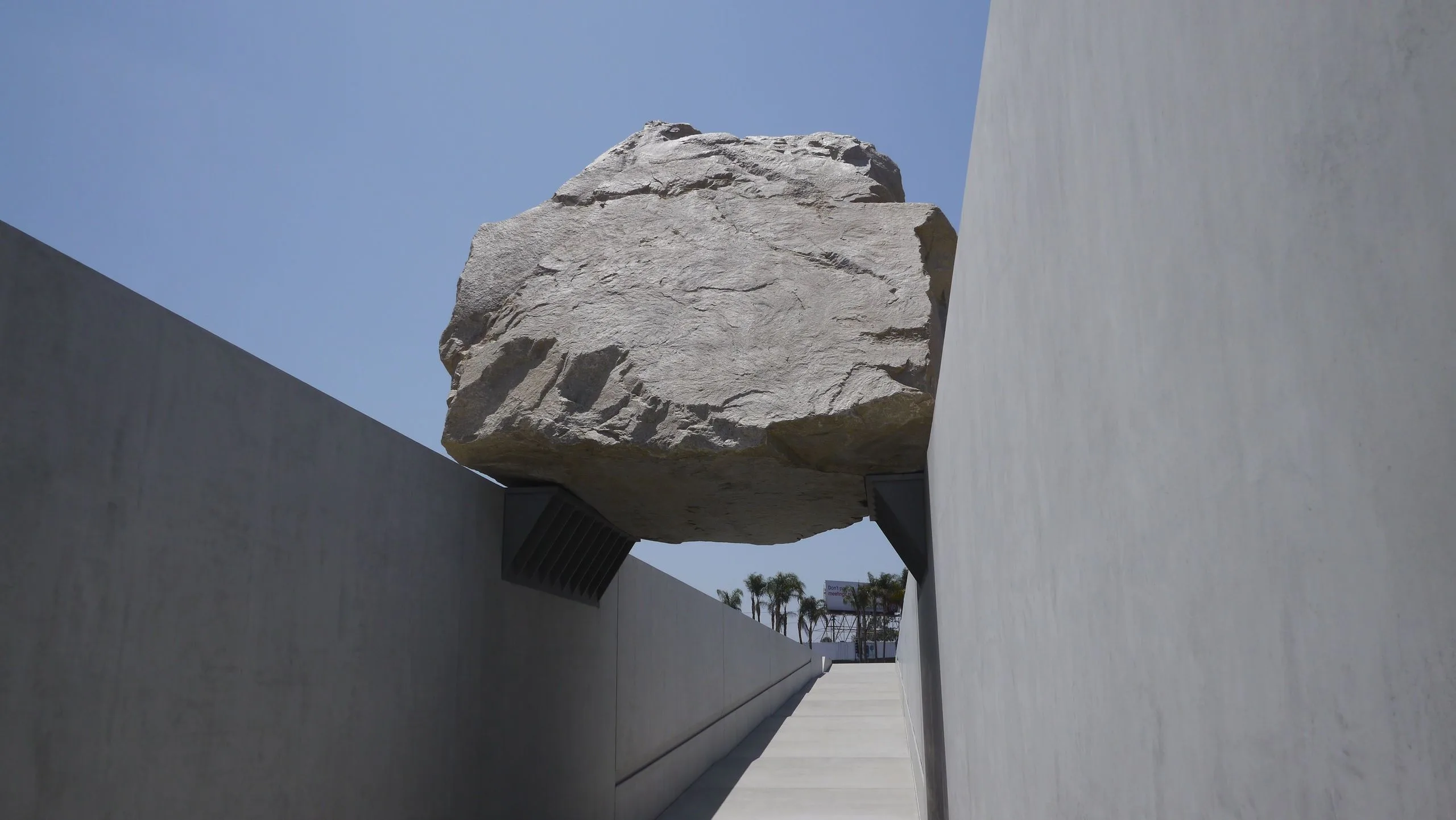
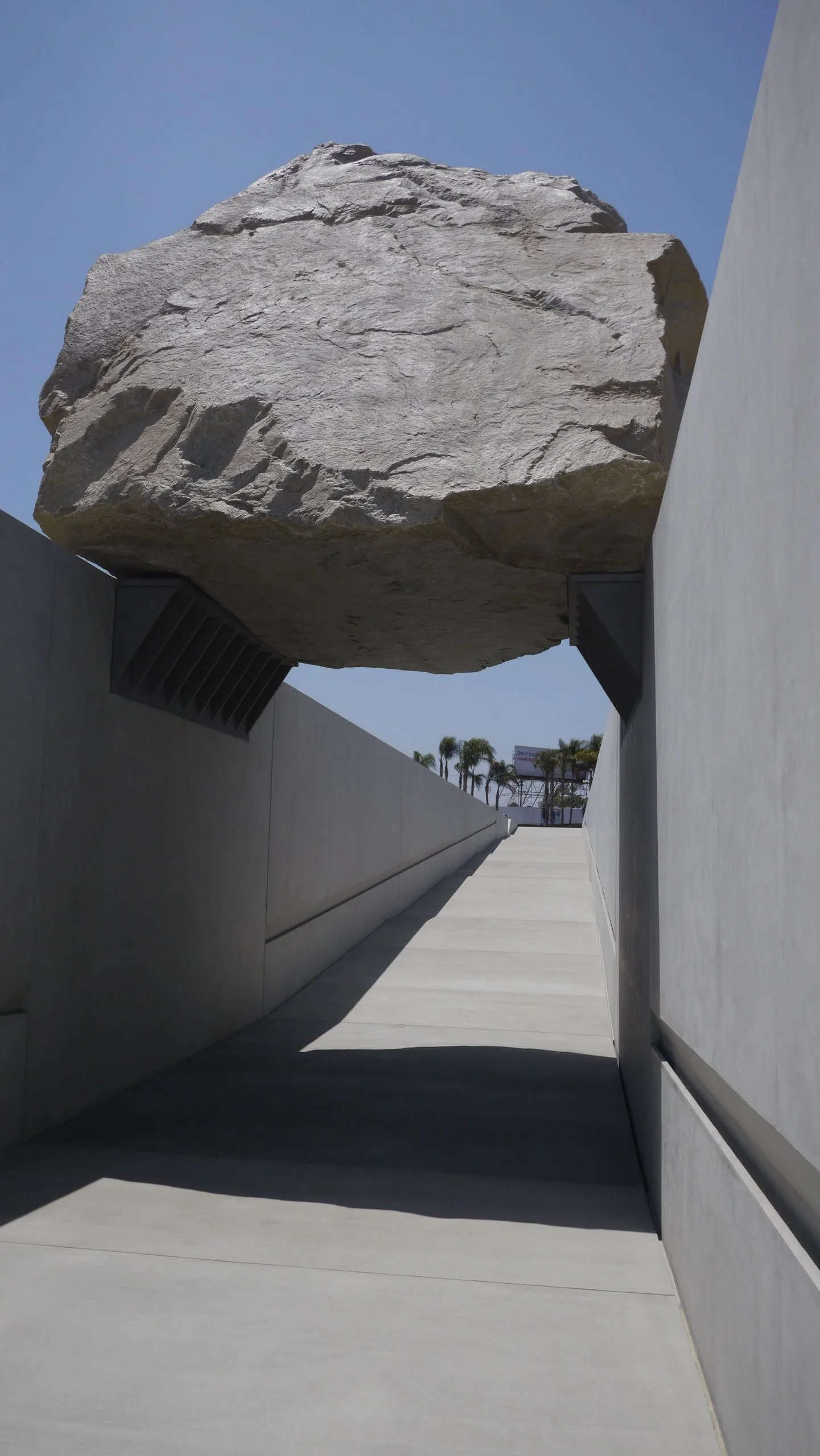
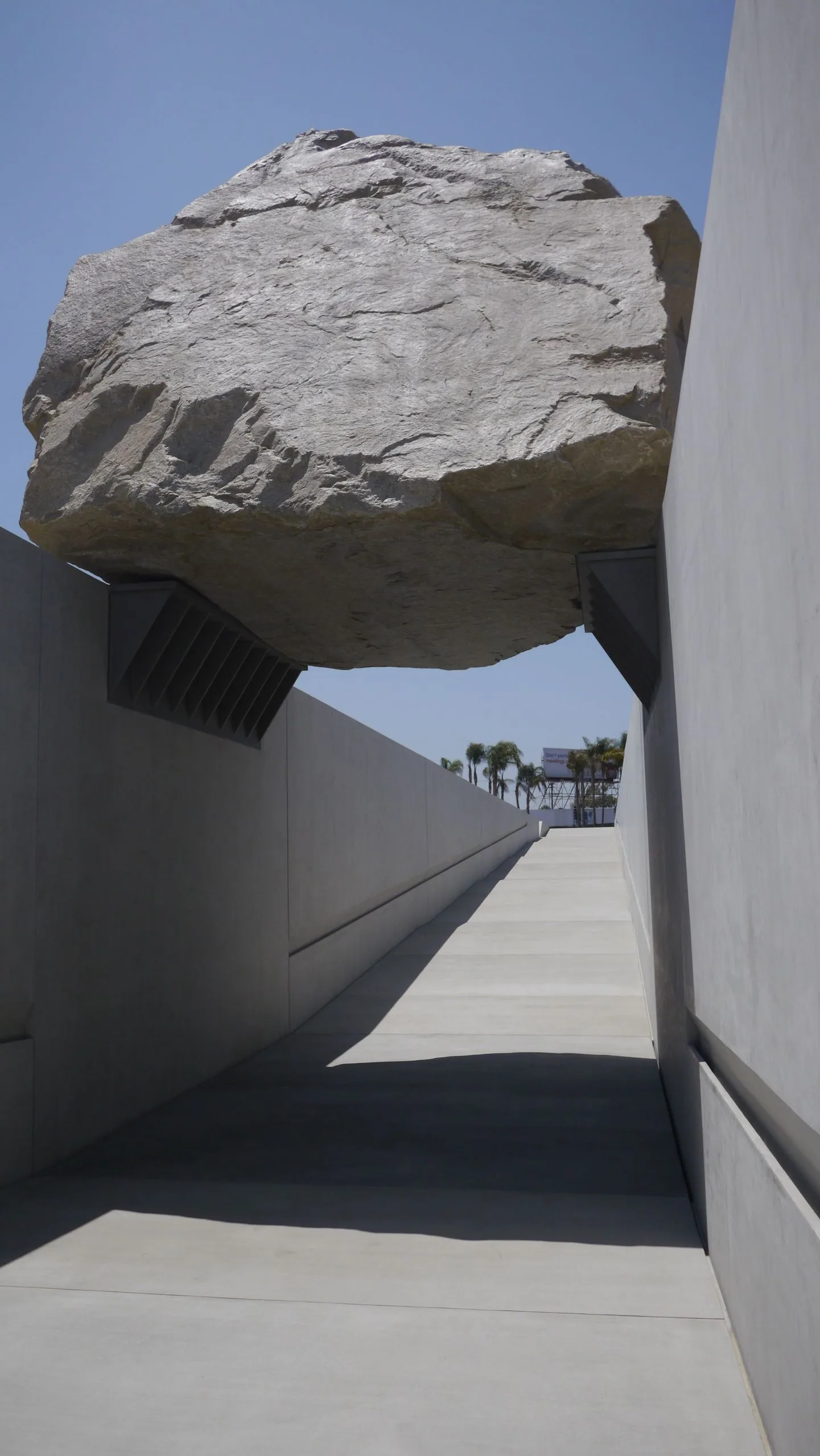
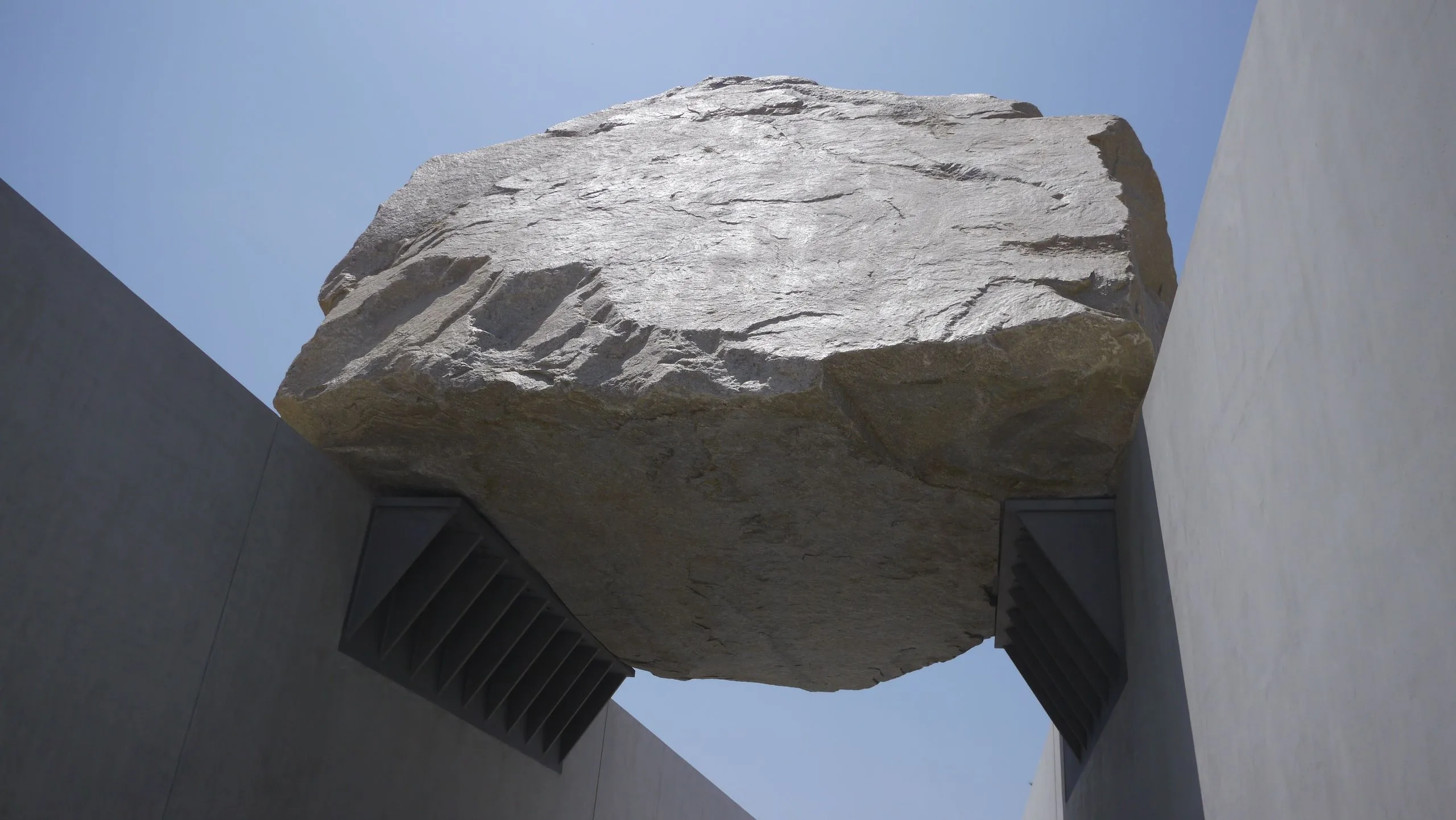
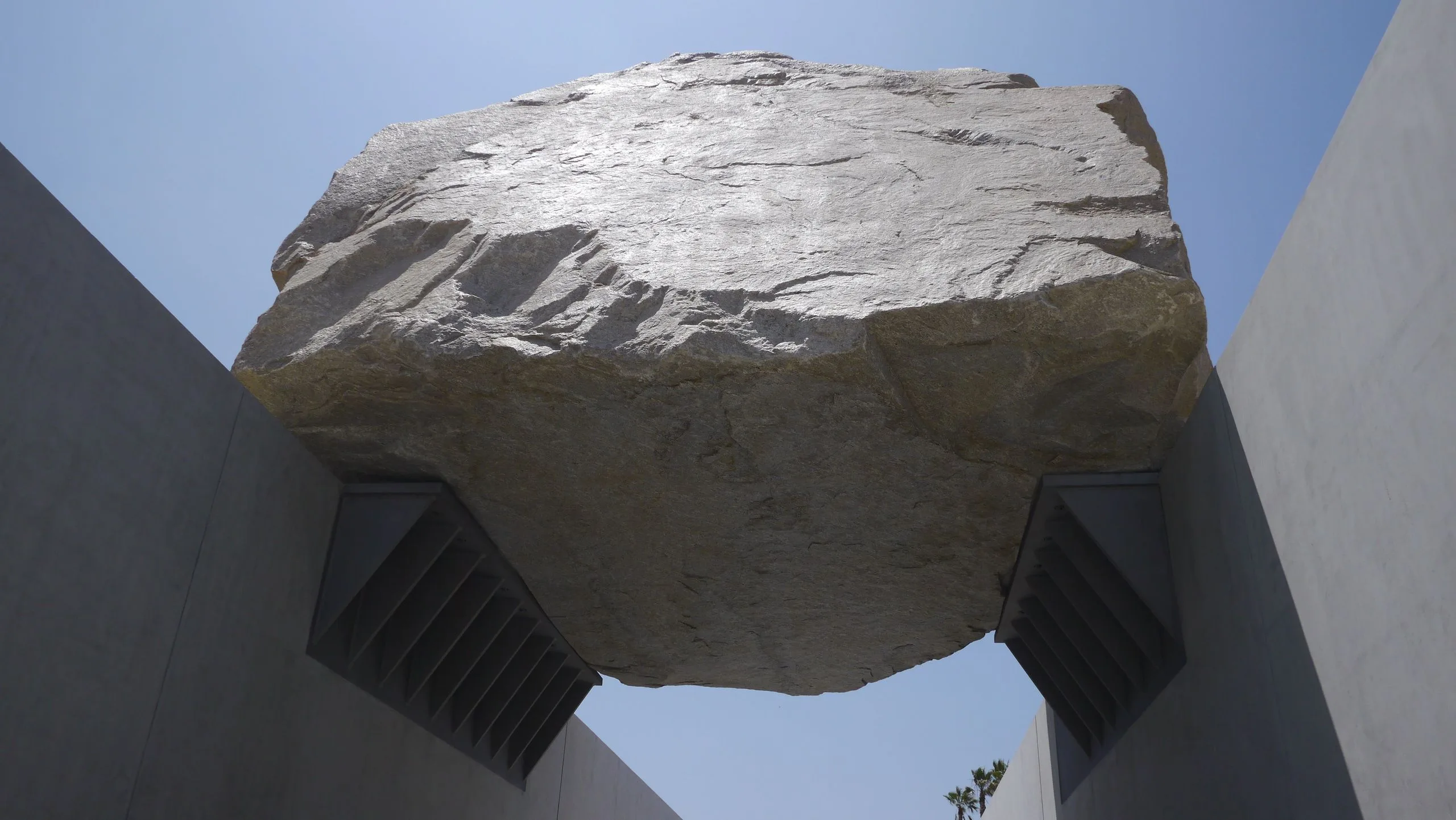
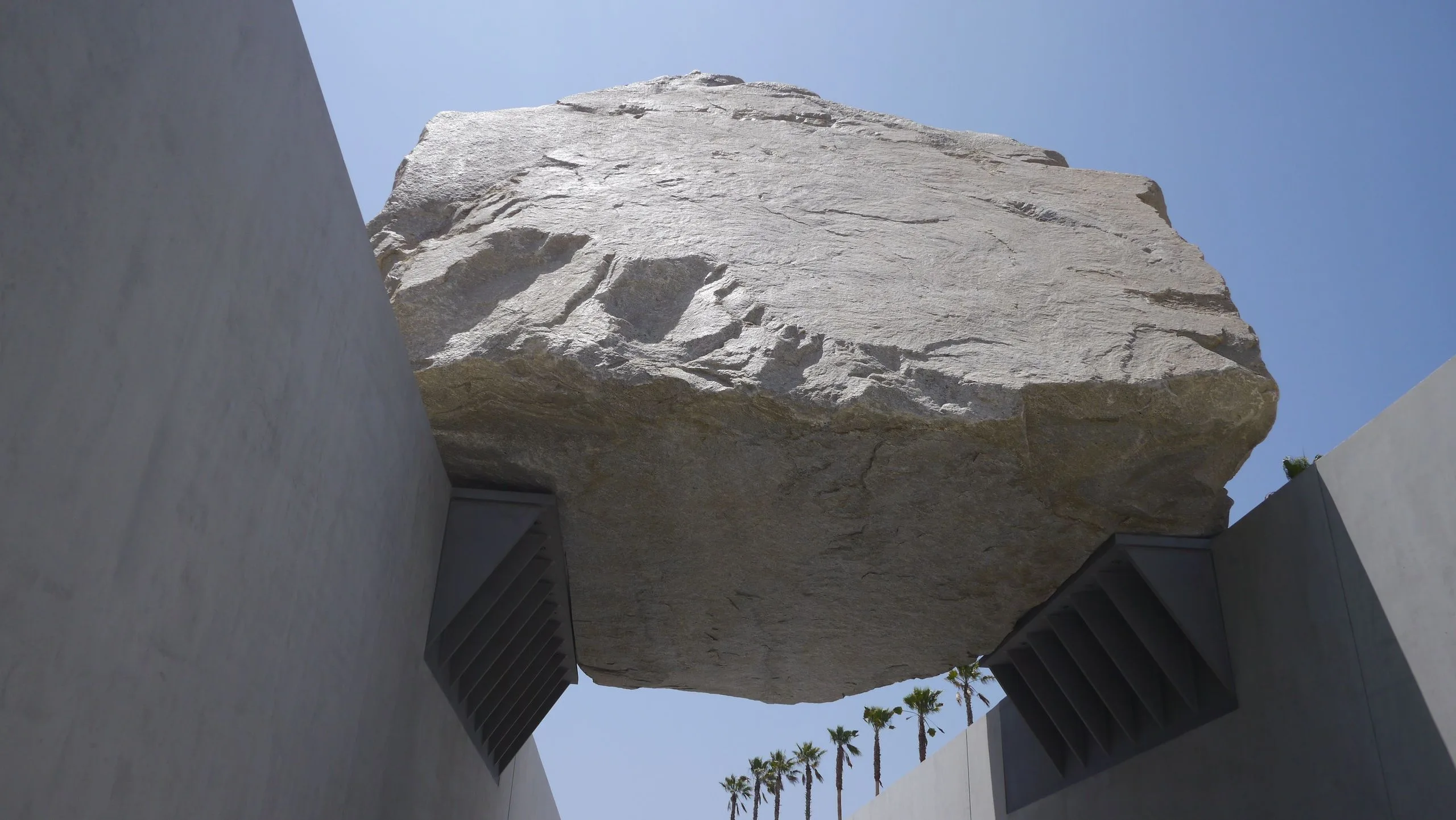
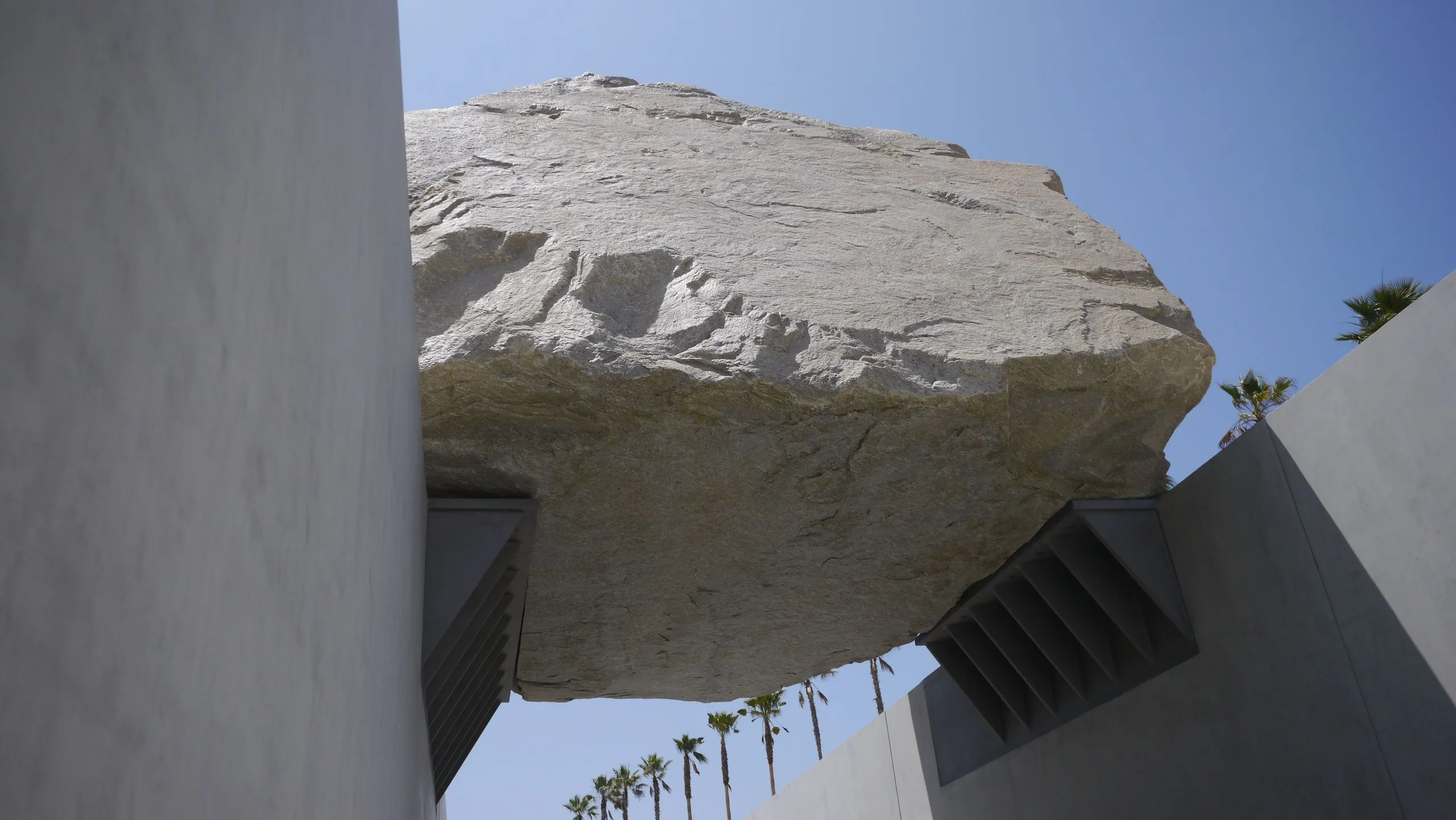
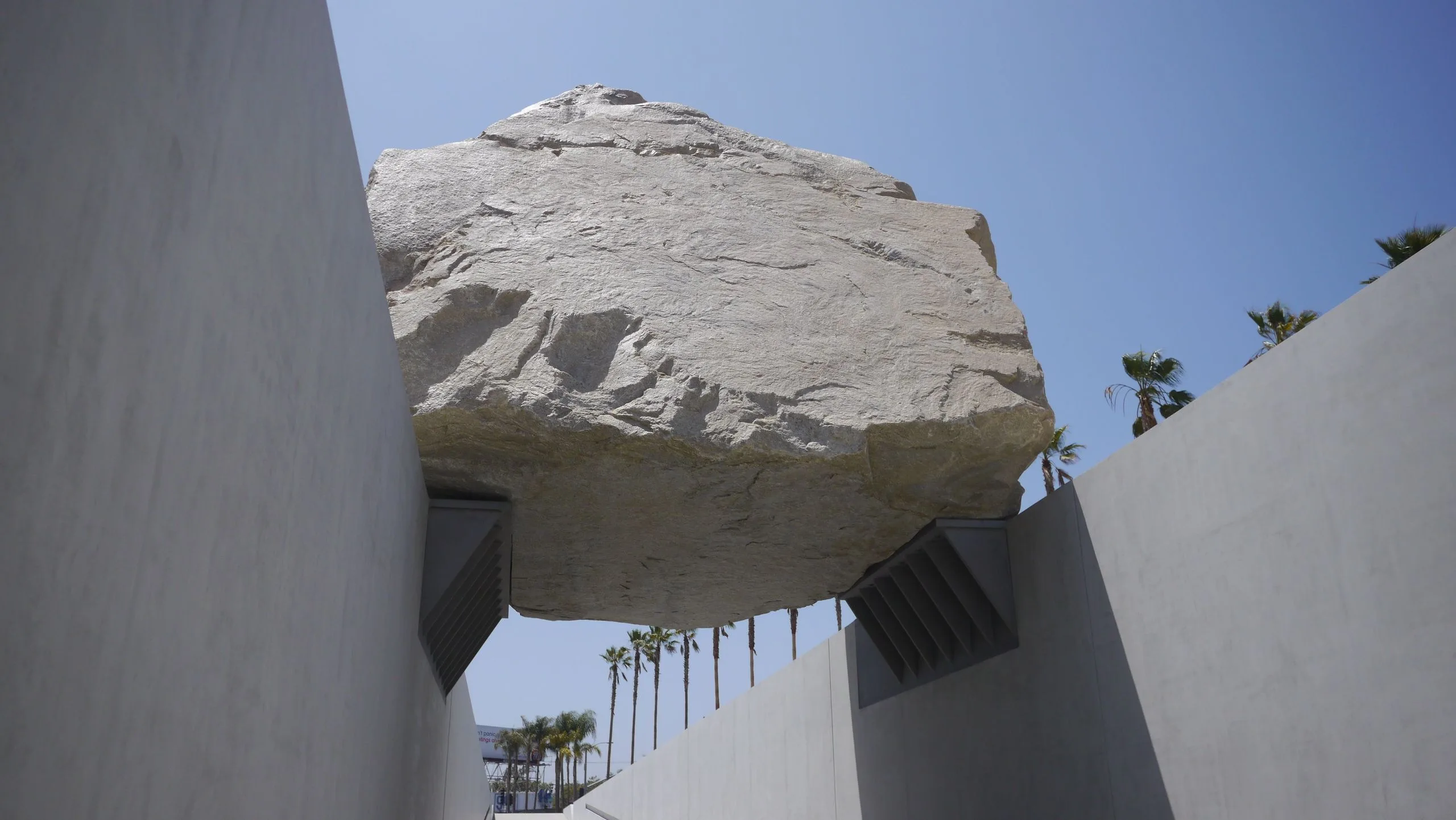
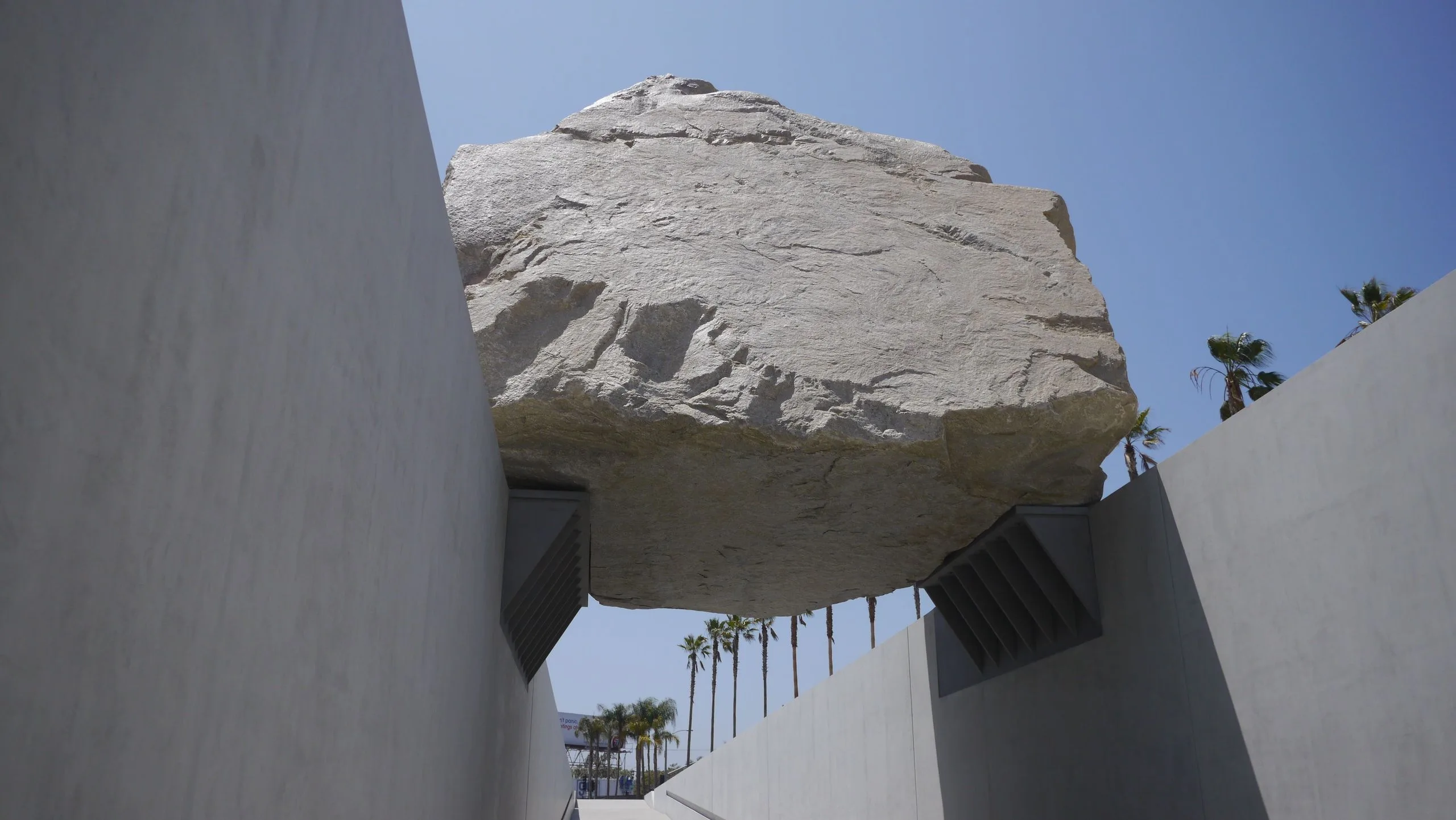
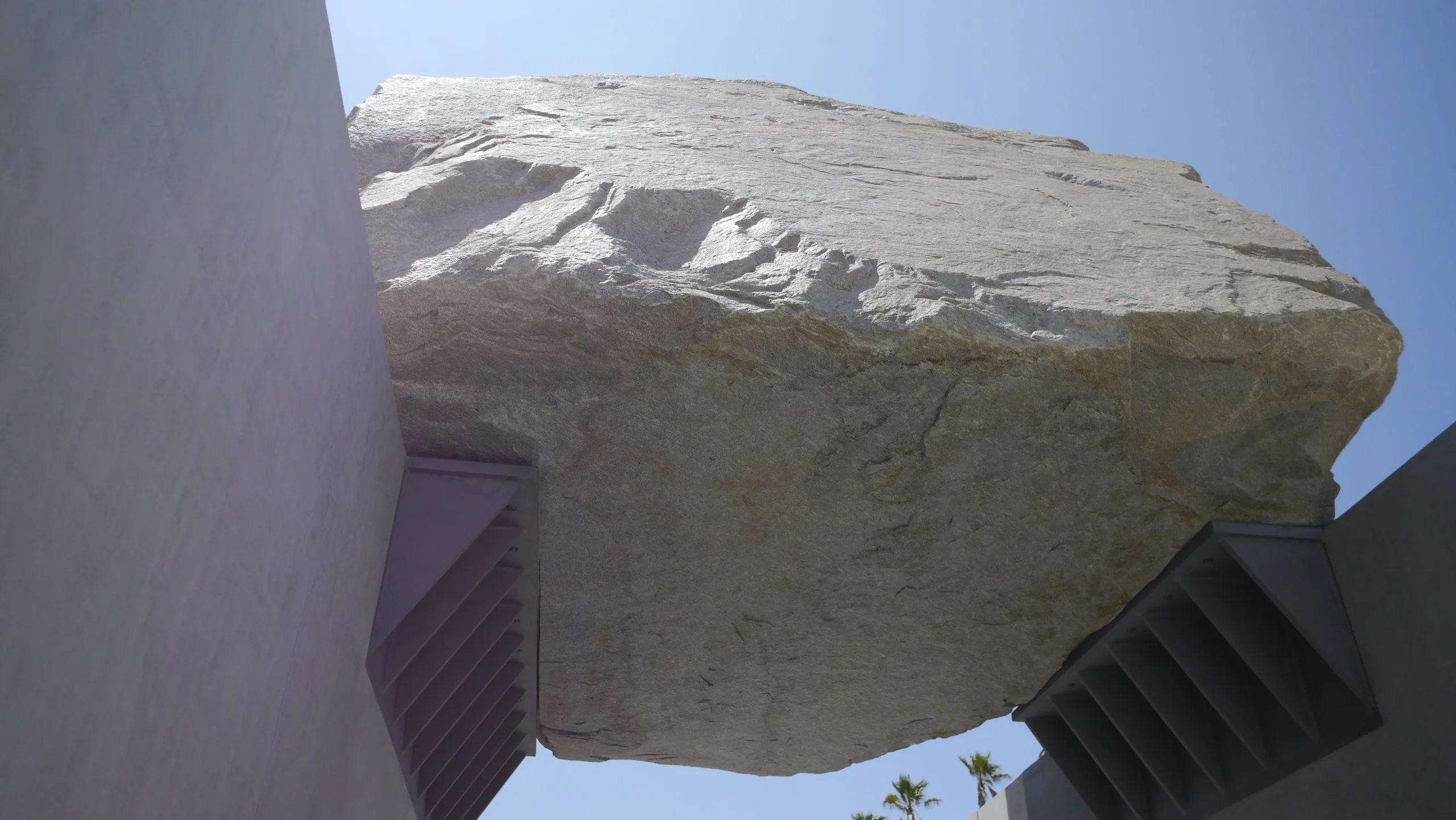
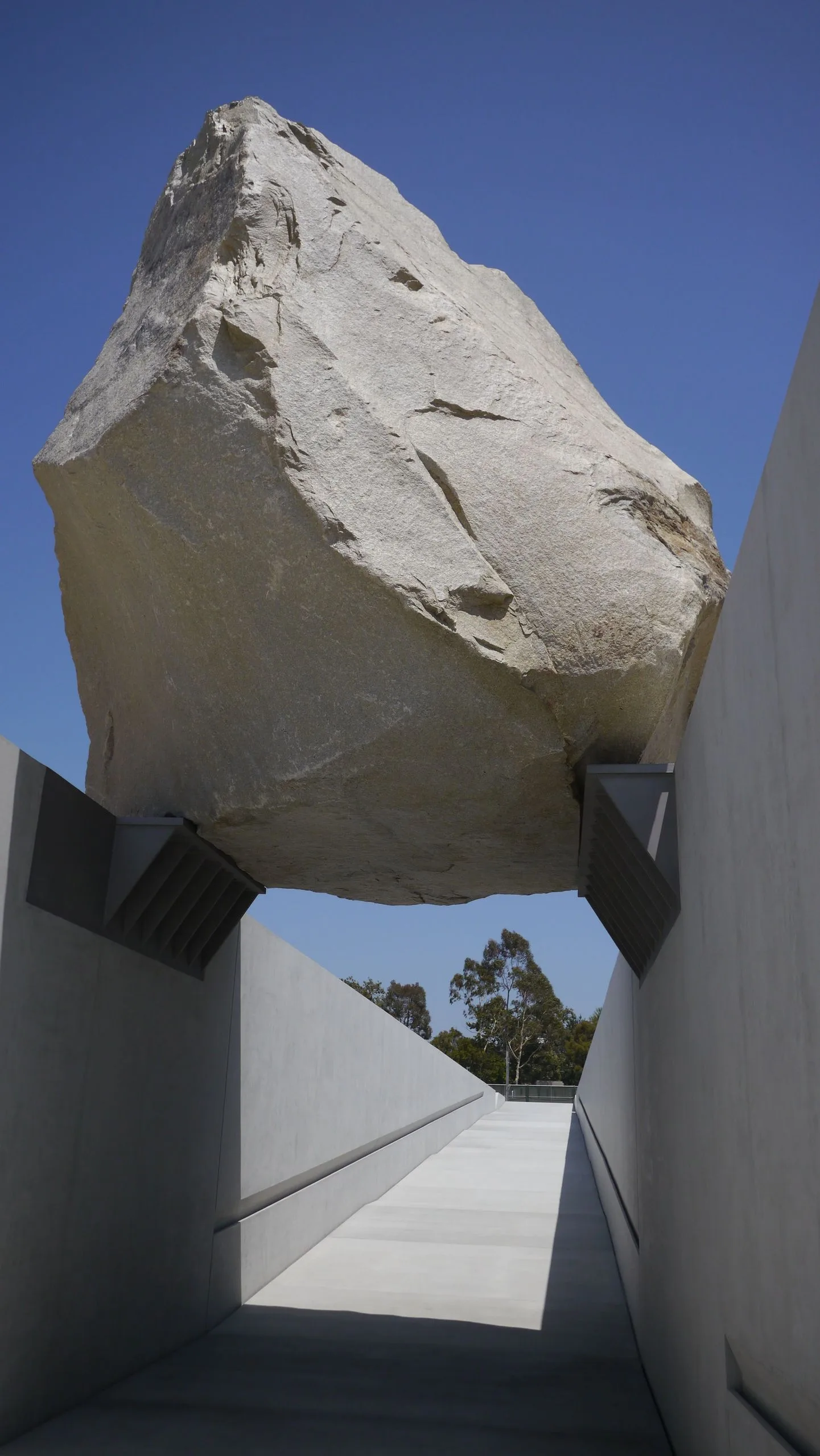
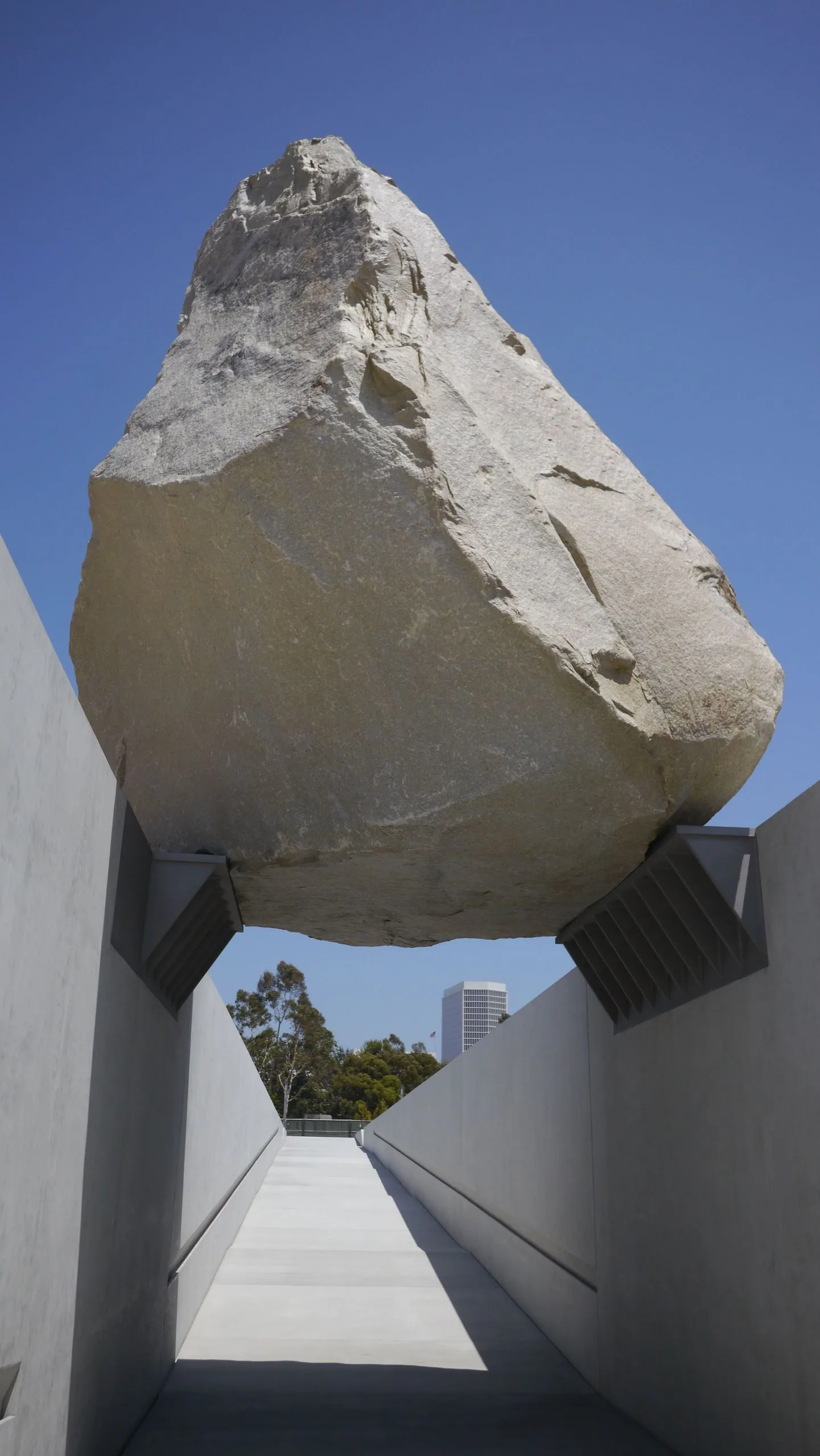
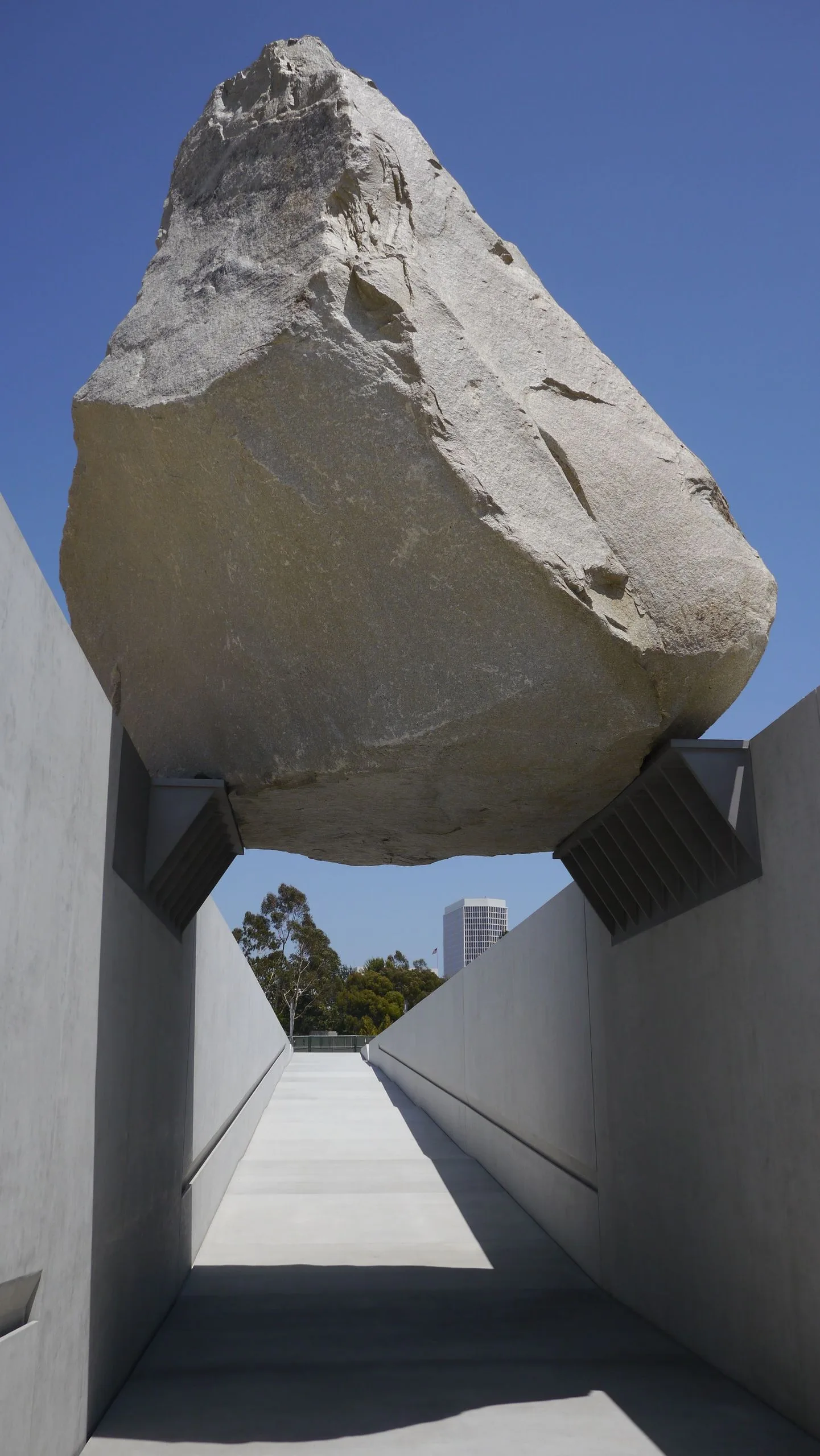
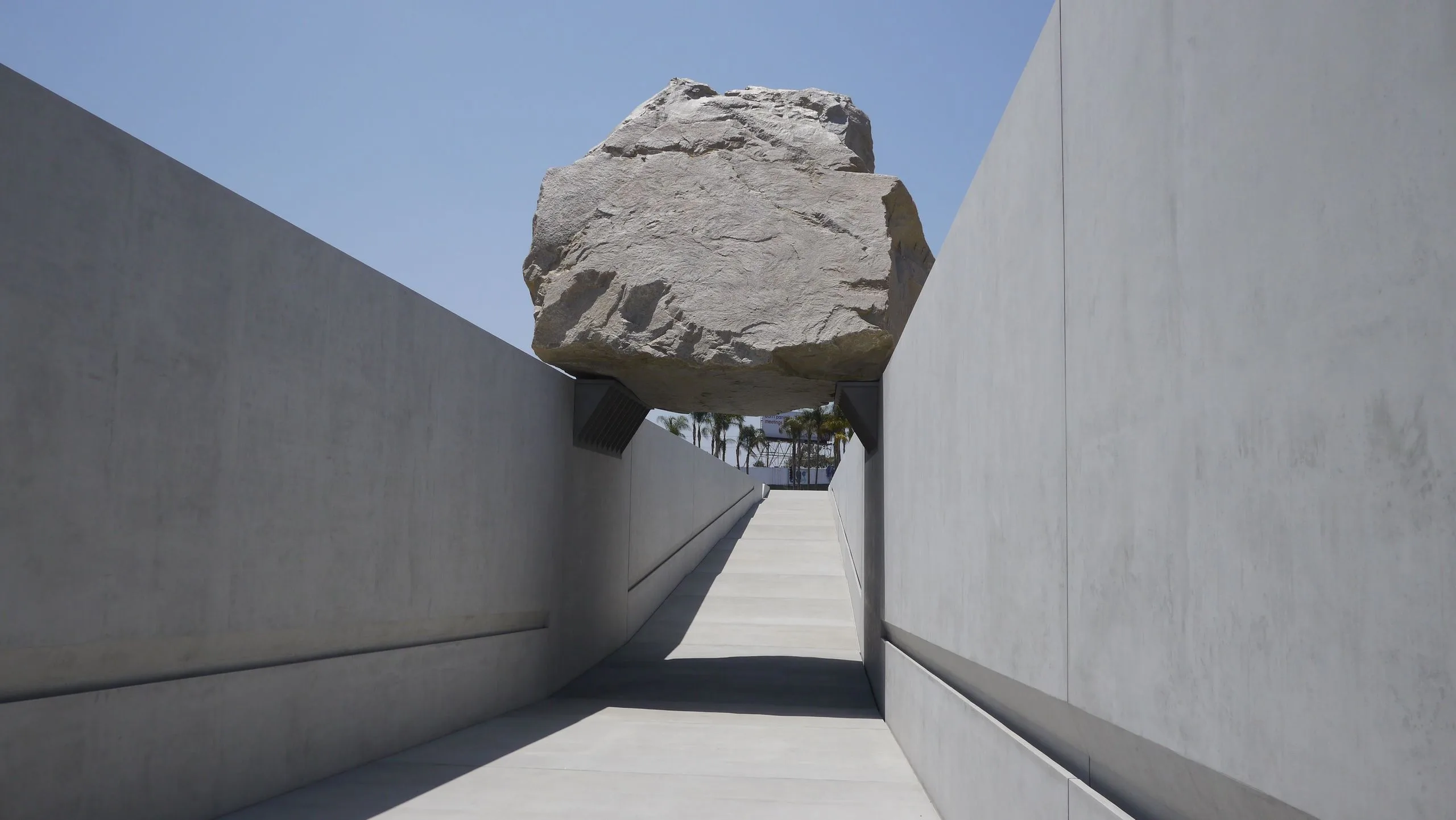
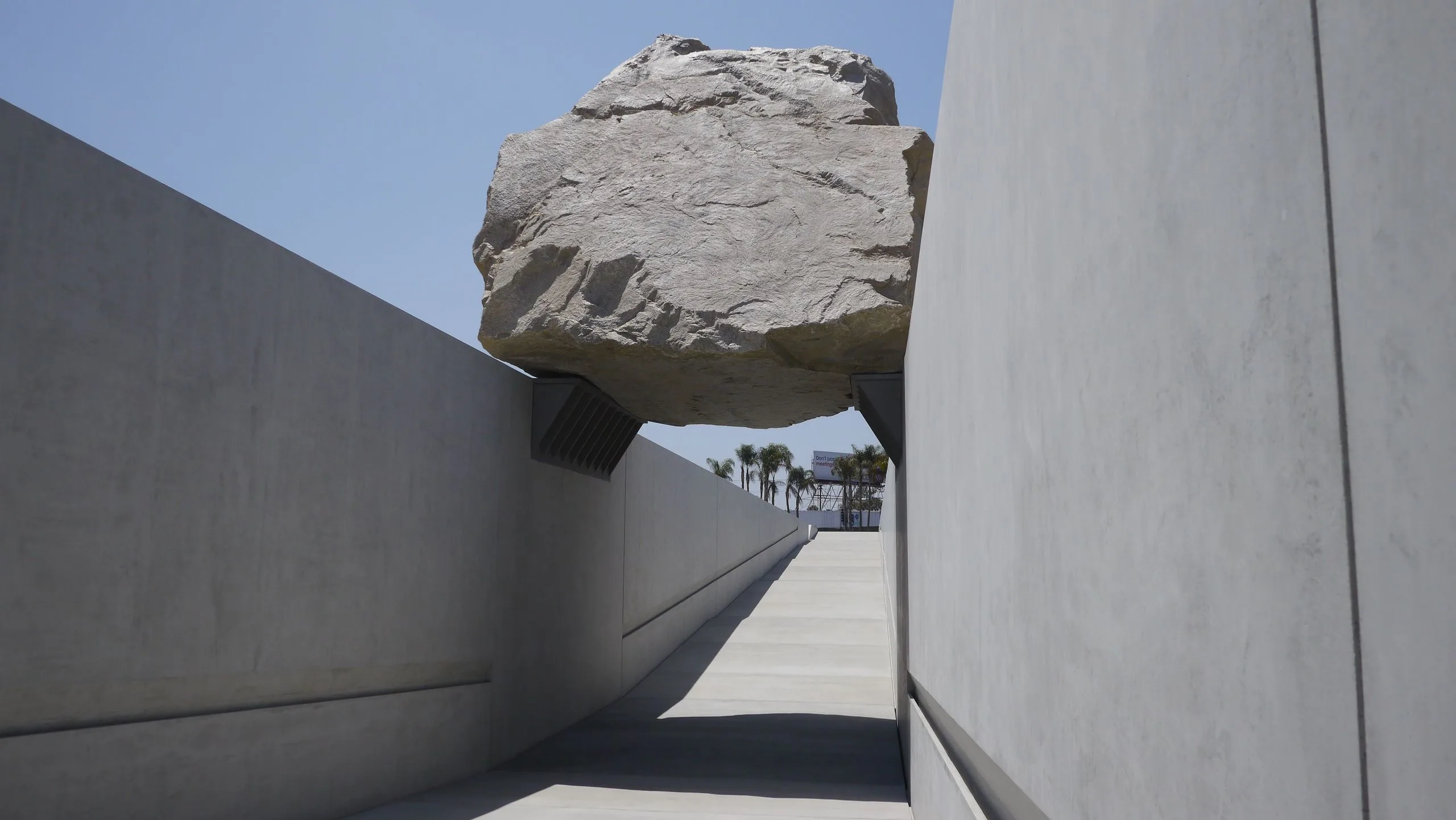
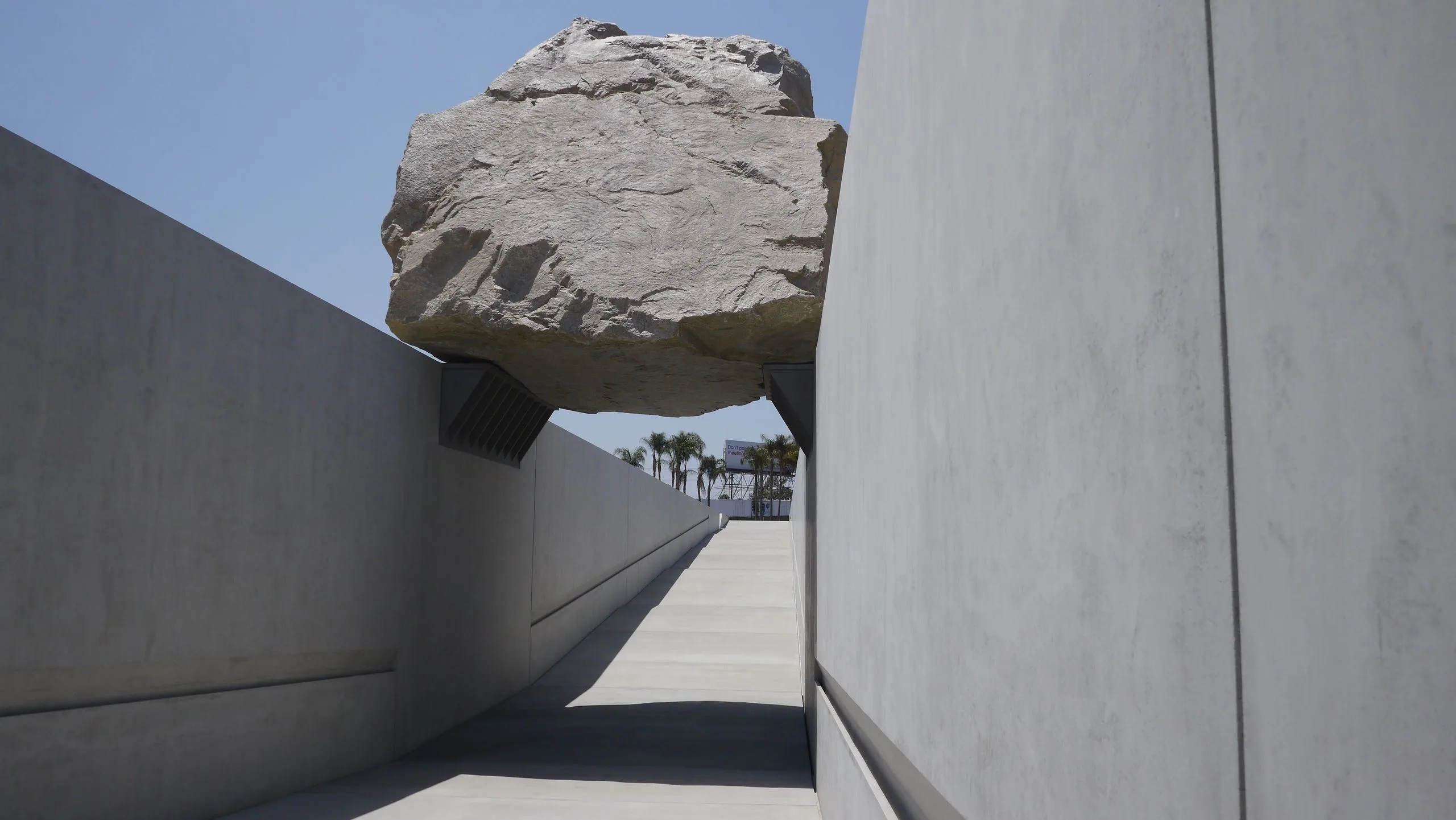
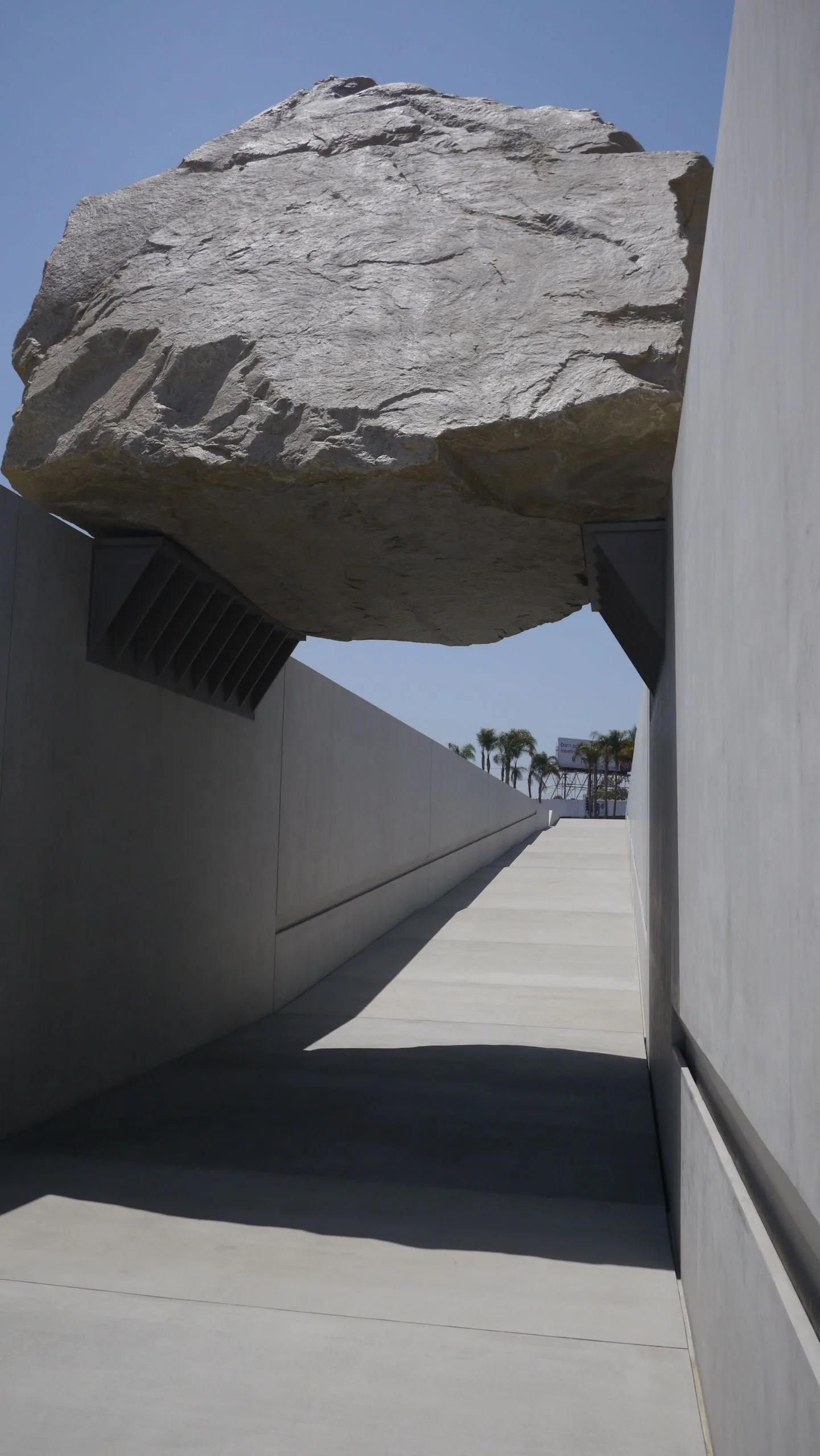
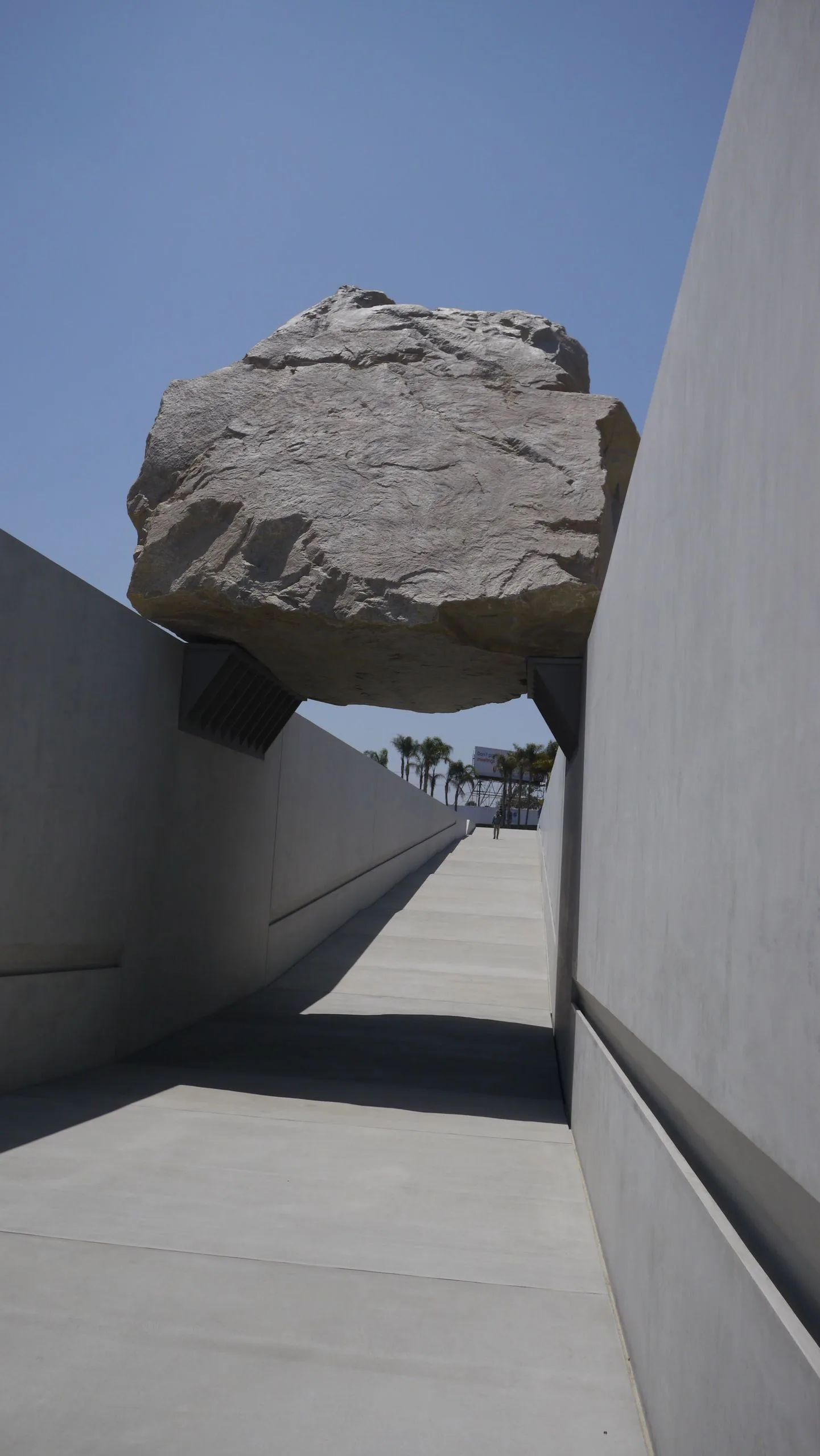
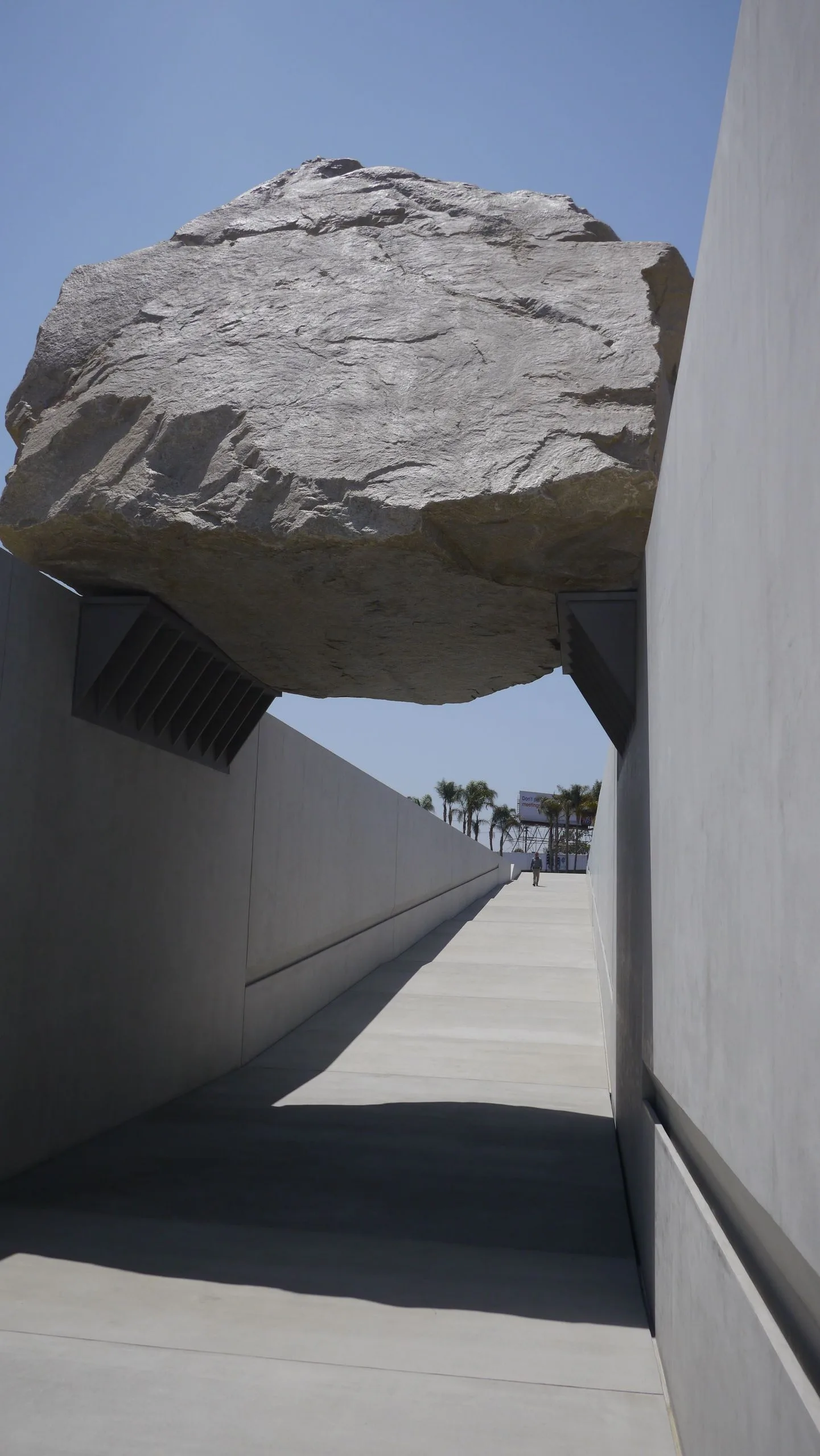
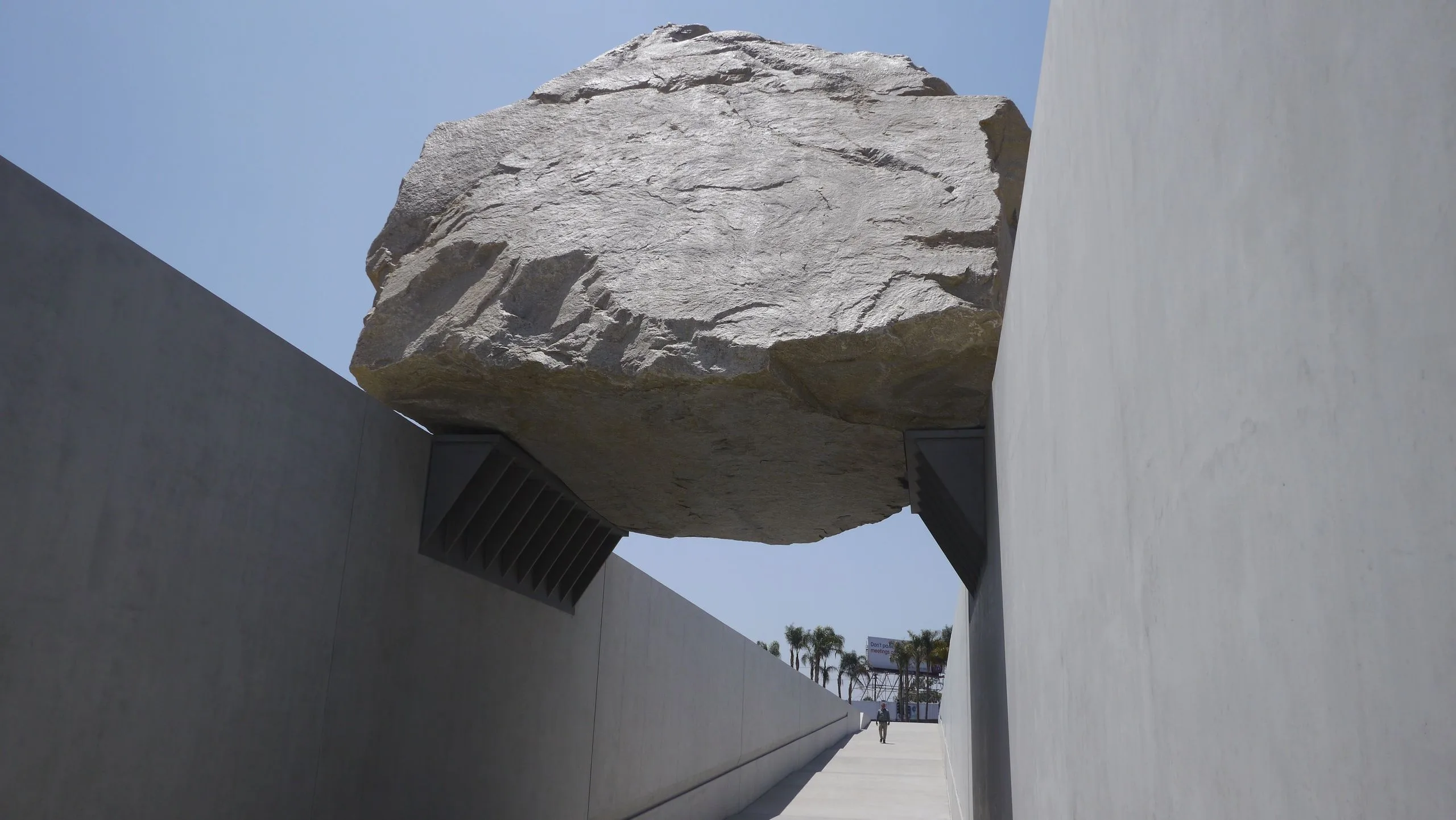
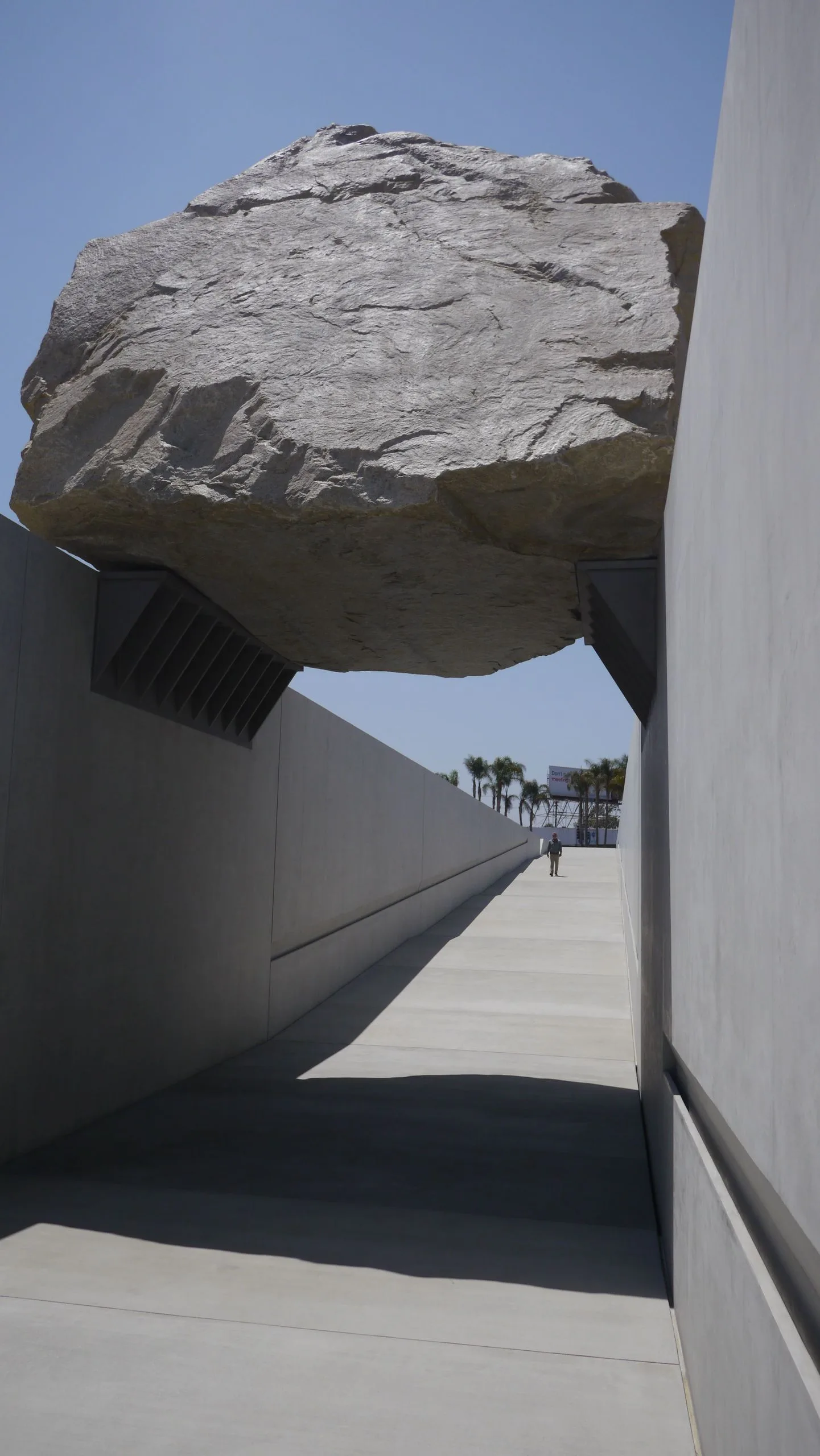
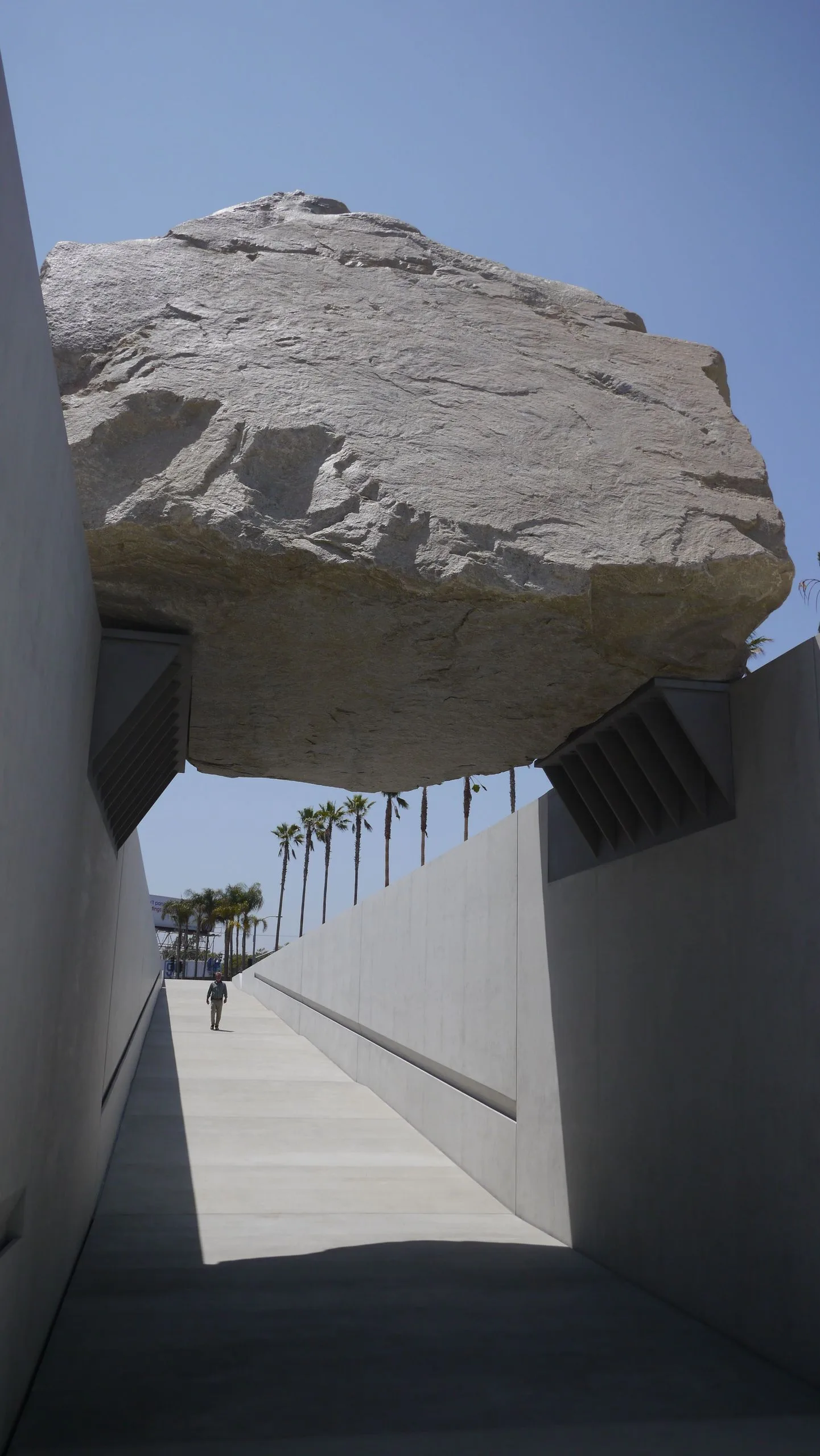
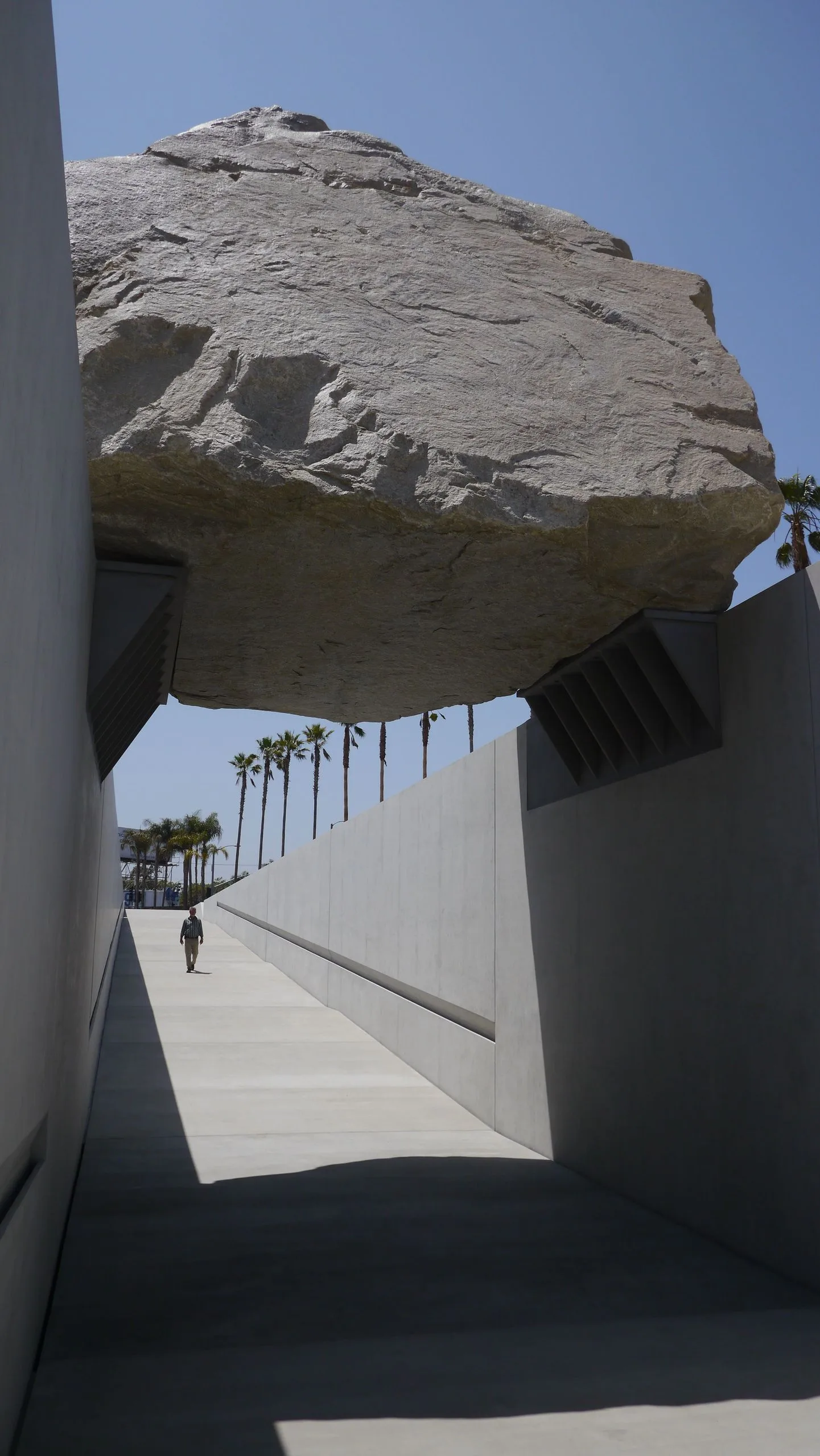
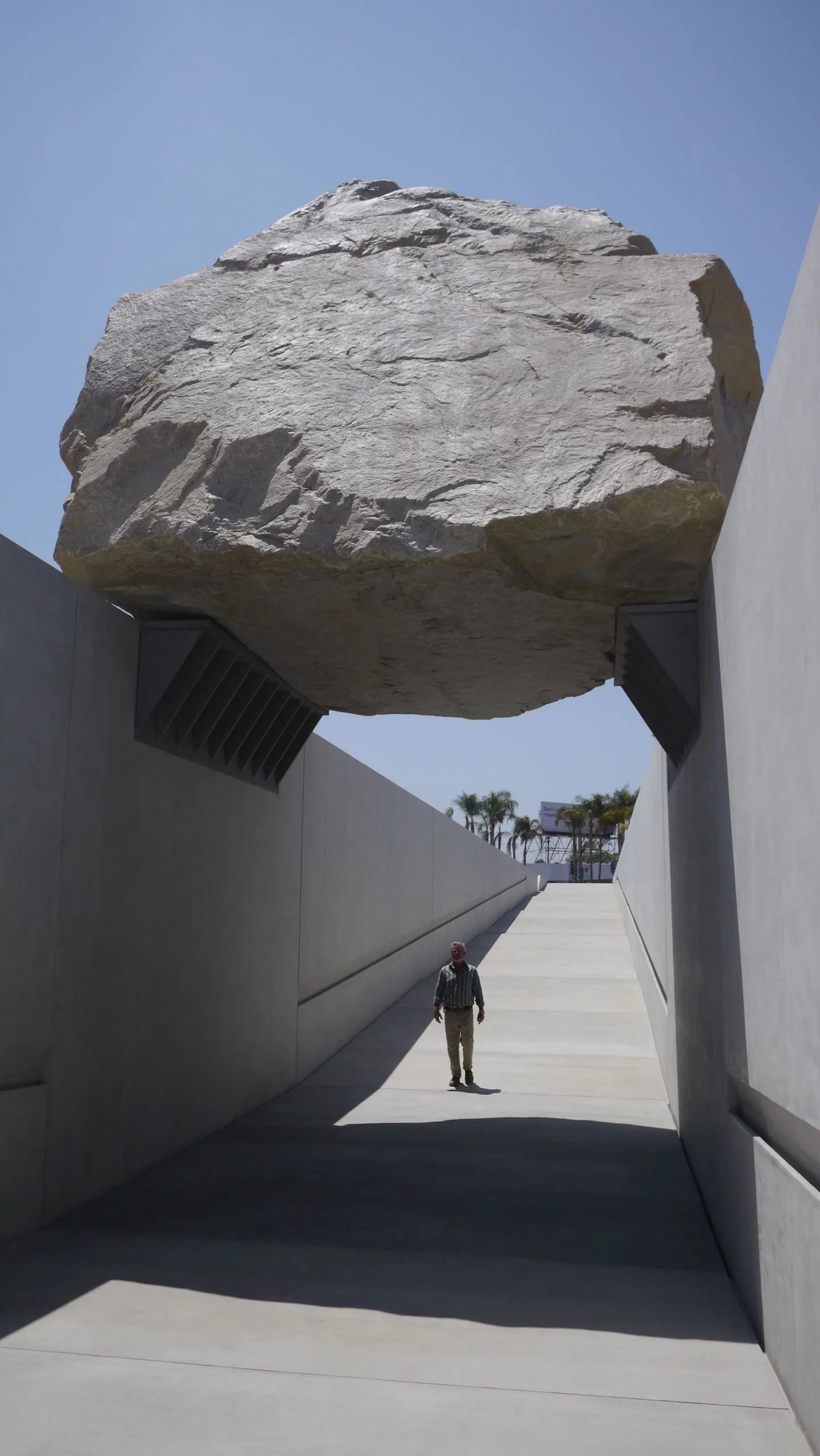
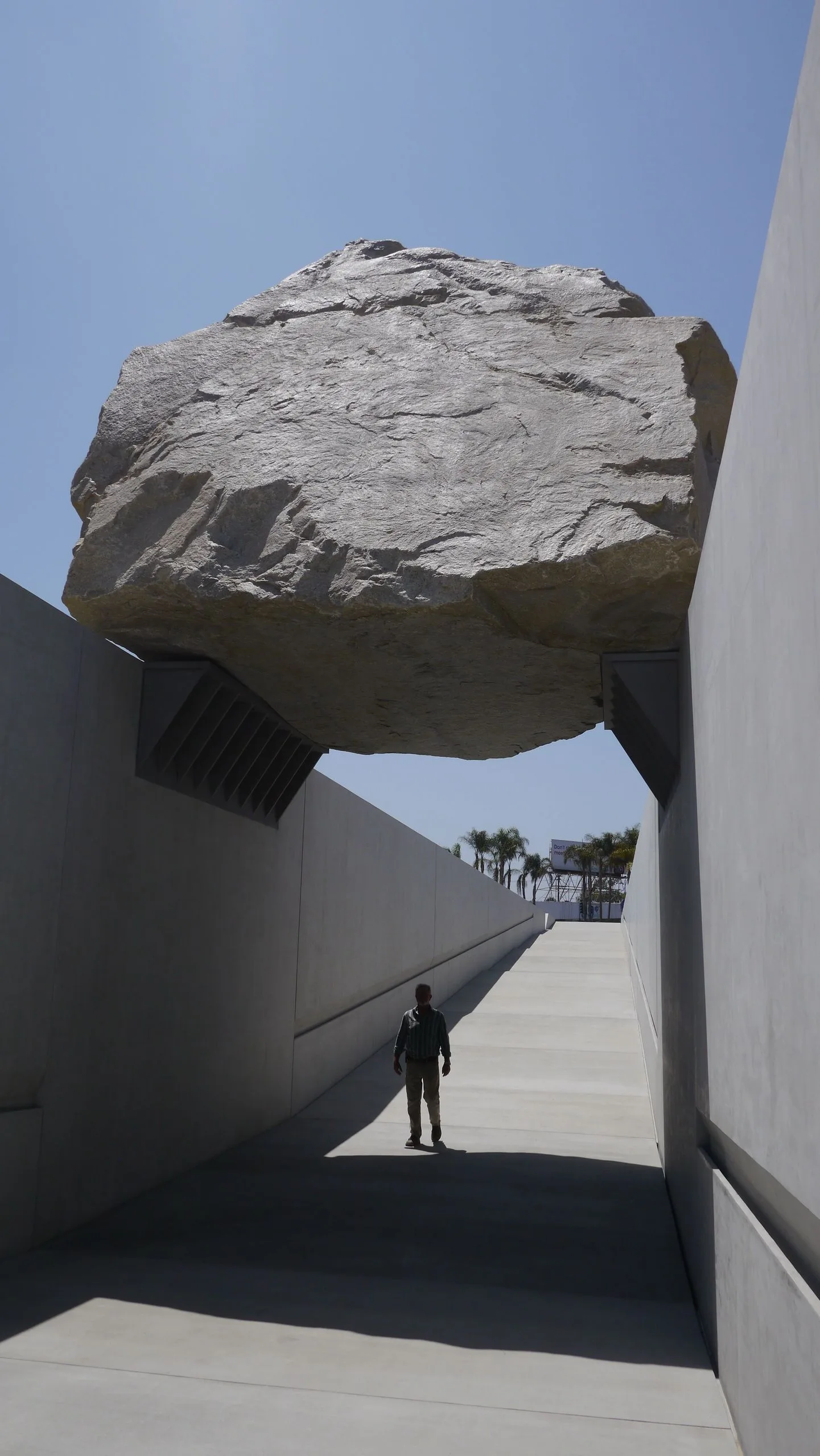
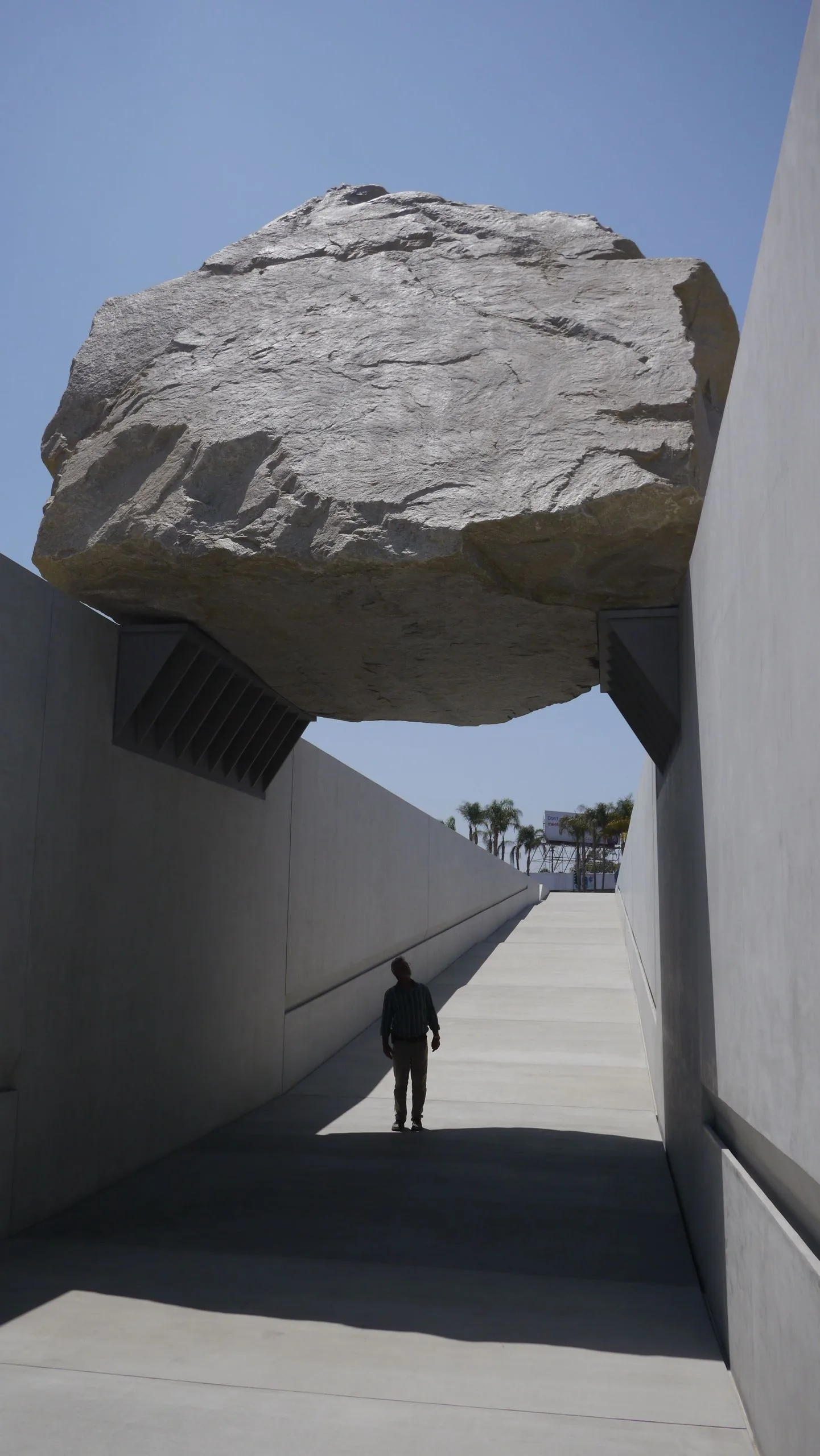
Michael Heizer’s Levitated Mass was conceptualized in 1969 (a drawing of the work is in the Staatliche Museen zu Berlin). The first attempt to build the sculpture took place that same year when Heizer obtained a 120-ton rock in the Sierras above Reno, Nevada, and a slot depression was excavated in a dry lakebed in northern Nevada in which to set the megalith. However, the rock proved too heavy to load, breaking a crane, and the project was abandoned. Decades later, in 2007, Heizer was working at the Pyrite-Hubbs Quarry in Riverside County when a 340-ton megalith came off the quarry wall during a detonation. The large size and impressive scale of the boulder were perfect criteria to realize Levitated Mass. Soon after, Heizer and LACMA director Michael Goven agreed that the work would be constructed at the museum.
The boulder is one of the largest megaliths to be moved since ancient times. Its massive size necessitated a complex plan of transport from quarry to museum, a distance of approximately 105 miles. The move began on February 28, 2012, following a specially designated route covering four counties—Riverside, San Bernardino, Orange, Los Angeles—and twenty-two cities. The transporter traveled only at night, at a speed of about seven miles an hour, arriving at LACMA on March 10.
The boulder is one component of Heizer’s artwork, which includes the 456-foot-long slot beneath it and the surrounding environment. As with other works by the artist, such as Double Negative (1969) and North, East, South, West (1967/2002), the monumental negative form is key to the experiential nature of Levitated Mass. Taken whole, it speaks to the expanse of art history—from ancient traditions of creating artworks from megalithic rock to modern forms of abstract geometries and cutting-edge feats of engineering—as well as the modern philosophies underlying Heizer’s deployment of negative space and volume as “physical” or measurable entities in his sculptures and paintings.